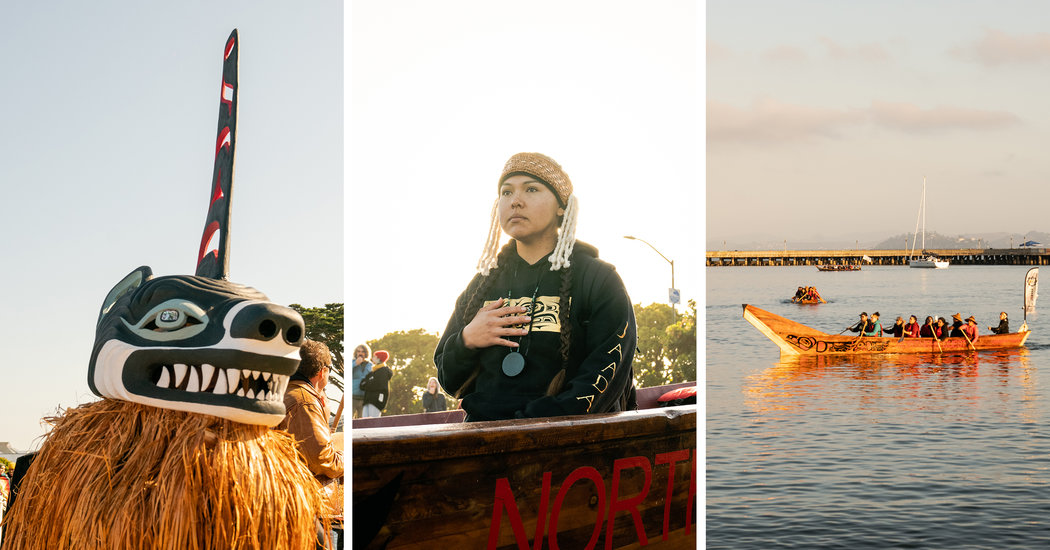
Fifty years ago, Native American activists occupied Alcatraz Island in San Francisco Bay. This October 14 — Indigenous Peoples’ Day — Native American tribes from across the country and Canada paddled canoes around the island to commemorate the anniversary.
What, if anything, do you already know about the occupation of Alcatraz?
To learn more, read this article from History.com. Or, watch the 25-minute video “We Hold The Rock,” commissioned by the Golden Gate National Recreation Area. (If you are short on time, you can watch from 4:00-8:45 and 18:30-19:30). Then respond to the following questions:
Who occupied Alcatraz?
What were the goals of the occupation?
Why was Alcatraz chosen as the protest site?
What was achieved by the 19-month occupation?
Questions for Writing and Discussion
Read the article, then answer the following questions:
1. According to the article, what did the occupation of Alcatraz accomplish? How did it change the lives of those who participated in the original occupation, like LaNada War Jack?
2. What is a “canoe journey”? Why was the canoe journey chosen as an important way to honor the occupation’s 50-year anniversary?
3. What are some of the reasons people chose to participate in the canoe journey?
4. What does Cortney Russell mean by her statement, “Despite the attempt to assimilate us through cultural genocide, we the original caretakers of the land, we are still here. We will not be forgotten”? How do the many activities of the day challenge that attempt to assimilate Native Americans and erase their culture?
5. Shannon Morrison, a participant whose parents had taken her to the island during the original occupation as a baby, said:
By dancing, by singing, by canoeing, by these activities, I am showing the value of our communities. I do it for my grandchildren, for the future generation.
Why is it important to celebrate and value one’s history, culture and community? What is lost if these are forgotten?