
Find all our Lessons of the Day here.
Lesson Overview
Featured Article: “With Brutal Crackdown, Iran Is Convulsed by Worst Unrest in 40 Years”
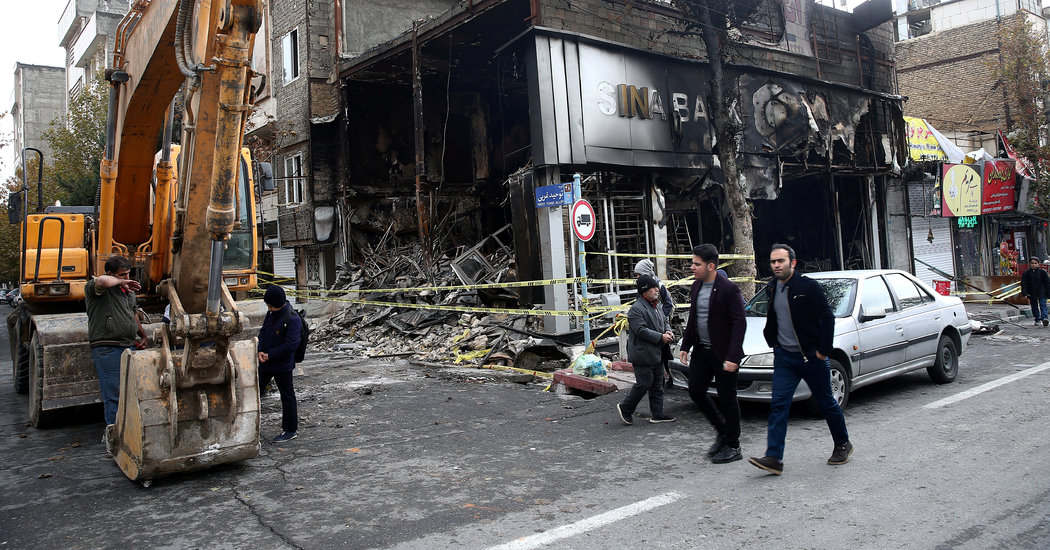
What started as a protest over a surprise increase in gasoline prices in Iran turned into widespread demonstrations met with a systematic repression that left at least 180 people dead. In this lesson, you’ll learn about the factors that have contributed to this unrest — both the obvious ones and those lying beneath the surface.
Warm Up
What do you know about Iran? What have you read, seen or heard about the country in the news recently?
On your own or with a partner, list at least 10 names, places, adjectives, facts, historical events, news items or other details that you associate with Iran. (Note to teacher: If you are doing this in a classroom context, you might conduct this as a whole class activity by writing “Iran” on the board and inviting students to add details around it.)
On Nov. 15, an increase in fuel prices sparked protests across the country, followed by a brutal government crackdown. In the five-minute Video Op-Ed below, “What Iran Did Not Want You to See,” Raha Bahreini, a human rights researcher, exposes and analyzes footage of human rights abuses by Iranian security forces.
Watch the video. Then return to your list and circle the items you think are most relevant to what is happening in Iran today and explain why.
(Note to teacher: This video contains some scenes of violence. Please be sure to preview it to make certain it is appropriate for your students.)
Questions for Writing and Discussion
Read the article, then answer the following questions:
1. What event sparked the protests in Iran? How did they evolve from there?
2. The reporters write that the government has reacted to the protests with “unbridled force.” What evidence do they cite that supports that claim?
3. Why are details corroborating the scope of the killings and destruction being revealed only now, two weeks after the protests were crushed? What does this tell you about the Iranian government?
4. What are two of the most significant economic and political challenges facing Iran? What impact do these have on its citizens?
5. Mir Hussein Moussavi, an opposition leader and former presidential candidate, compares the government’s response to the infamous 1978 massacre by government forces that led to the Iranian Revolution of 1979. In what ways does he say these events are similar? What does this suggest about what is happening in Iran today?
6. The reporters spend nearly half of the article detailing what happened in the city of Mahshahr. Why do you think that is? What story do these events tell about the relationship between Iran’s leaders and its citizens?
7. Media literacy. From whom did The New York Times get information about the events in Mahshahr? Why do you think the reporters chose to tell readers about these sources?
Going Further
The unrest in Iran isn’t as simple as outrage over an increase in gas prices. There are complex and nuanced factors contributing to both the public’s frustration and the government’s harsh response. Like an iceberg, what we’re seeing is only part of the story — with a larger history that rests below the surface.
Demonstrate your understanding of what is happening in Iran and why by creating an “Iceberg Diagram,” an activity from Facing History and Ourselves. You can use this handout or draw your own iceberg.
On the tip of your iceberg, list everything you know about this event: What happened? When? Where? Who was affected?
Then, in the bottom part of the iceberg, list factors that have contributed to this event, based on what you have read in the article and what you already know about the country: Why are Iranians angry with the government? Why did the government respond the way it did? What other events, from the past and today, have influenced these actions and reactions?
Finally, reflect. Choose one or more of the prompts below to write about or discuss with your classmates:
If you have more time …
Learn about what else is happening in Iran right now. Choose an article to read below, or do your own research into something you want to know more about:
U.S. Commander Warns of Iranian Attack in Middle East
Trump Announces New Sanctions on Iran
Iran, Deeply Embedded in Syria, Expands ‘Axis of Resistance’
The Iran Revolution at 40: From Theocracy to ‘Normality’
Iraq Prime Minister Says He Will Resign Amid Protests
Then tell us: Based on what you learned in the lesson and in the article you chose to read, what can you tell about the state of Iran — its government and its people — today?

