
Have you ever wished that you could have the same teacher over again? Or do you look forward to getting a different teacher each year?
What if you found out that research shows that having the same teacher year after year might actually be good for you?
In North Carolina, economists examined data on several million elementary school students. They discovered a common pattern across about 7,000 classrooms that achieved significant gains in math and reading performance.
Those students didn’t have better teachers. They just happened to have the same teacher at least twice in different grades. A separate team of economists replicated the study with nearly a million elementary and middle schoolers in Indiana — and found the same results.
Every child has hidden potential. It’s easy to spot the ones who are already sparkling, but many students are uncut gems. When teachers stay with their students longer, they can see beyond the surface and recognize the brilliance beneath.
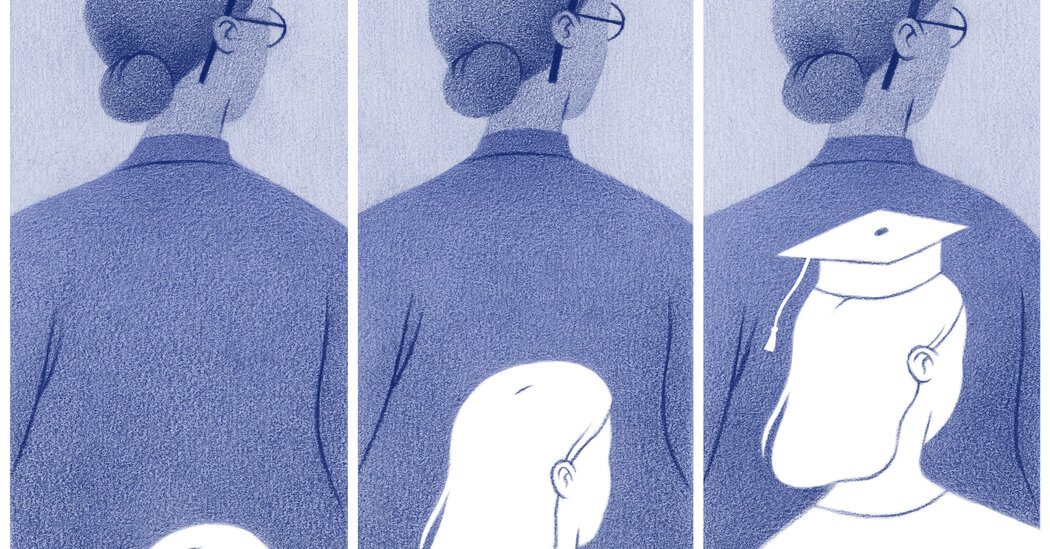
Instead of teaching a new cohort of students each year, teachers who practice “looping” move up a grade or more with their students. It can be a powerful tool. And unlike many other educational reforms, looping doesn’t cost a dime.
With more time to get to know each student personally, teachers gain a deeper grasp of the kids’ strengths and challenges. The teachers have more opportunities to tailor their instructional and emotional support to help all the students in the class reach their potential. They’re able to identify growth not only in peaks reached, but also in obstacles overcome. The nuanced knowledge they acquire about each student isn’t lost in the handoff to the next year’s teacher.
Finland and Estonia go even further. In both countries, it’s common for elementary schoolers to have the same teacher not just two years in a row but sometimes for up to six straight years. Instead of specializing just in their subjects, teachers also get to specialize in their students. Their role evolves from instructor to coach and mentor.
It didn’t occur to me until I read the research, but I was lucky to benefit from looping. My middle school piloted a program to keep students with the same two core teachers for all three years. When I struggled with spatial visualization in math, Mrs. Bohland didn’t question my aptitude. Having seen me ace a year of algebra, she knew I was an abstract thinker and taught me to use equations to identify the dimensions of shapes before drawing them in 3-D. And after a few years of observing what fired me up in social studies and the humanities, Mrs. Minninger knew my interests well. She saw a common theme in my passions for analyzing character development in Greek mythology and anticipating counterarguments in mock trial — and suggested doing my year-end project on psychology. Thank you, Mama Minnie.
Most parents see the benefit of keeping their kids with the same coaches in sports and music for more than a year. Yet the American education system fails to do this with teachers, the most important coaches of all. Critics have long worried that following their students through a range of grades will prevent teachers from developing specialized skills appropriate to specific grade levels. Parents fret about rolling the dice on the same teacher more than once. What if my kid gets stuck with Mr. Snape or Miss Viola Swamp? But in the data, looping actually had the greatest upsides for less effective teachers — and lower-achieving students. Building an extended relationship gave them the opportunity to grow together.
Students 13 and older in the United States and Britain, and 16 and older elsewhere, are invited to comment. All comments are moderated by the Learning Network staff, but please keep in mind that once your comment is accepted, it will be made public and may appear in print.

