How did you get your last name? Was it passed down to you from your father’s side of the family? That is how last names are usually given to babies in the United States, but some families are taking different approaches. They may draw from the mother’s side instead, use both parents’ last names (sometimes placing a hyphen between them), choose a name that has family history or other significance — or come up with something wholly original.
What does your last name mean to you? If you have children someday, how will you decide on their last names?
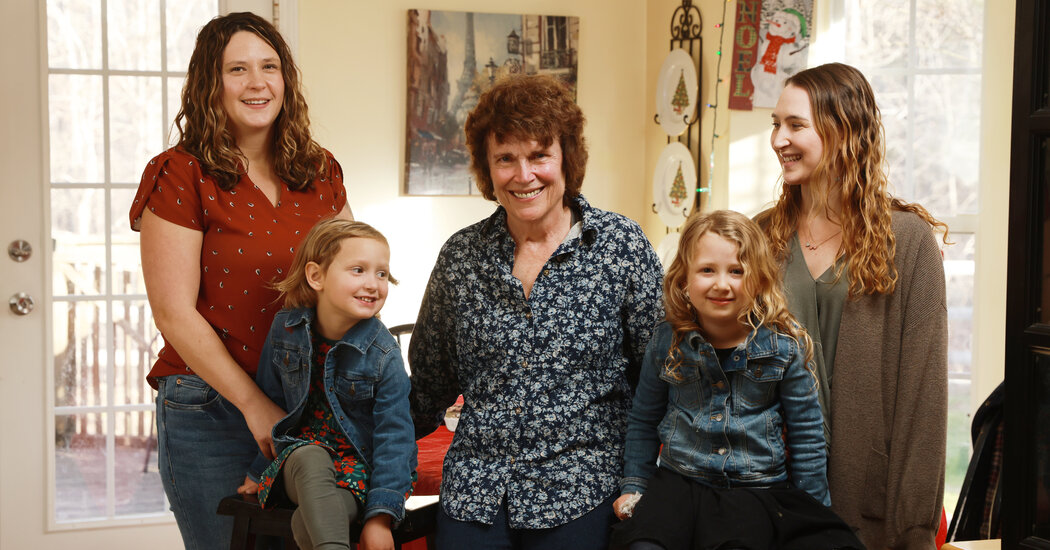
When Judy Pellarin had her daughters three decades ago, she and her husband gave them her last name instead of his. A generation later, her daughters also broke tradition — one gave her daughter her surname, and the other created a new name, a blending of her and her husband’s middle names.
Though some families have deviated from the patrilineal tradition for decades, they remain part of a small minority. Even as many gender norms have changed over the generation since Ms. Pellarin named her children, the tradition of giving babies their fathers’ surnames remains so strong as to be almost unquestioned.
Yet in other ways, the American family looks very different. Fifty years ago, most adults under 50 were married and raising children as a couple; that is no longer the norm for U.S. adults. Parents are increasingly likely to be never married or divorced, or same-sex or interethnic couples.
These changes complicate the patrilineal tradition, say parents who have taken a different approach. Many hyphenate their last names. Some make less common choices, like giving children the mother’s surname or coming up with new names altogether. For some, it is a rejection of patriarchal norms. Others say it’s about maintaining ties to their heritage or ethnicity, or because fathers weren’t involved in raising the children.
There is no nationwide data on how many parents give children a surname other than the father’s. But data on the names couples take at marriage suggests it’s uncommon. Of men in opposite-sex marriages, a Pew survey found this year, 5 percent took their wife’s last name, and less than 1 percent hyphenated their names.
Four in five women take their husband’s last name at marriage. Those who keep their names are likelier to be liberal, highly educated or Hispanic — and this minority is more likely to make unconventional choices with their children’s names, research shows.
The patrilineal tradition arose, said Charlotte J. Patterson, a psychology professor at the University of Virginia, as an acknowledgment that “fathers were the head of the household, and when they named their child this way, it was expressing that it was a legitimate birth and the child could inherit from them.”
Even as those reasons have become less relevant, she said, “because we have this longstanding custom, I think many people do this without really considering any alternatives.”
Students 13 and older in the United States and Britain, and 16 and older elsewhere, are invited to comment. All comments are moderated by the Learning Network staff, but please keep in mind that once your comment is accepted, it will be made public and may appear in print.