
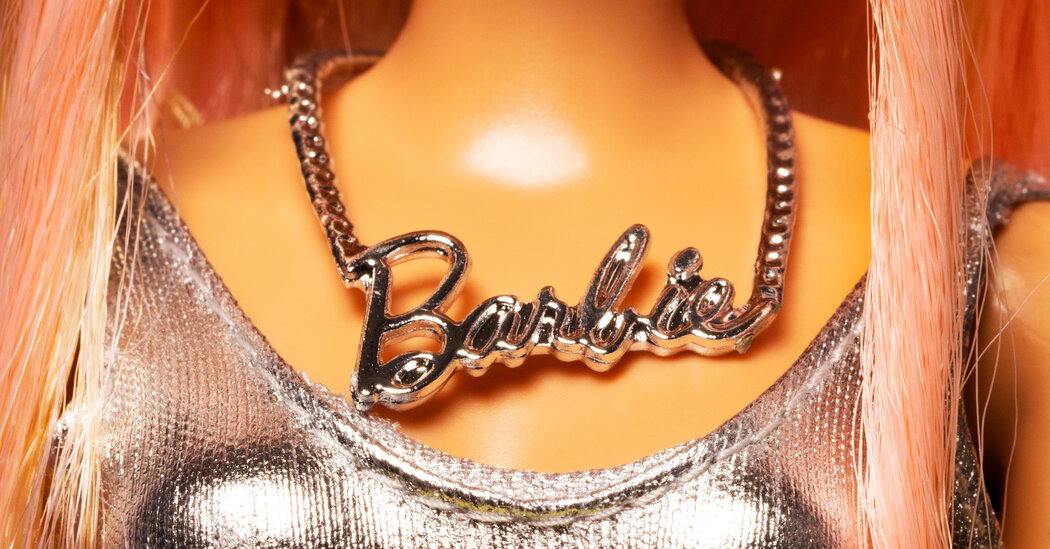
The dolls ‘used to lack diversity quite a bit.’
My overall view of Barbie dolls is that it used to lack diversity quite a bit, which is something that’s very important to me, however in recent years they have gotten much better in terms of diversifying their toys. I can understand why many people might have a negative view of Barbie, and why they believe that she isn’t the best role model for young girls. The doll has mainly had one image for the past few decades and that has been a white woman with blonde hair and blue eyes. Things like this can help push that white is the norm in the USA, especially to girls of color that enjoy playing with Barbies. There was a time when you could walk into a store and only see dolls that looked the exact same, which was white, blonde, and skinny. However I feel like more progress is being made as time goes on. Despite all of this I feel that the movie handled a lot of these issues in a pretty good way.
‘I would have loved to see Barbies who … weren’t all that into pink.’
Personally, when the Barbie movie came out, I had never been interested in the sort of products the brand offered nor was the movie something I was excited about watching. However, when a friend of mine insisted we should go see the film, I begrudgingly said yes and fished to grab my one pink button-up out of my closet. Wow! I was really pleasantly surprised by this movie! Though Barbie has a very light tone, it managed to discuss important issues in a way that definitely made me think. Part of the movie is the fact that it should make you uncomfortable, which forces you to take a good look at the real world. Additionally, the character Alan was very dear to me because he symbolized the experience of not fitting into the “Barbie” or “Ken” category. However, I do feel that the film oversimplified the varied experiences of women. Stereotypical Barbie was just that: stereotypical. I would have loved to see Barbies who didn’t necessarily have high heels and dresses, weren’t all that into pink, and didn’t necessarily partner up with a Ken. Overall, while the movie certainly isn’t perfect, it was definitely something I will keep watching again and again.
‘Without Barbie, I wouldn’t value my culture as much as I do today.’
As a child, my bedroom floor was almost always haphazardly covered by a plethora of Barbies. I even remember begging my parents to go to Toys “R” Us only to browse the Barbie aisle. I was obsessed with the idea of having a “perfect” toy. Something about her ubiquitous, embellished features captivated me. Eventually, however, this admiration became envy. Having a reminder of what was “perfect” — only to look back at the mirror and find no similarities — was incredibly dispiriting. Living as an Asian immigrant, I always strived to look like what was most represented — being a white, skinny girl — which I was neither. How could I begin loving myself if the media didn’t? Thus, I started to hate Barbie. The designated Barbie pile I once had was trashed. I assimilated into American culture, disregarding my mother tongue. Rejected my food, my words, and my culture. Gradually though, I began appreciating my identity and ethnic features. It wasn’t a magical change. I had to learn my culture again as if it was an old hobby. I like to think of Barbie as a hallmark. It is representative of the pain I felt, so displaced in a world where I felt like I didn’t belong. But it also represents the progress and change I have gone through. Without Barbie, I wouldn’t value my culture as much as I do today. I wouldn’t cherish my features as much as I do today either. And I love Barbie for that reason.
— Olivia K, Masterman School, Philadelphia, PA
Learn more about Current Events Conversation here and find all of our posts in this column.


