Written by Lisa Westcott Wilkins, Co-CEO of DigVentures.
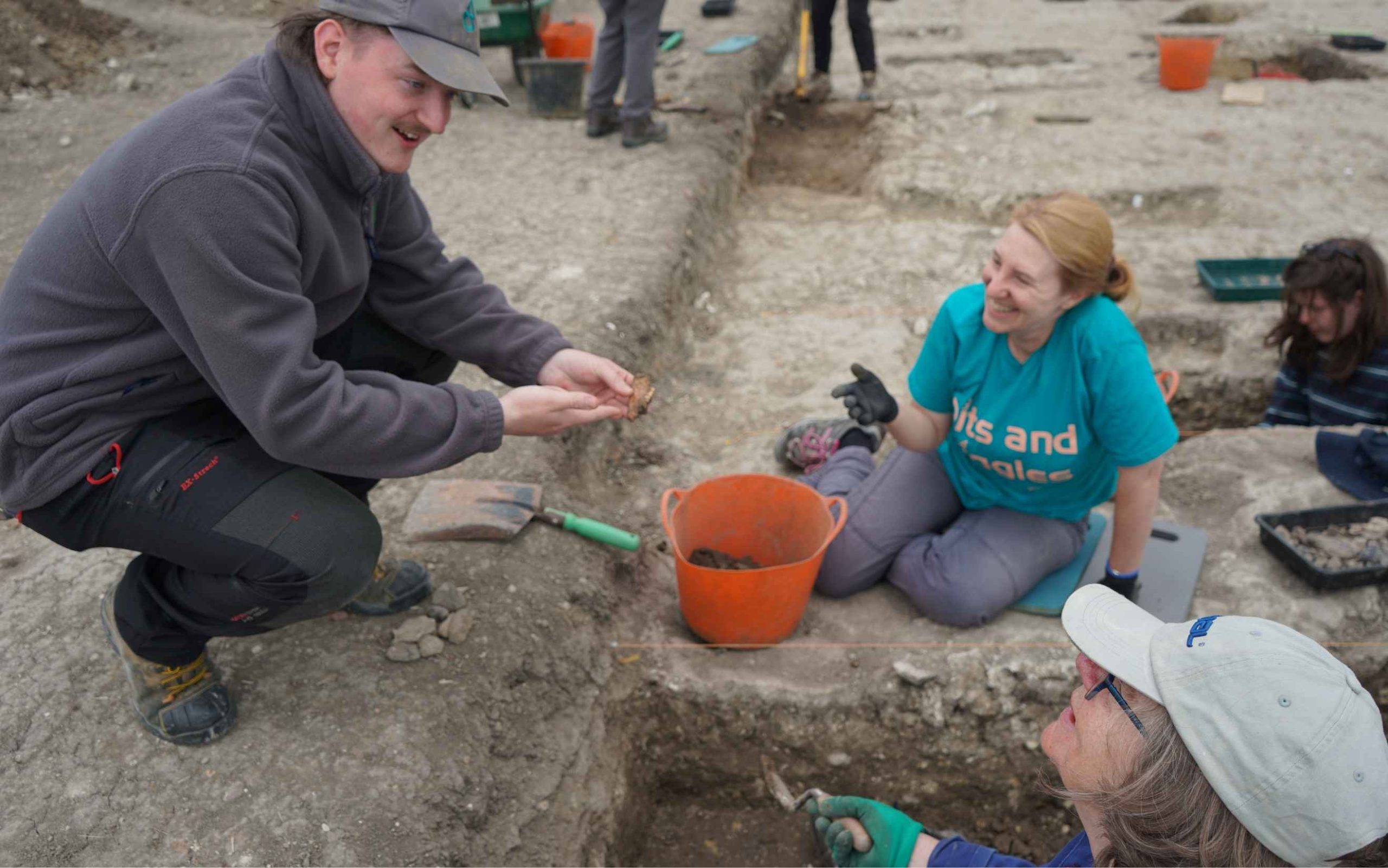
Most people picture archaeology as dusty ruins and people on their knees with tiny brushes, or as something only meant for academics or adventure films. But a growing body of research shows that engaging with archaeology, even from your sofa, is one of the most effective ways to support your mental health, curiosity, and sense of belonging in the world.
Whether you’re studying online, volunteering on a local dig, or simply learning to read the landscape around you, archaeology activates a set of psychological and social processes that are remarkably well-aligned with what scientists know makes us feel good. And you don’t need a degree, a trowel, or a plane ticket to get started.
The Evidence Is in the Ground (and in the Data)
In 2008, the UK Government commissioned the New Economics Foundation (NEF) to identify the evidence-based actions most likely to improve personal wellbeing. The result was the Five Ways to Wellbeing framework: connect, be active, take notice, keep learning, and give. It’s been used worldwide by health services, including the NHS, schools, and community organisations ever since.
What makes archaeology remarkable is that it hits all five!
- Connect: Archaeology is collaborative. Whether you’re joining an online discussion about a Roman coin or volunteering on a community excavation, you’re entering a shared endeavour with people you wouldn’t otherwise meet. Research from Historic England has found that heritage engagement reduces feelings of isolation and builds social cohesion, particularly for people who feel disconnected from their immediate communities.
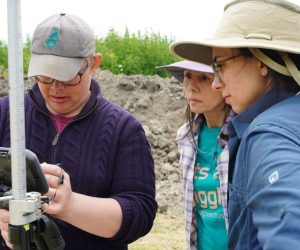
- Be active: Fieldwork is physical. Walking, digging, surveying, kneeling, and being out in the weather. Learning to notice archaeological features in landscapes transforms a walk into an investigation. Heritage sites are among the most visited outdoor spaces in the UK, and studies published in the Journal of Public Health have linked regular visits to heritage sites with higher life satisfaction and lower mental distress.
- Take notice: Archaeology trains your attention. You learn to slow down, observe closely, and ask questions about things most people walk past without a second glance. Why is that field a strange shape? What’s that bump in the ground? This kind of deliberate noticing, what psychologists call mindful attention, is strongly associated with reduced anxiety and improved mood.
- Keep learning: Archaeology isn’t a single subject. It pulls in geology, biology, chemistry, history, art, technology, and data science. Learning archaeology means constantly encountering new disciplines, and research consistently shows that acquiring new knowledge and skills builds self-confidence and provides a sense of purpose, regardless of your age or career stage.
- Give: Community archaeology, where members of the public work alongside professionals, is built on contribution. You’re not just consuming content; you’re helping to record, preserve, and interpret the shared story of a place. That sense of contributing something meaningful is one of the most powerful drivers of sustained wellbeing.
 It’s Not Just About the Past – It’s About Where You Are Right Now
One of the most underrated benefits of learning about archaeology is what it can do for your relationship with place. Most of us move through our daily environments on autopilot, the same street, the familiar park, the daily commute. Archaeology gives you a different lens. Suddenly, the road you walk down every day has a story that’s thousands of years deep. The park was a medieval common. The hill next to your office was an Iron Age fort.
Research from the University of Glasgow and Historic England, published in 2026, found that people who feel connected to the historic character of the places they live report stronger mental health outcomes. Place attachment, the sense that where you are matters and has meaning, is linked to greater resilience, stronger community bonds, and a more grounded sense of identity.
For anyone who’s moved to a new city, started a new job, or simply feels a bit lost, learning the deep history of where you live is one of the fastest ways to feel like you belong somewhere.
You Don’t Need To Be Indiana Jones
One of the barriers to engaging with archaeology has always been access. Historically, it was an expensive, university-gated discipline with high costs to enter. That’s changing fast.
Free online platforms like Alison offer an Introduction to Archaeology course that covers everything from excavation techniques to how archaeologists date the past. Our organisation, DigVentures, is a UK-based social enterprise with a global community of over 100,000 people; we have pioneered a participation model where anyone can take part in real archaeological research, from live-streamed excavations to citizen science projects in nature recovery. Our CIfA-endorsed online courses are designed to build genuine skills, not just broadcast information.
The point isn’t to become a professional archaeologist (though you could, and the career paths are more varied than you’d think). The point is that learning about the past equips you with a set of capabilities that are genuinely useful, including critical thinking, evidence assessment, spatial reasoning, attention to detail, collaborative problem-solving, and the ability to construct a narrative from incomplete information. These are transferable skills that employers across sectors value highly, and also the kind of activities that keep your brain nimble, no matter what your age.
The Bigger Picture
We live in an era of constant acceleration. Screens demand attention. News cycles create anxiety. Many of us feel disconnected from the physical world and the communities around us. Learning about archaeology is a quiet, peaceful corrective to all of that noise.
If you’re looking for something that genuinely builds your wellbeing, sharpens your thinking, deepens your curiosity, and connects you to the places and people around you, it’s hard to beat digging into the past.
DigVentures a community-powered social enterprise working across archaeology, heritage, and nature recovery. DigVentures has built a global community of over 100,000 participants and holds the Europa Nostra Award and the EU Prize for Citizen Science.