
Do you find yourself easily bored? What do you do to cope with the monotony?
Sample Phrases When Posting as an Affiliate

As an affiliate, you align yourself with a business or organisation and share that with your online connections. And if you manage to execute being an affiliate correctly, everyone involved becomes empowered and wins. There are several things you, as an affiliate, need to do to communicate your product or service to ensure the lead is converted into a sale. You need to decide which platform to use or what style of content gets you a response from your audience. Another key aspect to consider is the sample phrases when posting as an Affiliate. Keep reading because we have you covered.
Writing your affiliate post
What makes you become a successful affiliate is knowing your audience and tailoring your content in a way that will guarantee they buy what you’re promoting.
- Give a testimonial. It goes a long way to your audience if you’ve used the service and can give valuable feedback and say how it’s empowered and changed your life.
- Do in-depth research. It’s important to know what you’re selling. If one of your followers asks you a question about the service, you want to be able to give them an honest and insightful answer.
- Explain value. How has the product or service empowered you and how will it empower them? What value will they get from buying what you’re selling?
Your affiliate piece is not complete without adding a call to action.
What is a ‘call to action’?
A “call to action” or CTA is the directive phrase that tells your reader what their next step should be. This is what encourages your audience to take them from a potential customer to a converted one. CTAs are also easy to identify because of their placement that makes it easy for the reader to recognise, usually with a click-through or button and icon. Here are a few that may be familiar:
- Download now
- Subscribe to our newsletter
- Learn more
- Share now
Sample phrases when posting as an affiliate
The phrases you use as an affiliate largely depend on your goals. For example, if you want to increase your subscriber list, increase your brand exposure, encourage your followers to share your post, or promote an event, you’ll craft and use certain phrases to achieve the goal.
Words have the power to evoke emotion. The right emotions elicit actions in the reader. Words serve greed, curiosity, laziness, trust, and can encourage These speak to human beings’ primary emotion because the right words can trigger a desired effect in the reader.
Top 20 sample phrases you can use
- Sign up now
- Click here for more details
- Act now!
- Start your free trial today
- Book your spot
- Offer expires…
- Get early access
- Join millions of other subscribers
- Shop now
- Request your demo today
- Refer your friend
- Unlock your discount
- Buy two, get one free
- Test it now
- Get more customers
- Yes, I want to learn more
- Claim your gift
- Request your no-obligation free quote
- Find out more information
- Download the ultimate guide to…
The key things to remember about your call-to-action phrases are that they should be clear, concise, compelling, enticing, and stand out. Ready to put these phrases into action? First things first – sign up to an affiliate programme.
Below is an example of how you can use a sample phrase when promoting one of Alison’s free courses:
“If you’ve been following me for a while, you know that I love anything “free”. Usually, the T&Cs reveal that free is not actually free. Until I came across Alison. They have thousands of courses you can study for FREE. I discovered that I could learn online, anytime, and choose from a variety of courses to improve my skills and knowledge in how I run my business. It’s what empowerment should be! So, if you’re like me and love “free”, click here to sign up on Alison and begin your learning journey.”
How Alison’s Affiliate Programme Works
Becoming an affiliate is quick and easy. After you’ve created your Alison account, you can sign up to be a part Alison’s Affiliate Programme in three easy steps:
- Register with Alison. Login or sign up. Join one of our informative webinar sessions with an Alison representative and learn how you can empower others by being an Affiliate.
- Invite. Using the Affiliate link generator, share your Affiliate links online with your friends, family, colleagues, neighbours and anyone else you can think of who might benefit from our free educational and professional tools.
- Earn money. You will receive 20% of the revenue generated by the new learners who come to Alison through your Affiliate links.

It’s as simple as that. It doesn’t matter what your goal is. Carefully craft your CTA phrases when you post to your audience, and you’ll not only get more clicks, but you’ll get the conversions you need to make you a successful affiliate and change their lives.
Banksy in Ukraine
Are you familiar with this artist? What do you think he is saying with this mural?
Word of the Day: inculcation
This word has appeared in four articles on NYTimes.com in the past year. Can you use it in a sentence?
Digest #167: Should we give up on growth mindset?

5) Goodbye growth mindset, Hello efficacy and attribution theory by Mirjam Neelen and Paul Kirschner @P_A_Kirschner
This blog post was written before this latest revival of the growth mindset controversy, but provides an accessible description of why many interventions might fail in the ways that they simplistically apply mindset research. Instead, a clear and easily applied alternative is offered that should result in much the same effect as a mindset intervention.
Bottom Line
We are self-plagiarizing here and using the same bottom line as in the 2017 digest linked above… If you are a parent or educator, please do some careful reading before trying to implement an educational trend with students. Most interventions depend on context and do not work for all students so any changes based on limited research should be made with caution.
References:
1) Macnamara, B. N., & Burgoyne, A. P. (2022). Do growth mindset interventions impact students’ academic achievement? A systematic review and meta-analysis with recommendations for best practices. Psychological Bulletin.
2) Burnette, J. L., Billingsley, J., Banks, G. C., Knouse, L. E., Hoyt, C. L., Pollack, J. M., & Simon, S. (2022). A systematic review and meta-analysis of growth mindset interventions: For whom, how, and why might such interventions work?. Psychological Bulletin.
How to Drive Data Literacy in the Public Sector


By Kevin Mills, Vice President, Coursera for Government
From the smallest unit of local government to international organizations, public sector agencies around the world are undergoing digital transformations that leverage new technologies to carry out core functions. This evolution demands new skills and knowledge, chief among them data literacy.
Yet successfully driving a data literacy program can be a challenging prospect for many organizations. According to The Data Literacy Project, 74% of employees feel overwhelmed or unhappy when working with data, despite 87% of employees seeing data as an asset.
Fortunately, it’s never been easier for the public sector to meet this challenge head on.
I’m excited to announce our latest e-book Driving Data Literacy in the Public Sector which builds on the lessons learned from our partnerships with government agencies around the world, including the Abu Dhabi School of Government (ADSG) in the United Arab Emirates and the Defense Acquisition University (DAU) in the United States, to explore how the public sector can successfully implement data skills development programs to establish a foundation of knowledge for all employees.
Data literacy—as we define it—is the capacity to read, interpret, communicate, and reason with data. It is a command of data in context, involving a grasp of where and through what methods data is sourced, how data is analyzed, how it can be applied to real-world use cases, and what practical value it may realize.
Today, data literacy skills no longer are solely the domain of technical specialists. Every government employee needs a baseline level of data literacy to solve problems, communicate, and make informed decisions.
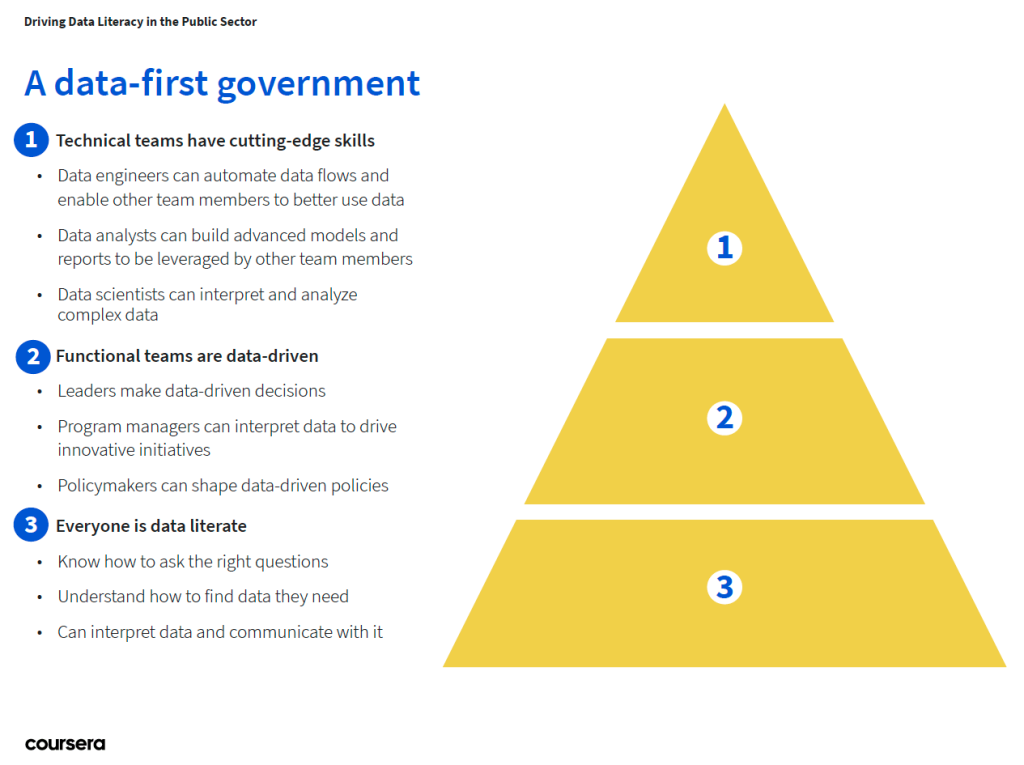
In this e-book, public sector leaders will learn:
- Why data literacy is vital for improving government services through a detailed examination of the four main outcomes that data literacy helps achieve
- How to launch, support, and show the ROI of a data literacy skills development program through the exploration of a framework created by our Solutions Consultants team
- How Coursera can help support data literacy skills development within your organization
From cities to national agencies, the public sector can leverage data literacy skills to streamline their processes, attract and retain talent, and improve the lives of their citizens. We are already seeing firsthand how governments across the world are realizing the potential of a culture of data to effect positive change and I hope that this resource helps more organizations to do the same.
Download the Driving Data Literacy in the Public Sector e-book.
What’s Going On in This Graph? | Nov. 30, 2022
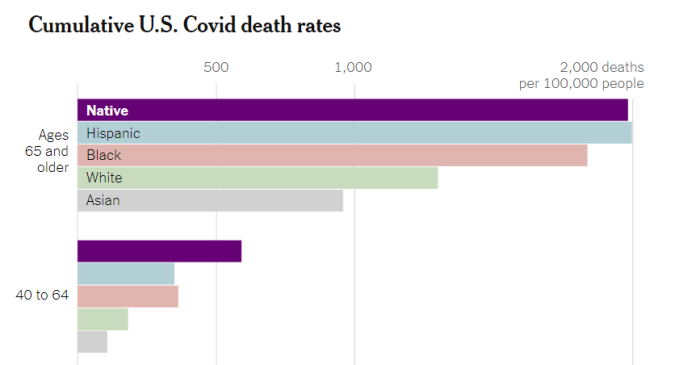
3. Below the response box, there is an option to click on “Email me when my comment is published.” This sends the link to your response which you can share with your teacher.
4. After you have posted, read what others have said, then respond to someone else by posting a comment. Use the “Reply” button to address that student directly.
On Wednesday, Nov. 30, teachers from our collaborator, the American Statistical Association, will facilitate this discussion from 9 a.m. to 2 p.m. Eastern time.
5. By Friday morning, Dec. 2, we will reveal more information about the graph, including a free link to the article that includes this graph, at the bottom of this post. We encourage you to post additional comments based on the article, possibly using statistical terms defined in the Stat Nuggets.
Reveal
We’ll post more information here on Thursday afternoon. Stay tuned!
More?
• See all graphs in this series or collections of 60 of our favorite graphs, 28 graphs that teach about inequality and 24 graphs about climate change.
• View our archives that link to all past releases, organized by topic, graph type and Stat Nugget.
• Learn more about the notice and wonder teaching strategy from this 5-minute video and how and why other teachers are using this strategy from our on-demand webinar.
• Sign up for our free weekly Learning Network newsletter so you never miss a graph. Graphs are always released by the Friday before the Wednesday live-moderation to give teachers time to plan ahead.
• Go to the American Statistical Association K-12 website, which includes teacher statistics resources, Census in the Schools student-generated data, professional development opportunities, and more.
Students 13 and older in the United States and the Britain, and 16 and older elsewhere, are invited to comment. All comments are moderated by the Learning Network staff, but please keep in mind that once your comment is accepted, it will be made public.
Practice these Ruby on Rails Interview Questions to Help You Land Your Next Role


It doesn’t matter if this is your first Ruby on Rails interview or your fifth — congrats! A lot of work went into landing this interview, from networking to resume writing to building your technical portfolio — and let’s not forget the whole process of actually learning Rails — you should be proud of all of that!
But now it’s time to prep for your interview, and one of the best ways to do that is by practicing common Ruby on Rails interview questions. Not only does this help you work out the answers beforehand, but it can also help you identify any areas or skills that you need to brush up on before your interview.
If you want to take this one step further, see if you can borrow a friend or family member for an hour and set up a mock interview. Have them ask you these questions in person or virtually (ideally matching the way you’ll be interviewed); that way, you can practice saying your answers out loud before you’re in front of the interview committee.
Ready to get started? Here are 15 Ruby on Rails interview questions and answers to help you prepare for your interview.
1. What is Ruby on Rails
Ruby on Rails is an open-source, object-oriented framework that’s used to develop web applications. It’s written in the Ruby programming language, and developers turn to Ruby on Rails for its time-saving features and fast development. It’s often referred to simply as Rails.
2. What are some of the advantages of Ruby on Rails?
There are many advantages of Ruby on Rails, and your answer to this question can be guided by what you like most about it. Do you benefit from the built-in testing feature? If so, you could mention how Rails supports fixtures and harnesses that make creating and executing test cases more manageable. Or you could talk about meta-programming and how it makes it easier to construct extensive, detailed code within Ruby. Rails has three separate environments: development, production, and testing. What about scaffolding? You could go over how Rails makes it easier to scaffold by automatically creating temporary code. Another advantage that you might want to mention is that you don’t have to spend a lot of time and energy configuring within Rails if you follow naming conventions.
3. What is the naming convention used in Ruby on Rails?
Naming within Ruby on Rails consists of five elements:
- Class and module. Classes and modules make use of MixedCase, and they don’t have an underscore. The words in modules and classes begin with uppercase letters.
- Variables. The letters used when declaring variables are in snake_case: all lowercase letters and underscores to separate words.
- Database table. When you name a database table, it should be in snake_case. Table names should be pluralized.
- Controller. To write controller names, you use a pluralized form of a word to denote what the controller manages. For example, you could use “OrdersController” to refer to the controller that works with an order table.
- Model. When specifying a model, you use MixedCase and put it in the singular form.
4. What is meant by a “class library”?
A class library consists of domains in Ruby on Rails, including thread programming, data types, and more. These allow you to create abstractions of code, making it possible to efficiently use the same logic within different elements of an app or in another program.
5. What does the term “Yield” refer to in the context of Ruby on Rails?
Yield refers to what a Ruby method uses to refer to a code block while invoking it. When yield gets called within a method, it allows the method to refer to all the code within the block. This prevents a programmer from manually having to insert many lines of code repeatedly.
6. What is the difference between “false” and “nil”?
“False” refers to an object of FalseClass that represents a Boolean value. “Nil” is an object that indicates when there is no value present.
7. What is the Object Relationship Model (ORM) in Rails?
An ORM indicates when your classes are being mapped to a table within the database. Also, objects are mapped directly to the rows within a table. This makes it easier to incorporate the attributes of several different classes within a single table.
8. What is the difference between Symbol and String?
The difference between String and Symbol can be primarily found in the object ID. Strings are mutable, meaning they can be changed. Symbols, on the other hand, are immutable objects. While a String and a Symbol can consist of similar code, the mutable or immutable nature of each often means they serve very different roles in the context of the application as a whole.
9. How are Symbols different from variables?
Symbols in Ruby are immutable and are stored in a fixed location in memory, while variables are mutable and point to a value in memory. A symbol represents the value itself and, once created, can be reused throughout a program without the need to be allocated more memory. On the other hand, when a new value is assigned to a variable, the variable will change its pointer, or reference, to that new value. Symbols are sometimes compared to strings in their functionality and can be converted back and forth between a string and a symbol type.
10. What is an enum in Ruby?
An enum refers to a data type consisting of a set of named values. It allows values to be mapped to integers within the database, and this enables them to be queried using their names.
11. How can you create a controller in Rails?
You can create a controller with this command:
$ bin/rails generate controller Subjects
This command generates corresponding routes, views, test files, and stylesheets. There are many other convenient commands like one for generating a model. The typical workflow would be first to generate a model and migrate that into the schema, then generate the corresponding controller, and finally construct the view accordingly.
12. What is referred to by Rails Migration?
Rails Migration makes it so Ruby can alter the database schema, which makes it possible to utilize a version control system to leave everything synchronized with your actual code. This enables you to avoid managing individual SQL scripts and use a domain-specific language (DSL) to define your changes.
13. When do you use self.down and self.up in Ruby on Rails?
You use self.up when you’re migrating to a new version, and you use self.down when you’re rolling back changes that have been made. By using both self.up and self.down, you can perform a migration and roll it back within only a few lines of code.
14. What is Mixin?
Mixin gives you an alternative to having multiple inheritances since it’s possible to import Mixin modules inside a class. This gives you a manageable way of allowing classes to perform more functions. Classes are often composed of many different Mixins.
15. How are Variables defined in Ruby?
In Ruby, there are three main types of variables:
- Global variables start with $ and can be accessed from anywhere in a program.
- Class variables start with @@ and can be used anywhere within the class that it’s defined in. They’re shared by class descendants.
- Instance variables start with @. The value stored inside this type of variable is used in a local scope that’s specific to instances of the created object. Instance variables may vary from object to object.
Prepare to ace your interview
If you need a refresher before diving into interviews, check out our Learn Ruby on Rails course, where you’ll go over the basics of the framework while also building eight web applications with Rails — so you’ll definitely have the opportunity to brush up on your skills. And if you need a refresher on the programming language Ruby, our Learn Ruby course is a great option.
Once you feel confident in your Ruby on Rails skills and knowledge, it’s time to prepare for your interviews. Our complete guide to the technical interview will walk you through the key parts of a technical interview so you know what to expect. And here are tips to help you prepare for the whiteboard interview.
Also, check out our Career Center for more interview resources, as well as resume and cover letter writing guides.
Ruby on Rails Tutorial: Learn Ruby on Rails | Codecademy
Utilize our Ruby on Rails tutorial to learn the basics of building applications with a convenient, powerful web development framework. Leverage your skills to become a future Ruby on Rails Developer!
Georgetown University partners with Coursera to launch an online bachelor’s completion program for adult learners


Accessible, affordable degree from leading U.S. university can be completed for $22,400*
By Betty Vandenbosch, Chief Content Officer at Coursera
Today, I am pleased to announce the first liberal studies degree on Coursera from Georgetown University, one of the best U.S. universities and our newest partner.
The Bachelor of Arts in Liberal Studies from Georgetown’s School of Continuing Studies (SCS) is a bachelor’s completion program that offers an affordable, flexible way for adult learners to finish their degree.
In the U.S. alone, more than 39 million students leave college without a degree. Black, Latino, and Native American students are overrepresented in this population.
SCS’s program is designed to help students of all backgrounds complete their degrees and unlock their earning potential. The degree’s most recent on-campus cohort is composed of 62% students of color and 40% military-connected learners. SCS is introducing this fully online degree to scale this program to learners worldwide.
Because of SCS’s commitment to accessibility and college completion, the SCS bachelor’s program does not require any application fee or deposit. Students can transfer up to 64 college credits, including military training, to their 120-credit degree. Each credit hour is offered at $400, which is 22% more affordable than the average online credit hour from privately-ranked colleges.
“By partnering with Coursera, Georgetown will be better able to serve a critically overlooked population of learners that fall outside the traditional model of 18- to 22-year-old, residential undergraduate students,” says Kelly Otter, Ph.D., dean of the School of Continuing Studies. “We must meet this sizable and growing population where they are by providing access and affordability—on top of the world-class, values-based education that Georgetown already offers. Whether they are career changers, military-connected individuals, or those interested in later advanced degrees, this program empowers more students to finish their bachelor’s degree, but also transform their lives.”
The program combines the best aspects of online learning, such as asynchronous courses taught by renowned Georgetown faculty, with high-touch support services crucial to student success, including academic advising. Students learn skills in communication, problem-solving, and critical thinking in core liberal studies courses and can then choose a job-relevant concentration, including business, communications, and international relations.
Nearly all, nine out of 10, employers view the skills taught in liberal studies programs to be important for success in the workforce. Graduates of the on-campus program significantly advance job levels, with 43% progressing to an executive or director level position. Alumni have secured positions at leading institutions in nearly every field, including the World Bank, American Express, the National League for Nursing, and the Department of Homeland Security.
Elaina Cohen, an alumna of the program and immigrant from Jamaica who founded two companies after graduating, said, “Georgetown completely transformed my worldview and my place in it. Its innovative program equipped me with essential skills crucial in today’s business and professional domain.” Said Bilani, who graduated from the program in 2020, said he gained a year of professional growth during each academic year. He went on to earn an M.A. at Georgetown, an M.Ed. at Harvard, and a coveted U.S. State Department fellowship.
We are honored to partner with Georgetown to empower students to complete their education. Earning a high-quality degree is a pivotal milestone that helps graduates advance their careers, better their lives, and transform their communities.
Applications will open in early December 2022, with classes beginning in summer 2023. To learn more and apply today, visit https://www.coursera.org/degrees/ba-liberal-studies-georgetown.
*Calculated using 64 transferred credits, priced at $400. (Tuition is subject to change)
