
Do you ever mumble to yourself when you’re alone? Or have lively conversations in front of the mirror?
Are Driverless Cars the Future of Transportation?
Would you want to ride in one?
Lizzo and James Madison’s Crystal Flute
What is your reaction to this history-making moment?
Understanding anger to manage it

Understanding the emotional processes helps one to know yourself better, manage emotions, and react better to the different situations that may arise, no matter how difficult and uncontrollable they may seem.
A study published by the Psychology Today site called “Understanding and processing anger” indicates that “90 percent of aggressive incidents are preceded by anger”.
Understanding, validating, and managing our emotions is vital to maintaining healthy relationships with ourselves and with others. Therefore, it is vital to have health professionals who help us in the therapeutic processes of psychoanalysis and self-knowledge.

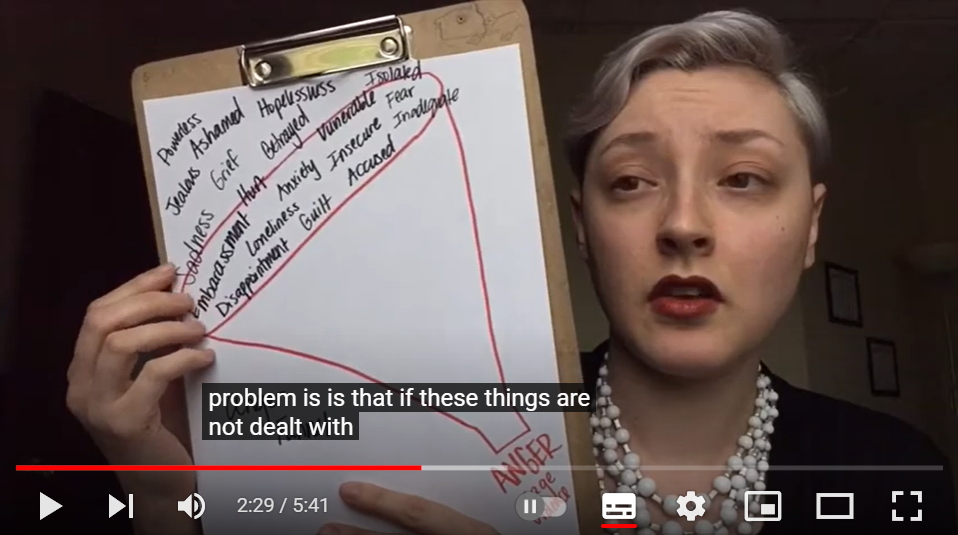
The anger funnel
Dr. Monica Vermani C. explains how “Anger appears when we feel the need to defend ourselves. It is a sign that something is wrong and needs our attention and consideration. Neither acting out anger nor containing it produces a desirable result. Anger demands our attention as it buries our most authentic primal emotions and prevents us from seeing ourselves and our situation clearly, and understanding what is going on inside of us.”
The Anger Funnel is one of the strategies that Dr. Vermani uses to help patients better understand and process their anger and relate to others in a more positive, authentic, and effective way.
With the Anger Funnel, the process of understanding and processing anger is less difficult. Learning to lift the general emotion of anger and explore our true feelings leads us to a better understanding and compassion for ourselves, and to healthier, more positive, effective, and authentic interactions with others.

Anger could be indicating the need to face situations from a different perspective. Learn to identify when we feel anger, you should be aware of the physical indicators, and understand what causes this feeling.
What to do when anger appears?
Dr. Vermani’s article is very useful and practical when giving recommendations to channel this feeling:
Take a step back, instead of acting angry.
Take some time to allow angry feelings to subside.
Use the anger funnel to explore underlying primary emotions such as sadness, disappointment, or fear that triggered your anger.
Acknowledge the true feelings beneath your anger.
Take steps to address problem situations in your life.
Seek the help of a mental health professional if you find that your anger is out of control.

If you want to have more tools to be able to have a healthy relationship with your feelings or seek to understand more about the subject, you cannot miss the following readings:
Anger Management : An Anger Management Training Package for Individuals with Disabilities
Word of the Day: bedlam
This word has appeared in 28 articles on NYTimes.com in the past year. Can you use it in a sentence?
September News Quiz for Students: The Queen, Tennis Greats, Asteroid Crash

Welcome to our new, monthly student news quiz! You can expect to find it the last school day of every month.
Above is an image related to one of the news stories we followed this month. Do you know what it shows? At the bottom of this quiz, you’ll find the answer.
Have you been paying attention to the news recently? See how many of these 15 questions you can get right.
1 of 15
On Sept. 8, Queen Elizabeth II, Britain’s longest-serving monarch, died at 96. She ruled for seven decades, unshakably committed to the rituals of her role amid epic social and economic change and family scandal.
Her reign overlapped the tenures of 15 British prime ministers — from to Liz Truss.
2 of 15

The war between Russia and Ukraine continued. In September, Ukraine launched an effective counteroffensive in the east and south, recapturing over 3,000 square miles of land.
Which of the following has Russia’s president, Vladimir V. Putin, NOT done in response to Ukraine’s recent successes?
Called up roughly 300,000 reservists to the military
Made a veiled threat to use nuclear weapons
Pushed for direct negotiations with President Volodymyr Zelensky of Ukraine to end the war
Staged sham referendums on Russian annexation in occupied areas of Ukraine
Enterprise Learning Systems – What does that really mean?

Enterprise.
The term, is ambiguous in its nature. What does a company who themselves may refer to as an “Enterprise” really mean exactly? Is it based on the number of employees? Or setup of operations? Multiple locations and LOBs (or divisions)? Is it all the above, none of the above, something totally different?
Trying to define “Enterprise” related to business, isn’t clear cut. Here is just a sampling of what I extracted off the net.
- Defined based on “Revenue” – In this angle, it is large enterprise only, there is no such thing as small or mid size enterprise.
- “A legal entity that has the right to do business. To create contracts and agreements. A for-profit company or organization. Can incur liabilities, own property, generate revenue.”
- “any type of operation that is involved in providing goods or services with the anticipated outcome of earning a profit” (Malcolm Tatum, https://www.smartcapitalmind.com/what-is-a-business-enterprise.htm). Malcolm adds that it doesn’t only apply to large enterprises, but any size of business.
I think you see the point here – no clear-cut definition, no “this is X and only X”.
What about Technology?
From a technology standpoint, it is a bit more clearer, but nowadays when a vendor says “Enterprise” they are not thinking from the technology standpoint
This is why solutions back in the early 2000’s called ERPs – SAP, Oracle, JD Edwards and Peoplesoft took off, especially SAP. An ERP, depending on the modules you purchased, could or should streamline your entire process of operations – connecting billing with accounting with supply chain/logistics and financial analytics for example, add human resources, oh how about some sales and customer service. They still exist of course, SAP, Oracle, the others, plus Workday (founded by the guy who founded PeopleSoft). Plus there are systems just for supply chain, and customer relationship – both are types of Enterprise solutions.
And again, the learning system vendor or e-learning provider?
When a learning system vendor when referring to an “Enterprise” system isn’t really focused on this angle (the tech one) – sure they may say it will streamline your learning or training, but it is about use cases here, and numbers – end users that drive the term “Enterprise”. Actually, let me change that, slightly. There are only a handful of vendors in the entire learning system space (what I refer to as Corporate – including for-profit, non-profit, associations) that base the term “Enterprise” for Revenue and Large Enterprise at that. For example, one vendor defines “Enterprise” as a company that does a minimum of 50 million dollars (USD) per year.
For me?
I think of “Enterprise” in terms of user bases, regardless of the size of the company, whether they are profit or non-profit – although I rarely hear someone say the term “Enterprise” and they are talking about a non-profit or an association for that matter, there are vendors who never stipulate the term itself, and that only adds to the confusion.
Then there are the customers, the clients to be or are. They themselves may not know what the term “Enterprise” really means. They hear it, they hear from the company, or somewhere and say, “Yes, we are enterprise”. But, it depends on the definition of what that company or whoever is presenting it to them, is “Enterprise”. Nowadays, due to the business world, you could be a for-profit business, with no physical location, and define yourself as an Enterprise. Heck, I could be a professional training operation, that hits a couple of “enterprise definitions”, and refer to myself as an Enterprise. True, I would actually be an “Extended Enterprise” – another legacy term that should be punted into the fields along with the Model T. Which is why, the new terms are “customer education/training, partner training, B2B”, and why I try to get vendors off the term “Extended Enterprise”, because I could be one person who sells content to other businesses, makes a lot of money, and slide under “Extended Enterprise”, which in of itself, isn’t clear cut.
You say Potato, I say POH-TA-TO
Enterprise does make a big difference in the learning system industry, depending on the vendor. It affects pricing. Feature-sets, opportunities for the vendor themselves.
Pricing, Features, Options
The approach goes this way – I sell an “Enterprise” version of my learning system. It may cost higher than the non “Enterprise” version (there are vendors who sell different versions, which is a whole other box of snakes). For the Enterprise version, it may be listed as having more features and capabilities and what you can have – such as premium support or dedicated customer manager, versus the non-enterprise version.
If you – the prospect/buyer wants all the above, but you do not see yourself as an “Enterprise” can you still buy it? Absolutely. A vendor would have to be in the non to make money business to demur. And even if their salespeople said that “No” to you, trust me hundreds of others will say yes.
Twist
Ahh the twist. There are vendors who have a minimum number of end-users, who if you do not slide to that minimum, they won’t sell their system to you. The number tends to slide in the 5,000 min. range. Is it a smart business move? Heck, no, because it is based on a faulty premise that higher user numbers means higher budget to purchase the system, which trust me, is not always the case. I know of a company with 1,800 users. Their budget? Nearly 1M dollars for a learning system. Another had 7,000 users. Their budget? 35 thousand dollars (35K).
Back to Enterprise – Vendor Wise
When I talk to any vendor, and they say “Enterprise”, I always ask them how they define the term. Sometimes I get “what do you mean” – which isn’t a good sign, and then leads me to say, how many users – which leads to me, “we base it on active users” – which unless they bill monthly (and some do) – is a total farce – because the bill annually, which you pay upfront. They will always want to the total number of users. It’s Pricing Bundle 101 (the #1 pricing model in the industry, regardless if they go range or not behind or publicly).
I will push, until the vendor gives me a number – whether it is users (common) or revenue (extremely uncommon).
The Number
If only it could be so simple. Everyone with the same numbers, would be a great start. Or close to the same numbers. Or, heck stay with the numbers over a period of time, like at least a couple of years, that would be good.
But, nope, not in our industry. No way.
Time Machine Enterprise Ship – BTW, why was the U.S.S. so lame in technology? I mean the Klingons and Romulans had stealth and what did we have? A captain with a bad toupee (sorry to tell you) and a ship that does warp speed.
2000 to 2010
The most common user numbers for “Enterprise” by learning system vendors (as a whole, and yes there is always variance)
10,000 users (regardless if they are employees, customers, apes – watch for Cornelius, I don’t trust him)
2010 to 2015
Anything over 5,000 – thus the 5,000 minimum
2015 to 2020
All of over the map, but generally a minimum of 1,000 users. A few vendors started at 500, one well-known vendor listed 300 or more as Enterprise.
2020-2021
Map time – pick a place, here we are. Generally though two numbers appeared the most
1,000 or 2,500 as Enterprise
Oh, same well-known vendor stayed with 300 or above.
2021-2022
Map it Carmen! 1,000, 2,500 or 5,000 as the minimum for “Enterprise” – Some vendors may say mid-market or mid-size enterprise for the lower numbers, then go Enterprise for 5,000 and Large Enterprise as 10,000 plus.
Guess what? Same well-known vendor went with 300 and above. It’s all about consistency.
2022-23
5,000. Although there are enough vendors who see 1,000 too.
Well-known vendor moved off of 300. It’s now a min. of 1,000.
Large Enterprise
The industry talks about (majority of vendors) behind the scenes. Even then the numbers aren’t fully clear, for those who do not look at it from a revenue standpoint.
How I define Large Enterprise
Min. of 25,000 users
Vendors?
Common ones – 10,000; 25,000; 100,000
And yes, there are vendors who see Large Enterprise as anything above 5,000.
I know of one vendor, who defines large enterprise as anything above 200,000.
I am Enterprise, you are Sputnik
I know some of you are thinking, “who cares, how the vendor sees me or how I see “Enterprise”. Well, I am going to tell you why you should care.
- Perception. It is very understandable to think when you say “Enterprise” and see “Enterprise” as say a minimum of 50,000 users, to think that the vendor themselves sees “Enterprise” as the same thing. OR you see yourself as an enterprise and have 2,225 users, and the vendor sees enterprise as 1,000.
Thus, the vendor says we have 1500 “Enterprise ” clients. That will impress. But… it is common to think what you define and think is “Enterprise” is the same as them. Now, if you think “Enterprise” is 5,000, because that is your user base, and the client says 1,500 enterprise clients, it is natural to think – impressive – the perception is the same as you. But, what if 1,410 of those enterprise clients are 850 users. And only five are 5,000, the rest below that. Are you still impressed?
- Features and Pricing – As noted earlier, you may be paying more for more features, etc. and thus price point is higher just under “Enterprise”. This appears BTW when vendors have tiered package pricing.
- It taps into very common propaganda techniques – including just like you and me – which is why you think X, the vendor is Y, but you think their client size as “enterprise” is like you.
What you can do you?
- Ask them. The salesperson should know what they – the vendor considers Enterprise to mean. They may ask, “what do you mean”, so tell them – you want to know what is the minimum number of users that the vendor considers to be the minimum for Enterprise. If they don’t know – find out who runs sales, get their name (first and last) and e-mail address. They will know. If the salesperson doesn’t want to give it out, or says, “they will find out”, decline, and ask for that information. You want or should want a vendor who is trustworthy. If they won’t tell you, then that isn’t very trusting is it? Transparency is the key here. Any every vendor knows what they consider Enterprise. If a vendor bases it on revenue, fine, give me a number.
- Now you know what Enterprise means to them. Does it match you?
- If they do tiered packages, with Enterprise being the call us, or however they spin it – and it offers more than say what you think you need, consider that you are not looking at today – you are looking down the road. Secondly, the features are already in the system, they just deactivated them. Lastly, pricing comes down to user base, again the active thing is a farce, unless they bill monthly – and that is a tiny percentage. As I say, how do they really know the active user base when they make you pay upfront? What Nostradamus is a direct relation?
If the vendor notes that their system is Enterprise or just says we sell an Enterprise system, and you are not what you think is enterprise, you should still ask what they define enterprise as. If nothing else, it will tell you clearly how transparent they are. Which isn’t such a bad thing. If they tell you, great, go forward if you like them anyone. If they won’t, then they are not for you. I mean if you can’t get a straight answer out now, what does that say down the road, when you run into a speed bump or what further responses on something?
Bottom Line
The industry loves the term “Enterprise”. Love it. Love saying it. Love messaging it. Love telling others about it.
Enterprise system. A system for learning enterprises. A system for customer enterprises (whatever that means, but let’s roll with it). A system for employees in the enterprise.
I call it Ad nauseam.
Then I ask,
Okay, so what do you define enterprise as?
Because if you don’t ask,
They won’t share.
And that isn’t ad nauseam,
it’s just stomach
churning.
E-Learning 24/7
VLOG: The Learner Variability Project
For today’s VLOG post, Cindy interviewed Jessica Jackson, Director of Professional Learning for the Learner Variability Project @DigitalPromise. In this video, Jessica talks about the concept of learner variability and walks through all the fun tools available through the Learner Variability Project, and in particular the Learning Variability Navigator. The Navigator is an evidence-based guide that shows the connections between different whole-child factors, with strategies and examples you can use to target different factors.
Throughout the video there are references to many different resources, which are linked below:
The Learner Variability Navigator: Our free open source tool that translates the science of learning into factors and strategies that educators can use to understand the learner variability they see in their classroom.
Teaching Students about Learner Variability: This guide shares how to teach students about learner variability and includes free resources and lesson plans.
Strengths Based IEPS: Our IEP project includes a guide and template for creating IEP’s that consider the whole child and leverages the Learner Variability Navigator to help identify students strengths and what strategies can support them.
Workspace on Assessment Anxiety: This workspace is an example of how you can use the Learner Centered Design tool to focus on certain factors and strategies for a specific purpose. This workspace features conversations with a coach and teacher about how to address assessment anxiety in her 6th graders. Learn how to make a workspace here.
Overview of the Learner Variability Project: This slide deck provides an overview of our project, features some of our key resources and our impact on educators in the classroom.
Coming soon our Learner Variability Navigator will include a professional learning section where you can access even more resources! If you are interested in professional learning for your school or district you can reach out to Jessica at jjackson@digitalpromise.org
What’s Going On in This Graph? | Oct. 5, 2022
Which elected officials should do more on climate change? What Americans say, in three maps.
