

Can you find Lebanon on a map? What else do you know about this Middle Eastern nation with about seven million people?
Lesson of the Day: ‘The Invasion of Ukraine: How Russia Attacked and What Happens Next’
Please note: We are continuing to update this lesson, and we also now have a place for young people to react, discuss and ask questions.
Lesson Overview
Featured Article: “The Invasion of Ukraine: How Russia Attacked and What Happens Next”
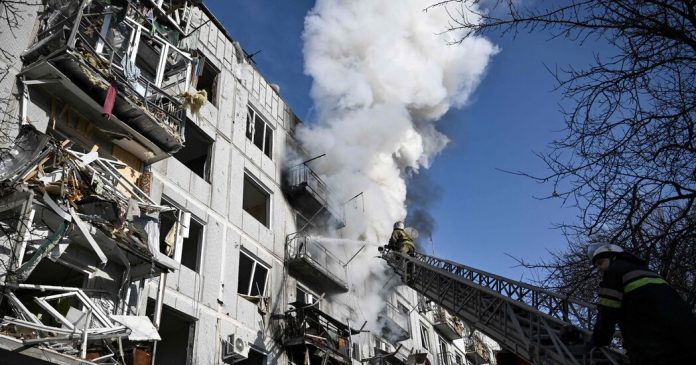
Early on the morning of Feb. 24 in Ukraine, Russian troops poured over the border, and Russian planes and missile launchers attacked Ukrainian cities and airports. The attacks spanned much of the country, far beyond the border provinces where there has been sporadic fighting between the nations for years.
Ukraine’s government called it “a full-scale attack from multiple directions.” In the Feb. 24 edition of his newsletter, The Morning, David Leonhardt wrote, “The most significant European war in almost 80 years has begun.”
In this lesson, you will learn about this invasion and its implications. Then you will follow the story via live updates as Ukraine and the rest of the world reacts to a military action that threatens serious consequences for the security structure that has governed Europe since the 1990s.
For additional background, take a look at our Jan. 26 lesson that helps explain key concepts like the Soviet Union, the Cold War, NATO and more. The Warm-Up, below, uses the same article for reference.
Warm-Up
The Russian invasion will upend the lives of 44 million Ukrainians. But the relevance of Ukraine, on the edge of Europe and thousands of miles from the United States, extends far beyond its borders. Its fate has huge implications for the rest of Europe, the health of the global economy and America’s place in the world.
Why might Russia, the United States and Europe care so much about Ukraine? With a partner or in a small group, make as long a list as you can think of. It might help to think about the following questions:
Where is Ukraine on a map of Europe? What is significant about its position? This piece, “How To Think About Ukraine, In Maps and Charts,” can also help.
What do you know about the history of the relationship between Russia and Ukraine? For example, was Ukraine once part of the Soviet Union? (This timeline can also help.)
What do you know about the political alliances in Europe right now? For instance, what is NATO, and is Ukraine a part of it?
What do you know about the economic relationships between Russia, Ukraine and the rest of the world? For instance, what important exports does Russia supply?
Once you have your list, take a look at the article we used for a Jan. 26 lesson plan, “How the Ukraine Crisis Developed, and Where It Might Be Headed.” Skim it to see how many of the items on your list are mentioned there. What more did you learn? What questions do you still have?
Questions for Writing and Discussion
Read the article, then answer the following questions:
1. The article begins, “After months of troop and tank buildups, of grim warnings of violence and vague assurances of peace, and of efforts at diplomacy in Washington, the halls of the United Nations and the capitals of Europe, Russia’s invasion of Ukraine began early Thursday morning.” Have you been aware of some of this? How much have you been following this story so far?
2. What does the article mean by calling the declaration by President Vladimir Putin of Russia “cynical” when it quotes his description of the invasion as a “special military operation” to “demilitarize” Ukraine but not occupy the country?
3. What is the state of the fighting? How are ordinary Ukrainians being affected? (Deeper answers to these questions, beyond what is in this overview, can be found in the Live Briefing.)
4. Why has Mr. Putin long sought control over Ukraine? What happened in 2008 and 2014 to complicate the situation?
5. Why does the prospect of Ukraine joining NATO infuriate Mr. Putin? (For more information, see this article.)
6. What events, starting last fall, led to the invasion on Feb. 24?
7. Ukraine, the United States and others have condemned Russia’s aggression and dismissed Mr. Putin’s justifications. What have they done in response so far?
First, we invite teenagers around the world to react to the attack on Ukraine in this forum. Post your own comment, or respond to the comments of others.
Then, because this is news story that will continue to develop, we recommend following it via these live updates. We also recommend delving into some of the history of the region in order to understand the roots of the invasion.
Students might choose an angle that especially interests them, and, via the links below and other news sources, learn as much as they can about it in order to report back to the class.
Here is a beginning list:
Economic Implications: President Biden has announced tough new sanctions aimed at cutting off Russia’s largest banks and some oligarchs from much of the global financial system and preventing the country from importing American technology critical to its defense, aerospace and maritime industries. Read about how sanctions work and what is at stake for the global economy. Check the live updates and find out: What other sanctions have been imposed by nations around the world? What economic implications has Russia’s attack had globally so far? What is SWIFT, and why is barring Russian banks from using it a powerful tool?
Historical Connections and Context: How has history influenced what is happening today, and how the world is responding? For instance, why might some be calling this conflict a “new Cold War”? Why might this war stir memories of past horrors for Ukraine’s Jews? Why is this invasion “unlike most wars in 80 years”? And why, according to four Times Opinion writers who discuss this situation via an audio roundtable, has “the world changed overnight”? What other historical roots and connections can you find?
Putin’s Rationale for the Attack: Mr. Putin has spun a narrative, much of which is fabricated or distorted, to justify Russia’s invasion of Ukraine. Fact-check Mr. Putin’s claims about Ukrainian statehood, the country’s path to nuclear weapons, genocide and more. Why might Mr. Putin make these baseless accusations? What might these invocations suggest about Russia’s goals, beyond war with Ukraine? Why does what he has said matter for the rest of the world? And how are Russian citizens reacting? (To track the invasion, follow these maps, which The Times continues to update.)
Global Response: How has the world responded to Russia’s invasion of Ukraine so far? How are Europeans reacting? What about Russian citizens? What role is the United States taking, and why? What implications might Russia’s relationship with China have for this conflict?
Life in Ukraine: What is it like to be in Eastern Ukraine right now as heavy fighting gets underway? This article, via pictures, descriptions of the lives of ordinary people, and even poetry, describes the moment. The video embedded above shows what it was like to be in the nation’s capital, Kyiv, as Russian troops advanced. The Feb. 24 edition of “The Daily” features live dispatches from Times correspondents in Ukraine as the attacks begin. And in a Feb. 25 Opinion piece, Veronika Melkozerova, a Ukrainian journalist, writes, “I’m in Kyiv, and It Is Terrifying.” What details in these stories stand out for you, and why? What can you glean about life in Ukraine, and how the invasion is changing it?
Beyond the Battlefield: How will the fallout of Russia’s attack affect the rest of the world? This article explains how, in addition to the anticipated bloodshed, the invasion could spur a rise in energy costs, Russian cyberattacks, a new refugee crisis in Europe and more. In what ways might the invasion affect you, the communities you’re a part of, or other ordinary people around the globe?
Chernobyl: Russia’s Defense Ministry said in a statement on Feb. 25 that its paratroopers had taken control of the territory around the former Chernobyl nuclear plant in northern Ukraine and were working with Ukrainian guards to ensure the safety of its facilities, contradicting Ukrainian claims that Russian forces were holding the plant’s personnel hostage. Chernobyl was the scene of the worst nuclear accident in history, when an explosion and fire in 1986 destroyed one of the plant’s reactors. The two countries have made opposing statements about what is happening there. Why are Ukrainian officials concerned? Read this article to learn more.
Your Choice: As this news develops, there will be a growing number of related effects to investigate, understand and help explain to others. Continue to keep up with the news, whether via Times live updates or any other reliable source.
Want more Lessons of the Day? You can find them all here.
UC Chile and Coursera announce three online master’s degrees focused on skills of the future 


By Betty Vandenbosch, Chief Content Officer, Coursera
Today, I am proud to announce three new Spanish-language degrees from Pontificia Universidad Católica de Chile (UC Chile) – the No. 1 university in Latin America. These are the first degree programs from a Chilean university on Coursera.
About 50% of Latin American firms cannot find candidates with the skills they need to remain competitive, compared to 36% of companies in OECD countries. These new degree programs from UC Chile are designed to help Spanish speakers in the region and across the world develop the skills necessary to succeed amid digital transformation.
These programs will open applications on March 8, 2022:
- Magíster en Ciencia de Datos (Master of Data Science) – Using cutting-edge computational tools, this degree trains learners in both the fundamentals and the application of data processing, modeling, and analysis. The curriculum will cover crucial topics such as programming, software engineering, data visualization, and data ethics. Graduates will be prepared to work in academia or as data engineers, data scientists, and data analysts at leading companies.
- Magíster en Analítica para los Negocios (Master of Business Analytics) – This program focuses on the technical foundations of computing and data analysis and its application to business. The curriculum includes digital business strategy, data analysis, machine learning, and analytical models. Graduates will be prepared to make data-driven business decisions in management roles.
Each program includes opportunities to learn from industry experts and engage with peers through group projects, forums, and networking activities.
“Our new online degrees on Coursera will enable UC Chile to transcend borders and reach people throughout Latin America and Spain, which gives our university an international reach,” said the Vice President of Academic Affairs at UC Chile, Fernando Purcell.
“This new initiative is very strategic for UC Chile. We’ll be able to bring the high-quality education UC Chile is known for to a broad, diverse audience,” said Patricio Donoso, Provost of Institutional Management at UC Chile. “These programs will help us reach many more students — beyond those who are able to attend our on-campus master’s programs.”
UC Chile is one of the most esteemed universities in the region and already offers 35 open courses on Coursera that have reached over one million learners. We are honored to expand our partnership to offer world-class degrees that will help Spanish-speaking students earn valuable credentials in emerging digital fields. With these new programs, Coursera now hosts eight Spanish-language degrees on the platform and remains committed to serving learners in Latin America and beyond with high-quality education from leading universities.
Versión en español:
UC Chile y Coursera anuncian tres maestrías en línea enfocadas en las habilidades del futuro
Por Betty Vandenbosch, directora de Contenidos, Coursera
Hoy me enorgullece anunciar tres nuevas maestrías en español de la Pontificia Universidad Católica de Chile (UC Chile), la universidad No. 1 de América Latina. Siendo estos los primeros programas a nivel maestría de una universidad chilena en Coursera.
Alrededor del 50% de las empresas latinoamericanas no pueden encontrar candidatos con las habilidades necesarias para seguir siendo competitivas, en comparación con el 36% de las empresas de los países de la OCDE. Estos nuevos programas de maestría de la UC Chile están diseñados para ayudar a los hispanohablantes de la región y de todo el mundo a desarrollar las habilidades necesarias para tener éxito en medio de la transformación digital.
Los programas que abrirán las inscripciones el 8 de marzo de 2022 son los siguientes:
- Maestría en Ciencia de Datos (Master of Data Science) – Utilizando herramientas computacionales de última generación, este máster capacita a los alumnos tanto en los fundamentos como en la aplicación del procesamiento, modelado y análisis de datos. El plan de estudios abarca temas cruciales como la programación, la ingeniería de software, la visualización de datos y la ética de los datos. Los graduados estarán preparados para trabajar en el mundo académico o como ingenieros de datos, científicos de datos y analistas de datos en empresas líderes.
- Maestría en Inversiones y Finanzas Aplicadas (Master of Investment and Applied Finance) – Este programa utilizará las técnicas más recientes para proporcionar una formación básica en finanzas e inversiones y su aplicación al mundo empresarial. El plan de estudios abarca campos como los mercados de capitales, el análisis financiero, las finanzas corporativas y las finanzas para la inversión. Los graduados estarán preparados para ocupar puestos ejecutivos en finanzas e inversiones.
- Maestría en Analítica para los Negocios (Master of Business Analytics) – Este programa se centra en los fundamentos técnicos de la informática y el análisis de datos y su aplicación a los negocios. El plan de estudios incluye estrategia empresarial digital, análisis de datos, aprendizaje automático y modelos analíticos. Los graduados estarán preparados para tomar decisiones empresariales basadas en datos en funciones de gestión.
Cada programa incluye oportunidades para aprender de los expertos del sector y relacionarse con los compañeros a través de proyectos de grupo, foros y actividades de creación de redes.
“Nuestras nuevas carreras online en Coursera permitirán a la UC Chile trascender las fronteras y llegar a personas de toda Latinoamérica y España, lo que le da a nuestra universidad una proyección internacional”, comentó el vicepresidente de Asuntos Académicos de la UC Chile, Fernando Purcell.
“Esta nueva iniciativa es muy estratégica para la UC Chile. Podremos llevar la educación de alta calidad por la que es conocida la UC Chile a un público amplio y diverso”, dijo Patricio Donoso, Provisor de Gestión Institucional de la UC Chile. “Estos programas nos ayudarán a llegar a muchos más estudiantes – más allá de los que pueden asistir a nuestros programas de maestría en el campus”.
UC Chile es una de las universidades más estimadas de la región y ya ofrece 35 cursos abiertos en Coursera que han llegado a más de un millón de alumnos. Nos sentimos honrados de ampliar nuestra asociación para ofrecer títulos de clase mundial que ayudarán a los estudiantes de habla hispana a obtener valiosas credenciales en campos digitales emergentes. Con estos nuevos programas, Coursera cuenta ahora con ocho titulaciones en español en la plataforma y mantiene su compromiso de servir a los estudiantes de América Latina y más allá con una educación de alta calidad de las principales universidades.
Word of the Day: meticulous
The word meticulous has appeared in 240 articles on NYTimes.com in the past year, including on Dec. 22 in “A Time Capsule Beneath a Lee Statue Reveals More Mysteries” by Eduardo Medina:
After about five hours of meticulous prying and poking, the time had come on Wednesday afternoon for Gov. Ralph Northam to lift the lid of a time capsule that had been hidden beneath a statue of Robert E. Lee in Richmond, Va., since 1887.
… The time capsule was first recovered last week by historians, who had failed to find it in September, when the statue was taken down. They strategized over the weekend about how to delicately recover the container from the 1,500-pound block of granite that it was nestled in.
But after an X-ray scan and careful chipping with power saws and wedges, the removal process was over.
Daily Word Challenge
Can you correctly use the word meticulous in a sentence?
Based on the definition and example provided, write a sentence using today’s Word of the Day and share it as a comment on this article. It is most important that your sentence makes sense and demonstrates that you understand the word’s definition, but we also encourage you to be creative and have fun.
Then, read some of the other sentences students have submitted and use the “Recommend” button to vote for two original sentences that stand out to you.
If you want a better idea of how meticulous can be used in a sentence, read these usage examples on Vocabulary.com.
If you enjoy this daily challenge, try one of our monthly vocabulary challenges.
Students ages 13 and older in the United States and the United Kingdom, and 16 and older elsewhere, can comment. All comments are moderated by the Learning Network staff.
What’s Going On in This Picture? | Feb. 28, 2022

1. After looking closely at the image above (or at the full-size image), think about these three questions:
2. Next, join the conversation by clicking on the comment button and posting in the box that opens on the right. (Students 13 and older are invited to comment, although teachers of younger students are welcome to post what their students have to say.)
3. After you have posted, try reading back to see what others have said, then respond to someone else by posting another comment. Use the “Reply” button or the @ symbol to address that student directly.
Each Monday, our collaborator, Visual Thinking Strategies, will facilitate a discussion from 9 a.m. to 2 p.m. Eastern time by paraphrasing comments and linking to responses to help students’ understanding go deeper. You might use their responses as models for your own.
4. On Thursday afternoons, we will reveal at the bottom of this post more information about the photo. How does reading the caption and learning its back story help you see the image differently?
The Reveal
We’ll post more information here on Thursday afternoon. Stay tuned!
More?
• See all images in this series or slide shows of 40 of our favorite images — or 40 more.
• Learn more about this feature in this video, and discover how and why other teachers are using it in their classrooms in our on-demand webinar.
• Find out how teachers can be trained in the Visual Thinking Strategies facilitation method.
Students 13 and older in the United States and the Britain, and 16 and older elsewhere, are invited to comment. All comments are moderated by the Learning Network staff, but please keep in mind that once your comment is accepted, it will be made public.
Prized Possessions

A recent Times article reported on bizarre stories of people being buried with their cars, with some saying they were inspired by accounts that ancient Egyptians were buried with their possessions. How do you feel about the idea of burying extravagant items with their owners after they die?
Do you have a deeply-beloved personal possession? What is it? How did you acquire it? Is its value monetary, sentimental or both?
Tell us in the comments, then read the related article to learn more.
Want more Picture Prompts? Find them all in this column.
Students 13 and older in the United States and Britain, and 16 and older elsewhere, are invited to comment. All comments are moderated by the Learning Network staff, but please keep in mind that once your comment is accepted, it will be made public.
Lesson of the Day: ‘Beyond the Statistics in Pedestrian Deaths’

This lesson is a part of our Accessible Activities feature, which aims to welcome a wider variety of learners to our site and to The Times. Learn more and tell us what you think here.
Lesson Overview
Featured Article: “Beyond the Statistics in Pedestrian Deaths” by Simon Romero
The United States is enduring its most severe increase in traffic deaths since the 1940s. Beginning in the summer of 2020, during the pandemic, crashes and deaths began going up.
In this lesson, you will learn about how the roads of Albuquerque became more dangerous for pedestrians during the pandemic. Then, you will study a graph about pedestrian deaths and try to understand the causes behind the issue.
Warm-Up
Reflect in Writing or Discussion
How often do you walk in your community? Daily? Weekly? Occasionally?
Do you walk to go to school, shop or socialize? How safe do you feel as a pedestrian — that is, someone traveling by foot — in your neighborhood? Why?
Vocabulary
Look at the eight words below. Do you know what any of them mean? Are any new to you?
1. pedestrian
2. avid
3. stunned
4. fender bender
5. abound
6. surge
7. onset
8. longstanding
9. fatality
To learn the meanings and quiz yourself, you can check out this Vocabulary.com list.
Questions for Writing and Discussion
Read the article below or use a link or PDF, then answer the following questions:
1. What were some of the things that Simon Romero, the reporter, noticed drivers doing in his community?
2. What happened last December in Albuquerque that gave him additional concerns about drivers and pedestrian safety?
3. When did pedestrian deaths begin to go up? What factors might have caused this increase?
4. What does Aditya Bhattacharya, Pronoy’s father, think should be done?
5. How do you feel after reading the article? How important is this issue in your community?
Going Further
Spend five minutes looking at the graph below. Then respond to the questions.
What do you notice about the graph?
What do you wonder about the graph?
What is your reaction? How does this graph connect to your own life and community?
What changes might have contributed to the rise in pedestrian deaths and to frustration and anger among drivers?
Extension: To learn what experts think is causing the increase in reckless driving, read this excerpt from the Morning newsletter, “Vehicle Crashes, Surging”:
“We’re seeing erratic behavior in the way people are acting and their patience levels,” Albuquerque’s police chief, Harold Medina, told Simon. “Everybody’s been pushed. This is one of the most stressful times in memory.”
Art Markman, a cognitive scientist at the University of Texas at Austin, said that the emotions partly reflected “two years of having to stop ourselves from doing things that we’d like to do.” He added: “When you get angry in the car, it generates energy — and how do you dissipate that energy? Well, one way is to put your foot down a little bit more on the accelerator.”
Rising drug abuse during the pandemic seems to play an important role, as well. The U.S. Department of Transportation has reported that “the proportion of drivers testing positive for opioids nearly doubled after mid-March 2020, compared to the previous 6 months, while marijuana prevalence increased by about 50 percent.” (Mid-March 2020 is when major Covid mitigations began.)
How accurate were your guesses? Are you surprised by this information? Why or why not?
Now think back to the questions in the warm-up. Do you feel any more or less concerned about the issue after reading the article and looking at the graph?
What do you think could be done to address this issue in your community?
Want more Lessons of the Day? You can find them all here.
What Is Your ‘Good Luck Charm’?

Above is a photo of Karen Chen, the 2017 U.S. national champion. She won a silver medal in the team event at the 2022 Winter Olympics after skating in the short program and the free skate. The red necklace she’s wearing, which has a rabbit made of jade, is a childhood gift from her mother. Ms. Chen says that she always wears it.
Do you have something like this necklace that comforts you or reminds you of someone special or that you believe brings you luck? If so, what it is? Where did you get it, and why and how does it help you?
In “‘I Just Feel the Best When I Wear Them’,” Juliet Macur writes about Ms. Chen’s jade necklace but also about the costumes she wears to compete, which are made by Hsiu-Hui Tseng, her mother. The article begins:
BEIJING — As soon as Karen Chen skates onto the ice, the dreaded feeling returns.
Her coach could be pounding on the wall of the rink to get her excited. Her family and friends could be screaming encouragement from the stands. The fans could be cheering her name.
Yet in that spotlight, standing there waiting for the music to begin, as she will in Thursday’s free skate of the Beijing Games, she still feels so very vulnerable.
“It’s only me, my body and my mind, and it just hits me that, ugh, I’m doing this by myself,” said Chen, a two-time Olympian and the 2017 U.S. national champion. “That can be so scary.”
She knows the remedy is close, so close that she carries it with her. A quick touch of her jade rabbit necklace and a glance at her costume remind her that it will be OK because her mother is out there with her, too.
Chen’s mother, Hsiu-Hui Tseng, gave her that necklace when Chen was 9 after her first serious injury in the sport, a chipped bone in her foot, and the rabbit is Chen’s Chinese zodiac sign. It’s meant to protect her, and Chen always wears it.
And her costume? That’s a different story, one stitched together over years of a mother’s love and support for a daughter who had an Olympic dream and now has realized it twice.
For most of Chen’s career, her mother has made her sparkling costumes that are carefully designed with Swarovski crystals that are the best for catching the light. There could be thousands of them on each costume, and each is individually glued on. The bigger ones are also sewn on, so they don’t fall off.
At this level of the sport, where dresses can cost several thousand dollars each — or more because, in some cases, Vera Wang has designed them — a homemade dress that can pass muster at the top level of the sport is a rarity.
There’s a lavender one with a deep V lined with shining butterflies and flowers, for a performance to “Butterfly Lovers Concerto.” Another, purple with a splash of white and fuchsia flowers that flows daintily across the bodice. A black one with a moody deep V design of dazzling blues on the front and a matching deep scoop on the back.
And one that’s among Chen’s favorites: a lavender dress with an ombré design that took Tseng multiple tries to perfect because she bought the fabric from a Jo-Ann store and dyed it herself. You can learn anything on YouTube, she said.
Chen, 22, wore meticulously mom-made dresses in both the short program and the free skate of the team event last week, when the United States won the silver medal. She can’t imagine wearing a dress made by anyone else.
“It’s hard to explain, but I just feel the best when I wear them,” Chen said, several days after arriving in Beijing.
Want more writing prompts? You can find all of our questions in our Student Opinion column. Teachers, check out this guide to learn how you can incorporate them into your classroom.
Students 13 and older in the United States and Britain, and 16 and older elsewhere, are invited to comment. All comments are moderated by the Learning Network staff, but please keep in mind that once your comment is accepted, it will be made public.
WEALTH FROM WASTES

Waste (or wastes) are materials that are unwanted or unusable.
“Waste is any substance which is discarded after primary use, or is worthless, defective and of no use.” – Wikipedia.
Every day, we generate waste.
Waste is anything that we no longer need or value and wish to discard; from the pizza carton, nylon bags, paper bags, leftover foods, to the much heavier industrial waste, we produce tons of waste on a daily basis.
In the United States, waste management has categorized wastes into four types:
Trash – Wet waste.
Garbage- Dry waste.
Refuse – A mixture of both wet and dry waste.
Rubbish- a mixture of refuse and demolition or dirt from a construction site.
According to the World Bank, Africa alone generates several million tons of waste each year, with the figure growing by the day.
Several methods have been developed in the past to deal with the waste produced by society, such as dumping sewage waste into rivers and seas, burning some other dry wastes, and so on.
These waste disposal methods have resulted in a number of disease outbreaks and environmental pollution. Waste has always been and will always be generated by humans; waste generation will never cease as long as we live; instead, waste production is increasing, particularly on the African continent, due to factors such as population growth, rapid urban and rural settlements, and rising levels of disposable income. It seems like with every development comes the production of waste. Waste is one of the products of human existence.
With the advancement of technology, several attempts have been made to manage waste in order to reduce the negative effects it has on our health and the environment, such as the ISO 14001 directive on proper waste management.
Waste management has recently become a very profitable business for some entrepreneurs, particularly in the waste recycling business. Waste recycling is the process of converting waste into items that can be reused, such as converting a pile of nylon bags into a plastic bowl for use in the kitchen. Several of these businesses can be found all over the world, particularly in Africa, where waste generation is much higher on a daily basis.
The waste industry is now a very profitable business, particularly in Africa, providing hundreds of jobs and a higher standard of living for many others.
From waste collection to waste recycling, there are numerous opportunities; indeed, there is wealth in waste, thanks to research and technology.
Some opportunities found in the waste industry are categorized under the following:
- Waste Collection – Every household, business, and the industry generates waste on a daily basis and must dispose of it. Previously, these wastes were dumped in a specific location for waste disposal; however, after a while, the wastes overflowed and clogged the drainage and roads. Due to environmental laws, most households and businesses are now willing to pay in order to properly dispose of their waste. This has created a business opportunity for many industries, which are now purchasing waste trucks to be used in the waste disposal business. This is a win-win situation for both waste generators and waste collectors, as well as a healthier, less polluted environment.
- Waste Processing- This can be either organic or inorganic.
Organic waste processing – Organic waste is waste that decomposes or biodegrades and can be obtained from the kitchen, restaurants, hotels, leftover food, vegetables, grasses, and animal waste. Composting is the process of processing organic waste, and the end product is the preferred form of fertilizer for the soil because it contains a high level of humus, which allows the soil to breathe. Composting is a natural method of converting organic matter into valuable organic fertilizer that can be used to enrich the soil before planting.
Inorganic waste processing – Inorganic wastes are non-degradable wastes such as rubbers, plastics, glasses, wood, textiles, and so on. When inorganic waste is collected, it is usually separated into different parts based on its type, and then cleaned and sanitized before processing begins. Metals, papers, plastics, textiles, and rubbers are separated. Paper bags, buckets, tires, and a variety of home decoration items are among the end products of inorganic waste.
The waste industry has benefited not only waste collectors and processors, but also the industries that provide the machines used in the processing and society as a whole.
Thanks to the waste industries, we now live in a cleaner and healthier environment.
So, the next time you trash your waste, remember that your waste is another person’s wealth!
Sources
THINK OUTSIDE THE BOX

“Think outside the box” is a popular phrase in the business sector, but it may also be applied to other aspects of life. It implies to think outside the box, to think outside the established norms and regulations, to think outside the set boundaries and standards.
“Thinking outside the box (also thinking out of the box or thinking beyond the box and, especially in Australia, thinking outside the square), is a metaphor that means to think differently, unconventionally, or from a new perspective. This phrase often refers to novel or creative thinking. The term is thought to derive from management consultants in the 1970s and 1980s challenging their clients to solve the nine dots puzzle, whose solution requires some lateral thinking”- Wikipedia
The origin of nine-dot puzzles can be traced back to 1914 or even before. The problem is an intellectual exercise that requires you to use a pencil to connect nine dots in a square design. The dots are to be connected with four straight lines, without lifting the pencil from the paper, until the last dot is joined.
The solution to the nine-dot puzzle is to draw lines that extend beyond the box; however, once found, it becomes clear that the solution is actually outside the box!
It is clear from the previous explanation that the phrase has more to do with problems and solutions. In this example, the box represents what we are used to, what we have been told is the proper way to deal with a problem, laws, and regulations, guidelines, risks, repercussions, rights and wrongs, feasible and impossible, causes and effects, and so on. The majority of these boxes represent teachings that have been passed down to us since we were children, therefore this is what we have always understood to be correct.
There are several counter-arguments to this statement. One writer claims that thinking outside the box is a flawed method of innovation because the phrase conjures up images of an imagined box that never existed, such as the nine-dot problem. The nine dots were all that existed until the four lines were drawn. The game’s participants limited the possible solutions to the spaces between the dots, forming an imaginary square. Even though they were not told not to, they did not perceive the white spaces outside the imaginary square. This act puts the participants in an unwanted, self-limiting scenario, preventing them from perceiving a feasible solution. He advised us to set the boxes on fire and act as if there was no box at all; after all, when faced with a threat, the human survival instinct is either fight or run; there is no in-between!
While some may agree with the previous argument, it is important to remember that the boxes are present in our daily lives, from our homes to our workplaces. We did not place these boxes there most of the time! We have been “boxed in”!
So, how do you think outside the “box” you have been “boxed in”?
- If the problem is related to your workplace, go to the library and search online for similar problems in other places, and industries unrelated to yours to see how such issues were handled. The solution might however require combining two options from your findings; be creative and explorative!
- Learn new things and expand your knowledge by taking courses that are unrelated to your current work. You never know when this will come in handy. Inquire, ask questions, and train your mind!
- Every book contains one or more lessons that can be applied to various life challenges. Do not wait until you encounter a challenge: read books or novels and pay attention to the problems and solutions in the story.
- It is said that the left side of our brain is more creative and rational than the right side of our brain, and writing is one way to develop the left side of our brain. Don’t just read; write a poem about the problem at hand, and then write down the solution you learned from your reading. The faintest ink is more potent than the sharpest memory!
- Putting a face to a problem allows you to see every aspect of the problem; in this case, the face is related to drawing. Drawing develops the right side of the brain, whereas poetry develops the left side.
- “He who asks a question is a fool for five minutes; he who does not ask a question remains a fool forever.” – Chinese Proverb. Choose the latter, and ask for feedback questions, and advice from colleagues, friends, and, most importantly, a child. A child will always give an honest, unbiased response to a question. Keep an open mind!
- Do you remember how you felt when you misplaced your car keys? You start thinking about where you have been, where you sat the last time, yes, that feeling! Everyone has it: the ability to recall; to think backwards in order to find a solution or to see where you went wrong. That is also beneficial if you want to think outside the box.
- Sometimes the problem confuses you and you go blank as if you have reached a dead end. When this happens, it is time to take a hot bath or go for a walk; you will feel refreshed and your focus will return.
Remember, “If everyone is thinking alike, then somebody isn’t thinking.” –George S. Patton.
Sources
https://en.wikipedia.org/wiki/Thinking_outside_the_box
https://www.lifehack.org/articles/featured/11-ways-to-think-outside-the-box.html
