A tornado outbreak tore through six states on Friday night: Arkansas, Illinois, Kentucky, Mississippi, Missouri and Tennessee. The greatest loss of life was in Kentucky, where Gov. Andy Beshear said on Monday that there were 74 confirmed deaths. Officials are still attempting to find victims and account for the damage; however, on Monday morning, about 26,000 customers in Kentucky were still without power.
In this lesson, you will learn about the tornadoes’ devastating impact. Then you will focus on one Kentucky community where people are pitching in to help one another.
Warm-Up
Part 1: Watch a video.
Watch this one-minute video about the toll of the tornadoes. Then respond to these questions:
Part 2: Study a map.
Spend five minutes scrolling through this article that shows interactive maps and videos of the damage. Then, choose one map or diagram to focus on. What is one thing you notice? What is one thing you wonder?
Part 3: Journal.
Have you ever experienced a natural disaster before? How does it feel to read the news about the tornadoes, and see photographs and videos of the damage? What do you imagine the people in these communities need most right now?
1. What happened last Friday night in Arkansas, Illinois, Kentucky, Missouri and Tennessee? What was one glimmer of hope after the tornadoes?
2. What happened at the Mayfield Consumer Products factory in Kentucky? Why were Darryl Johnson, and other family members of workers, particularly concerned about the situation at the factory?
3. What was the impact of the tornadoes? How have individuals and families been affected?
4. What did Paul Reagan, a retired steelworker, mean when he said, “There is no reason for us to lose family members because corporate America wants a dollar”? What does his statement reveal about how some community members in Illinois and Kentucky view the businesses that were in operation during the tornadoes?
5. How has the Mayfield Consumer Products factory responded to critiques about why it remained open during the storms? What do you think of its response?
6. How has the Latino community in Mayfield been uniquely affected by the tornadoes?
Going Further
Reflect on Community During Times of Need
Watch the three-minute video above. What do you find out about this community and the devastation that you didn’t learn from the other things you read or watched? What moments stand out for you?
Have you ever experienced anything like this, where people in a community you’re a part of came together to help others? What was it like? What memories stand out? What did you learn from the experience?
If you would like to help the victims of this disaster, you can learn about some of the organizations that are on the ground helping, and, perhaps, donate money or skills. Are there other ways that you, your family or your school community could pitch in? Create a plan and then talk to your teacher, classmates or family members about making it happen.
Additional Teaching and Learning Opportunities
Keep up with this story as it develops: Rescuers are continuing to tally the loss of life after the tornadoes, and there is a long road to recovery for the communities that have been most devastated. The New York Times is regularly updating this story via a live briefing, where you can find breaking news, maps, photos, advice about how to help and more.
Consider your emergency preparedness: How prepared do you feel to navigate a tornado or another natural disaster? Read this short article about what plans were in place during the tornadoes. Then, make a list of steps you can take to be prepared for a natural disaster. For instance, what might you put in a “go bag”? Does your school or community have a disaster plan? If not, tips from this article may help.
Learn more about the situation at the Amazon factory: Read this article that details some of the concerns that workers and community members have had about the factory. What questions does the article raise for you?
Explore why the role of climate change in tornado “clusters” is unclear: In recent years, tornadoes have been occurring farther east from the Great Plains’ tornado alley, and they seem to be occurring in greater “clusters” as well. Read this article to find out why Friday’s tornado system was unusual, and why scientists are not yet able to determine whether there is a link between climate change.
Want more Lessons of the Day? You can find them all here.
New program prepares students for entry-level business careers while providing a seamless pathway to an MBA
By Betty Vandenbosch, Chief Content Officer, Coursera
Today, we are pleased to announce an online Bachelor of Science in General Business (BSGB) from the University of North Texas (UNT). New research finds that learners are prioritizing flexibility and career relevance in postsecondary education. Meanwhile, as the twin forces of the pandemic and automation accelerate business transformation, business development professionals and business managers are among the top emerging job roles across industries. This fully online degree program from UNT is designed to equip students with a foundational business education, emphasizing real-world skills that prepare them for future careers in business.
The BSGB provides students with fundamental skills as well as hands-on, job-relevant learning. The curriculum will take a comprehensive approach, providing a solid foundation in accounting, business information systems, finance, management, and marketing to enable students to explore diverse job roles and career paths across industries. Students will also have the opportunity to pursue for-credit paid internships to gain first-hand industry experience.
“With a job-relevant curriculum and engaging online format, the BSGB meets the evolving needs of students who are looking for deep value, relevance, and career flexibility in a degree education,” said Adam Fein, Vice President for Digital Strategy and Innovation at UNT. “Our partnership with Coursera enabled us to rethink the delivery of a high-quality at-scale business degree, to make it accessible, affordable, and valuable for students across the world.”
To further improve access and opportunity, the program sets students up to seamlessly continue their learning journey with an MBA. Graduates of the BSGB who are admitted to the online or on-campus MBA program at UNT can earn their MBA with 36 credits, as opposed to 48. Students who complete the BSGB with a 3.5 GPA or better will also be provided direct entry into UNT’s on-campus MBA program without any testing or prerequisite requirements.
UNT has 75 years of experience in business education and is known for its inclusive approach — ranking in the top 100 nationally for social mobility and in the top 60 for diversity. The online BSGB builds on the university’s commitment to increase access to a top-quality education and follows the success of UNT’s online Bachelor of Applied Arts and Sciences (B.A.A.S.) on Coursera, which just last week celebrated its first 81 graduates. Announced two years ago, this program created one of the fastest, most affordable ways for transfer students, including non-traditional students with college credit, to complete their bachelor’s degree.
“The depression I had felt in 2020 will soon be replaced by excitement for where my career will go in the future […] I never realized how great it would feel to complete my degree. Though it may be 22 years later than I had originally planned, the satisfaction is not reduced. The UNT/Coursera B.A.A.S. program has changed my life and I will be forever grateful,” said Joseph Givens, a graduate of the UNT B.A.A.S. degree.
We are proud to expand our partnership with UNT to launch another degree program that will help more students acquire the skills they need to succeed in today’s digital economy.
Each Wednesday we shine a spotlight on five student activities that support a broad range of learners. In this week’s roundup of accessible activities, we invite students to learn about competitive double Dutch, share their favorite emoji, reflect on what they’re grateful for, analyze a photograph and watch a film about coming of age as a girl.
Note: To learn more about this new weekly feature, read our introductory post. Please share your thoughts in the comments section or by emailing us at LNFeedback@nytimes.com.
1. Learn about a double Dutch competition.
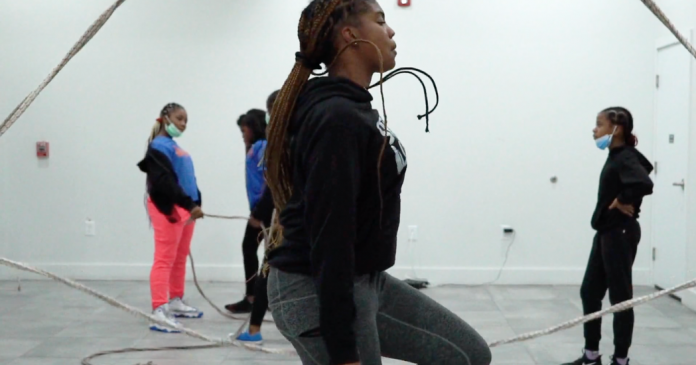
In this Lesson of the Day, students learn about New York City double Dutch teams preparing for the annual Double Dutch Holiday Classic at the Apollo Theater. Then, they will share creatively about their favorite sport or playground game.
2. Write about your favorite emoji.
Our Student Opinion prompt asks students to share what emoji they used the most this year and what they feel it communicates. Students learn about the year’s most popular emojis and can share their reactions, and personal favorites, in the comments section.
3. Share what you’re grateful for.
This Picture Prompt asks students to use an image to inspire their reflections on gratitude. They reflect on how often they think about what they’re grateful for and how easily, or not, gratitude comes to them. Students can share their reflections, and read the reflections of young people from around the world, in the comments section.
4. Decipher what is happening in a photograph.
What’s Going On in This Picture features a New York Times photograph that has been stripped of its caption. Students use their observational and analytical skills to try to figure out what is happening in the image.
5. Watch a film about coming of age as a girl.
In this Film Club, girls ages 14 to 17 open up about the excitement, confusion and anxiety of going through puberty today. After watching the film, students will respond to the question: What are the trials of growing up a girl?
In “Best Albums of 2021,” Jon Pareles, Jon Caramanica and Lindsay Zoladz reviewed Tyler, the Creator’s album “Call Me if You Get Lost.”
A life of luxury can’t mollify Tyler, the Creator. He’s no longer the trolling provocateur he was a decade ago when he emerged with Odd Future, but he’s still intransigent and high-concept. After singing through most of his 2019 album, “Igor,” he’s back to rapping, now simulating a mixtape with DJ Drama as hypeman. In his deep voice, he raps about all he owns and all he can’t control — mostly romance — over his own dense, detailed productions, at once lush and abrasive. The album peaks with an eight-minute love-triangle saga, “Wilshire”: a raw confession, cannily orchestrated.
This comedy about a Korean Canadian family started out as a play and ended abruptly after its fifth season, when the creators, Ins Choi and Kevin White, left the show. Despite some unevenness over its 65 episodes, “Kim’s” was most often a low-key kind of show, gently paced and easy to like, a single-camera comedy that felt like a multicamera one in style and approach. But it was still packed with genuine and potent tensions, especially between Appa (Paul Sun-Hyung Lee) and Jung (Simu Liu), the stern father and his mostly distant son.
Loosely translated as “the hustle” or “the struggle,” the concept of “la brega” is a point of common heritage and a point of departure in this expansive story collection and love letter to Puerto Rico. Produced in English and Spanish by a collective of Puerto Rican journalists and hosted by Alana Casanova-Burgess, each episode of “La Brega” creates a transporting sense of place. Rich and under-examined American histories abound in its stories of pothole fillers, political activists and basketball heroes who navigate their own versions of the struggle, many of which trace back to the very idea of a self-governing territory in the United States.
Students, scan some of the sources of inspiration we’ve included above.Then tell us:
Which articles did you choose to read? Do you agree with the reviewers’ selections? What else would you want to include on those lists? Is there anything you would eliminate? Why?
If you were making your own “Best of 2021” list, what would be on it? What art and culture did you enjoy this year? What world, national or local events fascinated or inspired you? What breakthroughs in science or technology excited you? What would be your headline for the year?
What would be on your “Worst of 2021” list? What happened in the news that would make the list? What annoyed you about pop culture or sports?
What happened in your own life this year that was wonderful? What aspects of your personal, family or school life will you be happy to leave behind in 2021?
Want more writing prompts? You can find all of our questions in our Student Opinion column. Teachers, check out this guide to learn how you can incorporate them into your classroom.
Students 13 and older in the United States and Britain, and 16 and older elsewhere, are invited to comment. All comments are moderated by the Learning Network staff, but please keep in mind that once your comment is accepted, it will be made public.
Have you ever seen, read or heard about a conspiracy theory? Do you believe in any? How concerned are you about people falling for them? Are they something that you, your family or your friends take seriously?
The Birds Aren’t Real movement contends that birds don’t exist and are really drone replicas installed by the U.S. government to spy on Americans. Hundreds of thousands of young people have joined the movement, wearing Birds Aren’t Real T-shirts, swarming rallies and spreading the slogan.
But is the movement real or is it a satirical comment on the absurdity of our post-truth world?
In this lesson, you will learn about this Gen Z-fueled conspiracy theory and what it says about our current society. In Going Further activities, you will share your own experiences of coming-of-age in a time of misinformation and make a recommendation for the best way to tackle the spread of conspiracies.
Warm-Up
Have you heard of the conspiracy theory known as Birds Aren’t Real? If so, what has been your reaction?
Before reading the featured article, take a few minutes to explore the Birds Aren’t Real website. Then, respond to the following prompts in writing or in discussion with a partner:
What did you learn about the Birds Aren’t Real movement? In your own words, what does the organization promote?
What’s your reaction to the website? What were your thoughts and feelings as you clicked through or watched the videos?
Do you think the Birds Aren’t Real conspiracy is real? What evidence supports your conclusion?
1. Who is 23-year-old Peter McIndoe and why did he create the Birds Aren’t Real conspiracy? Ms. Lorenz writes that Mr. McIndoe was “marinated in conspiracies.” How did his personal biography influence his fictional creation?
2. How did Birds Aren’t Real grow from a “spontaneous joke” to a viral movement?
3. Mr. McIndoe said, “A lot of people in our generation feel the lunacy in all this, and Birds Aren’t Real has been a way for people to process that.” Do you agree? Is it a helpful way to process the absurdity of the endless misinformation you see and experience online?
4. Why have others, like Cameron Kasky, 21, an activist from Parkland, Fla., joined the Birds Aren’t Real movement? How have members “become a political force” according to the article?
5. Why did Mr. McIndoe choose “to reveal the parody” behind his conspiracy now? What are his hopes for next steps?
6. The article concludes with a quotation from Mr. McIndoe:
“We have been intentionally spreading misinformation for the past four years, but it’s with a purpose. It’s about holding up a mirror to America in the internet age.”
Do you agree? In what ways does the Birds Aren’t Real movement hold a mirror to America? What does it show and reveal?
7. The article prompted many comments from Times readers. Robert Conger from Michigan wrote: “This is one of the most inspiring things I have read in awhile. These people are America’s future. You have to recognize the absurd to know the truth.” However, Yellow Dog in Oakland, countered: “I am more often confused by sarcasm than amused by it. Sorry to be a spoiled sport, but I doubt that many conspiracy theorists realize that this project is a joke. More conspiracy theories seems the last thing we need now. When you fight fire with fire, you’re likely to get burned.”
Which of the two reader comments resonates most for you? Do you think Birds Aren’t Real is inspiring? Or does parody fail if people don’t understand it? Do you think the movement is an effective form of media literacy?
Going Further
Option 1: Share your thoughts, opinions and experiences.
Respond to one or more of the following prompts in writing or through discussion with a partner or group:
What is it like to come of age in a time of misinformation and conspiracies? How do you process the madness of life online?
Why do you think conspiracy theories have become so popular on sites like YouTube, Facebook and Instagram?
Do you believe in any conspiracy theories? Have you seen conspiracy theories featured in videos, memes, podcasts or talk shows? How do you know when to quickly dismiss a theory as unfounded or absurd — and when to consider if there’s any truth behind it?
How concerned are you about people believing in conspiracy theories? Do you think conspiracy theories are just fun and interesting, or do you think they can lead to serious consequences? Are they ever dangerous?
Read one or more of the linked articles, or do your own research into fighting misinformation. Then persuasively present your case for the most effective way to tackle the spread of conspiracies and misinformation.
Option 3: Watch a film.
In the 10-minute Opinion video “What Do We Do About Q?” Kirby Ferguson argues that while QAnon conspiracy theories might seem ridiculous, the consequences are real.
Watch the film, and then discuss with a partner: What did you learn about why people believe in conspiracy theories? How persuasive is Mr. Ferguson’s argument? How did it add to or change your views on conspiracies and how to fight them? What questions do you still have about conspiracy theories?
Note to teachers: Please watch the film in advance to make sure it is appropriate for your students.
You can also find a media literacy lesson on the featured article by the News Literacy Project here.
Want more Lessons of the Day? You can find them all here.
What are you giving this holiday season? What are you hoping to get — or, what have you already received?
Are you the sort of person who would like to be gifted material objects — or would you rather receive experiences of some kind? What, in your opinion, makes a great present?
Tell us in the comments, then scan The Times’s 2021 Holiday Gift Guide for ideas — or read this piece by a woman who learned during the pandemic that one’s “presence is much more valuable than presents.”
Want more Picture Prompts? Find them all in this column.
Students 13 and older in the United States and Britain, and 16 and older elsewhere, are invited to comment. All comments are moderated by the Learning Network staff, but please keep in mind that once your comment is accepted, it will be made public.
noun: something that bulges out or is protuberant or projects from its surroundings
noun: the act of projecting out from something
_________
The word jut has appeared in 13 articles on NYTimes.com in the past year, including on July 15 in “Basketball Is Nothing Without Net” by David Waldstein:
One of the most gratifying sounds in sports is the whoosh of a basketball snapping the netting on a perfect swish.
Take away the net and all that’s left is the unsatisfying silence of a ball pushing air molecules around as it sails through the rim. Did it even go through? Sometimes it is hard to tell.
… Across the city, some rims jut out into space unadorned with twine. Some do have nets, whether bought and attached by civic-minded individuals like Amador, or provided by a school, a generous physical education teacher, or another anonymous donor.
Daily Word Challenge
Can you correctly use the word jut in a sentence?
Based on the definition and example provided, write a sentence using today’s Word of the Day and share it as a comment on this article. It is most important that your sentence makes sense and demonstrates that you understand the word’s definition, but we also encourage you to be creative and have fun.
Then, read some of the other sentences students have submitted and use the “Recommend” button to vote for two original sentences that stand out to you.
If you want a better idea of how jut can be used in a sentence, read these usage examples on Vocabulary.com.
Students ages 13 and older in the United States and the United Kingdom, and 16 and older elsewhere, can comment. All comments are moderated by the Learning Network staff.
Iain Batten is an Alison Learner from South Africa. His remarkable story of overcoming educational challenges, from dyslexia to outdated institutional biases, is an incredible tale of perseverance, commitment and the importance of education.
As if his story wasn’t inspirational enough, Iain has also beaten cancer three times and is currently taking the fight to a recent multiple sclerosis diagnosis.
Iain spoke to the Alison Blog to share his incredible story in the hopes of encouraging others to never give up hope in education and to never stop fighting.
Hi Iain, it’s great to get to be able to share your remarkable story. Can you tell us a bit about yourself and your journey?
My name is Iain Batten and I live in South Africa. I am a single father and grandfather of two beautiful girls and three grandkids. I came into this world with a lot of difficulty! My mother was in labour for days and eventually the doctors pulled me out using steel forceps. This resulted in brain damage to the left side of my temporal lobe and cortex. I grew up in a loving Christian home, the middle of three children. Growing up, I knew I was different and I was an extremely angry person at times.
I battled through school, only passing three subjects out of nine in Grade 8. I was caned by teachers every day for failing tests and I was called stupid, idiot, and other vile names by those teachers who were supposed to be teaching me. I was told that my life wouldn’t amount to much because I was stupid and couldn’t pass anything. This made me very aggressive at school. I was eventually diagnosed with severe dyslexia. At 16 years of age, I was told I had the reading average of a 10 year old.
I have always had a fascination for criminology and my dream was to become a profiler or psychologist. Unfortunately, my school marks weren’t good enough for me to pursue my passion as no university, college or any other learning institute would accept the marks that I achieved.
I followed the retail fashion career path, first as a trainee manager in one of the biggest retail fashion stores in South Africa. I quickly rose through the ranks and become a store manager. I went on to become an area manager in charge of thirty stores throughout South Africa. I studied through the company and I got my Sales Manager and Franchise Manager diplomas.
I had spent 25 years working in the corporate environment and held the position of Operations Manager when a severe illness ripped through my body and my life. I am a very proud cancer survivor and multiple sclerosis warrior. I was born a fighter who has lived with being dyslexic and has beaten cancer. I can beat MS.
Your story is truly empowering. How did Alison enter your life?
I was helping a friend who was looking for an institution for her friend to learn English for free. I googled loads of institutions and came across Alison. Alison looked good and had very positive reviews, so I sent her the link. I then had a light bulb moment and decided to look into what other courses Alison offered. I was hooked from then on.
What was your first course on Alison, and why did you choose it?
I have always wanted to pursue my passion for criminology and so I studied a Forensic Psychology Diploma through Austin Peay State University, Texas. I achieved a 90% average for my course over the year, which included assignments and research articles. This gave me tremendous confidence to pursue other areas of psychology.
I am now onto my fourth course with Alison and I love every moment. I have been in and out of hospital having been diagnosed with a very aggressive type of skin cancer. I am no stranger to cancer, having beaten testicular cancer in 2004 and lung cancer in 2009.
I have also recently been diagnosed with multiple sclerosis, which affects the central nervous system. It’s an autoimmune disease in which the immune system attacks its own healthy cells. There is no cure for multiple sclerosis but many people are able to manage their symptoms and adapt to new lifestyles after their diagnosis. The worst parts are the brain fog, depression and the constant pain.
Alison courses help to keep me motivated. They allow me to be able to say I achieved something and focus a force of determination in me that drives me to get up and do the studying and to pass well! It keeps my mind off the pain I am going through.
What’s your favourite way to relax from studying?
Definitely listening to music. It has always been my go to place when I am in pain or depressed. Getting lost in songs soothes my mind. I also enjoy walking and reading crime books.
Where are you working and what are you studying now?
At the present moment I am unemployed. Pre-covid I was a motivational speaker, life coach and ran a registered non-profit organisation called African Survivor Foundation. I have given cancer talks to schools, companies and churches and have taken part in survivor walks and motivated other cancer survivors to let their voices be heard as I honestly believe that that is why we were spared. To break the stigma that is still attached to the word cancer.
I have been through so much in my life, including the stigma I suffered because of the cancer on my face, that I want to make a positive contribution to people going through the same thing and that’s what drives me. I have lost everything and I am currently staying with some friends in their garage, but I will never give up.
I am studying everything to do with Psychology and Counselling, as this is where my passion lies. Throughout my life I have counselled many people and have had great success with it.
What’s next for you, in terms of education or work?
To get out of the hole I find myself in and to pursue my passion. I am in the process of setting up a website that displays my passion for psychology and criminology. I am also going to continue my work as a life coach and a motivational speaker. I am also looking at self-publishing my articles in the form of ebooks.
If you could learn absolutely anything in the world from an Alison course, what would it be?
What would you say to someone if they asked you about Alison? Would you recommend it and why?
Yes, I would highly recommend Alison to anyone who wants to upskill for a higher job position or wants to make sure they have the best skills for a new job posting and beat the competition. The way Alison courses are laid out and presented is very user friendly. It’s also nice that you can do the courses at your own pace and online. You get to choose your schedule and you can let life happen around you while you are studying.
Learning to code can be challenging. Not only do you have to learn syntax, but there are so many new concepts to learn as well, and many of them don’t relate to anything else you’ve studied in the past.
Struggling to learn code is completely normal and expected. Most beginners go through at least one rough patch (and often several) while they’re learning to code, but the good news is that a lot of these rough patches involve similar obstacles. Even professional developers with years of experience run into some of these problems.
In this article, we look at 10 of the top obstacles beginners face when they’re learning how to code, and how to overcome them
1. You have trouble finding the time to code
For many new developers, it can be challenging to find the time you need to learn how to code. The key to overcoming this obstacle is to have a goal in mind. Envision where you’ll be when you’ve mastered a new programming language and all the new opportunities you’ll have with your new skills.
If that seems too far away, you could focus on building a coding passion project. While you might’ve already completed a few projects in your coursework, finding a project you’re excited about will help keep you motivated and engaged in your learning.
It’s also worth keeping in mind that finding the time to learn any new skill ultimately comes down to discipline. Try looking at your schedule, especially when you have nothing to do or when you’re switching from one task to another. Most people can find time if they look.
Once you find a good time to study, stick to it. Learning only when you can find the time never works. Make the time.
2. You want to learn too fast
Being motivated to learn how to code will help you get through the rough spots, but you can also take it too far. When you’re learning to code, you have to crawl before you can walk. Remember — you’ll get there, but you need to start with the basics and build your skills. Many of the courses in our course catalog are designed for beginners and will make sure you start your coding education with a firm foundation.
Roy, an active member in the Codecademy forums, has noticed this obstacle with many new programmers:
“Too many learners bite off more than they can chew and want to soar before they have wings, so they fall flat on their face. There is so much evidence of this it can be found on any given day, learners taking on concepts they have neither an understanding of nor the necessary background preparation. Why they insist on jumping in the deep end rather than treading water or learning the basic strokes is a mystery but speaks of their ambition. They struggle with it rather than cool their jets and hammer out the rudiments.”
3. You get frustrated
If you ask a seasoned developer, we’re willing to bet they’ll tell you that getting frustrated with coding is simply part of the process, and it’s something you have to get used to.
Just remember that you’re a beginner. Everyone was “bad” at coding in the beginning. You can always ask team members, the coding community, or the QA department for help. (See #8.)
Also, know that every company building applications today usually has a QA department working full-time. So bugs are expected, even in code written by professional developers.
4. Imposter syndrome grabs ahold of you
When coding becomes a struggle, you might think you aren’t cut out for a career as a developer. This lack of confidence is common, especially when you’re just starting out. In fact, it even has a name — imposter syndrome. But, don’t give up! If you fail, that’s okay. You may even find that you learn more from your mistakes.
Nathan, a Codecademy forum member, suggests remembering these three things:
“Failure is okay.”
“Brilliance in the basics is a key to success in anything.”
“It also means that doing the little things right often leads to doing big things right.”
5. You use Google to help you code a lot
If you’re someone who turns to Google for help when you’re stuck, you might think this means you’ll never cut it as a developer. Wrong! You’ve just stumbled upon the #1 tool in the professional developer’s toolbox.
Even coding tests in many technical interviews will allow you to search with Google. The syntax, keywords, and methods of programming languages are hard to remember, but as long as you know where to look for the answer, you’re on the right path.
Malachi Constant, another member of our forums, agrees with this:
“Wholeheartedly agree though, it can be frustrating sometimes too buuut a large part of coding is figuring out the problem and a whole lot of googling/stack overflow…”
6. You aren’t motivated to learn
A lack of motivation makes it especially hard to learn to code. While we all have different things that get us motivated, one thing that might help you is to surround yourself with people who are passionate about coding.
Try socializing with other developers who are building something interesting, and pick up some of their excitement to learn. Find a time slot every day to code and put it on your calendar. As you build your skills daily, you’ll be able to do more things with code and see the possibilities, which will fuel your motivation.
7. You have trouble remembering what you learn
Learning to code is slightly different than learning other topics that require a lot of memorization. With programming, the best way to learn and retain your new skills is by writing code.
Programming is a very abstract subject. You’re turning text into actions and graphics on the computer, representing something in the physical world. There are at least two layers of abstractions here, and getting your hands dirty with code will help everything “click.” Try some coding challenges and complete some coding projects to practice.
“Take notes, but they don’t have to be on paper. Good note taking is essential to getting the most out of your study. Sometimes it’s good to take notes while studying, sometimes it’s good after. I find that audio memos help me tremendously, and for certain things, even video notes help me also. “Talking” a problem out while drawing it on paper is another good thing to try if you haven’t.”
We’ve already told you one of the secrets of professional programmers: Google is their best friend. But, many of them also turn to Stack Overflow.
Stack Overflow is a great resource for developers. Every dev has issues once in a while, and the Stack Overflow coding community is happy to help you find the answer. All you have to do is ask.
While we’re on the topic of asking, check out our own coding forum, where you can find help from other coders who are on the same path as you.
“Your community is here for that exact reason. Mind, because there is a huge diversity of expression, we might have to grow a thick skin and learn tolerance and empathy. It also means we have to be willing to admit confusion. Nobody is judging our code on anything but its own merit. That never reflects on the writer.”
9. You don’t know what technology to start with
It can be difficult to decide which programming language to learn and which one matches your strengths and interests. It can also be challenging to figure out exactly what you’ll be able to do with your new skills. And all this confusion can, understandably, lead to indecision.
Once you’ve narrowed this down, you can start researching specific job titles and looking at the skills you’ll need for those roles. You can also look into our Career Paths, which include courses that teach the skills you’ll need to successfully start out on your new journey. Here are a few of the Career Paths we offer:
Codecademy can help those struggling to learn code
Running into obstacles as you code doesn’t just happen to beginners. All programmers — even those who’ve been coding for years — struggle from time to time. It’s completely normal and expected, and the key to overcoming those struggles is to stick with it. You’ll get there with patience and dedication.
Still, there’s a difference between learning on your own and being guided along the right course while you learn. Here at Codecademy, many of our coding courses are designed specifically for beginners. Try one of our courses, and if you need support along the way, you can find peers who have made it through the struggles you’re going through and are willing to help out in our forums.









 At the present moment I am unemployed. Pre-covid I was a motivational speaker, life coach and ran a registered non-profit organisation called African Survivor Foundation. I have given cancer talks to schools, companies and churches and have taken part in survivor walks and motivated other cancer survivors to let their voices be heard as I honestly believe that that is why we were spared. To break the stigma that is still attached to the word cancer.