fbpx
Home Blog Page 1210

Trending online courses in business, data science, tech, and engineering

0
Trending online courses in business, data science, tech, and engineering

With more world-class content launching every week, there are always new topics to explore, new skills to learn, and new ways to achieve your goals. These latest courses, Specializations, and Professional Certificates cover everything from business management and online teaching to data engineering and AI product management. What will you learn next?

Business

Digital Transformation Certificate from Dartmouth College

Gain the knowledge and skills necessary to facilitate strategic and impactful change in your organization. Identify challenges associated with building data analytics, artificial intelligence, and machine learning capabilities, and discover ways to develop digital transformation strategies to solve these challenges. Through hands-on projects and applications, you will develop the skills and tools needed to successfully manage digital transformation journeys, and you’ll benefit from access to simulations and optimization tools that utilize cloud technology. You’ll explore digital product design and development and examine its relationship to agile project management, and learn to create the metrics that are a critical part of any organization’s transformation efforts.

Introduction to Business Specialization from the University of California, Irvine

In this popular beginner-level Specialization, you’ll develop management, leadership, finance, and digital marketing skills that can translate to the successful operation of a business. Learn the basics of running a business and develop new strategies for improving an organization’s growth and profitability by analyzing financial statements, creating forecasting and budgeting, and embracing digital marketing best practices.

Data-Driven Decision Making Certificate, from the Indian Institute of Management Kozhikode

Build the foundational skills needed to transform data into actionable business insights that can help grow your business. Develop your quantitative decision-making skills through the use of business intelligence tools designed to maximize the effectiveness of your organizational strategy and operations. Identify the issues in decision-making where data-based analysis is most impactful, and develop the skills needed to communicate data quality issues and collection methods with confidence. You’ll learn techniques for interpreting statistical findings in a rigorous, clear, and concise manner, refine your ability to communicate your findings to non-technical audiences, and explore how to turn those findings into managerial actions.

Connected Planning for Business Transformation Specialization from Anaplan

Build valuable business strategies and planning skills in the new Connected Planning for Business Transformation Specialization from Anaplan. Learn the principles and benefits of connected planning, get hands-on experience with real-life case studies from a wide range of industries and functions, and explore the organizational imperatives critical to successful connected planning adoption.

Digital Transformation Certificate from the Indian Institute of Technology Bombay

Build the leadership and technical skills needed to evolve your organization’s technology stack develop your ability to successfully lead new initiatives that achieve business goals. Learn to leverage new and emerging digital technologies to power organizational growth, increase efficiency, and reduce costs as you gain the skills to succeed in technical leadership roles. This program is designed for learners with at least three years of work experience and an understanding of basic digital technologies.

Introduction to Risk Management  from the New York Institute of Finance (NYIF)

Gain essential knowledge to measure, assess, and manage risk in your organization. Learn how risks are measured and gain an understanding of the goals and benefits of risk management. Understand various types of financial risks and their sources, and explore how firms manage risks. You’ll learn about the four main types of financial risk and the best measures to gauge different risk types and set risk limits. You’ll also learn how investment managers maximize portfolio returns while keeping risk within their tolerances and then apply these techniques to a portfolio you will construct. Experience with MS Excel, a basic knowledge of statistics and probability, and familiarity with financial instruments is recommended.

Online Learning Design for Educators Specialization from Macquarie University

This Specialization is designed for teachers and educators who are new to online learning, and those who are preparing to adapt existing learning resources to an online learning environment. Gain the foundational skills required to design, develop, and deliver an effective and engaging online course or lesson in an online learning environment and explore new strategies to help learners feel connected and motivated to learn.

Data Science

AI Product Management Specialization from Duke University

In this beginner-level Specialization, you’ll explore questions of when and how AI can be applied as you learn to speak the language of data and analytics and develop your ability to work in cross-functional teams on machine learning projects. You’ll learn the data science process as well as industry best practices for leading machine learning projects. You’ll also develop competency in designing human-centered AI products which ensure privacy and ethical standards. You’ll build a foundational understanding of what machine learning is, how it works, and when and why it’s applied. Professionals and aspiring professionals from a diverse range of industries and functions, including product managers, engineering team leaders, executives, analysts, and more, will find this program valuable. 

Hands-on Foundations for Data Science and Machine Learning with Google Cloud Labs Specialization from Google Cloud

Master the basics of BigQuery, learn about building and optimizing warehouses, and get hands-on practice on the more advanced data integration features available in Cloud Data Fusion. Learn best practices for querying and gaining insights from your data warehouse in the interactive collection of BigQuery Google Cloud Labs Series, and leverage Google Cloud’s Qwiklab platform, where you’ll have the virtual environment and resources needed to complete each lab. 

DataOps Methodology from IBM

Learn best practices from IBM experts for defining a repeatable and business-oriented framework to provide delivery of trusted data. Understand how to enable the organization’s business, development, and operations to continuously design, deliver and validate new data demands.

Hands-on Machine Learning with Google Cloud Specialization from Google Cloud

In this Specialization from Google Cloud, you’ll get hands-on practice with machine learning as it applies to language processing. You’ll practice with machine learning at scale, and learn how to employ the advanced ML infrastructure available on Google Cloud.

IBM Data Engineering Professional Certificate from IBM

Learn from experts at IBM and develop the job-ready skills to land an entry-level data engineer position. You’ll build familiarity with essential tools and techniques and expand your professional portfolio as you prepare to take advantage of the increasing demand for data engineering talent (up 50% in the last year, as reported by DICE). Using programming languages like SQL and Python in hands-on labs and projects, you’ll learn how to perform the key tasks required in a data engineering role.

Analyzing and Visualizing Data in Looker from Google Cloud

Learn from experts at Google how to perform data exploration and analysis in Looker to find relevant content in your organization’s Looker instance. After completing this course, you’ll know what questions to ask about data findings, as well as how to create new metrics and build and share visualizations and dashboards to facilitate data-driven decision-making.

Tech

AWS Developer Specializations from Amazon Web Services 

With this special collection curated by Coursera, you can gain the skills to ​​become a web developer as you learn from experts at Amazon Web Services about how to build cloud-native applications using Python, Node.JS, .NET, and Java. To get the most from your Specialization, intermediate knowledge of your preferred coding language (Python, Java, .NET, or Node.js) is highly recommended. This is an excellent opportunity to take advantage of rapidly expanding career opportunities in the field. With 90% of all new apps predicted to be cloud-native by 2025, demand for skilled developers will only increase over time.

Microsoft Azure Data Engineering Associate DP-203 Exam Prep Specialization from Microsoft

Prepare for the Microsoft Certified DP-203 Azure Data Fundamentals Exam in this new, ten-course Specialization from the experts at Microsoft. Across four hands-on courses, you’ll learn how to design and implement data solutions using Microsoft Azure data services. You’ll explore how to integrate, transform, and consolidate data from various structured and unstructured data systems into structures that are suitable for building analytics solutions that use Microsoft Azure services.

Introduction to Agile Development and Scrum from IBM 

In this new course from IBM, you’ll learn to apply Agile practices derived from lean manufacturing concepts such as test-driven development. Developed and taught by an experienced Agile practitioner, the course includes hands-on practice through realistic scenario-based labs using GitHub and ZenHub. You’ll learn how a scrum team functions, explore how to write good user stories, and track your team’s progress using a kanban board. You’ll also create and refine a product backlog collaboratively with the team and the customer. With this approach, you can achieve a higher level of efficiency, refine your ability to plan and execute sprints with your development team, and measure success with actionable metrics. 

Postgraduate Certificate in VLSI Design from the Indian Institute of Technology Roorkee

Earn a Postgraduate Certificate in VLSI Design from IIT Roorkee and develop VLSI chip designing capabilities that can power new-age technologies like AI, IoT, VR, mobility, cloud, and analytics. You will build your understanding of MOS capacitors as two-terminal devices, and gain an in-depth introduction to advanced FETs and its applications, as well as gain an in-depth understanding of digital system design by focusing on VLSI micro-architecture and embedded system design. A basic knowledge of circuits, electrical networks, and semiconductor devices is required to enroll in this program.

Cybersecurity Leadership and Management Specialization from Infosec

In this Specialization from Infosec, you’ll get an introduction to the basic principles of cybersecurity leadership and management. You’ll learn concepts, methodologies, and terminology for leadership and management skills and draw on industry standards, frameworks, and models to explore the key objective elements of cybersecurity leadership. You will additionally learn to align information security to organizational strategy, regulatory systems, and operational excellence.

Power Electronics and Motors for Electric Vehicles (EVs) Certificate from the Indian Institute of Technology Bombay

Gain the necessary skills to advance your career in electric vehicle (EV) technology with IIT Bombay’s Power Electronics and Motors for Electronic Vehicles certificate program. You’ll gain an in-depth understanding of the various types of motors used in EVs today and learn how these motors function. You’ll also explore key design elements of a high-speed motor, and learn about various types of motor drive controllers, controller architecture, and firmware development. Educational and work experience in electrical, electronics, or mechanical engineering is required.

Python Scripting for DevOps Specialization from LearnQuest

Build essential job skills for a career in software engineering, IT, or data science and gain the knowledge necessary to succeed in a programming role in LearnQuest’s new Specialization. Learn main concepts in programming and apply your learnings in simple computer programs designed to reinforce the material in the lesson. No previous programming experience is required.

Microsoft Azure Developer Associate Exam Prep Specialization from Microsoft

Learn to develop, troubleshoot, and optimize Azure solutions from the experts at Microsoft. After completing this program, you’ll be prepared to take the Microsoft certification exam: Developing Solutions for Microsoft Azure, AZ-204. 

Postgraduate Certificate in 5G Technologies and IoT from the Indian Institute of Technology Roorkee

Advance your career and build a comprehensive understanding of the underlying principles of advanced communication as they pertain to fifth-generation (5G) wireless communication in the 3rd Generation Partnership Project (3GPP). You’ll focus on key aspects of 5G, explore 5G challenges, and develop in-demand skills and experience through case studies as you build essential software skills with expert faculty feedback and support. A basic knowledge of circuits, electrical networks, and semiconductor devices is required to enroll in this program.


Whether you’re at the beginning of your career journey or looking to enhance your skillset to make a mid-career transition, you’ll find ample opportunities to gain new knowledge across these new offerings, and depending on your life and career goals, you can choose from a range of learning experiences to find the courses and programs that are right for you.

1

Should We Leave Cameras on During Video Lectures?

0
Should We Leave Cameras on During Video Lectures?

Researchers had all participants watch a video lecture on Zoom and then take a quiz. The participants were split into three conditions. Group 1 had all screens off (no one in the class could see themselves or anyone else). Group 2 had only their own screen off (they could see the rest of the class). Group 3 had screens on (they could see themselves and others).

If seeing others is distracting or causes anxiety because of equity issues, then Groups 2 and 3 should be negatively affected. If seeing yourself causes Zoom fatigue because of monitoring, then Group 3 should be really affected. But if, instead, seeing others increases engagement, then Groups 2 and 3 should do a bit better and if seeing yourself increases accountability then Group 3 should do a lot better.

It should be noted that there might be multiple different effects at play here. What these researchers were asking was not about the why this happens. They were asking if there is a difference first.

The lecture itself was part of an introductory psychology course and was pre-recorded. The instructor was unfamiliar to the students and was not visible on screen. After about a half hour lecture, the students were told to immediately switch over to their LMS to take the 15-item multiple-choice quiz.

The researchers found that those students who could see themselves and their peers scored highest on the quiz and significantly higher than those who had video off.

GUEST POST: New Book – The Fundamentals Of Teaching

0
GUEST POST: New Book – The Fundamentals Of Teaching

Mike Bell taught science in a state secondary school and then ran the Evidence-Based Teachers Network (EBTN). He has run successful training courses on evidence-based methods in dozens of UK schools and Further Education colleges. [Bio taken from the book]. You can follow Mike on Twitter: @EvidenceTeach


What is your teaching background?

I was teaching science in an ordinary secondary school here in the UK.  I was a mature entrant to the teaching profession and had been used to running my own business, so always wanted to know not only what we were doing, but also why we were doing them. 

I had an existing friendship with Prof Michael Shayer and Denise Ginsburg who were involved with a large-scale educational research in ‘cognitive acceleration’.  They wanted to find ways to help students understand the more difficult, abstract parts of the curriculum. 

From them I learned about control trails, effect sizes and some of the other components of a research project which were needed to give reliable results.  Also that there were sometimes cognitive reasons that the student did not understand what I was teaching.  It wasn’t simply that they were not listening or not trying. 

This led me to be more interested to find out what other high-quality evidence was available in education.  I found it odd that my fellow science teachers did not seem to apply the scientific method to deciding whether a particular policy or teaching method would be effective. 

My breakthrough came in finding Geoff Petty’s book ‘Evidence Based Teaching’ (1).  Here was what I was looking for.  He had used Marzano’s ‘Classroom Instruction that Works’ and Hattie’s ‘Visible Learning’ lists (and some other sources) to create a teacher’s handbook.  I got in contact with Geoff, met up with him and attended one of his teacher-training sessions.  I was hooked. 

Geoff’s book was so successful that in 2010, he had so many requests for training sessions, that he passed some over to me.  It was a fast learning curve.


How did you get involved with the Evidence-Based Teacher Network (EBTN)?

There was a lot of enthusiasm at the training sessions from teachers, but we knew that, within a few weeks, most of the material from the sessions would be forgotten as teachers have busy jobs and are often not given the chance to practice the methods.  I started putting a sheet out at the end of the session for people to sign up for a regular newsletter.  I soon had 400.  I created the EBTN website around 2012 and included a sign-up form for the newsletter and promoted it with email shots to UK schools.  It reached 7500 at one point.  We sent out a mailing twice a term with short items (with links for more information) about effective methods to try and myths and ineffective methods to avoid.  We ran a training sessions in UK further Education colleges and schools. As the funding for education got tighter and tighter, the number of training sessions slowed.

You have a new book, “The Fundamentals of Teaching” (2). Can you give us a short summary?

In the training sessions we used evidence from different research-reviews.  However, I realised that this created some confusion: which list should we use?  Which method should I choose to focus on? 

When we compared the lists from Hattie, Marzano and the UK EEF (Education Endowment Foundation) we found that, although the lists looked different, the same methods were appearing.  By cross-referencing, we came up with a shorter ‘common ground’ list. 

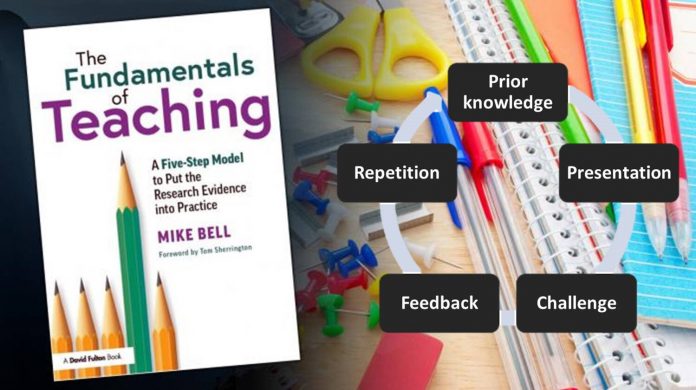
We were then presented with the problem of how to present the list.  Should we simply list it in order of effectiveness?  We chose to list them in the order a teacher may use them when teaching a topic. From this we ended up with a five-step process: Prior Knowledge, Presentation, Challenge, Feedback and Repetition. 

We then looked at two major research-reviews from educational psychology, Rosenshine’s Principles (3) and one from the National Center for Education Research (4).  To our surprise we found that nearly all the elements in these lists were already on our ‘common ground’ list.  This gave us confidence that there really is a consensus emerging in education among those who look at evidence. 

In parallel I had become interested in the neuroscience of learning and became convinced that any understanding of the learning process had to have neuroscience foundations.  It seems unlikely that we could have a general understanding of how memories are formed in the classroom without understanding, in broad terms, how memories are formed in the brain.  This turned out to be an area of controversy – some eminent educationalists claiming that neuroscience could never tell us how to teach.  

However, I realised that it is possible to use neuroscience to explain why a method is effective without falling into that trap.  We cannot get away from the limits to working memory or the need for spaced repetition to secure long-term memories, for example. 

What kinds of evidence did you base your five-step model on? 

So the book is based on three types of evidence:  research from classroom experiments and cognitive psychology both explained with educational neuroscience.  This amounts to a general theory of learning as we can use it to explain how learning happens, why some students struggle, how to improve the learning of almost any student, why the effective methods work and what to avoid. It can therefore  show us how best to allocate resources of time and money in a school or college to maximise learning. 

The five-step model has several benefits.  It can simply be a way to arrange the effective methods to help a teacher decide which one to try.  However, it also shows that it is not so much the individual methods which are important, but that we give the students the chance to be taken through this learning cycle.  From the brain’s perspective, the five-steps are not just a helpful teacher-guide, that are a description of the process by which long-term memories are formed in the brain. 

I hope teachers will find the book useful.. During our training sessions teachers often told me:  “Now I know why it works I’m much more likely to try it.”

Do You Think It Is Time to Get Rid of Daylight Saving Time?

0
Do You Think It Is Time to Get Rid of Daylight Saving Time?

Ms. Coaston sets up the episode and conversation:

As you will likely learn on Nov. 7 when your oven clock is suddenly wrong — or maybe that’s just me — clocks in most of the United States will fall back an hour, plunging us into darkness for the next four months until we change them back again. It’s a never-ending cycle, much like time itself. I’m Jane Coaston. Personally, I find the clock switches pretty annoying. It’s disorienting. And I know it can be a nightmare for my friends who are parents. But what didn’t I know? Daylight saving is a wildly contentious issue with some truly high stakes. Also, yes, it’s saving without the S. You learn something new every day. It’s getting Senators Marco Rubio and Ed Markey to actually agree on something, the Sunshine Protection Act, a bill to make daylight saving time permanent, which, by the way, 19 states already have on tap.

Dr. Takahashi argues: “Standard time is determined by the rotation of our Earth. And it also is optimally phased to correspond to biological clocks.” He continues:

So even though the switch is only on two days, the lasting impact of the switch can be as long as weeks for certain individuals. So, for example, when you spring forward and individuals have to wake up an hour earlier each day, many individuals actually require two to three weeks to make what seems like a very small change of one hour in the timing of the clocks in our body. So a circadian rhythm is a 24-hour, typically physiological, process in our bodies that has a periodicity of about a day. It’s not exactly 24 hours. And it’s endogenously generated by our own cells, by the special set of genes, OK? And living organisms have evolved to have circadian clocks to anticipate the 24-hour change in the environment. So, for example, if you’re a plant, it’s pretty obvious you can’t move. And you depend on photosynthesis. The plant knows when the sun is going to come up the next morning. It doesn’t just respond to the lights coming on. It has a whole metabolic program that it goes through each day. Very clear in plants, but it turns out even in us humans and in animals, we have this 24-hour metabolic program that happens every day. But modern society has also imposed additional stresses on our biology. And what we now know is when your body clocks go out of sync, there are many bad health and metabolic consequences. We lose our ability to regulate blood sugar. Lipid levels go up. We become hungry when we’re not really hungry. Lots of signaling mechanisms are influenced by disruption of our clocks. And just that one-hour disruption is enough to actually trigger these problems.

Mr. Buehler counters with an argument in favor of permanent daylight saving time:

I think that the advantages that we get during the summer are very different than the advantages that we could get during the winter. So we all know what the advantages of daylight saving time are during the summer. You have longer evenings, whether it’s kids playing outside or people golfing or playing basketball or going out for a walk. You can do more in the night. We’re using that time early, early in the morning before everybody gets up, and we’re allocating that hour to the evening, when people are awake. The winter is different. In the winter, most places in the United States, because it’s so dark, really have to make a choice. Do they want to allocate the hour of light for the morning commute or the evening commute? And on balance, the argument that I would have that many states have is that that hour of daylight is better allocated for the evening. So the evening commute is more irregular. There’s more children out playing. There’s more commuters that might have alcohol in their blood stream. And people are more tired. And so it just makes more sense, if we can’t have both commutes in the sunlight, to prioritize the evening commute. And that’s why I think many jurisdictions are starting to look in that direction.

Students, read the entire transcript or listen to the entire episode, then tell us:

  • Is it time for the United States to end Daylight Saving Time? Why or why not?

  • How helpful, if at all, do you think daylight saving time is? To what degree is it worth the hassle of changing clocks, “gaining” and later “losing” an hour of time?

  • What benefits and drawbacks have you personally experienced? Have you ever felt the physiological effects of changing the clocks that Dr. Takahashi describes?

  • Which arguments made in the podcast did you find most persuasive? Do you think the negative health consequences described by Dr. Takahashi outweigh the benefits, like longer evenings in the summer for kids to play outside, that Mr. Buehler cites?

  • Currently, only about 70 countries in the world change their clocks during the year. And in the United States, Arizona and Hawaii don’t even make the switch. Do you think the United States should have one uniform standard? Should we pass legislation, like the Sunshine Protection Act, that would make Daylight Time permanent. Or should each state be able to decide?

  • What do you think you will do with the “extra” hour we will gain on Sunday when we push the clocks back?


Want more writing prompts? You can find all of our questions in our Student Opinion column. Teachers, check out this guide to learn how you can incorporate them into your classroom.

Students 13 and older in the United States and Britain, and 16 and older elsewhere, are invited to comment. All comments are moderated by the Learning Network staff, but please keep in mind that once your comment is accepted, it will be made public.

Word of the Day: ornery

0
Word of the Day: ornery

: having a difficult and contrary disposition

_________

The word ornery has appeared in 21 articles on NYTimes.com in the past year, including on Dec. 14 in the Opinion essay “Beethoven’s 250th Birthday: His Greatness Is in the Details” by Anthony Tommasini:

Beethoven’s dominance of classical programming is a little crazy. Yet he was indisputably amazing. He cultivated the mystique of the composer as colossus, as a seer and hero striding the earth, channeling messages from on high and revealing them to us mere mortals.

In person, he may not have advanced this image. Unkempt and ornery, he had delusions about having royal blood, kept falling for women of the upper ranks in Vienna who were unattainable matches, and, in a pathetic attempt at having a family, spent years in court fighting to gain custody of his nephew from the boy’s widowed mother, whom he considered morally unfit. (He succeeded, with predictably fraught results.)

Can you correctly use the word ornery in a sentence?

Based on the definition and example provided, write a sentence using today’s Word of the Day and share it as a comment on this article. It is most important that your sentence makes sense and demonstrates that you understand the word’s definition, but we also encourage you to be creative and have fun.

Then, read some of the other sentences students have submitted and use the “Recommend” button to vote for two original sentences that stand out to you.

If you want a better idea of how ornery can be used in a sentence, read these usage examples on Vocabulary.com.

If you enjoy this daily challenge, try one of our monthly vocabulary challenges.

Students ages 13 and older in the United States and the United Kingdom, and 16 and older elsewhere, can comment. All comments are moderated by the Learning Network staff.

Lesson of the Day: ‘A Close Look at My Day of the Dead Altar’

0
Lesson of the Day: ‘A Close Look at My Day of the Dead Altar’

This lesson is a part of our new Accessible Activities feature, which aims to welcome a wider variety of learners to our site and to The Times. Learn more and tell us what you think here.

Featured Article: “A Close Look at My Day of the Dead Altar” by Oscar Lopez

The beginning of November marks one of the most important holidays in Mexico: Day of the Dead. The Times reports:

Day of the Dead, or Día de Muertos, is one of the most important celebrations in Mexico, with roots dating back thousands of years, long before Spanish settlers arrived. It has become a blend of Catholic tradition and Mexican mysticism, commemorating death as another element of life and as a way to remember and honor loved ones.

In this lesson, you will learn more about this holiday and about one of the traditions associated with it: the creation of an ofrenda, or altar, for loved ones who have died. Then, you will think of a special way to honor someone in your life who has passed away.

What do you know about Day of the Dead, or Día de Muertos? Is it a holiday you observe with your family? Or have you learned about it from friends, school or movies? To find out more about the celebration, watch this three-minute video from Inside Edition:

Then, in writing or class discussion, respond to these questions:

  • Have you ever experienced the death of a loved one? If so, how did you commemorate the person’s death, or celebrate the person’s life?

  • Do you have traditions or customs in your culture or community to honor the dead?

Here are 10 words you’ll find in this article that you may not know:

1. element 2. deceased 3. maternal 4. beloved 5. offering 6. represent 7. connoting 8. purgatory 9. nod 10. quench

Which words are you familiar with? Which are new to you?

Use this list of words and their definitions on Vocabulary.com to learn what each means and to practice using them.

Note: You can read more about Day of the Dead here.

Click through and read the article above as a slide show, or read it here as a PDF. Then, answer the following questions:

1. What purpose does the ofrenda, or altar, serve in observing Day of the Dead?

2. What are some of the important items that are included in an ofrenda?

3. What is the significance of the seven levels of the altar? Are there numbers that are important in your culture, religion or spiritual practice?

4. Why does the author include candles and a glass of water in his altar?

5. What can we tell from Mr. Lopez’s altar about the beliefs of people who celebrate Day of the Dead about death?

6. Think about someone close to you who has died. What items, foods, drinks or other symbols remind you of him or her?

Now, think of a special way to honor a loved one who has died. Here are some ideas of things you could do to remember someone:

  • Write a poem, story or song about the person.

  • Draw, paint or make a mixed-media collage of a memory you have with the person.

  • Make an altar with objects that remind you of the person.

  • Do something you used to do with that person, such as cook a recipe the person taught you, watch his or her favorite movie, or play a sport he or she loved.

Here are some prompts to get you thinking about your loved one and what you could do to commemorate his or her life:

  • What three words would you use to describe this person?

  • What personal items remind you of this person?

  • What special memories do you have of the person?

  • What lessons has this person taught you?

  • What aspects of your own spiritual, cultural or religious traditions can you include in your creation?

After you’ve completed your creation or task, write a statement describing what you did or made and why. What does this piece or activity mean to you? How does it honor your loved one? Why did you make the artistic choices you did to create your piece?


Want more Lessons of the Day? You can find them all here.

Lesson of the Day: Inspiration From The Times’s ‘It’s Never Too Late’ Series

0
Lesson of the Day: Inspiration From The Times’s ‘It’s Never Too Late’ Series

Featured Series: “It’s Never Too Late”

Many of us dream of trying something new, but then somehow fail to get around to it. A new Times series, “It’s Never Too Late,” tells the inspiring stories of people who have decided to switch gears, change their lives and pursue their dreams.

Whether it’s playing the cello, climbing a mountain, learning to ride horseback or recording your first album, these stories are a reminder that you never know what the future holds — but you do have the power to shape it. As Vijaya Srivastava, who learned to swim at 68, put it: “Finally I decided if I don’t try, it’s never going to happen.”

In this lesson, you will learn about people who prove that you can always change your life. In a Going Further activity, you will use some of the Times’s articles as mentor texts to create your own portrait of an older person who tried something new later in their lives. Or, you can make a plan to pursue a dream of your own!

Consider the two sayings:

Which of these sayings do you find more accurate, more true to life?

Turn to a partner and share your thoughts. Then, discuss one or more of the following questions:

  • Are there certain things that are easier or harder to learn, depending on your age?

  • Is there anything that, in your relatively young life, you already feel it’s too late to try?

  • Are there any goals you have that might be better to pursue when you are older?

Choose one of the articles in the “It’s Never Too Late” series to read in its entirety:

Answer the questions below based on the article you read:

1. Which article in the “It’s Never Too Late” series did you select and why? Give a short snapshot of the older person profiled in the piece, including at least two significant biographical details.

2. What was this person’s goal? What obstacles prevented them from pursuing their dream when they were younger? What finally prompted or inspired them to go for it?

3. What did they discover when they achieved their long-sought-after goal — about themselves and about life?

4. What quote, image or detail from the article did you find most surprising, moving or memorable? If you could interview the person profiled in the article, what else would you want to know about them? Why?

5. Return to the warm-up activity: How does reading the article add to or change your perspective on the two sayings? What life lessons and inspiration can you draw from the story? Have you ever had a dream or goal? If so, are you now more inspired to pursue it? How might you do that?

Option 1: Interview an older person

Imagine you have been hired to write the next entry in the “It’s Never Too Late” series. Who would you profile and why? What questions would you ask? How might these experiences inform, engage and inspire readers of The Times?

Do you know any inspiring people who prove it’s never too late to switch gears, change a life and pursue dreams? You can choose to spotlight someone in your own family.

Whomever you choose, follow the formula used in this column. Make sure to include a photo, a brief preface introducing the person (including at least two biographical details about their life before they reached their goal), and an interview excerpt that you feel highlights that person’s achievement, in their own words.

Be sure to do some background research on the person you choose so you can develop a set of interview questions in advance. You can also draw from some of the questions used in the series, such as: Tell me about the life you’d been leading before this change? How did you find the courage and strength to take that initial step? What were the biggest challenges in your journey? What would you tell other people who feel stuck and are looking to make a change?

If you are doing this project as a class, you might bring your stories together when everyone is done and publish them somehow — on a school website, via social media, or by printing them and hanging them in a public place.

Option 2: Pursue a goal you always dreamed of, but never had the courage to try.

“It’s Never Too Late” is the name of the Times series, but why wait until you are much older? Think of a goal — big or small — and go for it now!

Whether it’s learning to swim, playing a new musical instrument or climbing a mountain for the first time, now it’s your turn to learn a new skill, pursue a deferred dream or just try something completely different.

Once you settle on your goal, map it out. How will you start pursuing it now? Where do you hope to end up? What steps will help you get there? Create a path for yourself.

For inspiration, you might use the stories from the series as well as the sage advice of its protagonists, such as the words of 93-year-old Vera Jiji, who took up cello at 62. She urged others: “Don’t say no to yourself.” Jocelyn Nicole Johnson, who at 50 made her literary debut, advised others to “embrace rejection and find your people.” And Rose Young, who learned to ride a horse at 63, said, “Don’t be afraid of embarrassment or opening yourself up to criticism.”

We wish you the best in realizing your goal!


Want more Lessons of the Day? You can find them all here.

Ashitiva Ghai: “Alison’s philosophy that learning has the ability to change lives keeps me motivated.”

0
Ashitiva Ghai: “Alison’s philosophy that learning has the ability to change lives keeps me motivated.”

“My name is Dr. Ashitiva Ghai. I was born and raised in Kenya and I am 41 years old. When I finished my bachelor’s degree, I secured a work-study in the United States of America where I then got a scholarship to do my postgraduate studies.

I am a research assistant at Texas State University and a part time Lecturer at the University of Nairobi in the Department of Extra Mural Studies. I hold dual citizenship as both an American citizen and as a Kenyan citizen. I am also an Alison Course Creator, having created more than ten courses. I specialize in management information systems.”


How did you learn about Alison?

I came across Alison through my own research. At the time I wanted a course on Project Management and luckily, I was able to do take Certified Associate in Project Management through Alison. With time, I developed an interest in becoming an Alison Course Creator. I went ahead and did the Alison Publisher Tool Training and Introduction to E-Learning Theory and Practice, which I passed and then qualified as an Alison Course Creator.

Tell us about the Facebook group, Alison Free Online Learning Group, and the work you do?

Initially the name of the group was Alison South African Students. Through my contribution to the group, I was made an admin. I suggested that we change the name of the group to Alison Free Online Learning Group so that all Alison students feel included and to develop a feeling of togetherness as an Alison fraternity. The group then grew from 3,000 members to its current 15,000 and the growth is still very rapid.


Why did you become interested in encouraging more students to enroll on Alison and empower themselves?

I was amazed by the philosophy of Alison founder Mike Feerick and his believe in the power of learning and its ability to change lives and promote progress across all sectors of global society. I believe education is an indispensable tool that all humans must possess in order to better their lives and make the planet a better place for humanity.

What’s next for you, in terms of education or work?

I am hoping to become a professor very soon. I am currently doing my research, which I publish online to that other researchers can benefit from these resources. One thing that keeps me motivated and moving on is Alison’s philosophy that learning has the ability to change lives. I believe that, in contemporary society, we all need knowledge and that knowledge can only be achieved through free or affordable quality learning across the globe.

What would you say to someone if they asked you about Alison? Would you recommend it and why?

I would recommend and I have always recommended Alison courses for professional development due to their quality and richness. I have seen Alison graduates who have been employed and doing very well in different sectors. Alison is the best since it meets all the requirements of quality education.

What’s Going On in This Picture? | Nov. 8, 2021

0
What’s Going On in This Picture? | Nov. 8, 2021

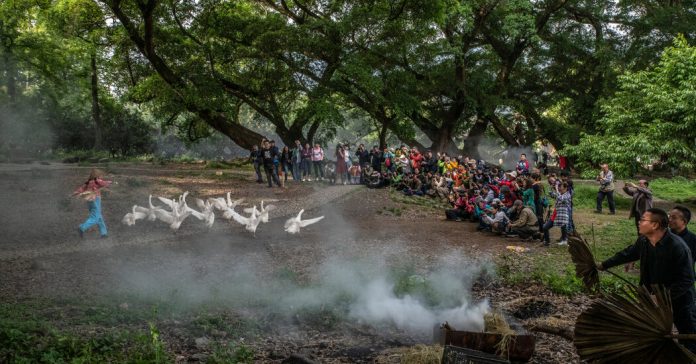
1. After looking closely at the image above (or at the full-size image), think about these three questions:

2. Next, join the conversation by clicking on the comment button and posting in the box that opens on the right. (Students 13 and older are invited to comment, although teachers of younger students are welcome to post what their students have to say.)

3. After you have posted, try reading back to see what others have said, then respond to someone else by posting another comment. Use the “Reply” button or the @ symbol to address that student directly.

Each Monday, our collaborator, Visual Thinking Strategies, will facilitate a discussion from 9 a.m. to 2 p.m. Eastern time by paraphrasing comments and linking to responses to help students’ understanding go deeper. You might use their responses as models for your own.

4. On Thursday afternoons, we will reveal at the bottom of this post more information about the photo. How does reading the caption and learning its back story help you see the image differently?

We’ll post more information here on Thursday afternoon. Stay tuned!


More?

• See all images in this series or slide shows of 40 of our favorite images — or 40 more.

• Learn more about this feature in this video, and discover how and why other teachers are using it in their classrooms in our on-demand webinar.

• Find out how teachers can be trained in the Visual Thinking Strategies facilitation method.

Students 13 and older in the United States and the Britain, and 16 and older elsewhere, are invited to comment. All comments are moderated by the Learning Network staff, but please keep in mind that once your comment is accepted, it will be made public.

Weekly Accessible Learning Activities: Analyze a Photo, Write a Story, Reflect on Community

0
Weekly Accessible Learning Activities: Analyze a Photo, Write a Story, Reflect on Community

Each Wednesday, we shine a spotlight on five student activities that support a broad range of learners. In this week’s roundup of accessible activities, we invite students to learn about Indigenous environmental activism, recommend new music, tell us a story, closely analyze a photograph and watch a short film about a beachfront haven for Black families.

Note: To learn more about this new weekly feature, read our introductory post. Please share your thoughts in the comments section or by emailing us at LNFeedback@nytimes.com.


1. Learn about everyday people fighting to protect their land.

This Lesson of the Day focuses on the predominantly Indigenous residents of the village of Narsaq, Greenland, who stood up for their home and fought outside mining companies. Then, students will share about a time when they took an action for something they believed in.

2. Share the new music you’re currently listening to.

In this Student Opinion, students read five new music recommendations from the Times’s chief pop music critic. Then, they share what they’re listening to now and how they find new music.

3. Watch a film and think about community.

Our Film Club brings students into the world of New York’s Sag Harbor, a community that became a refuge for African American families. After watching the film, students respond to the question: What communities protect, affirm and nurture you?

4. Write a story based on an image.

Students look closely at the image in this Picture Prompt and write their own story — real or imagined — based on what they see. They can share their story with classmates or in the comments section.

5. Analyze a photograph.

Students can engage with other young people around the world, as they try to answer the question: What’s Going On in This Picture? Using observational skills, they can share their findings in the comments section and respond to what other students noticed in the picture.