fbpx
Home Blog Page 1209

Hazel Kendrick: “Alison courses help me to improve my teaching skills.”

0
Hazel Kendrick: “Alison courses help me to improve my teaching skills.”

Hazel Kendrick is a lecturer in Business Management in South Africa and finds that Alison’s online courses allow her to stay up to date with her teaching methods. As well as being an Alison learner, Hazel also teaches online and recommends Alison courses to her students. 

“My name is Hazel Kendrick. I am a lecturer in Business Management at Damelin College in Cape Town, South Africa. I also tutor students online on a one to one basis. I learned about Alison online and my first course was the Introduction to the Learning Process for Teachers and Trainers.

I followed this up with other teaching courses to help me improve my teaching skills for my Business Management programme, as well as for my online teaching. I also took the Diploma in Human Resources, which helped me tremendously. I enjoy keeping up to date and Alison allows me to learn new skills.


I’m continuing to upgrade my skillset by taking more courses whenever time permits me to do so. I’d love to take some IT courses. I also write articles for StuDoc.com.

I always recommend Alison to my friends and family and even to some of my student so that they can enhance their skills.”

Joy Cherotich: “Alison educated me by offering me free courses!”

0
Joy Cherotich: “Alison educated me by offering me free courses!”

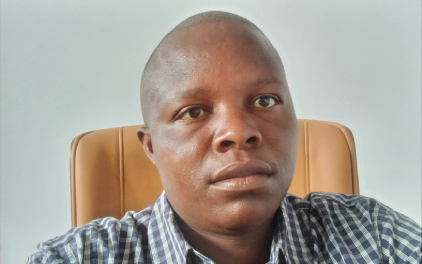
“My name is Joy Cherotich from Kenya. I achieved my secondary school certificate in 2007 but afterwards I didn’t join a college due to financial problems. However I learned about Alison through a friend and Alison educated me by offering me free courses!”

What was your first course on Alison, and why did you choose it?

My first course was the Diploma in Customer Service

What’s your favourite way to relax from studying?

I like playing gospel music.


Where are you working and what are you studying now?

I’m currently working at Bethesda Health Care Service Ltd in Nandi Hills in Kenya. I am planning to study Pharmacy.


What’s next for you, in terms of education or work?

I’m planning to pursue more courses with Alison.

If you could learn absolutely anything in the world from an Alison course, what would it be?

I’d like to learn how to help others and how to never give up.

What would you say to someone if they asked you about Alison? Would you recommend it and why?

Yes I would because Alison is free and provides you with certification.

Word + Quiz: mawkish

0
Word + Quiz: mawkish

: effusively or insincerely emotional

_________

The word mawkish has appeared in eight articles on NYTimes.com in the past year, including on Feb. 18 in “Ben Affleck Tried to Drink Away the Pain. Now He’s Trying Honesty” by Brooks Barnes:

Toward the end of “The Way Back” (spoiler alert) Jack has a powerful interaction with his ex-wife (Janina Gavankar, “The Morning Show”). He is in rehab at this point, and, when she comes to see how he is doing, he offers her an unflinching apology.

“I failed you,” he says. “I failed our marriage.”

It’s rough stuff, especially when watched through the prism of everything that has gone on with Affleck offscreen. You can’t help but think about similar conversations that he must have had with Garner.

“It was really important, without being mawkish or false, that he make amends to her — that he take accountability for the pain that he and only he has caused,” Affleck said.

_________

Should Teachers Be Allowed to Wear Political Symbols?

0
Should Teachers Be Allowed to Wear Political Symbols?

Students in U.S. high schools can get free digital access to The New York Times until Sept. 1, 2021.

Many school districts have policies prohibiting employees from expressing political speech while carrying out their professional duties. For example, in such districts teachers can have a “Trump 2020” yard sign in front of their home, but they cannot wear a similar T-shirt to school. But sometimes determining what is, and what is not, political speech can be more tricky.

First, do you think districts should ban employees from expressing political speech while in school? Do you think that is a smart policy? Why?

Second, how should districts define political speech? For example, should they prohibit symbols like the so-called thin blue line flag? What about apparel showing support for the Black Lives Matter movement?

In “What Happened When a School District Banned Thin Blue Line Flags,” Michael Gold writes:

In late October, administrators in a suburban New York school district told employees that some of their apparel was making students feel uncomfortable, and even threatened.

At issue were masks showing the so-called thin blue line flag, which signals support for the police but which has increasingly been used to display opposition to the Black Lives Matter movement, which rose in opposition to racism in policing.

Wearing the symbol violated a district policy prohibiting employees from expressing political speech, officials said. The logo, a black-and-white version of the American flag with a single blue stripe at its center, could no longer be worn by staff members.

Days later, a group of employees of the district, in Pelham, N.Y., appeared at work wearing shirts bearing the word “Vote” and the names of Black people who had been killed by the police, prompting accusations of hypocrisy and political bias.

The resulting controversy has divided Pelham, an affluent and mostly white Westchester County town of about 12,000 people just north of New York City.

The article continues:

The tense debate exemplifies the political tinderbox that much of the United States has become, where an emblem on a mask or a patch on a sleeve can ignite a dispute that consumes a community.

At the center of the conflict is a symbol that has come to mean vastly different things to different people, a black, white and blue Rorschach test whose significance continues to shift amid a continuing national reckoning over racism and police violence.

“It made a lot of people upset here, obviously,” said Ralph DeMasi, a school safety coordinator who was told not to wear the flag. “Clearly a directive was given. One side followed it, while another side was allowed to express their views.”

Facebook discussions have grown heated. Neighbors staked out clear positions and lined up in the cold to speak at a public meeting. School employees and parents said they had gotten threatening messages as the district attracted national media attention.

“People are taking this hard line,” said Solange Hansen, a Black and Latina woman who moved to Pelham last year and whose teenage son is a student there. “All of a sudden, overnight, you see these blue line flags on people’s lawns. You see them in people’s businesses. And that makes it really hard for the people of color.”

On Friday evening, The Pelham Examiner, a local news outlet, published a letter written by a Pelham high school senior, Nadine LeeSang, that expressed support for the district’s policy and said that the flag reminded students of color of “racist experiences they have had” with law enforcement.

“Nobody was really talking about how students felt uncomfortable, and it was kind of being dismissed,” Ms. LeeSang, 17, who is Black and Asian, said in an interview. Her letter was signed by 15 other people, most of them also students.

The article’s writer includes the debate about what the flag means to various people:

Those who support the flag say it has long been used to honor law enforcement officers who sacrificed their lives, and that it is not meant as a political statement.

“It signifies a memorial, a connection between officers killed in the line of duty and those who continue with their duties in the present,” said Carla Caccavale, a Pelham resident who has four children enrolled in district schools and whose father, a New York City Transit detective, was killed while trying to stop a robbery when Ms. Caccavale was an infant.

Ms. Caccavale has made sweatshirts honoring her father’s memory that include a thin blue line patch. Although she initially made them only for her family and another family, she has begun to sell them to support police-related charities.

When school staff members were told they could no longer wear the flag, her sweatshirts were included in the ban. She said the decision baffled her.

“You have to look at the intention of the sweatshirts,” she said.

But supporters of the district’s ban on the flag said the logo could not be divorced from its current context as a symbol for the pro-police Blue Lives Matter movement that sprang up in response to the Black Lives Matter movement.

The flag’s critics also say the image has acquired a racist connotation after being carried at demonstrations by hate groups, most notably a Charlottesville, Va., rally in 2017, where white nationalists staged a weekend of protests that turned violent.

“Now that you see this flag flown alongside this other flags and racist symbols, it’s very hard not to say, ‘Well, that’s a racist symbol,’” Annemarie Garcia, who has two teenagers enrolled in Pelham schools, said. “Even if that’s not what it meant to you originally.”

Students, read the entire article, then tell us:

  • Do you think schools and districts should prohibit employees from exercising political speech while working? If you were a principal or superintendent, would you want a ban on employee political speech while in school? Why?

  • How should political speech be defined? And specifically, what do you think about the two examples at the center of the debate in Pelham, N.Y.? In your opinion, is wearing a mask with the thin blue line flag a case of expressing political speech? What about wearing shirts bearing the word “Vote” and the names of Black people who had been killed by the police? Should either of these examples, or both, be banned as political speech? Why?

  • Have you ever observed a teacher expressing her or his political beliefs in a school setting? What was your reaction?

  • The First Amendment says “Congress shall make no law … abridging the freedom of speech.” Courts have ruled that students’ right to free speech in school is more broadly protected than teachers’ rights. Why do you think courts have made this distinction? Do you think students should have more rights to express political speech in school than teachers? Why?


About Student Opinion

Find all our Student Opinion questions in this column.
Have an idea for a Student Opinion question? Tell us about it.
Learn more about how to use our free daily writing prompts for remote learning.

Students 13 and older in the United States and the United Kingdom, and 16 and older elsewhere, are invited to comment. All comments are moderated by the Learning Network staff, but please keep in mind that once your comment is accepted, it will be made public.

What’s Going On in This Picture? | Nov. 23, 2020

0
What’s Going On in This Picture? | Nov. 23, 2020

Students in U.S. high schools can get free digital access to The New York Times until Sept. 1, 2021.

1. After looking closely at the image above (or at the full-size image), think about these three questions:

2. Next, join the conversation by clicking on the comment button and posting in the box that opens on the right. (Students 13 and older are invited to comment, although teachers of younger students are welcome to post what their students have to say.)

3. After you have posted, try reading back to see what others have said, then respond to someone else by posting another comment. Use the “Reply” button or the @ symbol to address that student directly.

Each Monday, our collaborator, Visual Thinking Strategies, will facilitate a discussion from 9 a.m. to 2 p.m. Eastern time by paraphrasing comments and linking to responses to help students’ understanding go deeper. You might use their responses as models for your own.

4. On Thursday afternoons, we will reveal at the bottom of this post more information about the photo. How does reading the caption and learning its back story help you see the image differently?

Things To Do At Home

0
Things To Do At Home

Here is a sampling of the week’s events and how to tune in (all times are Eastern). Note that events are subject to change after publication.


Celebrate Indigenous cuisine at the “Reclamation Feast,” a seminar hosted by the Museum of Food and Drink and the Greene Space. During the 90-minute event, participants will learn to make a three-course meal using heirloom ingredients. Experts leading the demonstration include Crystal Wahpepah, the first Native American chef to appear on the Food Network show “Chopped.” Tickets are $20.

When 8 p.m.
Where thegreenespace.org/event/reclamationfeast

Appreciate surrealist women artists with Abbi Jacobson, a star of “Broad City” and the host of the “A Piece of Work” podcast, and Anne Umland, a senior curator at MoMA. As part of the museum’s Virtual Views series, they will cover works by Claude Cahun, Frida Kahlo and Remedios Varo. To prepare, play the exquisite corpse game with your quarantine pals or listen to Ada Limón’s poem, ‘The Mirror & The Ribbon,’ inspired by Kahlo. The discussion is free.

When 8 p.m.
Where moma.org


Mix yourself a cocktail and settle in for some graveyard tales at Green-Wood Cemetery’s “History Happy Hour: Hidden Green-Wood.” Attendees will learn about some of the lesser-known graves on the cemetery’s 478 acres — including that of the 19th-century suffragist Elizabeth Tilton, who became embroiled in a scandalous affair with her pastor. Her grave is inscribed with just one word: “Grandmother.” Entry is $9 and includes an appletini recipe.

When 6 p.m.
Where green-wood.com/event


Trot your way into the holidays with New York Road Runners’ Virtual NYRR Run for Thanks 5K, one of many remote races happening across the country next week. Thanksgiving, it turns out, is the most popular day of the year to run. Entrance is free, and you can run your 3.1 miles anywhere; for $30, runners can access a virtual course map and leader board.

When Anytime, through Nov. 29
Where nyrr.org/races/virtualnyrrrunforthanks5k

Watch 15 short readings by Italian playwrights and then vote for your favorite as part of the Italian & American Playwrights Project. Themes examined in the plays include underage prostitution and family tragedy.

When Anytime, through Dec. 1
Where italianandamericanplaywrightsproject.com


Shake up your holiday traditions with a botanical art lesson by the London Drawing Group, an all-female art collective. The session starts with quick sketches and is followed by basic water color techniques. It is helpful to have some houseplants or collected leaves and flowers handy. A donation is encouraged and registration is required.

When 1:30 p.m.
Where eventbrite.co.uk

Try this at home with your leftover turkey bones. Science Fun For Everyone, an educational nonprofit, guides you through an experiment showing the effect of vinegar on bone strength. Chicken and ham bones work, too. Vegetarian households can substitute pasta for the bones. You’ll also need water, vinegar, two glass jars, two labels and pencil.

When Anytime
Where sciencefun.org

If you missed PBS’s broadcast of “A Charlie Brown Thanksgiving” on Sunday, you can still stream the Peanuts special for free on Apple TV+ for three days, starting today.

When Until Nov. 27
Where tv.apple.com


Tune into a marathon reading of Toni Morrison’s novel “Song of Solomon,” featuring contemporary writers like Jesmyn Ward, Jason Reynolds and Margaret Atwood. The three-day event, hosted by the nonprofit Literacy Partners, begins tonight and continues at 2 p.m. on Saturday and Sunday. A $5 donation is suggested; a $50 donation earns attendees a book by one of the participating authors.

When 8 p.m.
Where litpartners2020.org/toni-morrison

Attend a virtual concert with Dua Lipa. Her “Studio 2054” performance will be livestreamed from a warehouse and feature songs from her new album “Future Nostalgia,” as well as FKA Twigs as a special guest. On a recent Instagram live post, she described the livestream as “more like a theater performance — it’s more like someone giving me the reigns and letting me have my own TV show.” Tickets start at $14.99.

When 9 p.m.
Where dualipa.co/2054-livestream


View the art exhibition, “On Photographs,” named after a new book by David Campany, a curator and writer based in London and New York who was inspired by Susan Sontag’s “On Photography.” Both the book and the exhibition, which is presented by the Robert Klein Gallery in Boston, examine the meaning of the medium. The virtual collection surveys works by 18 prominent 20th-century photographers including Eugène Atget, Ilse Bing, Henri Cartier-Bresson and Mark Cohen.

When Until Dec. 31
Where robertkleingallery.com


Seize your last chance to watch “Kristina Wong for Public Office,” a virtual one-woman play starring Ms. Wong, a performance artist, and staged by the Center Theater Group in Los Angeles. In 2019, Ms. Wong was elected to the Wilshire Center Koreatown Neighborhood Council, an advisory board to the City of Los Angeles; the play explores the intersection of art and politics. Tickets cost $10.

When Until Nov. 30 at 2:59 a.m.
Where centertheatregroup.org

Word + Quiz: pastiche

0
Word + Quiz: pastiche

1. a work of art that imitates the style of some previous work

2. a musical composition, literary work or other artistic product made of pieces from various sources

_________

The word pastiche has appeared in 53 articles on NYTimes.com in the past year, including on Sept. 9 in “Central Park Birder Turns Clash Into Graphic Novel About Racism” by Sarah Maslin Nir:

Mr. Cooper said the graphic novel was deliberately not an exact recounting of his May 25 interaction with Ms. Cooper.

“I think that is the beauty of comics, it lets you reach that place visually and viscerally,” he said. “And that’s what this comic is meant to do: Take all these real things that are out there and, by treating them in a magical realist way, get to the heart of the matter.”

… Mr. Cooper said the Beth character is intended to be a pastiche, not a depiction of Ms. Cooper. (Ms. Cooper could not be reached for comment.)

_________

How Mentally Tough Are You?

0
How Mentally Tough Are You?

Students in U.S. high schools can get free digital access to The New York Times until Sept. 1, 2021.

When was the last time you faced a difficult test or challenge — mental or physical? How did you handle the situation? When you hit an obstacle or a limit, were you able to push through and persevere despite the pain, exhaustion or self-doubt? Or, did you reach your last straw and give up and give in?

Do you think mental toughness is something you are born with or a mind-set and set of habits you can develop, like your muscles?

Do you think we can all learn how to not only endure, but thrive in our daily challenges?

In “Build Mental Endurance Like a Pro,” Talya Minsberg writes about the life lessons we can learn from the world’s best extreme athletes:

There’s a special kind of exhaustion that the world’s best endurance athletes embrace. Some call it masochistic, others may call it brave. When fatigue sends legs and lungs to their limits, they are able to push through to a gear beyond their pain threshold. These athletes approach fatigue not with fear but as a challenge, an opportunity.

It’s a quality that allows an ultramarathoner to endure what could be an unexpected rough segment of a 100-mile race, or a sailor to push ahead when she’s in the middle of the ocean, racing through hurricane winds alone.

The drive to persevere is something some are born with, but it’s also a muscle everyone can learn to flex. In a way, everyone has become an endurance athlete of sorts during this pandemic, running a race with no finish line that tests the limits of their exhaustion.

Some of the world’s best extreme athletes shared what they do when they think they’ve reached their last straw. How do they not only endure, but thrive in daily challenges?

One message they all had: You are stronger than you think you are, and everyone is able to adapt in ways they didn’t think possible. But there are a few techniques to help you along — 100-mile race not required.

The author provides several techniques used by athletes for thriving in the face of difficult circumstances that are applicable to all people. Here are excerpts from three:

Pace Yourself

Training to become an elite endurance athlete means learning to embrace discomfort. Instead of hiding from pain, athletes must learn to work with it. A lot of that comes down to pacing, the sports psychologist Carla Meijen said.

Similarly, as you muscle through an ongoing pandemic, you must look for ways to make peace with unknowns and new, uncomfortable realities. “When we think about the coronavirus, we are in it for the long run; so how do you pace yourself?” asked Dr. Meijen, a senior lecturer at St Mary’s University in London.

She recommends thinking about your routines, practicing positive self-talk and focusing on processes instead of outcomes. You don’t know when the pandemic will end, but you can take control of your daily habits, Dr. Meijen said.

Create Mini-Goals

Sports psychologists frequently recommend creating mini milestones en route to a big goal. There are many steps on the path from base camp to a mountain’s summit. Likewise, there are smaller, more achievable milestones to reach and celebrate as you venture ahead into the unknown.

“Setting goals that are controllable makes it easier to adapt,” Dr. Meijen said. “If you set goals that are controlled by other people, goals that aren’t realistic or are tough or boring, those are much harder to adapt to.”

The professional ultrarunner Coree Woltering is especially skilled at conquering mini goals. The long-distance runner has stood on the podium after races from 50 kilometers to 100 miles. This summer, he set his sights on breaking the running record on the Ice Age Trail: some 1,147 miles across Wisconsin. He ran more than 50 miles a day for three weeks in a row to accomplish the feat.

“I’m really good at breaking things down into small increments and setting micro-goals,” he said. How micro?

“I break things down to 10 seconds at a time,” Mr. Woltering continued. “You just have to be present in what you are doing and you have to know that it may not be the most fun — or super painful — now, but that could change in 10 seconds down the road.”

Focus on Something New

When all else fails, look to something new: a new hobby, a new goal, a new experience. During a particularly hard patch of a competition, some athletes say they focus on a different sense, one that perhaps is not at the forefront of their mind when the pain sets in. A runner could note the smells around her and a climber could note the way his hair is blowing in the wind. When athletes are injured, sports psychologists and coaches frequently encourage them to find a new activity to engage their mind and body. The key is to adapt, adapt and then adapt again.

“We all want mental toughness, it’s an important part of dealing with difficult things,” Michael Gervais, a psychologist who specializes in high performance and the host of the “Finding Mastery” podcast, said. “The current definition of mental toughness is the ability to pivot and to be nimble and flexible.”

Students, read the entire article, then tell us:

  • The article defines mental toughness as “the ability to pivot and to be nimble and flexible.” Are you able to pivot and be flexible in the face of adversity? How mentally strong are you?

  • Can you recall a time when you demonstrated mental toughness in the face of a grueling test or challenge? Describe your experience: What was the situation? What strategies did you use to conquer your pain, exhaustion or doubt? What advice do you have for others who are facing similar adversity?

  • What role does mental toughness play in your life? Does it affect your life in and out of school? Do you agree that mental strength is needed during the pandemic more than ever? Why or why not?

  • What do you think of the athletes’ message: “You are stronger than you think you are, and everyone is able to adapt in ways they didn’t think possible.” Do you think this is true? Which of the athletes’ experiences and life lessons resonated most for you? Why?

  • Which techniques recommended in the article, like setting micro-goals or learning to pace yourself, do you find most useful? Do you think you could learn to “embrace discomfort”? How might you apply this advice in your daily life?

  • The article ends:

“The next moment is always completely uncertain, and it’s always been that way,” Dr. Gervais said. But adapting, adjusting expectations and discovering new goals or hobbies can allow you to continue to build the muscle that is mental toughness.

Bottom line? “Optimism is an antidote to anxiety,” Dr. Gervais said.

Does the article give you optimism — to get through the pandemic and to find ways to grow in mental toughness?

Lesson of the Day: ‘Chris Nikic, You Are an Ironman. And Your Journey Is Remarkable.’

0
Lesson of the Day: ‘Chris Nikic, You Are an Ironman. And Your Journey Is Remarkable.’

4. How did Nikic prepare for the Ironman competition? What role did Dan Grieb, a volunteer coach, play in helping him to reach his athletic goal?

5. At the end of the piece, Mr. Streeter returns to that make-or-break moment from his opening paragraphs when it looked like Nikic couldn’t go on. How was Nikic able to persevere and continue the race until he crossed the finish line? How did his family and supporters rally to help him during that critical time?

6. What is your reaction to the story? What lines were memorable, moving, surprising or enlightening and why? What aspects of Nikic’s journey speak to your own experiences?

7. The article ends:

“I learned that there are no limits,” he said, when we spoke days later. “Do not put a lid on me.”

Take a bow, Chris Nikic, for holding tight to your dreams, for your patience and hopeful perseverance and guts. We could use a little more of that in this world.

How do the words, “Do not put a lid on me” resonate with you? What emotions do you feel when you reach the end of Nikic’s triumph and read those final words? What lessons and inspiration can we draw from the story?

Option 1: Tell Someone Else’s Story of Accomplishment.

You probably noticed that Mr. Streeter’s piece doesn’t read like a typical article; instead it’s a tribute to the patience, perseverance and guts of 21-year-old Nikic.

How can you celebrate the successes and accomplishments of students at your school or in your community at a time when we could all use an uplifting story? What stories can you discover from friends, parents, students and teachers that show the power of human grit and determination?

Using the article as a mentor text, write about an achievement or triumph against the difficult odds of another person. Their accomplishment can be physical, intellectual or social; athletic or artistic; individual or collaborative. Be sure to use vivid language, as Mr. Streeter does (“his legs felt like concrete, and it seemed as if the muscles in his back had been put through a shredder”). And, as in the featured article, you might consider starting at the low point in the journey — the moment when it looked like defeat was probable.

Film Club: ‘What Do We Do About Q?’

0
Film Club: ‘What Do We Do About Q?’

The age of info insanity is upon us, and really weird claims are all the rage. Some have been saying Trump faked his coronavirus diagnosis because he’s about to round up an imaginary satanic pedophilia cabal. “Let’s get into the conversation of President Donald Trump supposedly having coronavirus— ‘supposedly’ being the operative word there.” Others are speculating that Joe Biden was wearing a wire in the debates. “There it is. Biden’s wearing a wire.” It’s actually just a crease in his shirt. And a popular meme among teens was the claim that Wayfair is shipping children in industrial-grade cabinets. I just have a lot of questions here. The main driver of info insanity is something called QAnon, which is where stories like these originate or are amplified. “I have grown to fully trust Don, master of all masters. He is a genius, a 5D chess player, a man with a huge heart.” He was an unknown person who claims to be an intelligence insider but obviously isn’t. And Anons are the people who follow him and decode his vague posts. The main gist of QAnon is that elite satanic pedophiles are everywhere and they’re coming to get your kids. More specifically, pedophiles are everywhere among liberals, celebrities, and the media. Meanwhile, Donald Trump is busy plotting to round them all up. “Why is it that all these pedophiles were allowed to be untouched for years and years and years until President Trump was sworn in as president?” The scale of QAnon isn’t yet clear, but it’s definitely big. It’s reached the crucial ‘your mom has heard of it’ stage. “Q is the best thing that has ever happened to me.” There are now 87 QAnon supporters who have run for Congress, and the first will be elected this November. “I think it’s something worth listening to and paying attention to.” And Trump refuses to push back against QAnon because QAnon loves Trump. “Well, I don’t know much about the movement, other than I understand they like me very much.” QAnon is serious, and it merits our attention and our concern. We need to respond. It’s tempting to just laugh all this off. But in this video, I’m going to show you why that is actually one of the worst things you can do. To understand QAnon, it helps to understand magic. I don’t mean this kind. I mean the medieval stuff. Throughout history, people believed in spells and superstitions and, yeah, religions. Magical thinking is driven by spotting patterns and creating connections. A black cat crossed your path, then your daughter fell ill— presto, look out for black cats. This is how Anons are interpreting reality. They’re thinking magically. They’re seeing patterns and drawing connections. “So there we have a connection between The Grateful Dead and the mystery schools of Egypt, ancient Egypt.” One of the major reasons QAnon is on the rise right now is because when the world is scary and uncertain, we are drawn to magical thinking. We now have a major schism between two tribes, magical thinkers and evidence seekers. The rest of us, the evidence seekers, are still plenty irrational and magical, but we mostly defer to science and empiricism. We are two tribes making sense of the world in different ways and perceiving different realities. QAnon has an indifference or outright hostility towards reality that to us evidence seekers is shocking or baffling or hilarious or infuriating. “What if I told you that those who are corrupting the world, poisoning our food, and igniting conflict were themselves about to be permanently eradicated from the Earth?” So how do we evidence seekers respond? Often with ridicule. “So I dived deep into the rabbit hole to talk to four prominent QAnon researchers.” “Donald Trump is one of the most intelligent men probably in our lifetime— like, top five, believe it or not.” “I find it hard.” We mock. We belittle. We dunk on them. It’s fun. It’s entertaining. It feels fantastic. “Boring!” Ridicule is a booming industry in Trump-era America. “I’m no psychiatrist, but I think it’s safe to say—” “This guy’s got some big issues.” There’s even an anti-QAnon community of influencers and podcasters and YouTubers dunking on QAnon all day every day. Many of them seem to love this stuff the way that other people love awful movies. It’s so bad, it’s good. “Not the bees!” Creators like these are funny and smart and, generally speaking, right. In a lot of ways, ridicule works. It’s a peaceful weapon against the powerful. It persuades people who haven’t chosen sides yet. And it demonstrates to those already on your side that your team is the smartest and wittiest and most wonderful of all. Ridicule is part of society’s immune system. Just like your body’s immune system fights a viral invader, ridicule attacks nonsense and drives it back to the fringes. Or, at least, it tries. “Where we go on, we go off. God bless, patriots.” But where ridicule falls entirely flat is at bringing people back who do believe in QAnon. Instead, ridicule leaves in its wake shame, anger, resentment, and in the worst cases, humiliation. We underestimate the power of this emotion. If someone humiliates us, we will hold that grudge indefinitely, and we will get our revenge. I think we all learned this from The Karate Kid. What role has the judgment and condescension of college-educated urbanites played in spawning QAnon? How big a factor is humiliation in the rise of Donald Trump? And if you think you’re above being targeted with ridicule, if you think you’re beyond the reach of humiliation, allow me a brief demonstration. Maybe you think Donald Trump engineered some brilliant covert conspiracy with Russia despite not being able to keep anything else secret. “We are actually about to find out if Russia maybe has something on the new president.” Maybe you think JFK was taken out by the FBI or the CIA or the military industrial complex. “I think most Americans would agree that it was not a lone gunman. That’s the conspiracy in the Warren Report.” Actually, this guy definitely did it all by himself. Maybe you believe in anarchism, which has never worked anywhere ever and spectacularly explodes in all experiments. If you believe any of these things, you might have just felt the sting of ridicule. That’s the feeling we give others when we ridicule them. Did it make you rethink your positions? Not unless you were already rethinking them. More likely, you doubled down. You got to work figuring out why I’m an idiot. Maybe you even started plotting your revenge, like a mean tweet. We all believe goofy stuff. We go to great lengths to avoid admitting being wrong, because it’s embarrassing. And when you’re really, really, really wrong, it’s humiliating. “Why are they not in jail? Oh, is it because you’re part of them? Are you part of the deep state?” “Thank you, ma’am. Your time has expired.” “The deep state is going down, and if any of you are in the deep state, you’re going down with it.” “Ma’am, this is your last warning. I’m finding that you are disrupting this meeting.” The bad news is, regardless of what happens with this guy, QAnon is still going to be here. And while most platforms have cracked down on Q, Anons are clever at evading these measures. QAnon may very well grow and even get uglier in the years ahead. So if we can’t dunk on fools, what do we do? What society as a whole does about QAnon is a complex question that has no definite answer. But what we as individuals do about Q in our personal lives is relatively simple. We don’t panic, and we don’t lash out. We calm down and we slow down. Here are three things to do if someone you know gets into QAnon. These are based on the work of Mick West, who has been debunking conspiracy theories for 15 years. Stay connected. For almost everyone, it’s not necessary to cut off a Q believer. If you do this, that’s one less lifeline back to reality they have access to. That’s one less voice that isn’t simply cheering them on. Share information they may be lacking. When you see someone posting incorrect information, share links that show why it’s incorrect and simply ask questions about how these conspiratorial claims would work. Often, when people delve a bit deeper, they can see for themselves when something is implausible. And finally, be patient. These beliefs are unlikely to suddenly vanish. It will seem like nothing is working when slow progress is actually being made. If you intervene, you need to be gentle. Be kind or be neutral. And if you can’t do either, do nothing, because your attacks can make things worse. Believers in QAnon will benefit more from our interest and our respect than from our condemnation. “Calling it stupid, calling the people who are involved in it stupid— and I’ve never known a good way to get people to do anything for me by calling them stupid.” Instead of looking at QAnon followers as a force to be defeated, look at them as fellow flawed humans you can positively influence. This isn’t some contest you need to win. Anons are just people like us. They’re not mentally ill. They’re not beyond redemption. The most formidable adversary QAnon might ultimately face is QAnon. This is a narrative that is not built to last. It’s premised on predictions that never materialize. Any and all outlandish claims are accepted. Dissent is not tolerated. There is no objective reality. And everything is interpreted. QAnon will always be an incoherent mess of nonsense. These are gigantic faults. And for many Q followers, they will become obvious in time. And the Q Show is still in its early seasons. People will also simply get bored. In the meantime, we need to endure and not chase people deeper down the rabbit hole. [MUSIC PLAYING]