fbpx
Home Blog Page 1469

What to learn during lockdown

0
What to learn during lockdown

As the COVID-19 lockdown continues, many of us find ourselves with more free time than usual. We’ve already outlined some ideas for how to find a new hobby in lockdown, but for those who’d specifically like to study, we’ve put together some further suggestions to help you get started.


 What do you want to achieve with your learning?

Before we delve into the details of what to learn during lockdown, let’s first take a look at what your aims might be. There’s never a bad time to learn something new, but having a goal in mind before you start can help you on your journey. Here are some popular learning outcomes to help you choose a goal. 

Although the world of work seems a little chaotic for many of us right now, things won’t always be so up in the air. When you’re considering what to learn during lockdown, you may want to improve your professional skills, ready for when the world reopens. 

With new technologies and processes being created at a fast pace, closing the skills gap can give you a significant advantage in your career. Whether you’re learning a totally new skill or improving on an existing one, it’s the kind of thing that can make you stand out from the crowd.

You don’t have to delve deep when you first start on your learning adventure. By taking an introductory course or studying the basics of a new subject, you can get a feel of whether it’s the right fit.

There are all kinds of hard and soft skills that you can start learning about. Even a small amount of study can support your existing knowledge and broaden your horizons. From there, you can think about the types of areas that will be most beneficial or interesting to you.

  • Improve your understanding of world issues

Many of us have been gripped by the coverage of current affairs related to COVID-19, with the feed of information almost constant. However, it can sometimes be difficult to focus on global issues aside from the headlines.

There are plenty of topics worth exploring that can give you a more detailed understanding of the world we live in. Studying the environment, human rights, ethics, religion, and other ideas and concepts can all help to give context to current affairs. 

  • Build better relationships

If you’re not quite sure what to learn during lockdown, it’s worth giving some thought to improving your relationships. Emotional intelligence is an invaluable skill that can positively impact all areas of your life. Similarly, improving your communication skills can help in your personal and professional relationships.

Taking the time to work on your own wellbeing can bring significant improvements to your everyday interactions with the important people in your life. At this time of uncertainty, it could be just the thing you need.

Of course, you may just want to study something purely for the joy of learning. There’s a lot to be said for picking a topic you don’t know much about and getting to know some of the basics. Lifelong learning is something that can bring benefits to all areas of your life, and you never know where it may take you.

To borrow from Dr Seuss, ‘The more that you read, the more things you will know. The more that you learn, the more places you’ll go.’


So, you hopefully now have a goal or two in mind for your lockdown learning. The next thing to do is to actually choose a subject to begin studying, but where to start?

We’ve put together a list of some ideas – each with a free online course you can take – that align with all of the main goals we’ve outlined.

Learning to boost your employability

The most in-demand hard skills: 

Let’s start with professional development. Whether you’re working from home, furloughed, or waiting for the job market to start moving again, now is a good time to boost your CV. There are both hard skills and soft skills you can work on, both of which can bring benefits to your career.

As we take a look at some of the learning opportunities available, remember that many of the courses we’ve outlined provide certification upon completion. Such an acknowledgement of your studies can strengthen your CV and show your dedication to continued learning.

A recent LinkedIn study looked at the most in-demand hard and soft skills. This is a great place to start.

Blockchain

You’ve no doubt heard of terms like cryptocurrency and Bitcoin. The latter had a meteoric rise and fall during late 2017 and early 2018 and continues to be an interesting prospect to this day. Blockchain technology is what powers the Bitcoin digital currency. It’s one of the cutting-edge financial technologies of the moment, and knowledge in this field is highly sought-after.

Cloud computing

Cloud computing is one of the technologies that will be the future of many businesses. Already, it’s a popular way of delivering data storage, software, analytics, and more. Essentially, it’s the use of the internet to offer fast and innovative computing services.  

Analytical reasoning

Data is now the most valuable commodity for businesses, and companies across the globe are finding new and unique ways to make sense of it. Emerging fields such as web analytics and big data are growing at a rapid pace. As such, those people who can analyse data and give insights to its meaning will find they’re in high demand.

Artificial intelligence

Artificial Intelligence (AI) was once a science-fiction dream. Now, it’s very rapidly becoming a reality. Robots and AI can supplement and augment the way we work and live our lives. Those with an understanding of machine learning, big data, and other associated topics will find plenty of opportunities in the future.

UX design

User experience design is a field that focuses on how users interact with a product or service. Whether focused on apps, websites, or machines, UX design relates to the ease of use for the user. It takes into account aspects of design, market research, psychology, technology and business.

Business analysis

As companies generate more and more data, there is a need for people who can identify the business needs that arise from such data. Business analysts are the problem-solvers of modern organisations.  If you’re wondering what to learn during lockdown, taking a course in a field such as big data analytics could be seriously beneficial.

Affiliate marketing

Social media and influencers are starting to replace traditional advertising. Whether it’s social selling, leveraging industry experts, or promoting other companies’ products, affiliate marketing is one of the hot new skills businesses are on the lookout for.

Sales

Companies always have and likely always will need good salespeople. Whether you want to learn about customer insight or customer engagement, you can find a course that’s going to boost your knowledge of the sales process. 

Scientific computing

Continuing in the theme of technological advancements, scientific computing relates to a wide variety of professions. For newcomers to the field, a course on how computers work might be a good starting point. For the more experienced, we have an array of computer science courses on offer.

Video production

Video is becoming an increasingly popular medium for all things related to business. Customers love watching videos, so being able to produce high-quality content is a valuable skill. You can learn some of the fundamentals in our explore filmmaking course.

The most in-demand soft skills:

Some skills are hard to teach, quantify and measure, yet remain essential in the workplace. These soft skills are often known as interpersonal or people skills. Many businesses look for candidates with strong hard and soft skills, so it’s worth spending the time to develop both.

Creativity

Being able to connect ideas, come up with unique solutions, and generate original concepts is valuable in all areas of life and business. A course in creative problem solving could be just the thing to help you flex your creative muscles during lockdown. If you’d like to look at a few more options, we have a collection full of courses designed to help you get creative. 

Persuasion

Whether you’re negotiating, leading a team, dealing with suppliers, or any other business task, persuasion is a sought-after skill. Communication skills are useful in general, and none more so than being able to persuade. Check out our course on successful negotiation if you’re looking for inspiration.

Collaboration

The ability to combine ideas and collaborate on finding solutions is something that makes humans unique. When applied to the workplace, being able to work with others is almost universally required. Why not try our course on collaboration, communication and remote working to brush up on your skills? 

Adaptability

The fast-paced and often unpredictable nature of modern life means that adaptability is essential to thriving in the workspace. The ability to change direction on the fly and still deliver results is a soft skill that employers frequently look for.

Emotional intelligence

It’s always useful to be in tune with your own and others’ emotions. It helps to build relationships and create a sense of togetherness. This emotional intelligence can help you understand others, resolve conflict, and make more informed decisions. 

Learning to expand your horizons  

If you’d rather spend your free time developing skills away from the world of work, there are plenty of options you can choose from. These skills to expand your horizons come in all sorts of shapes and sizes, meaning you can work on all kinds of areas of knowledge.

Languages

Learning a new language brings many benefits. It can help you connect with new people, give you a leg up in your career, improve your cognitive skills, and allow you to travel. By taking a language course now, you can put your new skills to the test once lockdown is over. How’s that for motivation?

Cultures

Studying other cultures can be an interesting way of expanding your horizons during lockdown. Our course on cultures and identities in Europe, for example, gives you the chance to develop a greater understanding of Europe and its people. Alternatively, you could choose to study culture in the digital age to see how technology has impacted our lives.

Coding

Coding and programming are tools that are becoming increasingly relevant and important. Studying in this field can give you a greater understanding of how technology works. It also gives you the chance to work on all kinds of projects, whether for personal or professional advancement.

Nature & environment

The natural world around us is ever-changing and fascinating. Studying in the nature and environment sector gives you the chance to explore topics such as sustainability, extinctions, upcycling and the value of the ecosystem.

Study skills

If you’re not quite sure what to learn during lockdown, why not study the art of studying? By brushing up on your study skills, you can make sure you’re performing at your best when you next choose a course to study. These are skills that can be useful both professionally and when you’re in a formal, academic study environment.

Learning to understand world issues

During the coronavirus pandemic, many of us have watched the global story unfold through the news and media. Although the virus has dominated headlines, there is still plenty to understand about the world.  Choosing to learn about some of the key issues facing us today can be highly rewarding.

Climate change

As one of the most pressing issues of modern times, climate change is something that we’re going to have to face and overcome together. Learning about the causes of climate change as well as some of the solutions can help you stay informed about the latest developments in this area.

Crime and criminology

The true-crime fascination of the last few years continues to influence our TV, podcasts, books, and other media. Whether it’s a subject you’re already interested in or you’re a total newcomer, crime and criminology is a fascinating and relevant area to learn about. 

Social issues

Our societies are rich, diverse and complex. If COVID-19 has taught us anything, societies can also be radically changed in a short space of time. Learning about some of the social issues that impact our lives can give you a greater understanding and appreciation of our cultures and values. 

Politics

Like it or love it, politics are something that has a huge influence over our lives. By learning about how the government and politics work, you can make sure you understand how certain key issues impact society. It’s a varied field too, with topics as diverse as international development and gender identity. 

Healthcare

The attention of the world is on our various healthcare systems and how they’re holding up during the pandemic. Now is the perfect time to learn about healthcare, especially with courses such as nursing in times of crisis and pooling healthcare data around the world. 

Learning to build better relationships

During the lockdown, we can all appreciate how important relationships are in our life. Although it can be difficult not seeing the people you care about, working on your relationship skills can yield many benefits.

Communication

The ability to effectively communicate with our friends, relatives, co-workers, and other people in our lives is often underappreciated. Yet it’s what brings us together and lets us understand each other. With courses available such as this one on intercultural communication, you can learn why communication is so valuable, and how you can improve your own skills.

Wellbeing

Taking care of your physical and emotional wellbeing is always a positive move. In terms of your relationships with others, it can help you maintain a healthy work-life balance, understand others’ thoughts and feelings, and boost your mental health.

Mindfulness

This is a topic that’s closely linked to wellbeing. Mindfulness is the act of being present in the moment and connecting with your feelings. Activities such as practising mindfulness can help you feel calmer and more appreciative about the important people in your life.

Management and leadership

The people we work with are often some of those we spend the most time with. It’s therefore worth the time investing in building relationships with them. Not only can learning about management and leadership help with that process, but it can also improve your career prospects overall.

Psychology

Psychology is a broad and interesting field. Learning about the inner-workings of the mind can help us appreciate the way we and others think. This understanding can help you build your relationships with others.  

Learning for pleasure 

Of course, many of us enjoy learning for the sheer enjoyment it brings. There are a whole host of topics we could include here, as well as all the ones we’ve already covered. However, we’ve tried to pick out some of the popular subjects that people are interested in right now.

History

It’s always fun to learn about history. The world that was has shaped the world that is, so it’s fascinating to look back and piece the puzzle together. We have a fantastic range of history courses on offer, covering British and Irish history, archaeology, military history and many more areas.

Creative arts

Whether you’re a film buff, culture vulture, budding photographer, or journalist in the making, the creative arts have plenty to offer. If you considering what to learn during lockdown and you’re feeling a bit creative, this is the perfect field to delve into.  

Literature

If you’ve always wanted to learn more about literature past and present, you’ll find a wealth of courses and resources available to you. You can learn about the importance of words and the power they hold to help shape the world.

Music

Whether you’re learning a new instrument or studying musical theory, there are few better ways to get your creativity flowing during lockdown than with studying a music course. Find out how to write your first song or gain a better understanding of how musical scores work.

Game development

Playing video games is a pastime that many of us have indulged in during lockdown. With that in mind, now might be a good time to turn that hobby into a more creative one. A game development course could be just the thing to take on for your lockdown learning project. 


If you still haven’t found a topic that you’re interested in, perhaps you can find the right course by browsing our short courses and seeing what piques your interest.

Category Current Issues, Learning

Free Rules for Daughters Printable

0
Free Rules for Daughters Printable

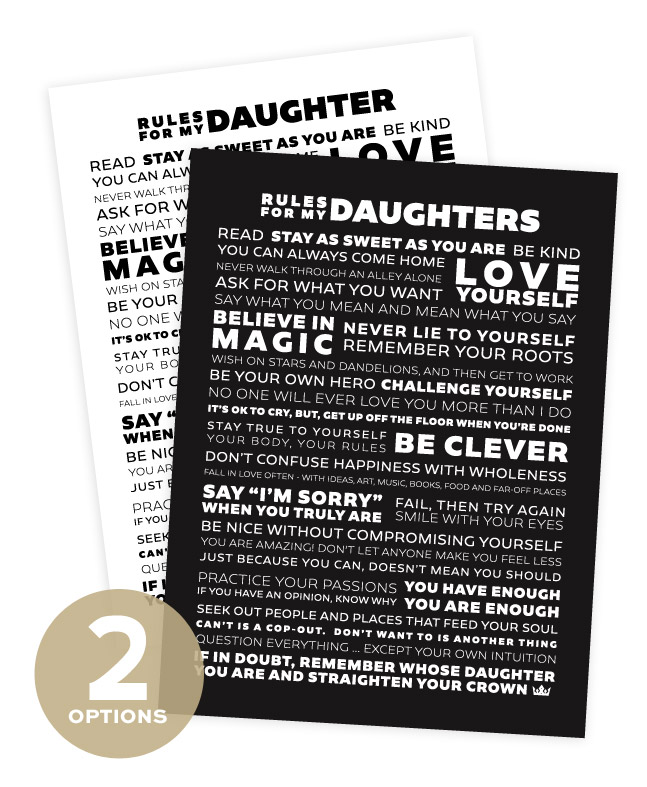
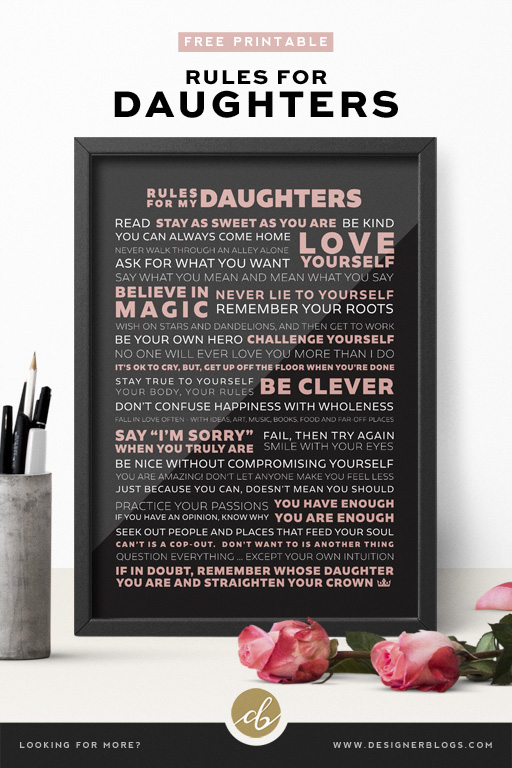
Rules for Daughters Printable Poster ready for download

Last month we got an email from one of our visitors asking about printable similar to our famous house rules poster. She had an excellent idea for printable containing rules for her daughters. Because of that, instead of charging her for creating this printable, I did it completely free. We decided together to make it available for all of you as a free download. It is how the rules for my daughters printable was created.

One or more?

No matter how many daughters you have, there is a version of this printable for you!

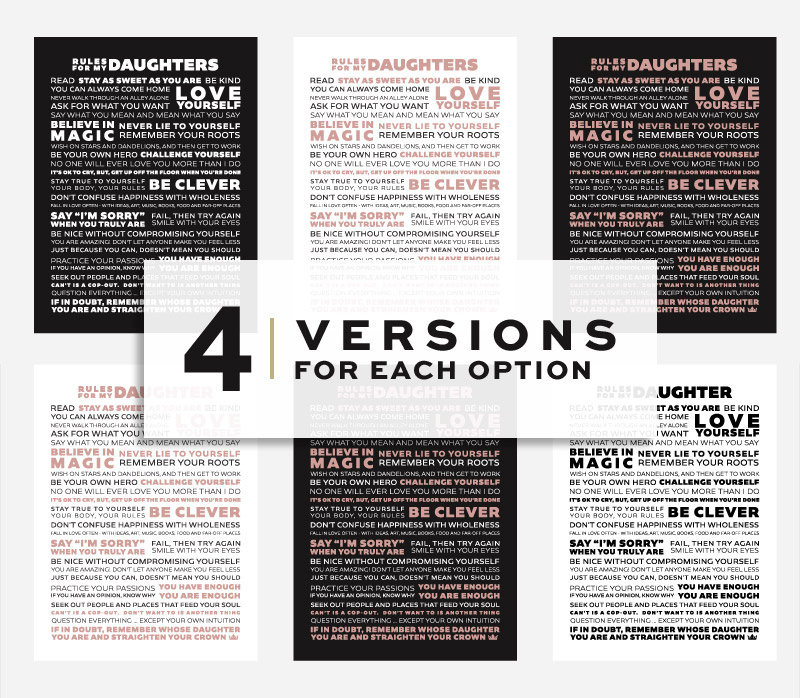
In this download, you will find a total of eight posters! Four for proud parents of one daughter and four for families with multiple girls.

All posters included in the Rules For Daughters printable package are in A3 size, so there should be no problem with reading all the rules.

Finally, I could not decide which colors to include. Because of that, I added them all. So there are black/white and black/white/pink color combinations.

Different versions of Rules for Daughters Free Printable

Download Free Rules for Daughters Printable

For Personal Use Only.


If you are looking for more printables, make sure to check our free printables library


We would appreciate it if you can share this printable because it helps us a lot! Just click on the buttons below. It is entirely free for you but helps us grow and produce even more content.

Share and help us grow. Thanks!


Font used in this free rules for daughters printable is called Geometrica.


Looking for something specific?

If you have an idea for printable, let us know in the comments! We are always looking for inspiration. If you decide to print today’s freebie, make sure to share photos of your decorated room with us via Instagram or Twitter.

P.S This post includes affiliate links. By clicking them, you are supporting us. Thanks!

Word + Quiz: ad hoc

0
Word + Quiz: ad hoc

adjective: for or concerned with one specific purpose

adjective: often improvised or impromptu

adverb: for one specific case

_________

The term ad hoc has appeared in 168 articles on NYTimes.com in the past year, including on May 6 in “Small Clubs Are Where Rock History Is Made. How Many Will Survive?” by Ben Sisario:

In interviews with 11 independent proprietors, most said they felt crippled by uncertainty about what lies ahead. Without some form of government aid, many said, they would go out of business in six months to a year.

…. To stay afloat, and distract from gloom, operators have gotten scrappily creative. In Wichita, Kan., Adam Hartke turned his club Wave into an ad hoc food-delivery hub for local farms.

Will Eastman, the owner of U Street Music Hall, a dance club in Washington, started selling T-shirts, which became an unexpected hit — the 700 sold in the last two weeks has provided enough cash to extend the club’s life a month longer than he’d estimated.

_________

Should Students Be Monitored When Taking Online Tests?

0
Should Students Be Monitored When Taking Online Tests?

In “Keeping Online Testing Honest? Or an Orwellian Overreach?,” Shawn Hubler writes about universities trying to ensure academic integrity in online testing:

In an April survey by Educause, a nonprofit organization focused on technology and education, 77 percent of 312 institutions polled said they were administering, or planning to administer, take-home tests online with some sort of remote monitoring, ranging from human surveillance via webcams to software that lets a test temporarily take over a student’s browser.

It is not only students who are cringing at the online monitoring.

“There has to be a better way,” said Sue Escobar, a professor of criminal justice at California State University, Sacramento. Ms. Escobar said she would not use the webcam option the university added last month to its online testing software, finding it “invasive.”

“Sure, we want to minimize cheating, but how far do you go?”

Academic integrity is not a new concern in remote learning. In surveys, about one in three students say they have cheated in online tests — about the same as the proportion who admit to cheating offline.

For nearly two decades, Respondus, an educational technology firm in Redmond, Wash., has been marketing a customized browser that prevents test-takers from seeking answers in a new tab while their exam is in progress. As online instruction and web access have expanded, the online proctoring market has become more crowded.

Companies like ProctorU in Birmingham, Ala., and Examity in Newton, Mass., now offer remote oversight by live proctors who watch students take tests via Skype and webcams. Proctorio in Scottsdale, Ariz., uses artificial intelligence to monitor and flag body language and background noise that might point to cheating.

The article continues:

Social media has exploded with complaints and workarounds for cheaters. The University of California, Berkeley banned online exam proctoring, concerned that poor and rural students lacked sufficient access to high-speed connections and compatible laptops. Meggan Levitt, the assistant vice provost for technology at University of California, Davis, said the school was set to expand its live proctoring deal with Examity when the coronavirus shut down the company’s India facilities.

Others simply report being annoyed and intimidated by the sense, even in the Zoom era, that they are being spied on. Thera Boonyamarn, a 20-year-old U.C.L.A. student who flew home to Thailand when her campus closed, said that every time she sneezed into a Kleenex because of allergies, the testing software would “flag” her for seeming to look away while holding what appeared to be paper.

“It’s creepy,” said Hailey Arzaga, a 22-year-old psychology and criminology major at Cal Poly Pomona who worried about what the webcam would reveal as she took a recent quiz on qualitative research methods. “Like, we have you on video and audio and we’ll record you if you screw up.”

Mr. McFarland of ProctorU acknowledged that the live surveillance “is something to get used to.” But the proctoring services say they do not sell students’ data to third parties and that they purge it after it is sent to the school unless a cheating investigation requires that they preserve it.

ProctorU drafted and posted a Student Bill of Rights after the privacy concerns at the University of California, Santa Barbara. At the University of California’s campuses where proctors are being used, faculty generally have assured students that alternate arrangements can be made for those concerned about proctors.

Students, read the entire article, then tell us:

  • Have you taken any tests since transitioning to remote learning? Did you feel tempted to look up answers online or in your notes, or to compare your work with your friends’ answers?

  • Do you think students should be trusted to complete remote tests without cheating? Why?

  • Is it ethical for teachers or outside proctors to be able to see students on video or to monitor their computer screens while they are taking tests? Why or why not?

  • Has the coronavirus pandemic changed how you view testing? We asked students if they think schools should change how they grade students during the pandemic. Do you think the pandemic should change how schools use testing to evaluate academic progress?


Students 13 and older are invited to comment. All comments are moderated by the Learning Network staff, but please keep in mind that once your comment is accepted, it will be made public.

Magical Chores

0
Magical Chores

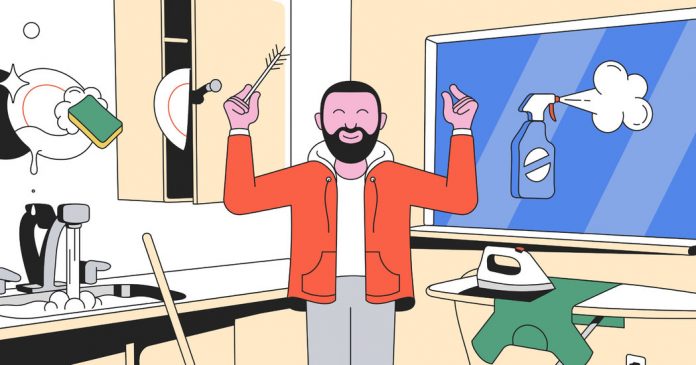
What story does this illustration inspire for you?

What’s the Best Book You Ever Read for School?

0
What’s the Best Book You Ever Read for School?

Those of us who are readers often owe a lot to our teachers. To mark the end of Teacher Appreciation Week, we thought we’d take a moment to reflect on the most influential books we picked up thanks to a teacher who slipped a book into our hands, assigned a particular novel or reached out with a thoughtful recommendation.

We asked several writers about the books or stories that left a lasting impression. Maria Semple, the best-selling author of “Where’d You Go, Bernadette,” chose “The Great Gatsby,” by F. Scott Fitzgerald. “Through ninth grade, I read books mainly for fear of getting busted if I didn’t,” she said. “That changed when David Webb at Choate Rosemary Hall assigned ‘The Great Gatsby.’ I vividly remember the day Mr. Webb pressed us to divine deeper meaning from the green light at the end of the dock, the names West Egg and East Egg, the faceless eyes on the billboard, and my quickening glee in discovering that a novel could be more than plot. It’s a high I’ve been greedily chasing since: as an English major in college, an unsuccessful starter-of-book-groups in TV rewrite rooms and a novelist myself.”

Priya Parmar, the author most recently of “Vanessa and Her Sister,” recalled: “In 11th grade, I took a class called Romantic Poetry. Our teacher unexpectedly had to move away partway through the year. Another teacher, Ms. Sidebotham, came back early from maternity leave to take her place. She brought her new baby, Susannah, with her. There were nine of us, and all that spring we pushed back the desks and sat on a circle on the floor and read poetry. When it got warm, we sat out on the grass under the oak trees. It was the kind of rare, special magic that happens when a class becomes something else. A group? A club? A team? No one word catches it whole. We became an us. Summer came. Susannah could roll over. We cried when the year ended. I asked Ms. Sidebotham for a book that would carry that feeling of collective magic forward over the summer. Carry it forward and forward so I would never lose it. She gave me ‘A Tree Grows in Brooklyn,’ by Betty Smith. I carry it forward.”

The poet Ada Limón “had a wonderful English teacher in junior high named Mr. Larimore,” she wrote. “When he returned a paper that he liked, he wrote ‘GO TO COLLEGE’ in giant letters on the front page. I liked reading, but much preferred being read to, and it was hard to do on my own with any interest. With his approval, I picked out ‘The October Country,’ by Ray Bradbury. What shocked me was the compression of the stories. The otherworldliness. I had never read stories like this. The sense of surprise. The distrust of human beings. How the enemy could be the wind or a crowd, or how a farmer could be forced to cut wheat that isn’t wheat at all with his giant scythe. I also learned the word scythe! It was just weird enough for me at 13. Just forbidden enough. Just dark and morbid enough to keep my interest. I still think about those short stories, their strange and eerie turns, how it gave the world another magical (and creepy) possibility.”

Veronica Chambers, a senior editor at The Times and the author, most recently, of “Queen Bey,” started college at 16, and found solace in her Spanish literature course. “Nacuñan Saez, my professor, handed me Isabel Allende’s ‘The House of the Spirits’ that year, and it was the very definition of the rabbit hole that took Alice to Wonderland. He gave me book after book after that: classics by Borges and Márquez, but also books by authors I’d never heard of, like Silvina Ocampo. Magic realism became our secret language. That book and these conversations taught me everything — how this language that I mostly knew as the domain of my mother and older relatives was something magnificent, truly stunning on the page.”

Students 13 and older are invited to comment. All comments are moderated by the Learning Network staff, but please keep in mind that once your comment is accepted, it will be made public.

An Intimate Look at Italy’s Saffron Harvest

0
An Intimate Look at Italy’s Saffron Harvest

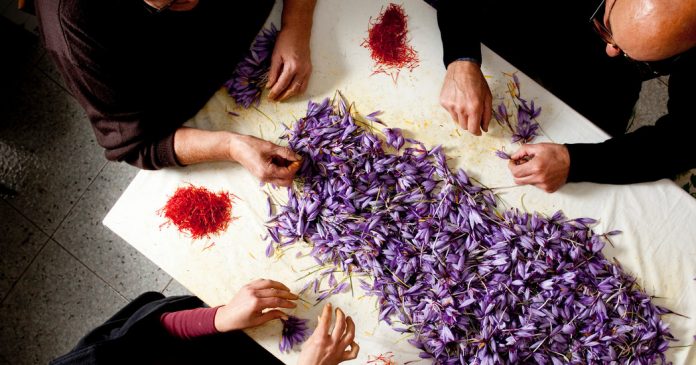
With travel restrictions in place worldwide, we’ve launched a new series, The World Through a Lens, in which photojournalists help transport you, virtually, to some of our planet’s most beautiful and intriguing places. This week, Susan Wright shares a collection of photographs from a saffron harvest in the Abruzzo region of Italy.

A few years ago, though, in happier times, I traveled to this isolated corner of Italy, east of the Apennine Mountains, to photograph the annual autumn saffron harvest.

It was my first adventure across the country’s rugged central mountains — to the wilder side, away from the popular tourist spots, where the terrain is pristine and sleepy medieval villages are scattered throughout the pretty foothills.

Having grown up in a rural setting in Australia, I was fascinated by the Italian agricultural communities: their deep connection to centuries-old traditions, and the infusion of their land and culture with an infectious love and passion.

How wonderful that these rural communities throughout Italy come together for their annual festivals, known as sagre, which are often dedicated to a specific local food.

Giovannina Sarra (often called the Saffron Queen) and her family hosted me and a handful of others at their home. Early in the morning, in the Navelli plateau, we fanned out among the misty, violet-tinged fields and participated in the harvest.

Saffron, which is taken from the stigmas of the saffron crocus, is a lucrative crop. Also called oro rosso, or red gold, it was first introduced into the region around the 13th century — an import from Spain. Prized as an exotic spice, it was sold in the wealthier regions and cities of Milan and Venice, and abroad in France, Germany and Austria.

Saffron is harvested in the hours just before sunrise, while the crocus petals remain closed; this makes the flowers easier to pick and helps protect their precious crimson-red stigmas. The delicate buds are handpicked and placed into baskets.

Later, on the same day, the stigmas — three tiny threads per flower — are separated from the moist petals. It’s a delicate process that takes hours with a skilled and patient hand.

In the evening, over an open wood fire, the bright threadlike stigmas are dried in wire baskets, a process that adds to the richness of both the color and the flavor.

It takes roughly 4,000 flowers to make one ounce of saffron powder — which means there’s a staggering amount of labor packed into the tiny containers in which the spice is sold.

Not long ago, when I sat down to a mouthwatering plate of Risotto alle Milanese (a dish that’s infused with saffron), I recalled the early misty morning I spent with Gina Sarra and her family.

But there’s no doubt that families like the Sarras will one day return to the restorative power of their sagre — and to the many traditions that have endured for generations in the fields of the Navelli plateau and beyond.


Susan Wright is an Australian photographer based in Italy, where she has lived since 2003.

Word + Quiz: meniscus

0
Word + Quiz: meniscus

1. (optics) a lens that is concave on one side and convex on the other

2. (physics) the curved upper surface of a nonturbulent liquid in a vertical tube

3. (anatomy) a disk of cartilage that serves as a cushion between the ends of bones that meet at a joint

_________

The word meniscus has appeared in 24 articles on NYTimes.com in the past year, including on Jan. 24 in “Zion Williamson Is Back. Will His Knee Hold Up?” by Jeré Longman:

With guidance from the medical staff of the New Orleans Pelicans, Williamson tried to correct biomechanical flaws suspected of contributing to a tear in the lateral meniscus — a rubbery, shock-absorbing cartilage on the outside of his right knee.

The meniscus was trimmed during surgery in October. Then, said Williamson, who can leap so much higher and is so much more agile than one might expect of someone his size, it was time to learn how to run and jump more safely. Williamson trained himself to land with his knees bent, instead of straight-legged. The bent-knee landing helps disperse the pounding forces of basketball. He also worked to avoid tilting his knees inward when landing with a rebound or making a sharp cut, which can put added stress on the outside of the joints.

_________

How Much Do You Know About Mozambique?

0
How Much Do You Know About Mozambique?

Can you find Mozambique on a map? What else do you know about this African nation with about 30 million people?

Lesson of the Day: ‘Teenager, an Aspiring Detective, Returns $135,000 He Found’

0
Lesson of the Day: ‘Teenager, an Aspiring Detective, Returns $135,000 He Found’

In this lesson, you will consider what Mr. Nuñez’s actions, and the community’s response to those actions, say about him and about our larger society.

Imagine you are walking down the street and you see a wallet. You open it and it has an ID but no money. Would you return it? What if it had $20? What about $200? Would that prompt you to change your decision?

Is it stealing if you keep it? Are you a sucker if you return it? What’s the right thing to do?

We asked that same question in a Student Opinion prompt earlier this year. One student commented, “If it has a lot of money in it I think a lot of people would actually be more obligated to return the wallet knowing that the person would miss it more.” What do you think about that response? Do you think it would be more tempting to keep the money if it was only a small sum? Why?

Jose Nuñez Romaniz found a bag with $135,000. What do you think would go through your mind if that happened to you? Would you give the money back immediately? Would you be tempted to keep any of it? What do you think most people would do in this situation?

Read the article, then answer the following questions:

1. Where did Mr. Nuñez find the money? Why did it have a tag on it that said how much money it was supposed to contain? How much money was in the bag?

2. Why did he move the money from the place where he found it? Why did he decide not to call the phone number that was posted on the A.T.M.? What did he do instead?

3. How did Mr. Nuñez say he felt at the time? What about later, when he learned that a ceremony would be held to honor him?

4. Mr. Nuñez said, “I’ve wanted to be a crime scene investigator or a detective for the police since I was a kid.” Based on how he reacted in this unusual situation, do you think he would make a good law enforcement officer? Why?

5. Officer Simon Drobik, an Albuquerque Police Department spokesman, described the Nuñez family as humble. He also said: “It was amazing to watch them. There’s a greater good there. They weren’t blown away by Jose’s actions, but everyone else was.” Why was the Nuñez family not surprised by what Jose did? Why do you think other people were surprised? What was your reaction when you read the article?

A special ceremony was held on May 7 to honor Mr. Nuñez. He was given gift cards, merchandise from a sports store, a $500 scholarship from an electric company and a plaque. He also got to throw the first pitch in an improvised ceremony with the Albuquerque Isotopes, a minor-league baseball team, and got to meet the mayor.

Watch the video embedded in the tweet below.

Why do you think Mr. Nuñez was given these honors and gifts? Was it to thank him for being honest? Was it to remind the rest of us that there is reason to have faith in humanity? Was it to make Mr. Nuñez a role model for other children and teenagers, to show that good things can happen when you do the right thing? Are there other reasons the community might have decided to hold a special ceremony for Mr. Nuñez?

What is your reaction to the ceremony? Was it the right thing to do for Mr. Nuñez, no matter what the reasons? Why?