fbpx
Home Blog Page 1536

Lesson of the Day: ‘Just 700 Speak This Language (50 in the Same Brooklyn Building)’

0
Lesson of the Day: ‘Just 700 Speak This Language (50 in the Same Brooklyn Building)’

Find all our Lessons of the Day here.

Do you speak or study another language? Is it easy to find books, dictionaries or videos in that language? In the article “Just 700 Speak This Language (50 in the Same Brooklyn Building),” the New York Times writer Kimiko de Freytas-Tamura documents a language that originates from a region in Nepal but that has very few remaining speakers today. In this lesson, you will be asked to think about the importance of preserving languages and the different languages that can be heard in your neighborhood or school.

Note to teachers: This lesson also offers activities specifically for students who are English language learners. Educators, based on your student body, consider if it might be meaningful for them to reflect on their personal experiences with language and culture. If you are a teacher of students who are English language learners, you may want to further explore this Reader Idea for teaching English as a new language using The Times or this resource for teaching Tier Two words with The Times.

Brainstorm ways that you can learn or absorb language. Have you ever observed a baby learning language? How is that similar or different from what you know about how teenagers or adults can learn a new language? What are ways that books or apps teach language? How can languages be learned or preserved through cultural experiences or at home?

If you speak a different language at home than at school, think about when you use and interact with your home language. Do you ever see it written anywhere? Do you know how to write and read in that language? Where do you hear it? When do you need to use the language?

Read the article, then answer the following questions:

1. What is the Endangered Language Alliance? Why is Rasmina Gurung working with the alliance?

2. What are some of the reasons that the linguist Husniya Khujamyorova is writing children’s books in Wakhi?

3. Ross Perlin, a director at the Endangered Language Alliance, said that “languages are not dying a natural death.” What does he mean by that, and what examples did he give to support that claim?

4. What are some of the reasons that Seke speakers immigrated to the United States? What are some of the similarities and differences between their lives in Nepal and in New York City?

5. Nawang Gurung, a New York-based translator, talked about some of the reasons that Tibeto-Burman languages that were spoken in the Himalayas are disappearing. What are some of the factors that he describes as being part of the decline of Seke speakers and of other speakers of Tibeto-Burman languages?

6. What is Ramaluk? What does this new dialect tell you about language evolution over time? How could Ramaluk affect the preservation of Seke?

Choose one or both of these Going Further activities:

Option 1: Languages in My Community

Explore this map of languages spoken in New York City from the Endangered Language Alliance. Do you recognize any or all of the languages that are included? Do you see any languages that are spoken in your neighborhood or school community? Create a map or list of the languages spoken in your town or even just in your classroom.

If you are in the United States, you can use this map from the United States Census Bureau to see what languages people identified speaking in 2010. The United States also has many languages that have been lost because of its history of colonization and because of the displacement of Native Americans. Look at this map from Native Land to see if you are able to identify the Native American languages that were spoken in your area. Do you know if any of those languages are still spoken by tribal members in your community or elsewhere?

Option 2: Culture in My Home

Image
Credit…Diana Zeyneb Alhindawi for The New York Times

How can you identify culture in your home? Is it through language, decorations, religious traditions or the observance of holidays? The article describes the home of Nyaka Gurung (shown above):

Nyaka Gurung, Ms. Gurung’s uncle, has built low, wooden rectangular seats along the walls, covered with rugs, a common setup in Nepalese living rooms. Scrolls of Tibetan deities hang on one wall.

On a recent visit, offerings were laid out under a framed photo of the Dalai Lama that hung above a large plasma television. A thermos used to serve hot butter tea, the national drink of Nepal, stood on a table nearby, and the smoky fragrance of chumin, a Tibetan incense, blended with the smell of Indian spices from the kitchen.

What are some of the elements of culture in Ms. Gurung’s home? Make a list with two columns: one for the object (hot butter tea) and one that names the cultural element (food). Then, think of your own home and make a list of objects and how they relate to your culture. If you have time, write a description of your home like the one in the article. You can use these questions to guide you:

  • What objects are important to you or other members of your family? Why?

  • What are the spices or cooking ingredients in your home? What dishes can be made with them? Where do you or other family members buy those ingredients?

  • Is there anything in your home that was not purchased in the United States or the country or city where you currently live? Is that object important to you in any way?

  • What language or languages are spoken in your home? If you have a television, what kinds of programs are playing? Is there instrumental music, singing or radio programs in another language playing at your home?

  • Are there objects of religious significance in your home? Are there certain foods or other traditions that you practice for holidays?

Be sure to use vivid language and details in your description so that someone can imagine what your home looks like.

‘A 📖 of Two 🏙’

0
‘A 📖 of Two 🏙’

What would the opening line of your favorite book look like written with emojis?

Like Patrick Thomas, the graphic artist who recreated the first line of Charles Dickens’s “A Tale of Two Cities” in this piece, try rewriting a line from a book you’ve read by replacing some key words with emojis.

Post it in the comments, then see the related article to learn more about Mr. Thomas’s work.


Find many more ways to use our Picture Prompt feature in this lesson plan. You can find all our Picture Prompts in this column.

Defy Expectations with the FutureLearn Career Mapper

0
Defy Expectations with the FutureLearn Career Mapper

Evidence suggests there are countless benefits to having a job you like doing. Or better still, a job you love doing. You’re happier, more motivated and more efficient. Similarly, finding purpose and feeling productive in your job also ranks highly with those happiest at work.

But finding and securing your dream role or even getting your foot on the ladder isn’t an easy task.

Taking your learning into your own hands can be a sure-fire way of proving your commitment to your profession, showing your initiative for self-improvement, and can even support you to start or transition into a new career.

Plus, learning can boost your self-esteem so that next time you’re going for a promotion or interview, you can be confident of your expertise.   

We’ve designed a Career Mapper to help you step back, assess where you’re at right now, think about where you want to go, and set some achievable goals to get you there.

This downloadable worksheet has been designed to take your current skill set into account and pinpoint the key areas in which you’d like to develop and where you might need further learning.

It won’t take too long, and it might just change your life.

Download your copy today.

How to Choose the Right Way to Study for You: Advice for Students

0
How to Choose the Right Way to Study for You: Advice for Students

On the other hand, something that does not offer any challenge at all is also not worth your time. If you practice a study technique and find that you are 100% accurate 100% of the time then you should start to get suspicious. You may need to increase the difficulty level, add in new material, or simply abandon the study technique all together. If you’re not getting anything wrong – ever – then you’re not learning! Of course, you might have a good day where you happen to do very well. Great! Celebrate the accomplishment and set the next goal. However, if there’s very little challenge then that’s a sign that the technique you’re using is either not effective or not appropriate for the material you are trying to learn.

There are several names for this phenomena in education and cognitive psychology (the “zone of proximal development” and “desirable difficulties” both describe a similar concept) but I like to think of this as the 3 Bears approach to learning. It shouldn’t be too hard or too easy, but somewhere in the middle that’s just right. 

Note that what is too easy or too hard can and should change as you learn more! You will need to periodically reevaluate what is and is not working for you.

An important question to ask when determining whether or not a strategy has been working is: what does success look like? Depending on the nature of what you’re studying success can look very different. For terms and definitions it can be fairly straightforward: the proper terms and definitions come to mind much more quickly and easily. You might score higher on a practice quiz or game or complete a timed run more quickly. Other learning tasks may not be as straightforward. Improving your understanding and analysis of a text for a literature class may involve some more nuanced feedback from your instructor to know if your study strategy has been working. Practicing a creative skill like drawing or acting might also require some practice or skill to even be able to evaluate what improvements you have made.

Often what success looks like depends on how you will be assessed or how you expect your newfound knowledge will be used. A common type of assessment is a unit exam or an end of term cumulative test. In some subjects the assessment may be more hands on like a lab practical or a final performance. At the end of these assessments (whether they are given by an instructor or they are simply a goal you have set for yourself) you will have some kind of information about whether you have learned something or achieved your goal. However, the way you should prepare for each of these can be very different. You would not prepare for a clarinet recital by only making flashcards of the musical scale. That might be beneficial at first, if you have no previous knowledge of how to read sheet music, but you would expect to move on to actually playing the clarinet and producing the appropriate sounds. Maybe eventually you will produce something that someone else would call music. Similarly, if you have a final lab practicum in a science class then practice recalling terms and definitions might be useful at first, but you will need to move on to actually practicing the laboratory techniques that you will be tested on. 

Generally, the more your practice/study technique/app/game looks like your final assessment or goal, the more beneficial it will be. As noted above, you may need to work up to that format depending on your level of background knowledge and experience, but as the quiz/test/recital/practicum approaches you should be doing something that resembles your goal. Be wary of any study technique that looks radically different or unrelated to how you will be assessed. Sometimes it might be a necessary step on the road towards your learning goal, and sometimes it can be a distraction from your goal. The only way to really know is to reevaluate periodically and, when possible, ask for feedback from your instructor.

References

(1) Kornell, N., & Bjork, R. A. (2007). The promise and perils of self-regulated study. Psychonomic Bulletin & Review, 14, 219-224.

(2) Karpicke, J. D., Butler, A. C., & Roediger, H. L. (2009). Metacognitive strategies in student learning: Do students practise retrieval when they study on their own? Memory, 17, 471-479.

(3) Hartwig, M. K., & Dunlosky, J. (2012). Study strategies of college students: Are self-testing and scheduling related to achievement? Psychonomic Bulletin & Review, 19, 126-134.

Film Club: ‘Almost Famous: The Lost Astronaut’

0
Film Club: ‘Almost Famous: The Lost Astronaut’

A monument is an ideal. A memorial is a memorial of something that really happened in life. I could have been the first black guy in space. Was that my fate that I’ll be remembered for that, for something that I didn’t do? Think about that one. How the hell do you get famous for something you didn’t do? There rest burdens heavier than have rested on the shoulders of any president since the time of Lincoln. In the ’60s, there was a lot of tension, an incredible amount of tension. In 1959, the first seven astronauts were appointed by Eisenhower, seven guys that become immortal by proclamation only. The way the story goes, the Kennedy White House said, we’ll satisfy our black community by making a black astronaut. One black guy on a Wheaties box. O.K., but how do you make an astronaut? I was born in Kansas City in 1933. I wanted to be an artist. My dad said, “No, no, no, no. You’re going to go to engineering school. You’re going to be an engineer.” All the pilots, the good pilots, the aces, they all grew up on farms. Every one of them. We lived on a farm. And the Fairfax airport was within walking distance. I didn’t know where these airplanes had been when they came and landed. And I didn’t know where the hell they were going when they took off. But it had to be exciting. I did get the flying bug. I was down there every day. I became their mascot. I’d hang out in the maintenance shacks. And I’d hand the guys the tools. And after a while, I said, “Why don’t you just take me up?” [AIRCRAFT ENGINE BUZZING] Immediately, when you can see past the horizon, you say, oh, my god. All of a sudden, your world expands to this bigger and bigger and bigger space. That whole expanse of stuff, you get even more curious about it. Why were we here? And what part do we play? And what, if anything, can we do about it? I was probably 18. And I had a paper route for the white newspaper. And I had a paper route for the black newspaper. On the front page of my black newspaper was a black jet pilot standing on the wing of an F-86 Saber jet. My world about exploded. Oh, my god, they’re letting black folks fly airplanes. I almost stopped throwing papers that minute. I went straight to the Air Force recruiting office. By the time I got to be upper class, I had all these stripes on my arm. I had my own office. I was an officer all the way through the whole thing. And lo and behold, I get this letter, all the Pentagon trapping, all this stuff on it. Direction of the president, opportunity to be an astronaut. So I took it to my boss and he said, “Tear it up. You don’t want any part of that, man. They’re going to make hamburger out of you down there, buddy. Ed, stick with us. You’ve got a career. You’re going to be a general. You have a family here. So leave it alone.” But my curiosity overwhelmed me. So I secretly sent all my information in. And within days, days, not weeks, months, years, I got an assignment to go to Edwards Air Force Base for me to enter experimental test pilot school. I was a Kennedy boy. That’s the term they used, Kennedy boy. I knew full well when I got on the base that it wasn’t going to be a cakewalk. It seems like every street at Edwards Air Force Base is named after a dead test pilot. Every time I strapped that airplane on my behind, I don’t know whether I’m coming back. And on top of that, I was told, Chuck Yeager, the guy that was running the whole damn school, had called the students and the instructor staff into the auditorium and said, here’s our plan. Don’t talk to him. Don’t socialize with him. Don’t drink with him. Don’t invite him to your parties. Just ignore him like he doesn’t exist. And in six months, he’ll be gone, because that’ll psychologically break him. He’ll quit. And so they set about doing that. That’s Chuck Yeager. My dad had issues in his work world. Whether you’re a baseball star like he was or whatever you did, I mean, you still suffer the ravages of prejudice. And he would go on these rants. “All white men are the worst people in the world and they’ll stab you in the back.” But my mother had the last word. “Don’t pay any attention to what your dad said. All people are equal.” And those were the last words I heard every day until I was 18 years old. You can teach your brain to help you, or you can teach your brain to destroy you. And your brain will react to what it’s been told. Every day of my life, my mother told me how much she loved me and how I could do anything in the universe. I don’t care what it was, you have the ability to do that, as long as you’re prepared for it. That removed any other force coming into my space plane. But if I had all this other trash running around in my head, I wouldn’t be able to do any of that kind of stuff. They were announcing names to go into the second phase of it. And of course, that next level moved you on to NASA, which was the third thing. Just graduated from test pilot school and we were all vying for a spot. So guess who’s not quitting? Captain Ed Dwight. 29-year-old Negro says he is anxious to go into space. He’s Captain Edward Dwight of the Air Force, selected to be an astronaut, the first of his race to be so designated. Captain Dwight and his family got the news at their home at Edwards Air Force Base in California. And of course, that was hot news, I mean, really, really hot news. Place was packed. The press came out from D.C. Cameras were everywhere. All these photographers on me. And they have one cover all the rest of them. Immediately, I was getting 1,500 fan mails a day. And I was on the cover of all these magazines around the world. See, I was being handled out of the White House. So everywhere I went, I was bombarded with it. So there was a lot of unhappy people about this. There’s a black guy that can do this? Oh, god, you’ve got to be kidding me. Kennedy boy, Kennedy boy. All that nonsense, couldn’t give it a parking space in my brain. We were in bioastronautics training at Brooks. They were trying to figure out how far they could take a person and break them. They did everything they could possibly do. They’d stick needles in your head and then introduce these waves. Centrifuge training, a lot of guys couldn’t handle that. They’d take you up to 15 g’s. Of course, your tear ducts close and the tears creep over to here. And they’re like bullets when they hit your ears, that thing is so fast. God, I just ate that up. I really enjoyed it. It was just absolutely fabulous. The happy ending of this thing would be going into space. [ROCKET ENGINES BOOMING] O.K., I guess you all know why you’re here today and why we’re here. We’d like to introduce the new group of 14 astronauts who we’ve been in the process of selecting for about the last four months. [APPLAUSE] Was there a Negro boy in the last 30 or so that you brought here for consideration? No, there was not. They were announcing a new group of astronauts and I wasn’t in that group. A month or so later, Kennedy has been assassinated. Are you now in fact completely out of the astronaut program? Why aren’t you an astronaut? Do you feel that what’s happened to you was a setback for civil rights opportunities in this country? I would rather not comment on that. I resigned in ’66, loaded my Volkswagen to the brim and drove off the base. You know, god, I start getting emotional. [CHUCKLES] I mean, that was tough. Next question. [SLOW STRING MUSIC] If I just receded into nothingness, it would have been all well and good with everybody else, because that’s how things are supposed to happen. I would have loved going into space, you know, had this thing all worked out that way. That choice was snatched away from me. So why bother about it, you know? I have to attribute that to some kind of fate. Well, maybe there’s some more work for me to do. Maybe my fate was I had to bring the African-American story to the public venue. [SLOW STRING MUSIC] And so I started building things, making things. 129. I’ve completed 129 memorials since I’ve done this and over 18,000 gallery pieces. A monument is an ideal. But a memorial is a memorial of something that really happened in life. How do you go from slavery to freedom and accomplishment? What happened? Harriet Tubman, George Washington Carver, Rosa Parks, Sojourner Truth, Dr. King, B.B. King, Dizzy Gillespie, Miles Davis, step by step by step by step. Guion Bluford. First African-American in space.

What Students Are Saying About 2020, Growing Up in Another Era, and Distraction

0
What Students Are Saying About 2020, Growing Up in Another Era, and Distraction

With all the work in A.I. that various tech companies such as Apple, Samsung, Google, Microsoft, and Amazon have been doing, it’s only a matter of time before this Artificial Intelligence moves out of its shell and into bigger, more human-like robots that can assist workers, and eventually replace them which may or may not be good depending on how you look at it. Regarding the way technology and the way it affects our lives and how it will change in the next ten years, I don’t know. I personally don’t want anything to change about my way of life and the tech around me, sure, faster internet, easier means of transportation, and robot helpers Sound nice, but if we get too used to those innovations and never do any work of our own we may as well end up like the people from Wall-E, mindlessly floating around on our hover chairs with our lazy bodies having their every need catered to by a computer.

— Bryce Hollopeter, garrison middle school, Walla Walla, WA

I believe we should stop artificial intelligence from even becoming a thing. Not only will it take away many jobs from humans, it will take away human interaction. People won’t be going to the doctor’s office and speaking with a real human being who can understand a person’s emotions and relate to them. They will be speaking to a robot who will just prescribe them some medicine and send them on their way. Not only should we become a more understanding society in the 2020s, we should also become a more interactive society, and push for the end of the development of artificial intelligence, not only to save jobs, but to save ourselves.

— Carter Osborn, Hoggard High School in Wilmington, NC

There is no telling where advancements in technology will bring us in this decade or even in this century. We could be rearranging the atoms in cars to make more food. We could be creating our own multiverse. We could be harnessing matter from other planets. In the late 2010s, we found a hint that the world will be more open-minded about change and about other people’s mentality. We legalized gay marriage and we became more socially aware of the LGBT+ community among others. And all of this change happened in just a decade, with more to come in this one. Think about the 60s. Look at how much work it took just to desegregate America. That took decades. Now, look where we are. We are introducing new genders! We are allowing people to change their gender! This all happened in the span of 5 years and this is just picking up speed now.

— Ian Condon, Hoggard High School

Not to start this off as a gloomy pessimist, but I think it’s all going downhill now. The problem? People. Sure, we don’t start natural disasters and you can’t blame an entire species for the mistakes of one person, but men and women all over the world are becoming exceedingly more and more aggressive. Instagram isn’t even a place to post pictures of your newborn baby anymore. Instead, it’s a place to bash our President, tell our next door neighbor Julie that her ideas on abortion are stupid and so on. Australia is already in flames and what are most celebrities with millions, even billions of dollars doing? Buying another Gucci bag and their fifth Lamborghini. Selfishness, aggression, and not having an open mind are going to continue plaguing the world. No matter how many disasters, political or natural, the world faces, humanity as a whole isn’t going to get it together any time soon. Happy New Year everyone.

— Faith Beene, Lubbock Cooper High School

The future is no doubt here. 20 or 30 years ago if you asked someone what they thought 2020 had in store they would probably envision a futuristic metropolis. Flying cars, jet packs, hovercrafts, and robots, the full “Jetsons” package but that is the opposite of what I think or at least hope 2020 has in for us. With the climate CRISIS pouncing on civilization what we need is a way to merge our world with the natural world. I think in 2020 we will see technologies improve so that we can almost regress in the damage we created and possibly fall out of the digitalized empire we have created. I predict that with the climate crisis we will learn from our mistakes and take preventative measures to keep it at bay and become one with the world and realize that no matter how strong governments or military forces are the one ally we need is the planet and no other war matters other than the war on climate change and greenhouse gasses.

— Ethan, Pinkey, Hoggard High School in Wilmington, NC

The Yankees will win two World Championships. The Ravens will also win two Super Bowls. I believe that iPhones will become more of an addiction, and kids will have more social problems than ever before. Gas will become way more expensive than it is now. The prices for everything will rise even at the grocery store. The world will be better cared for by hospitals due to technological advances. Those are my main predictions for the next decade.

— Kaleb Scull, Lubbock, TX

Young people have grown up and witnessed terrorism, climate change, major political conflict, war, and an economic crash. We’ve seen a lot and know a lot. We are the most accepting generation so far, and may very well entirely change the workforce. This generation is also very well versed in technology, and may be able to use technology in a very different way. With the looming threat of climate change, I believe this new decade will bring a new fight against pollution and global warming. With new findings on Mars, I believe space exploration will continue. I even believe that scientists may be able to start properly experimenting in terraforming — changing a planet’s climate through introducing plants into the environment, so that it resembles the Earth. A new generation may bring a lot to the table in this new decade.

— Evin Berube, Bristol Central High School

What’s Going On in This Graph? | Jan. 15, 2020

0
What’s Going On in This Graph? | Jan. 15, 2020

These graphs and map, which show the change in the past 48 years in the bird population by habitat for the United States and Canada, appeared elsewhere on NYTimes.com.

After looking closely at the graphs and map above (or at this full-size image), think about these three questions:

  • What do you notice? If you make a claim, tell us what you noticed that supports your claim.

  • What do you wonder? What are you curious about that comes from what you notice in the graphs and map?

The questions are intended to build on one another, so try to answer them in order. Start with “I notice,” then “I wonder,” and end with a catchy headline.

2. Next, join the conversation by clicking on the comment button and posting in the box that opens on the right. (Students 13 and older are invited to comment online. Teachers of younger students are welcome to post what their students say.)

3. After you have posted, read what others have said, then respond to someone else by posting a comment. Use the “Reply” button or the @ symbol to address that student directly.

On Wednesday, Jan. 15, our collaborator, the American Statistical Association, will facilitate this discussion from 9 a.m. to 2 p.m. Eastern time to help students’ understanding go deeper. You might use their responses as models for your own.

4. By Friday morning, Jan. 17, we will reveal more information about the graphs at the bottom of this post. Students, we encourage you to post an additional comment after reading the reveal. How does the original article and the moderators’ comments help you see the graphs differently? Try to incorporate the statistical terms defined in the Stat Nuggets in your response.


  • Read our 2019-20 introductory post, which includes the archives of past releases by topic and graph type.

  • Learn more about the “Notice and Wonder” teaching strategy and how and why other teachers are using this feature from our on-demand webinar.

  • Sign up for our free weekly newsletter so you never miss a graph, and add our 2019-20 “What’s Going On in This Graph?” live-moderated discussion Wednesdays to your Google calendar (1/15, 1/22, 1/29, 2/5, 2/12, 2/26, 3/4, 3/11, 3/18, 3/25, 4/1, 4/8). Graphs are always released by the Friday before to give teachers time to plan ahead.

  • Go to the A.S.A. K-12 website, which includes This is Statistics, resources, professional development, student competitions, curriculum, courses and careers.

Word + Quiz: tableau

0
Word + Quiz: tableau

1. any dramatic scene

2. a group of models or motionless figures arranged as if in a painting

_________

The word tableau has appeared in 96 articles on NYTimes.com in the past year, including on Dec. 17 in “There Are No Children Here. Just Lots of Life-Size Dolls” by Motoko Rich:

NAGORO, Japan — The last children were born in the remote mountain village of Nagoro 18 years ago.

Now, just over two dozen adults live in this outpost straddling a river on the Japanese island of Shikoku. The elementary school closed its doors in 2012, shortly after the last two students completed sixth grade.

But on a recent bright autumn Sunday, Tsukimi Ayano brought the school back to life.

It just so happened that she did it with dolls rather than humans.

Ms. Ayano, 70, had arrayed more than 40 handmade dolls in a lifelike tableau on the grounds of the shuttered school. Recreating a school sports day known as “undokai,” a staple of the Japanese calendar, she had posed child-size dolls in a footrace, perched on a swing set and tossing balls.

_________

Lesson of the Day: ‘The City That Cycles With the Young, the Old, the Busy and the Dead’

0
Lesson of the Day: ‘The City That Cycles With the Young, the Old, the Busy and the Dead’

Find all our Lessons of the Day here.

Featured Article: “The City That Cycles With the Young, the Old, the Busy and the Dead”

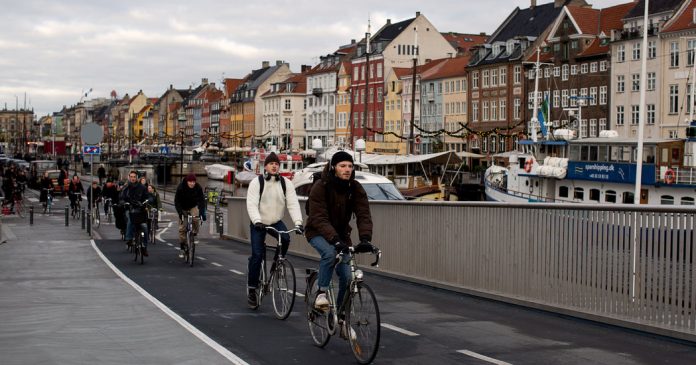
Nearly half of all journeys to school and work in Copenhagen, the capital of Denmark, take place on bicycles. And people like it that way.

In this lesson, you will learn how one city grew to become the most bike-friendly city in the world and the reasons residents love it. In a Going Further activity, you will imagine how you could transform your own town or city into a more bike-friendly environment.

Do you ever ride a bicycle? If yes, how regularly? Do you ever ride your bike to school? Do members of your family ever ride bikes to work?

In Copenhagen, 49 percent of all trips to work or school are on bicycles. In fact, in Denmark’s capital and most populated city, bikes vastly outnumber cars. In the United States, roughly 100 million Americans ride their bikes each year, but only about 14 million bike at least twice a week and less than 1 percent bike to work.

Imagine a situation where all cars and public transportation suddenly disappeared — and all you had for travel was a bicycle: How would it affect you and your family?

Take a few minutes to reflect on how life would be different: How would you feel? Do you think the transition would be easy? Or do you think getting around with only a bike would be an impossible task?

What would be the biggest challenges for you and your family? Are there any ways that riding a bike would benefit you and your community?

Write a short journal entry describing a life with only bikes to get around your town.

If you are in a classroom setting, share and discuss your journal writing with a partner.

Reflect and discuss together: In what ways would you and your community be better off with bicycles as the only mode of transportation? Would you want to live this way for a day, a month or even a year? Do you think it is possible or desirable for your town or city to become, if not a bike-only place, a more bike-friendly one?

Read the article, then answer the following questions:

1. Why does the article begin with the story of Natalie Gulsrud’s trip home after work? What details in the opening paragraphs illustrate Copenhagen’s commitment to bike riding?

2. Give at least three reasons residents of Copenhagen use bicycles as their primary means of transportation. What advantages do bikes have over other modes of travel?

3. What factors have influenced Copenhagen’s transformation into a bike city over the past 30 years? What role has city government played in this shift?

4. Why did Ms. Gulsrud move to Copenhagen from the Pacific Northwest? How do the bicycles parked outside of her home illustrate both the diversity and needs of cyclists in the city?

5. What can you tell about the role of bicycles in Copenhagen residents’ daily life from the photographs featured in the article? Select one image and write about how it reveals the city’s commitment to biking.

6. The article concludes:

Not long ago, modernity felt bound for something like the Jetsons, with families zipping around via jet packs. But maybe this is the future, a resumption of the past, upgraded by contemporary design.

“The infrastructure is there and it’s safe,” said Mr. Rasmussen, as he prepared a comforting dinner of squash soup and home-baked sourdough bread. “Why wouldn’t you bike? It’s stupid not to bike.”

Do you agree with Mr. Rasmussen? If you lived in Copenhagen, would you make bike riding your primary means of transportation? Are bikes rather than jet packs the future of transportation?

Choose one or both of the following two writing activities:

1.) Tell us about your views on bicycles:

  • Compare your writing from the warm-up activity to life in bike-friendly Copenhagen as described by the article. What was most surprising, provocative or memorable about the way the city supports, facilitates and encourages a biking culture? Does the article change how you think about transportation in your own town or city?

  • Do you own a bike? If yes, how often do you ride? Do you consider yourself an enthusiast? Or is your bike collecting dust in a closet or garage? Does reading this article make you want to change your bike-riding habits?

  • How common is bike riding in your town? Do you consider your town to be a bike-friendly place? What aspects of bike culture in Copenhagen do you think are replicable in your town?

  • Do you think a shift from car culture to bike culture is possible where you live? What about in America as a whole? What obstacles do you think prevent making bike riding a priority?

2). Make a recommendation (or series of recommendations) to make your town more bike-friendly.

How can you make bike riding more common, convenient, accessible and safe?

Think imaginatively: While increasing bike riding might be your goal, consider possible changes to the physical environment in your community as well as ways to change public attitudes. Additionally, take into account the benefits of increased bike use like improved health for individuals and protecting the environment.

First, based on your own experience, assess your town’s current bike-riding use: Do many people you know ride bikes? Are the streets frequently filled with bike riders? Or rarely? How safe is it to ride a bike? How easy is it for people to get around on a bike? Are there any local policies and initiatives that support bike riding? What obstacles might prevent the increase of bike riding?

Next, research existing bike-friendly policies, initiatives and programs such as: bike-share programs in New York City, Minneapolis-St. Paul and Charlotte, N.C.; improvements to bike infrastructure (which include bicycle boulevards, bike parking, better streetlights); the creation of designated bike lanes as in Boulder, Colo.; the use of cargo bikes instead of delivery trucks; e-bikes; car-free zones; programs that promote cyclists’ safety like the “Safe Routes to Schools” program in Eugene, Ore.; educational campaigns like the “No Ridiculous Car Trips” in Malmo, Sweden; and creative ways to promote a strong bike culture that welcomes and celebrates bicycling, like National Bike Month and Bike to Work Day.

Finally, develop a recommendation or recommendations to promote a more bike-friendly community where you live. Be sure to consider your community’s needs and strengths and to anticipate concerns from residents who might be skeptical.

How to Motivate Yourself to Achieve Your Goals

0
How to Motivate Yourself to Achieve Your Goals

Once you’ve set a goal or New Year’s Resolution, how do you find the motivation to achieve it?

Dr. Richard Ryan, who co-developed the Self-Determination Theory, one of the leading theories of human motivation, shares research-backed tips to do just that. Dr. Ryan is also a Professor at the Institute for Positive Psychology and Education at the Australian Catholic University and a Professor Emeritus in Psychology at the University of Rochester in New York.

Below, listen to the conversation or read the transcript, and hear Dr. Richard Ryan’s thoughts on:

  • If a person can change their personality or behavior
  • Questions to ask before you make a change in your life
  • How you can motivate yourself to achieve your goals
  • The psychology behind a lack of motivation
  • How to accomplish and stick to New Year’s Resolutions
  • If an accountability partner helps with motivation
  • How different types of motivation in psychology impact you

Want to hear more from Dr. Richard Ryan?

.

Or if you’re a member of the press, set up an interview with Dr. Ryan or learn more about the topics he can speak to.

___________________________________________________________________________

Transcript

Coursera: [00:00:02] From Coursera, this is Emma Fitzpatrick, and today I’m speaking with Dr. Richard Ryan, a Professor at the Institute for Positive Psychology and Education at the Australian Catholic University and a Professor Emeritus in Psychology at the University of Rochester in New York.

He’s also the co-developer of the Self-Determination Theory, one of the leading theories of human motivation. 

That’s why we’re talking with him about what exactly motivates us to change and how we can use his insights to really reach those New Year’s Resolutions this year.

So, let’s go ahead and get started.

You have done a lot of research about personality development and how people change throughout their lives. So, do you think that wanting to be a better person is part of human nature?

Dr. Richard Ryan: [00:00:55]
The nature of human nature is an age-old question.

A lot of people have said well, you know, human nature is
basically something that pursues the good or trying to be better. And other
people say it’s malevolent or bad.

From birth on, you can see that it’s human nature to want to learn, to want to explore, to be curious about the environment around us.

So, it’s kind of built into us as a natural tendency to grow
and to develop. And of course, that natural tendency really becomes more robust
when you get supportive and nurturing conditions.

That’s what I think what’s most interesting is when can
people be good, not whether they’re generally good.

And so, we’ve always been trying to study what are the
nurturing conditions that really bring out that growth tendency in people–that
desire to learn and desire to take things on.

Coursera: [00:01:39] Interesting. Okay.  And as people look at their life and what’s going on around them, do you believe fundamentally that people can change? 

Dr. Richard Ryan: [00:01:47]
People can make a lot of changes in their life.

They can both change their behavior, and they can change the
settings in which they find themselves.

And I think a lot of what people are seeking in life are
conditions under which they can feel a lot of satisfaction. And of course,
finding those in this modern world is no easy task.

So, a lot of what we do in a motivation theory is, first ask the question, why are you trying to make a change and explore what’s underneath that. 

Coursera: [00:02:09] And what is a common reason that you hear that people do want to make a change?

Dr. Richard Ryan: [00:02:14]   Well, people have all different reasons for
making changes in their life.

Take something like weight loss as an example.

Some people will wake up one day, and they say, well, I’m
going to lose weight. But the reasons for doing so could vary a lot.

Some could be from social pressure that they’re feeling around them, or, you know, wanting approval from other people.

Some could be because they really want to get more vitality in their lives or feel in some ways healthier.

The different motives you have for why you want to make a
change are really going to influence whether that change is going to be
successful over time.

Coursera: [00:02:41] So do you think that having that purpose be top-of-mind needs to come first before you can start zeroing in on motivation?

Dr. Richard Ryan: [00:02:49] We really look at two kinds of classes of why people are motivated to do what they do.

And sometimes we call it controlled motivation, when you’re
making a change because you’re feeling pressure from other people or pressure
from, you know, internal standards and criticisms that you have of yourself.

So, this kind of pressured change typically doesn’t lead to anything sustained over time.

Kind of more important is finding out if the change is
something that really is congruent with your values and your interests, and
really kind of focusing on that.

And that helps people, I think, sustain the effort it takes
to make real change over time.

Coursera: [00:03:22] So if someone is interested in changing their life, what do you recommend that they do to get started?

Dr. Richard Ryan: [00:03:28]
There’s a series of questions I’d ask.

The first one is, you know, why am I making this
change?  And if it’s really something
that truly is my personal value and something that’s going to be fitting with
my life.

I think the answer to that is, yeah, let’s pursue that.

And then if you’ve got a goal like that, that you really can
stand behind, I think the next question is how do you strategize reaching it?

And a lot of what motivation research today shows is that,
you know, you’ve got to be concrete about implementing that goal. You’ve got to
think about, well, how am I going to make that change?

And this is where other questions come in.  Where am I going to do that? How am I going
to do that, and when am I going to do that?

These are called implementation plans.

Once you’re committed to a change, you’ve got to be concrete
in saying, “Here’s how I’m going to accomplish that.”

And then the final thing is your goals should be ones that
you can reach.

So, we always think about setting what’s called proximal goals or more immediate goals. You know, accomplish the first step along the way up the mountain rather than thinking about the mountain itself. 

Coursera: [00:04:20] That sounds like great advice. People so often think I want to make a change. I want to do something different. And for so many people it seems like that’s as far as they get.

Dr. Richard Ryan: [00:04:30] Yeah. I’ve read reports that 80% of New Year’s Resolutions, for instance, don’t actually get achieved, which just backs up your point, Emma, that most of the time when we make such resolutions, they don’t succeed. But part of that’s for the reasons we’ve been talking about here.

Personally, I’m suspicious about, you know, goal setting in
the strong sense of like, “Oh, I’m going to set a real resolution
today.”

Coursera: [00:04:51] It sounds like you’re skeptical of New Year’s Resolutions?

Dr. Richard Ryan: [00:04:54]
Well, I have no problem with people picking a day and setting resolutions for
it. But again, what the data shows is 80% of the time people don’t follow
through with their New Year’s Resolutions.

And a lot of the ones that come up on New Year’s tend to be
the big five. I’m going to lose weight. I’m going to exercise more.

And a lot of those to me are really kind of external
pressure kinds of things. 

They’re also resolutions that can often come about because of what we call introjection. You’re doing it because you think you should. You know, that’s a kind of motivation that hardly ever sustains long-term behavior.

You know, a lot of times we really haven’t thought through
what is our goal and why are we pursuing that and making sure it’s something
that we’re really truly behind versus it’s just something that we’re telling
ourselves we should do or others are pressuring us to do.

But there are people who do succeed at them. And again, those are the people who have those goals really autonomously motivated. You know, they’re doing it out of interest, or they’re doing it really cause they value it, and they’ll be the ones who persist.  And I think, they can be set on any day of the year.

Coursera: [00:05:53] Right. So once you’ve asked yourself those questions that you mentioned earlier about why you want to do this and really looking deeply at the reason behind that,  should you have those steps of how you’re going to achieve it baked into the goal itself?

Dr. Richard Ryan: [00:06:07]
Let’s imagine that you decide that you want to get in better shape and exercise
more.  One of the things I’d want to do
is make sure you find an exercise that’s interesting.

One of the things that our data shows is that, you know, there are many ways to exercise, but you’ve got to find one where you find it pretty engaging

So, finding the right exercise is the first step.

Another thing is to make it fun for yourself, you know? That could include maybe bringing a friend into it so that it’s something you do together–in some way setting up little games and challenges within something. The more fun you can make the activity, the more likely you are to sustain it.

And short-term goals, you know, if you’re gonna learn to
exercise, don’t go out and try and run the half marathon within the next month.

You know, start small. Set challenges that you can really
make cause that feeling of competence that grows with really meeting those
small goals will help you stay in the game.

Coursera: [00:06:52] And in this scenario, what’s an example of a small goal? Is it something like running three times a week? Should it be even smaller?

Dr. Richard Ryan: [00:07:01]
The thing about motivation and goals is they’re going to be individual.

So, for some people that running three times a week might
not be very much increase for them. For other people, that might be an
insurmountable goal to reach.

So they really want to start by assessing where you’re at
now and setting some goals that are getting you just beyond that level of where
you are right now so that you can keep moving up and feeling that sense of
growth and competence and doing it in a way that also feels entertaining and
fun along the way.

Coursera: [00:07:28] And when you’re looking at goals like this, is it better to look at it by time spent, by achievement goals, like run three miles or spend two hours a week running? 

Dr. Richard Ryan: [00:07:41]
I think it’s going to be highly individualized, and whenever people say, well,
I’m going to do, you know, X hours a week.

Well, sure, it’s nice to start with a concrete goal like
that but be flexible about it. See how realistic it is.  Experiment, you know, and then find the right
levels that you can do.

Let’s say that you want to read more, or you want to have
more interactions. When you set any kind of goal like that, you want to make
sure it actually fits within your life.

Coursera: [00:08:04] Yeah, and I think that’s a great point.  If someone knows they want to change their life. They have a goal in mind. How do they actually find the motivation?

Dr. Richard Ryan: [00:08:14]
You don’t have to find the motivation. The motivation is already in you. It’s
more about finding the conditions under which that’s going to be able to be
expressed.

I think we have most of that motivation to grow–most of that motivation to, you know, develop new skills, to meet new people, to connect with things.

It’s about unleashing that, finding the conditions under which you’re going to feel free to pursue those things 

Find out what it is that we’re really interested in and what
we really value as a personal change.

And then in getting behind those things, make sure we set up
the circumstances.  We’re going to feel
that social support. We’re gonna feel that ability to grow and feel competent,
and not going to feel pushed around and controlled.

Coursera: [00:08:49] And when you’re looking at it like that, do you see that an accountability partner or having someone there who you can go to and say, “Hey, I want to do this. I want you to help me.” is a big piece of the puzzle?

Dr. Richard Ryan: [00:09:01] Bringing partners into it can be really helpful. I kind of shy away from the idea of an accountability partner ’cause it sounds like you’re putting the sense of control in the partner in that moment. And I’d be afraid of that not only not helping your motivation, but also interfering with your relationship.

Social support, not in the sense of trying to hold me accountable, but rather be a place I can go when I’m frustrated.

Coursera: [00:09:22] That’s a unique take on it.  How do you make that community and social support come to fruition?

Dr. Richard Ryan: [00:09:28]
Depending on what your goal is, you may be able to find other people who want
to pursue it with you.

If not, I think all of us need social support in the sense of friends we can go to, and discuss, you know, what’s working and not working for us in the goals we’re pursuing in life.

That could be, you know, your partner in life, or it could be a work partner, or it could be a sports mate. So, it could be, you know, any number of people.

But it’s always good to have somebody to go to, to talk out your frustrations and help reset your, goals and your tank.

Coursera: [00:09:54] And are there any other tips like that that you would suggest people keep top-of-mind to stay motivated that they often forget?

Dr. Richard Ryan: [00:10:02]
If they haven’t found themselves motivated, there’s a reason for it.

And usually, those reasons lie in one of three categories.

Either, you know, what’s motivating you is really a
controlling force. And I think, you know, that means, you know, think through
whether this is really something you want to do.  Sometimes when you’re unmotivated it’s a
signal that you’re on the wrong activity or wrong task, or you’re in the wrong
job.

Another thing I might think about is if I’m feeling unmotivated,
am I setting goals that are too high? Let me see if I can reach some more
immediate goals and proximal goals, so I can get my sense of balance back in
it.

And a third thing, maybe I’m feeling disconnected from the people around me in whatever setting that is, and I want to explore what that’s about and see if there’s a way I can make those bridges happen.

People are really motivated when they’re in conditions where
they can feel a sense of autonomy and choice in what they’re doing, where they
can feel that sense of competence, where they could feel that connection.

So, it’s about creating those conditions in your own life and that, and the people around you. That’s how motivation happens.

Coursera: [00:10:54] And it sounds like it’s not so much overcoming a lack of motivation when you set a goal and you’re not reaching it. It sounds like it could be the goal in and of itself that’s a problem.

Dr. Richard Ryan: [00:11:06] Absolutely. I think a lot of the reason people fail at goals is they’ve chosen the wrong goal. They’ve chosen goals that they really themselves don’t stand behind, and that’s why it’s not the lack of effort. Sometimes it’s because you can’t mobilize that effort cause you’re really not behind it.

You have to find those goals that are really fitting for you, and then you can pursue them with vigor.

Coursera: [00:11:24] And what does that process look like? I know you said asking yourself if it aligns with your values. In concrete terms, what are the steps that someone could take to make that happen?

Dr. Richard Ryan: [00:11:34]
There’s a lot of talk today about the concept of mindfulness, and mindfulness
really means that you are pretty open and receptive to what’s going on. 

I would want people to be mindful about the goal and think, “Hmm, I wonder why I want that goal. What’s up with this goal?” Let that goal kind of sink in and see does that really fit with me.

And I think if you’re mindful in that way and you’re
receptive to what’s going on, you’ll be able to pick better goals or ones that
are more congruent with who you are.

And we always should be open to reflecting on why we’re
doing what we’re doing.

A lot of personal change comes about because you’re feeling
pressure from other people to change, or you’re seeing some pressure from the
culture around us to be a certain kind of way.

And a lot of those things are just coming from the outside,
and they’re not really our own goals. And it’s no wonder that people don’t
persist at them.

Coursera: [00:12:16] So it sounds like if it’s motivated externally by outside signals, those goals are just never really going to work out very well.

Dr. Richard Ryan: [00:12:24]
You know, Emma, I’d even add to that, some of the goals that people have are
ones that even when they reach them, don’t make them happy.

And a lot of what we’ve been looking at is the content of people’s goals. Typically when people are pursuing things like materialism, image, or fame, whether or not they’re successful toward those goals, they don’t produce a lot of happiness.

And in contrast, when people are pursuing goals like
personal relationships or when they’re about caring for their communities or
personally growing and learning in their life, when they accomplish those
goals, it really produces happiness.

And so, some of motivation is not just, you know, why you’re
motivated, but it’s also what you’re motivated to do. And so, I think
reflecting on goals and trying to do the ones that really matter and are really
meaningful, it’s probably gonna produce the richest kind of life and an easier
one to sustain as well.

Coursera: [00:13:14] I’m so intrigued by this idea of really finding goals that speak to your motivation and your values. How do people find that?

Dr. Richard Ryan: [00:13:23]
We don’t get a lot of time to think about that. You know, we have busy lives
and we’re pushed around by a lot of forces. 

So, one of the things we’ve been looking at recently in our
research is the impact of solitude.

Solitude can help you find out what’s important to you and
how can I pursue the things that really matter.

And it does turn out when people are pursuing those things
that they think really matter, they have happier lives.  And so, I think that’s why people are so
interested in finding out what those are. 

Coursera: [00:13:49] That’s a great point. And I’m curious if there are any goals that you’ve been working towards recently? 

Dr. Richard Ryan: [00:13:56] There are so many changes that I have been pursuing in my own life, and some of them have to do with, you know, making sure I’m focused on the most important activities.

You know, given that the number of demands that I’m facing
is doing a better job of really keeping track of what I need to be doing versus,
you know, some peripheral things and distractions. So, you know, it’s a goal I
can stand behind. It’s a goal that I’ve set some techniques in motion to do.

I haven’t been fully successful at it in the last month or
two, but I’m working on it.

Coursera: [00:14:27]   So it sounds like even if you’re working on a goal and it is one that really matters to you and it’s not, you know, inherently going well right off the bat, that doesn’t mean you need to just toss it out the window. You can stick with it and make it work? 

Dr. Richard Ryan: [00:14:41]
When you aren’t achieving it, you’re getting some information. So, one of the
things you learn is like, what are the obstacles?

So, you know, I’m discovering in this goal a little bit more about what’s distracting me and what’s getting in my way. And that’s helpful. 

The thing I think about goal setting more generally is you
can set goals, but when you fail at them, there’s information there and it’s
not a thing to be self-critical about.

It’s a place of discovery. You can find out then how you might be more effective or what we can do differently to make that goal happen.

Coursera: [00:15:08] So what’s something that you wish more people knew or understood about how motivation works overall?

Dr. Richard Ryan: [00:15:14]
Well, I guess in the big picture of motivation, it used to be people thought
about carrots and sticks. Rewards and punishments.

So that was really about how can you motivate people from
the outside? How can you manipulate them to do X, Y, or Z?

What has come about in the field of motivation over time is
a lot less emphasis on how to control people from the outside, but rather how
can you facilitate motivation from the inside? And that means creating the
conditions under which they’re going to be most motivated.

It’s very different from trying to carrot and stick them
from the external environment.

Coursera: [00:15:44] Could you talk a little bit about what Self-Determination Theory is since I know that’s your main area of study and focus?

Dr. Richard Ryan: [00:15:52] Well, in a nutshell, the theory is a broad approach to understanding the conditions under which people are most willingly and wholeheartedly engaged and motivated.

And it’s also under what conditions they’re most likely, therefore, to flourish and feel wellbeing in contrast to when people feel unmotivated.

And kind of the key component of the theory as we’ve talked about, Emma, is that you have greater, higher-quality motivation and greater wellness when you have support for your basic psychological needs.

That means in those contexts where you feel, you know, more
autonomy, more competence, and more relatedness, you’re going to feel more
motivated.

And then the final piece of that theory is also looking at
the conditions that really do, deplete people and drive down their motivation.
So, conditions where people feel overly controlled.  Or feel the challenges are too great for them
or feel disconnected from others.  

Coursera: [00:16:36] And could you also talk through what are some of the different types of motivation?

Dr. Richard Ryan: [00:16:40]    When we think about intrinsic motivation when you’re doing something because you really have an interest in curiosity and find inherent enjoyment in the activity itself, it tends to be a very high-quality form of motivation.

So, when you can find intrinsic motivation, you’re much more
likely to sustain activity over time and to get the most out of it.

Extrinsic motivation’s when you’re doing something for some
goal that’s separate from the activity itself.

And in Self-Determination Theory, we see that as varying from very controlled, when you’re being pushed around by rewards and punishments all the way up to very autonomous when you’re doing something because you really highly value it. And so, it can vary a lot. So it can be a really sustainable motivation, but it could also be something that’s very short-lived and can’t be sustained.

We’ve only begun to touch on Self-Determination Theory,
which is a really broad theory of human motivation and development and
wellbeing.

And we do have a Coursera course on Self-Determination Theory. It’s called ,” and we cover a lot of topics in that, both intrinsic and extrinsic motivation about goals and how people can set goals, but we also look at, you know, people’s goals in domains, like in schools and classrooms and workplaces and in parenting.

And a lot of practical places where you can think about
motivation and put some of these ideas to work. So, you know, if you’ve had any
interest in some of the stuff we’ve been talking about today, the Coursera
course might be something to look into.

Coursera: [00:18:01] Go to Coursera.org today to enroll for free in Dr. Richard Ryan’s course,

And as always, thanks for listening and happy learning.