fbpx
Home Blog Page 1553

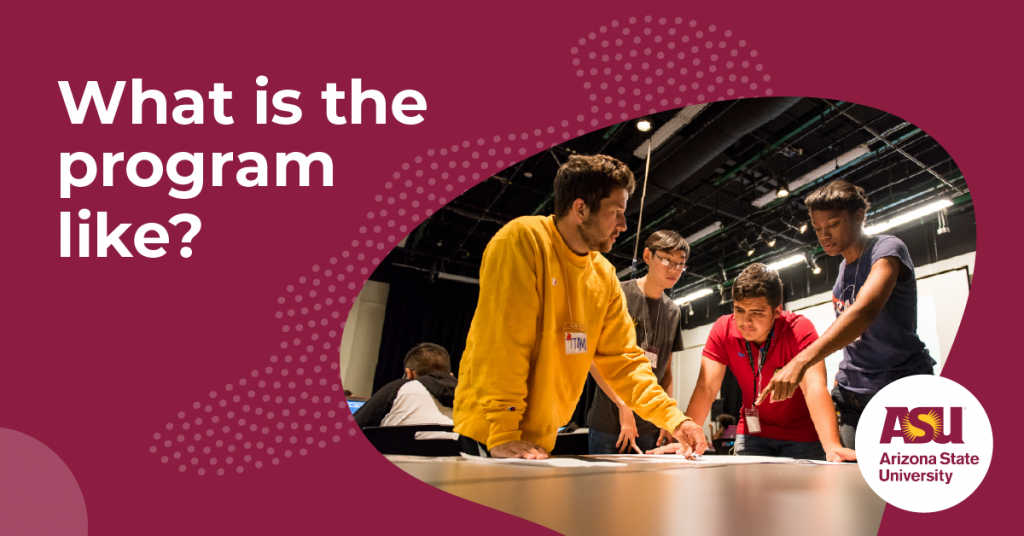
Getting an MCS Part II – What is the program like?

0
Getting an MCS Part II – What is the program like?

When preparing to apply for an online MCS, students often ask the essential question – am I prepared for this degree program? In part two of this three part “Getting an MCS” series, we will be going in-depth on how to prepare for the MCS program once you have applied.

Once you have applied to the program (this may have involved applying the first day you heard about the program, or working on your math requirement, mastering prerequisite skills, or improving your GPA to prepare your profile), it is typical to wonder what the program will be like. 

What is an MCS and can I earn it online?

Many students want to understand exactly what an MCS is, and what it is like to earn it online. The MCS program is a master’s degree that aims to educate its students around the most topical, important subjects in the computer science field. This means students will spend a total of 30 credit hours (which translates to 10 courses) mastering advanced computer science topics such as AI, Software Engineering, Cloud Computing, Big Data, and Cybersecurity. All online MCS students take one foundations course, one systems course, one applications course, and any seven additional courses. Students in the ASU online MCS program earn the same degree as students who study on-campus upon graduation. 

For students in the online program, the day-to-day learning experience includes attending live classroom sessions with professors, participating in group projects using Zoom and Slack, and accessing instructors during live office hours. The Coursera platform provides students with features like interactive video transcription, in-course note taking, and seamless learning across multiple devices. Faculty in the online program are hands-on and interactive in classes and projects, and hold weekly live class sessions that cover multiple time zones across the world.  Online ASU MCS students have access to many of the benefits of ASU that make the program unique. For example, as an online student, you can opt to work with on-campus organizations such as the one-of-a-kind Blockchain Research Laboratory, which offers a rich ecosystem of partners including private companies and government agencies. 

Is it hard?

Students often want to know how difficult the MCS program is. The answer is that the MCS program has rigorous coursework, but also has systems and people in place to support its students and empower them to succeed. 

The coursework is challenging; students are assessed by ASU faculty and staff on a rigorous set of assignments, projects, and exams required for university degree credit. Each course is about a 15-20 hour commitment. However, the MCS program is also set up to support its students at every stage of the degree program. One crucial piece of this support system is the role of the Success Coach. Each student who enrolls at ASU online is assigned a Success Coach. Success Coaches are segmented based on student affiliation, and work one-on-one with students to tackle time management, goal attainment, and connecting to ASU resources. Coaches are experts in asking the right questions, uncovering challenges, and working through difficulties that may arise during one’s time in the program. Many ASU students cite success coaches as instrumental to their success. The Success Coach has two components to their role. One is to provide coaching sessions that cater to the student’s personal, professional, or academic goals. These coaching sessions are unlimited to students in the online degree program. The second component is to perform proactive outreach based on a list of critical flags, such as not being registered for a course as the registration date approaches. 

The MCS program’s goal is to prepare its students for success in the world of computer science, which means that the program is proportionately rigorous in its academic expectations to what will be required by a career in computer science and that the program is structured to allow students to gain mastery and confidence in the field over the course of the program, often with the help of faculty, staff, and success coaches. 

Where can my MCS degree take me? Is it worth it? Why should I earn an MCS?

Finally, students considering the MCS program often want to know where the MCS degree will take them. The ASU online MCS program is focused on making certain that its students will succeed in the current computer science field. The degree’s coursework includes applied problems that are relevant to modern businesses. Students submit a project portfolio, which is a great tool for students to showcase their experience to prospective employers. When thinking about their educational plans, students should also consider what options they hope their education will open up for them. The ASU MCS program focuses on preparing its students for the computer science jobs that are in the world today by teaching cutting edge topics and by guiding each student through their career search. This holistic preparation and guidance means that ASU Online Master of Computer Science graduates have (but are not limited to) career opportunities for jobs in Computer Networks, Computer Programming and Science, Software engineering, Computer systems, Database administration, Information technology, Computer Software Quality Engineer, Computer System Architect, Computer Systems Analyst, Geospatial Information Technologists, Information Technology Manager and more.

ASU plays a very active role in the career search process. All students enrolled in the online degree program have access to the Fulton Schools of Engineering Career Center, a one-of-a-kind dedicated career center for ASU’s engineering students with a robust offering of online services and resources. Their office is designed to help strengthen student’s job search skills, build their resume, enhance their interview skills and more. These career advising sessions are easy to access for all online students, as the office provides virtual services like online resume reviews, online tools to practice interview questions, online chat with career advisors, and downloadable information and sample resumes. 

ASU’s MCS program will prepare you to thrive in whichever computer-related field you should choose. 


Getting an MCS Part I – Can I get in?

0
Getting an MCS Part I – Can I get in?

When preparing to apply for an online MCS, students often begin by asking themselves if they have the right background for this degree. In part one of this three-part “Getting an MCS” series, we will be providing in-depth answers to some of the typical questions students ask during the application process.

Can I get in?

The two components that students must consider when applying to a master’s program are their testing profile and their educational background. For ASU’s MCS degree, considering one’s testing profile is simple – the ASU MCS degree does not require the GRE to apply. Thus, the bulk of one’s time preparing to apply to the ASU MCS should be spent reviewing their educational background. 

For the ASU MCS program, students often want to know if they can get an MCS without having majored in Computer Science in their undergraduate degree. While the answer to this may initially seem like no – to be in the ASU program, you must be able to demonstrate prerequisite knowledge (on official transcripts) of the topics Computer Organization and Assembly Language Programming, Data Structures and Algorithms, Operating Systems, and Principles of Programming Languages OR Introduction to Theoretical Computer Science: Principles of Programming Languages – the answer is actually yes, you can apply to the ASU MCS program if you do not have a computer science background. ASU offers three short, self-paced non-credit courses that can help aspiring MCS students without a typical CS background demonstrate the required prerequisite knowledge. Read more about these courses on the ASU website. The fact that you do not have to have studied CS in undergrad to apply is evidenced by the profiles of the MCS’s incoming classes; some of the most common job titles from admitted students are non-CS roles, like technical Product Manager and Project Manager. 

Another piece of student’s educational background that they must consider when applying to the ASU MCS program is their undergraduate GPA. The ASU MCS program requires a minimum cumulative GPA of 3.0 (3.25 recommended) in the last 60 credit hours (last two (2) years) of a four (4) year undergraduate degree. Again, this requirement should not be a barrier for any student aspiring to apply to the ASU MCS program, as the MCS program has a performance-based pathway to help students that don’t have the required GPA enter the program. If you complete all three pathway courses with a 3.0 GPA on the first attempt within 18 months, you will have demonstrated an ability to succeed in the subject matter and can apply to the degree program using this new GPA. 

Getting an MCS without a background in mathematics

Students also want to know if you can get an MCS without a background in mathematics. The MCS program does require two (2) semesters of advanced math in Calculus I and Calculus II and a background course in Discrete Math, so if you did not complete those requirements in your previous education, you will need to either take the prerequisite courses at a local accredited University or enroll as a graduate non-degree seeking student at ASU to complete MAT 265 and MAT 266 online. 

The answer to the question “Can I get an MCS degree without the GRE, an undergraduate degree in Computer Science, a GPA over 3.0 or prerequisite math courses” is YES! If you are willing to put the time into preparing your education to align with the ASU MCS requirements and you are excited to learn about computer science, then you are eligible to apply for the MCS degree. 


Novartis goes ‘Big on Learning’ by Offering Employees Top Data Science Master’s Degrees on Coursera

0
Novartis goes ‘Big on Learning’ by Offering Employees Top Data Science Master’s Degrees on Coursera

By Leah Belsky, SVP of Enterprise, Coursera

In September, we began our partnership with Novartis, a leading global medicines company, to offer its entire workforce — 108,000 employees across 140 countries — unlimited access to Coursera’s catalog of 3,600 courses. We embarked on this journey with a goal of establishing a culture of learning that delivers critical data science, digital, and soft skills needed to drive medical innovation across the company. 

Today, I’m delighted to share that Novartis is going beyond courses to offer employees access to top master’s degrees on Coursera. As of this month, Novartis is granting all eligible employees free tuition to earn the Master of Computer Science in Data Science from the University of Illinois or the Master of Applied Data Science from the University of Michigan. The popular degrees will enable employees to build mastery in core skills like machine learning, computer systems, and natural language processing.

Adding world-class degrees to the learning catalog is a testament to Novartis’ leadership in “going big on learning.” Aside from building the critical skills needed to stay at the forefront of medical innovation, these efforts enable Novartis to boost employee engagement and attract and retain talent in the long-run. 

A rapidly changing skills landscape requires employees to gain different levels of proficiency in critical skills like data science, so providing a range of learning options is key. Novartis is the first Coursera for Business customer to offer master’s degrees through our enterprise platform, setting a model for creating diverse and flexible pathways within an institutional learning context. Employees can now select from individual courses to gain a basic understanding, Specializations for more in-depth exploration, and master’s programs to achieve advanced skills in data science. 

Novartis employees have demonstrated tremendous curiosity for learning. Since the launch of our partnership, thousands of employees have embraced the opportunity to learn data science on Coursera. Leveraging Coursera’s skills development analytics, Novartis is able to benchmark skills development against industry peers. Early results reveal that employees are quickly advancing in data science skills, leading in areas like Data Visualization and Data Strategy. 

We can’t wait to see the impact unfold as Novartis continues to set the bar high for learning in the workplace.

For more information about the Coursera for Business offering, visit coursera.org/business.

Coursera for Business provides a world-class learning platform for companies that need to upskill, reskill, and deepskill their talent. With topics ranging from digital transformation and data science to software development and leadership, over 2,000 companies trust the Coursera for Business enterprise platform to transform their talent.

1

MOOCWatch 21: China vs the World

0
MOOCWatch 21: China vs the World

With one of our newest recruits being based in China, we are now able to share an insider’s perspective on the development of MOOCs in one of the world’s most influential nations.

And it seems that MOOCs are as big in China as they are in the rest of the world combined. According to China’s Ministry of Education, there are around 270 million MOOC learners in China (this number is hard to verify…) and about 20 MOOC providers offering 15,000 courses.

Rui, Class Central’s data analyst, recently compiled a list of Chinese-language MOOC providers. She also explained how each year, China’s Ministry of Education reviews and recognizes the country’s best MOOCs.

In other big provider news: edX has a new co-CEO, Udacity continues to tweak their pricing, FutureLearn crosses 10 million learners, and Coursera courses now start every day.

Since we’re approaching the end of 2019, we have started working on our end-of-year analysis. You can read the 2018 edition here. Keep an eye out for this year’s series on MOOCReport.

Also, Class Central just turned eight! Read about what we’ve been up to in 2019, which included refreshing the site’s design, expanding our team, and participating in a series of international conferences.

Top Stories

China’s Nationally-Recognized MOOCs via Class Central
China has over 12,500 MOOCs. The Chinese government has launched a program to recognize the best MOOCs the nation has to offer.

Massive List of Chinese Language MOOC Providers via Class Central
We explore China’s MOOC providers, from the large, general-purpose MOOC platforms to the smaller, more specialized ones.

Coursera Courses Start Every Day via Class Central
In an investigation by Class Central, we found that most Coursera courses show a start date that corresponds to the day you visit the course page.

Co-CEOs for edX via Class Central
COO and President of edX Adam Medros has been promoted to co-CEO alongside founder Anant Agarwal.

Tweaks to Udacity Nanodegree pricing continues via Class Central
In the latest pricing tweak, Udacity students pay upfront for a limited time access, then switch to a subscription if needed.

University of Michigan (U-M) Now Has MOOCs on Three Major Platforms via Class Central
In 2012, U-M was a founding partner for Coursera. It joined edX in 2015 and is now also offering courses on FutureLearn.

Class Central Turns 8
Our website was launched 8 years ago. And 2019 has been quite hectic for Class Central. Read all about it in our new article describing, among others, how our platform, team, and course catalog have developed over the past year.

A Better Class Central via Class Central
Recently, we launched a new and improved version of Class Central which we have been working on for months.

Class Central design refresh

10 million learners via Class Central
Six years after the first FutureLearn courses were launched, the British-based provider has reached ten million users.

200 universities just launched 620+ free online courses via Class Central
In the past six months, more than 620 new courses in a range of subjects have been added to Class Central’s catalog from 200 universities around the world.

Arizona State Moves On From Global Freshman Academy via Inside Higher Ed
The Global Freshman Academy from Arizona State University has been scaled back and largely replaced by the non-MOOC (neither open nor free) Earned Admission program. Theories about why conversions are low from MOOCs to actual college credit continue to be proposed.

Coursera News Roundup

New MOOC-based Degrees

Georgia Tech’s online enrollments reach an all-time high via Georgia Tech
More than 9,000 students are currently enrolled in Georgia Tech’s online master’s degree in computer science (OMSCS). In addition, the Institute’s other two online programs have attracted more than 3,300 students. Overall, Georgia Tech’s online degrees for one third of the Institute’s 36,000 enrollments in Fall. With an OMSCS professor now at the helm of the Institute’s College of Computing, Georgia Tech’s online programs are expected to continue to grow.

2019 Nobel Prize in Economics via edX
MIT Professors Abhijit Banerjee and Esther Duflo, who created an edX MicroMasters program, and Harvard Professor Michael Kremer, were jointly awarded the prize for their research in development economics. Their work has “changed how governments and agencies around the world intervene to help people in poverty”.

Other Online Education

Africa-focused Andela cuts 400 staff as it confirms $50M in revenue via TechCrunch
Andela, which started out as an Edtech company is no-longer an EdTech company (unless it’s subsidized by the government) and just a consulting company. It released 400 of the junior engineers and plans to hire more than 700 more mid to senior level engineers.

Siraj Raval is cancelled? via Twitter and The Register
Popular AI/ML YouTuber, course maker, and ex-Udacity instructor Siraj Raval was recently caught plagiarizing an entire paper just weeks after the news came out that he had sold a shoddily made $199 10 week course to over 1000 people (although he promoted it as limited to only 500 people). In Class Central’s 2017 year in review for Udacity, we noticed that Siraj’s name was taken off Udacity’s Deep Learning Foundation Nanodegree, even though he was one of the original instructors. It turns out that multiple Udacity Directors had an intervention meeting with Siraj explaining to him how bad his habit of non-attribution was.

LinkedIn Skills Assessments via TechCrunch
The career-focused social platform LinkedIn recently announced Skills Assessments. Job search site Indeed also features skills tests. On the other side of the coin, freelancing website Upwork has recently abandoned its skill tests, saying clients prefer to use profile introductions, portfolios, and job feedback to choose freelancers.

Indian telecommunication company Airtel is offering a free Shaw Academy access with a mobile plan.

Udacity’s CEO talks about the future via EdSurge
Meanwhile, Udacity, which partnered with Georgia Tech to produce the OMSCS, has expressed interest in partnering with other universities as well, plus some other possible future actions.

Touching lives, changing careers via NPTEL
NPTEL surveyed alumni to discover their reasons for enrolling and found that taking NPTEL courses provides multiple advantages for anyone with a desire to learn.

Some sad news via LinkedIn
Prof Yoshimi Fukuhara, who was involved with OpenCourseWare and Japanese MOOC provider JMOOC, passed away in October after a long illness.

Not all MOOCS start off as MOOCs via Center of Academic Innovation U-M
Sometimes they don’t finish as MOOCs either. Here is the story of some University of Michigan offerings that have followed different paths to find the right audience.

The OpenLearning IPO on the Australian stock exchange closed early via On Market
More than AU$6.5 million was raised quickly after the company was listed on November 14th. OL Group primarily operates in Australia and Malaysia, offering accredited and non-accredited online courses from a variety of institutions.

You can find more items at Class Central’s MOOCReport, where we bring the news to you from a range of sources.

Conferences

Future of Learning Conference at Indian Institute of Management Bangalore (IIM Bangalore), India January 3-4, 2020.

Read about a conference with a difference: IEEE Learning with MOOCs VI (23-25 October, 2019, Milwaukee): Meeting the People who Make the MOOCs. And see Class Central founder Dhawal’s interview with IBL News.

The next Learning with MOOCs will be hosted by Universidad Galileo in Guatemala at the end of September 2020.

The next Coursera Conference will be held in Chicago April 21-22, 2020. The deadline for proposals for poster and session presentations is December 6th.

The edX Global forum scheduled for November 2019 was canceled because of safety concerns due to local circumstances in Hong Kong, but the 2020 edition will be held at Columbia University in New York.

The next Open edX conference will be in Lisbon, Portugal on May 19-22. Registrations open in January.

MOOCWatch is a digest of information related to MOOCs meant for professors and administrators, or others who are involved in education and want to stay up-to-date in the MOOC space. In addition to broad coverage, MOOCWatch also contains unique data, such as course popularity rankings, sourced from Class Central. Tell your colleagues about MOOCWatch and subscribe here.

Class Central: 8 Years in the Making

0
Class Central: 8 Years in the Making

Class Central's 8th anniversary

Class Central just turned eight! This site started out as a side project that I built for myself and launched over Thanksgiving weekend back in 2011.

Over the years, it continued to grow. In 2019, we expanded the team, refreshed the entire site, spoke at multiple international events, and even published a paper in an IEEE conference!

Here’s a recap of some of the changes that took place over the past year.

Expanding the Team

For most of its existence, Class Central was run by a skeleton crew of 2-3 people, including me. After grinding for so long, 2019 finally makes me feel like Class Central is a company.

This year, six new people from six different countries joined Class Central. Being a remote company with no physical offices enabled us to do that. It also enabled me to spend the summer in London, while Scott, our designer and front-end engineer, was able to move to Japan with his family.

We generally prefer to hire people who have taken online courses, and these six are no exception. Welcome to Manoel, Suparn, Rui, Neal, Alister, and Heba! Now we are a team of 10 living in almost as many time zones. We even built an open-source tool to keep track of everyone’s local time — scheduling meetings is tricky!

Team timezones tool
Team timezones tool

Losing the Hyphen

We finally changed our domain name from class-central.com to classcentral.com! Both will still take you to Class Central. The new, non-hyphenated version will simply ensure that no one gets lost on their way there. It looks like a small change, but in today’s internet, it can have a significant impact on engagement. And we think it looks cleaner too.

Developing the Platform

Cleaner Interface & Better Typography

Design refresh
Design refresh

Over the years, we added features gradually. Because of our limited resources, we had to focus on those that were most needed and easiest to implement. Deeper improvements and longer-term design considerations had to wait. So, naturally, pages ended up accumulating design inconsistencies and unwanted weight.

Today’s larger, more well-rounded team gives us the means to take on more time-consuming projects, notably, refreshing the website’s design. This included using a bolder, more readable font and introducing a dedicated button for bookmarking courses. You can find all the details here.

Custom Lists

Custom lists
Custom lists

At the very end of last year, we launched custom lists to allow users to build thematic collections of courses. Our users have since created over 20 thousand custom lists. You can learn more about this feature here.

Help Center

Every month, hundreds of people from all around the world ask Class Central questions about MOOCs (Massive Open Online Courses), about Class Central itself, and about online learning in general — for instance:

To make it easy to find answers to these questions, we built a Help Center addressing some of the most common queries we receive. And if you can’t find the answer you’re looking for, you can always reach out to us by email. Pat, our support lead, will try to get back to you promptly.

Help center
Help center

Leveraging More Data

But improvements haven’t been limited to the user interface. On the backend, things have been changing too.

In 2019, we improved our data collection methods for existing course providers, notably thanks to Suparn, one of our latest recruits. And we expanded our catalog to include new sources such as Swayam, MiriadaX, ThaiMOOC, IndonesiaX, and France Université Numerique (FUN).

Neal has helped us expand our Subjects taxonomy to improve discovery. We now have over 200 Subjects listed!

To help us manage Class Central’s rapidly expanding catalog, we built an internal dashboard. It allows Bob, our catalog manager, to rapidly locate courses — using searching, filtering, and sorting — and to make on-the-fly changes.

Internal course catalog dashboard

Growing MOOCReport

In addition to our course listing, we also keep tabs on the overall state of MOOCs and online learning in our web publication, MOOCReport. Thanks to the addition of international members to our team — such as Rui, our data analyst — we were able to expand our coverage to India and China, bringing attention to existing developments little known in the West.

As part of our design update, MOOCReport also got a refresh. We created new homes for our Monthly Course reports. And after a hiatus of several months, MOOCWatch is back, distilling the main developments in the MOOCs world in a single, convenient article.

Participating in Conferences

In 2019, we were media partners for five different conferences and spoke at two of them. These included:

  • Future of Learning 2019 in Bangalore, India.
  • Open edX 2019 in San Diego, USA.
  • EMOOCs 2019 in Naples, Italy — where we gave a keynote speech, sat on two panels, and organized another.
  • Learning with MOOCs 2019 in Milwaukee, USA — where we gave three lightning talks and presented a paper.
  • World Conference in Online Learning 2019 in Dublin, Ireland.
Class Central members at conferences
Conference talks — from left: Manoel, Dhawal, and Laurie

In addition to serving as outlets to raise awareness about Class Central, conferences allow us to stay up to date on the latest developments in research surrounding MOOCs and online education.

And on a more personal note, it’s an opportunity for some members of the team to meet face to face — a pleasant change in an otherwise 100% remote job. For instance, after attending Learning with MOOCs in Milwaukee, we had the opportunity of having a lovely meal with one of our colleagues and his wife, who happened to live nearby.

As we’re barreling toward the end of the year, we look forward to the developments to come.

Should Texting While Driving Be Treated Like Drunken Driving?

0
Should Texting While Driving Be Treated Like Drunken Driving?

Find all our Student Opinion questions here.

Though texting and driving is banned in most states, the law still typically treats it as a misdemeanor, punishable by a fine. However, some states are pushing to treat texting while driving as a more serious offense, on par with drunken driving.

What do you think? Should police arrest people they see texting and driving, like they would an intoxicated driver? Should those who text and drive have their licenses revoked? Should a person wo is found guilty of killing someone while texting and driving be sentenced to time in prison?

In other words, how big a deal is texting and driving, and how seriously should it be handled by authorities?

In “She Texted About Dinner While Driving. Then a Pedestrian Was Dead,” Nate Schweber and Tracey Tully write about a case in New Jersey in which a woman who was texting and driving was found guilty of vehicular homicide after fatally injuring a pedestrian:

One woman was out for a walk and a taste of fresh air during a break from her job as a scientist at a New Jersey fragrance manufacturer. She and her husband had been trying to get pregnant, and brief bouts of exercise, away from the laboratory’s smells and fumes, were part of that plan.

A second woman was behind the wheel of a black Mercedes-Benz, headed to work as chief executive of a nonprofit in a city that had once lauded her as civic leader of the year for her extensive work with troubled youth.

Their lives collided with devastating speed in the coastal town of Keansburg just before 8:20 on a Wednesday morning, leaving the woman out for a walk fatally injured and the driver facing a charge of vehicular homicide, accused of texting while driving.

On Friday, a jury found the driver, Alexandra Mansonet, guilty of vehicular homicide in a case that was believed to be the first time a New Jersey jury was asked to apply a 2012 law that places texting while driving on par with drunken driving.

The case has focused attention on the nationwide crisis of distracted driving, as well as how rare and difficult prosecutions can be.

Students, read the entire article, then tell us:

  • First, have you ever texted while driving? Or, have you ever seen friends or family members text and drive? Do you see why it’s dangerous? Do you think it should be illegal everywhere?

  • Do you think Alexandra Mansonet’s verdict is fair? If you were a member of the jury, what considerations would you weigh when deciding whether she should be found guilty of vehicular homicide?

  • Steven D. Altman, Ms. Mansonet’s lawyer, stated, “It’s going to be very difficult for her to deal with the fact that at sentencing she could be incarcerated for something we are all guilty of doing on a daily basis.” What do you think of his line of argument, that a harsh punishment, like a possible sentence of up to 10 years in prison, is unfair because texting while driving is so common?

  • The article states that pedestrian deaths in the United States approached a 30-year high last year. What do you think can be done to reverse that trend? Explain your reasons.


Students 13 and older are invited to comment. All comments are moderated by the Learning Network staff, but please keep in mind that once your comment is accepted, it will be made public.

Lesson of the Day: ‘A 6-Year-Old Asks Why There Are No Female Toy Soldiers. Now, There Will Be.’

0
Lesson of the Day: ‘A 6-Year-Old Asks Why There Are No Female Toy Soldiers. Now, There Will Be.’

Find all our Lessons of the Day here.

Featured Article: “A 6-Year-Old Asks Why There Are No Female Toy Soldiers. Now, There Will Be.”

A letter written by Vivian Lord, who is 6, drew a flurry of news media attention and prompted one toymaker to develop, for the first time, a pack of the classic toy soldiers designed to be women.

In this lesson, you will reflect on your own favorite toys from childhood, explore why one girl from Arkansas decided to implore toy makers to update a classic and make the case for a toy you believe needs a 2019 revamp.

What were your favorite childhood toys?

Make a list of at least five. Then, select one from the list to write about or reflect upon:

  • Why was it one of your favorites toys? What made it so much fun to play with?

  • How would you describe the toy for someone who has never seen or played with it (e.g. the color, size, main features, accessories)?

Then, turn to a partner and share your writing or reflection.

Discuss together: Do you think young children in 2019 would want to play with your toy? What makes a great children’s toy?

If time permits, share your favorites with the whole class and see what patterns and commonalities emerge.

Read the article, then answer the following questions:

1. The article begins, “Since their debut in the 1930s, toy soldiers have, at their core, hardly changed.” Describe in your own words what a typical toy soldier looks like. Have you ever played with one? If yes, what was fun about it? If no, explain why.

2. Who is Vivian Lord and what was her reaction to playing with toy soldiers on a recent vacation? What inspired her to write a letter to a toy company?

3. What are the main arguments of Vivian’s letter? What aspects of the letter do you believe are most persuasive?

4. How did Jeff Imel, the owner of BMC Toys, initially react to Vivian’s letter? What led him to change his mind?

5. Why does JoAnn Ortloff, a retired fleet master chief, believe female toy soldiers can have an important impact on the issue of gender equity? How do you think female toy soldiers would have affected you and your peers had they been available in your childhood?

6. What is your reaction to the images and descriptions of Mr. Imel’s first group of female toy soldiers? Do you think they will be popular with young kids today?

7. What is your reaction to the article? Would you consider buying the new female soldiers for yourself or a younger sibling or friend? What did you learn about the power of individual voices — especially young ones — to create change?

What childhood toy do you believe needs an 2019 update, makeover, rebranding or even a completely new launch?

Review your list of favorite childhood toys from the warm-up activity. Are there any that seem out-of-date or problematic?

Then choose one or both of the following two activities:

1. Write a letter to a toy company and urge them to make a change.

How will you get the toymaker’s attention? What is the problem with their current version of the toy? What specifically do you think should be changed and why? Who would use the new version of the toy? Do you have a particular target audience for the new product in mind? How will this revised product positively affect young children who might use it?

Use Vivian’s letter as a model: Consider the persuasive techniques she used — lots of exclamation points, making a personal connection — and employ your own, perhaps more age-appropriate ones, for your letter. If you feel inspired, find out which company manufactures your toy and email or mail them your letter.

2. Design and sketch an updated or revamped toy.

What is your new vision for your toy? How will the makeover address and fix the problems with the old version? Who is your target audience? What design features might appeal to the interests and needs of this audience? Consider how specific details like color, size and accessories can help you meet your vision.

Annotate your design to explain how it improves the original toy. If you’re inspired, create a new product tagline, slogan or jingle.

Word + Quiz: pugilist

0
Word + Quiz: pugilist

: someone who fights with fists for sport

_________

The word pugilist has appeared in 59 articles on NYTimes.com in the past year, including on July 1 in “Martin Sorrell Wants to Build a New Ad Empire. Please Don’t Call It Revenge” by David Segal:

If the story line of “Mad Men” had stretched into the late 1980s, there would have been a character based on Martin Sorrell. He would have been a coiled, determined and thin-skinned British man in his early 40s — part pugilist; part charmer — and he would have incensed ad agency honchos by acquiring their companies in hostile takeovers. Four real-life agencies mentioned in the show — Young & Rubicam, Grey, Ogilvy and J. Walter Thompson — were eventually snapped up by WPP.

_________

Delve into criminal minds with Criminology at Griffith University

0
Delve into criminal minds with Criminology at Griffith University

Why do people commit crimes? How can some people do what others find deplorable? When you study the Bachelor of Criminology and Criminal Justice with Griffith University through Open Universities Australia (OUA), you’ll learn about the psychology behind criminal behaviour, the causes and prevention of crime, and the role of criminal justice institutions.

Hot criminal topics, taught by world-class experts

As one of the biggest criminology schools Australia-wide and globally, Griffith University has a reputation for high standards of research and teaching.

“We talk about topics that get students fired-up like racism and inequality in Australian Society,” says Dr Elise Sargeant, one of Griffith University’s world-class experts and lecturers.

“As long as crime exists, people will be interested in discovering the reasons behind it. We look to criminologists to answer questions underlying issues like human trafficking, drugs, cybercrime, domestic violence, and problems with institutions and prisons.”

“Crime isn’t just about bad people, but the contexts those people live or interact in,” says Elise. “The course looks at theoretical perspectives that can explain a range of social problems in Australian society. We look at crime alongside disadvantage, racism, and gender equality.”

Alongside Dr Elise Sargeant in teaching at Griffith University is Dr Aaron Sell, who hails from the United States. He is one of only six people in the world who studies crime from an evolutionary point of view.

In his subject Evolutionary Criminology, students study aggression by looking at why two animals fight to unlock insights in criminology. Aaron also teaches Offender Profiling – a popular subject in which students are given a real life example of an unsolved case, including materials and photographs. The challenge is to reconstruct the crime.

Louise Sargeant, lecturer at Griffith University.

Discover where you can take your degree

After you graduate, your qualification could lead to a number of exciting roles in policing, security, probation, parole and child protection. You could work in regulatory agencies, government departments, private enterprises, the court and more.

Why study criminology online?

Study online, and you’ll have access to everything you need to complete your degree from the comfort of home – meaning you can juggle work and family between your studies. You’ll have access to all lecture content, take part in collaborative sessions (where you talk directly to your lecturer and ask questions), post on discussion boards, and use other technology to interact with your fellow students.

What’s more, thanks to the new mini-lecture format at Griffith University you can binge-watch a range of videos on different topics all in one go – on the train, when you’re waiting at the doctor’s, wherever. It’s that easy.


To learn more about how to study through OUA – fill out the form on this page, and a friendly student advisor will get in contact. You can also chat to them on OUA’s website Messenger service, Facebook Messenger, WhatsApp or SMS. They’ll help you find the right course for your future.

Otherwise, head over to the website to browse hundreds of degrees and subjects from leading Australian universities right now.

Is the Mona Lisa Bad for Art?

0
Is the Mona Lisa Bad for Art?

Find all our Student Opinion questions here.

Have you ever seen the Mona Lisa? In person, in a photo, on a pen or in a meme? Is it on your bucket list of things to see or do in your lifetime?

Each year millions of people flock to the Louvre in Paris to catch a glimpse through the crowds and crush of people raising cellphones toward the famed painting.

Why exactly is this 16th-century portrait by Leonardo da Vinci so famous? Is it worth the fuss?

In “It’s Time to Take Down the Mona Lisa,” Jason Farago writes:

The Louvre houses the greatest collection of art anywhere in Europe, within a palace that is a masterpiece in its own right. It is, by some distance, the most popular museum in the world. In 2018 a record 10 million visitors, three-quarters of them foreign tourists, besieged the joint: up 25 percent on the previous year, and more than triple the attendance of the Centre Pompidou or the Musée d’Orsay.

Yet the Louvre is being held hostage by the Kim Kardashian of 16th-century Italian portraiture: the handsome but only moderately interesting Lisa Gherardini, better known (after her husband) as La Gioconda, whose renown so eclipses her importance that no one can even remember how she got famous in the first place.

Some 80 percent of visitors, according to the Louvre’s research, are here for the Mona Lisa — and most of them leave unhappy. Content in the 20th century to be merely famous, she has become, in this age of mass tourism and digital narcissism, a black hole of anti-art who has turned the museum inside out.

The author describes seeing the Mona Lisa after a recent renovation of the gallery space where the painting is displayed:

I went up with the crowds recently. Things were no better. Now, you must line up in a hideous, T.S.A.-style snake of retractable barriers that ends about 12 feet from the Leonardo — which, for a painting that’s just two and a half feet tall, is too far for looking and way too far for a good selfie.

Apparently the painting is beneath some nifty new nonreflective glass, but at this distance how could I tell? My fellow visitors and I could hardly see the thing, and we were shunted off in less than a minute. All this for a painting that (as the Louvre’s current show confirms) is hardly Leonardo’s most interesting, and that has drowned out the Venetian masterpieces in the Salle des États, such as Titian’s “Woman With a Mirror,” or Veronese’s “Wedding at Cana,” which Beyoncé was smart enough not to neglect. The museum is admitting as much with the pathetic new signs in the Salle des États: “The Mona Lisa is surrounded by other masterpieces — take a look around the room.”

This is a gallery that makes the Spirit Airlines boarding process look like a model of efficiency, and offers about as much visual delight. If you think me some sniffy aesthete for saying so, listen to the crowds: In a poll of British tourists earlier this year, the Mona Lisa was voted the “world’s most disappointing attraction,” beating out Checkpoint Charlie, the Spanish Steps, and that urinating boy in Brussels. If curators think that they are inspiring the next generation of art lovers, they are in fact doing the opposite. People come out of obligation, and leave discouraged.

Jean-Luc Martinez, the museum’s director, has said the Louvre might take further steps to alleviate Mona mania in coming years: new entrances, timed tickets. This misunderstands the problem — for the Louvre, with more gallery space than any museum on the planet, isn’t that swamped if you can get through the security lines. On my last visit the Islamic galleries were nearly empty. The French painting wing was trafficked by just a few visitors. Even the Venus de Milo, perhaps the second most famous work of art in the museum, draws a comfortable few dozen peepers at a time.

The Louvre does not have an overcrowding problem per se. It has a Mona Lisa problem. No other iconic painting — not Botticelli’s “Birth of Venus” at the Uffizi in Florence, not Klimt’s “Kiss” at the Belvedere in Vienna, not “Starry Night” at the Museum of Modern Art in New York — comes anywhere close to monopolizing its institution like she does. And if tourist numbers continue to rise, if last year’s 10 million visitors become next year’s 11 or 12, the place is going to crack.

It is time for the Louvre to admit defeat. It is time for the Mona Lisa to go.

After suggesting several ways to improve the experience of seeing the Mona Lisa — including housing it in its only building — the article concludes:

No work of art should make people miserable. Let Paris’s millions of future visitors enjoy the art, the shopping, the sweets and the selfies at the Sheikh Zayed-Louis Vuitton-Samsung Galaxy-Ladurée Macarons Mona Lisa Pavilion. Then let them rediscover the Louvre as a museum.

Students, read the entire article, then tell us:

  • Is the Mona Lisa bad for art? Does the attention it receives overshadow the pleasures of other artistic treasures? Does it “make people miserable”?

  • Have you seen the Mona Lisa in person? If yes, does the experience described by the author resonate with you? If not, how have you experienced it? In either case, would you consider the Mona Lisa one of your favorite works of art?

  • Do you agree with Mr. Farago’s assessment that the Mona Lisa is the “Kim Kardashian of 16th-century Italian portraiture”? Why do you think the painting attracts so many people to see it? What do you think are its artistic merits? Is there another work of fine art that you think should get as much or more attention?

  • What does the author mean by his claim that in this age of “mass tourism and digital narcissism,” the Mona Lisa has become “a black hole of anti-art who has turned the museum inside out”? Is the spectacle of the Mona Lisa hurting a deeper understanding and appreciation of art? If yes, how? If no, why not?

  • Have you been to an art museum or gallery recently? What was your visit like? How did you experience the art? How did other patrons interact with it? Do you visit museums and galleries for the art or for the chance to get a good selfie?

  • What do you think should be done with the Mona Lisa? How do you think the Louvre should improve the experience of seeing it?

  • After reading the article, are you more or less likely to want to see the Mona Lisa in person?

Please note, you can turn your writing here into a critical review of a painting and submit it to our Fifth Annual Student Review Contest, which runs from Nov. 7 to Dec. 10, 2019.


Students 13 and older are invited to comment. All comments are moderated by the Learning Network staff, but please keep in mind that once your comment is accepted, it will be made public.