fbpx
Home Blog Page 1554

Is the Mona Lisa Bad for Art?

0
Is the Mona Lisa Bad for Art?

Find all our Student Opinion questions here.

Have you ever seen the Mona Lisa? In person, in a photo, on a pen or in a meme? Is it on your bucket list of things to see or do in your lifetime?

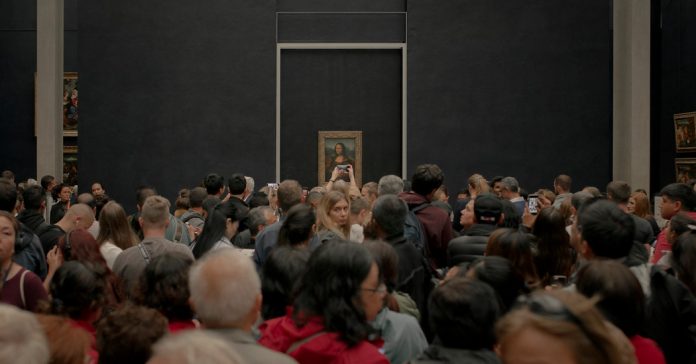
Each year millions of people flock to the Louvre in Paris to catch a glimpse through the crowds and crush of people raising cellphones toward the famed painting.

Why exactly is this 16th-century portrait by Leonardo da Vinci so famous? Is it worth the fuss?

In “It’s Time to Take Down the Mona Lisa,” Jason Farago writes:

The Louvre houses the greatest collection of art anywhere in Europe, within a palace that is a masterpiece in its own right. It is, by some distance, the most popular museum in the world. In 2018 a record 10 million visitors, three-quarters of them foreign tourists, besieged the joint: up 25 percent on the previous year, and more than triple the attendance of the Centre Pompidou or the Musée d’Orsay.

Yet the Louvre is being held hostage by the Kim Kardashian of 16th-century Italian portraiture: the handsome but only moderately interesting Lisa Gherardini, better known (after her husband) as La Gioconda, whose renown so eclipses her importance that no one can even remember how she got famous in the first place.

Some 80 percent of visitors, according to the Louvre’s research, are here for the Mona Lisa — and most of them leave unhappy. Content in the 20th century to be merely famous, she has become, in this age of mass tourism and digital narcissism, a black hole of anti-art who has turned the museum inside out.

The author describes seeing the Mona Lisa after a recent renovation of the gallery space where the painting is displayed:

I went up with the crowds recently. Things were no better. Now, you must line up in a hideous, T.S.A.-style snake of retractable barriers that ends about 12 feet from the Leonardo — which, for a painting that’s just two and a half feet tall, is too far for looking and way too far for a good selfie.

Apparently the painting is beneath some nifty new nonreflective glass, but at this distance how could I tell? My fellow visitors and I could hardly see the thing, and we were shunted off in less than a minute. All this for a painting that (as the Louvre’s current show confirms) is hardly Leonardo’s most interesting, and that has drowned out the Venetian masterpieces in the Salle des États, such as Titian’s “Woman With a Mirror,” or Veronese’s “Wedding at Cana,” which Beyoncé was smart enough not to neglect. The museum is admitting as much with the pathetic new signs in the Salle des États: “The Mona Lisa is surrounded by other masterpieces — take a look around the room.”

This is a gallery that makes the Spirit Airlines boarding process look like a model of efficiency, and offers about as much visual delight. If you think me some sniffy aesthete for saying so, listen to the crowds: In a poll of British tourists earlier this year, the Mona Lisa was voted the “world’s most disappointing attraction,” beating out Checkpoint Charlie, the Spanish Steps, and that urinating boy in Brussels. If curators think that they are inspiring the next generation of art lovers, they are in fact doing the opposite. People come out of obligation, and leave discouraged.

Jean-Luc Martinez, the museum’s director, has said the Louvre might take further steps to alleviate Mona mania in coming years: new entrances, timed tickets. This misunderstands the problem — for the Louvre, with more gallery space than any museum on the planet, isn’t that swamped if you can get through the security lines. On my last visit the Islamic galleries were nearly empty. The French painting wing was trafficked by just a few visitors. Even the Venus de Milo, perhaps the second most famous work of art in the museum, draws a comfortable few dozen peepers at a time.

The Louvre does not have an overcrowding problem per se. It has a Mona Lisa problem. No other iconic painting — not Botticelli’s “Birth of Venus” at the Uffizi in Florence, not Klimt’s “Kiss” at the Belvedere in Vienna, not “Starry Night” at the Museum of Modern Art in New York — comes anywhere close to monopolizing its institution like she does. And if tourist numbers continue to rise, if last year’s 10 million visitors become next year’s 11 or 12, the place is going to crack.

It is time for the Louvre to admit defeat. It is time for the Mona Lisa to go.

After suggesting several ways to improve the experience of seeing the Mona Lisa — including housing it in its only building — the article concludes:

No work of art should make people miserable. Let Paris’s millions of future visitors enjoy the art, the shopping, the sweets and the selfies at the Sheikh Zayed-Louis Vuitton-Samsung Galaxy-Ladurée Macarons Mona Lisa Pavilion. Then let them rediscover the Louvre as a museum.

Students, read the entire article, then tell us:

  • Is the Mona Lisa bad for art? Does the attention it receives overshadow the pleasures of other artistic treasures? Does it “make people miserable”?

  • Have you seen the Mona Lisa in person? If yes, does the experience described by the author resonate with you? If not, how have you experienced it? In either case, would you consider the Mona Lisa one of your favorite works of art?

  • Do you agree with Mr. Farago’s assessment that the Mona Lisa is the “Kim Kardashian of 16th-century Italian portraiture”? Why do you think the painting attracts so many people to see it? What do you think are its artistic merits? Is there another work of fine art that you think should get as much or more attention?

  • What does the author mean by his claim that in this age of “mass tourism and digital narcissism,” the Mona Lisa has become “a black hole of anti-art who has turned the museum inside out”? Is the spectacle of the Mona Lisa hurting a deeper understanding and appreciation of art? If yes, how? If no, why not?

  • Have you been to an art museum or gallery recently? What was your visit like? How did you experience the art? How did other patrons interact with it? Do you visit museums and galleries for the art or for the chance to get a good selfie?

  • What do you think should be done with the Mona Lisa? How do you think the Louvre should improve the experience of seeing it?

  • After reading the article, are you more or less likely to want to see the Mona Lisa in person?

Please note, you can turn your writing here into a critical review of a painting and submit it to our Fifth Annual Student Review Contest, which runs from Nov. 7 to Dec. 10, 2019.


Students 13 and older are invited to comment. All comments are moderated by the Learning Network staff, but please keep in mind that once your comment is accepted, it will be made public.

Lesson of the Day: ‘The Dinosaur-Killing Asteroid Acidified the Ocean in a Flash’

0
Lesson of the Day: ‘The Dinosaur-Killing Asteroid Acidified the Ocean in a Flash’

Find all our Lessons of the Day here.

Featured Article: “The Dinosaur-Killing Asteroid Acidified the Ocean in a Flash”

In this lesson you will learn about a scientific study that attempts to support the hypothesis that the asteroid that struck Earth 66 million years ago not only wiped out dinosaurs on land, but it also destroyed marine life. Then, you will be able to use a hypothesis from the United Nations Intergovernmental Panel on Climate Change to think about how this discovery could connect to climate change in 2019.

What do you know about how dinosaurs became extinct? If you are in a classroom, make a list with some of your peers of everything you know or think you know, and then share it with the rest of the class. Do you all know more collectively? Are there things you disagree about?

Then, make a list of questions you still have about the topic.

Someone in your class may have mentioned the Chicxulub asteroid, which struck Earth and wiped out the dinosaurs 66 million years ago. Watch this video from the Science Channel that brings to life the asteroid striking earth and the aftermath.

Read the article, then answer the following questions:

1. Why is the new research, published by the National Academy of Sciences, significant? What does Noah Planavsky, a biogeochemist at Yale, mean by saying it was “flash acidification”?

2. What did Michael Henehan, a geochemist, discover when he was in the cave system at Geulhemmerberg? What did he do when he returned to his lab, and what did he discover?

3. How were Dr. Henehan and Dr. Planavsky able to conclude that “the oceans became acidic practically overnight”?

4. How does the study give evidence of the asteroid being the cause of marine mass extinction rather than the volcanic activity that was happening around the same time in what is now India?

5. How do reports from the United Nations Intergovernmental Panel on Climate Change connect the study’s findings to the world today?

The final point made in the article relates the study’s findings to climate change:

According to reports from the United Nations Intergovernmental Panel on Climate Change, human emissions of carbon dioxide are not only warming the planet, but also acidifying the oceans. And that modern acidification, Dr. Planavsky says, is happening at a rate and scale comparable to the asteroid-triggered acidification. A similar result, he said, “is on the extreme end of what we could get in the next 100 years.”

Now, see if you can make this information interesting and accessible to different audiences. In small groups, or individually, choose an audience from the list below and think of how you would present the information to them:

  • If you had to explain the findings and this contemporary connection to a third grader, what language and props might you use?

  • How about if you were going to on Twitter? Do you think you could explain the effects of the Chicxulub asteroid in 280 characters?

  • Do you think you could use an illustration, chart or graph to explain the findings in a science fair setting?

If you’re interested in learning more about the Chicxulub asteroid, check out these Times articles that feature other related research that has been done in the past year:

A New Timeline of the Day the Dinosaurs Began to Die Out

Fossil Site Reveals Day That Meteor Hit Earth and, Maybe, Wiped Out Dinosaurs

Mister Rogers

0
Mister Rogers

Did you watch “Mister Rogers’ Neighborhood” when you were growing up? What impact did the show have on you?

If not, who did you look up to when you were younger? Which figures from TV, movies, books or your own life would you consider childhood heroes? What made them such important role models to you?

Tell us in the comments, then read the related article to learn more about Mister Rogers’ legacy on children’s television.


Find many more ways to use our Picture Prompt feature in this lesson plan. You can find all our Picture Prompts in this column.

Weekly Digest #140: There’s an App for That

0
Weekly Digest #140: There’s an App for That

These days we are all extremely busy! So, we’ll keep it brief. Check out these resources to help you manage your workflow and stay productive. Since we know you’re busy, we’ll keep the descriptions to a minimum today and let the descriptive titles speak do most of the talking!

How Well Do You Read Other People?

0
How Well Do You Read Other People?

Find all our Student Opinion questions here.

You walk into a crowded room: Can you tell if the mood is tense or light?

You are at a friend’s house: Can you sense if they would like you to stay all afternoon or if they are secretly hoping you would leave already?

How observant are you in social situations? Are you good at picking up on social cues — or reading a room? Can you sense what people are really thinking and feeling? Or are you usually oblivious to the social world around you?

In “The Korean Secret to Happiness and Success,” Euny Hong writes:

I was born in the United States and raised in an English-speaking household. My parents spoke Korean with each other — it was great for secret conversations — but not with me and my siblings. Nonetheless, some Korean words were impossible to escape.

One of the first I learned was “nunchi” — literally translated, “eye-measure.” Nunchi is the art of sensing what people are thinking and feeling, and responding appropriately. It’s speed-reading a room with the emphasis on the collective, not on specific individuals. It might be the most important word I ever learned.

As with most Korean children, I learned it in the negative, with my parents chiding, “Why don’t you have any nunchi?” In traditional Korean child rearing, nunchi is on a par with “Look both ways before crossing the street” and “Don’t hit your sister.”

The Opinion essay continues:

There is a Korean expression, “Half of social life is nunchi.” You need nunchi to get along with people, to get what you want out of people in a purely pragmatic sense and to protect yourself from danger. Nunchi emphasizes speed — if you are a skilled nunchi practitioner, Koreans don’t say you have “good” nunchi, they say you have “quick” nunchi.

Whereas the average person enters a room focusing only on a few people (the ones they like or hate or want to sleep with), a skilled nunchi practitioner takes a mental snapshot of the whole room. Is the atmosphere light or heavy? Why? Is a soccer game on TV in the 89th minute? Did someone’s ex just walk in?

Maybe you have nunchi already: Do you sense when a host secretly wants you to leave? Do you accurately sense when dangers are real before your friends do? Then you probably have quick nunchi. When a work meeting is about to end, do you jump in with, “I just have one more question”? Do people roll their eyes when you speak? Then you need to work on your nunchi.

The great thing about nunchi is you don’t need to be rich, privileged, or even in a good mood to employ it. In fact, Koreans say that nunchi is “the secret weapon of the disadvantaged.” It’s especially useful to women and minorities in the workplace who, like me, are tired of being given contradictory feedback — that they are either leaning out or leaning in too much.

Nunchi exists so that the embattled can focus on changing the circumstances within their control. You don’t need to be the loudest in order to present your ideas or ask for a raise; you just need to have the best timing.

Students, read the entire article, then tell us:

  • How well do you read other people — and situations? Do you think you have “quick nunchi”? Tell us about a recent experience when your social skills were put to the test. What did it reveal about your nunchi?

  • Ms. Hong provides many examples of social situations where nunchi might be very useful. Which resonated most with your experiences?

  • How meaningful or relevant is the concept of nunchi to you? Do you find Ms. Hong’s argument that nunchi is an important key to happiness and success? What do you think are other keys to success in social situations?

  • The author writes:

You might well wonder, if nunchi is so great, why isn’t the world doing it already? Well, aspects of nunchi are horrifying to the 21st-century Western mind, the opposite of what we teach our children. Nunchi requires that you admit the value of collectivism, of introversion, and above all, of never passing up a good opportunity to shut up.

Do you agree? In what ways is nunchi the opposite of what we teach children in the United States? What aspects of nunchi do you think American parents should incorporate in their child-rearing?


Students 13 and older are invited to comment. All comments are moderated by the Learning Network staff, but please keep in mind that once your comment is accepted, it will be made public.

Feasting With Family

0
Feasting With Family

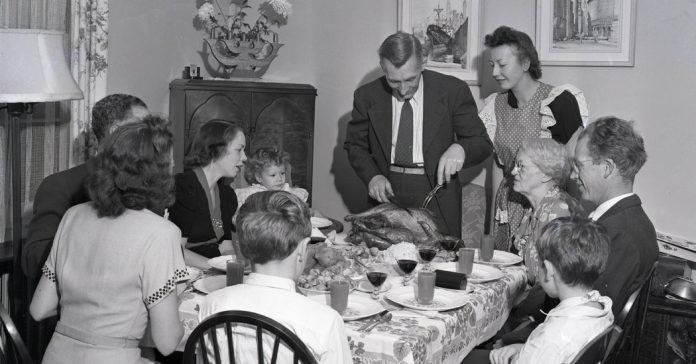
The approaching holidays often mean spending more time with family, who come from near and far. Do you enjoy large family get-togethers or find them overwhelming?

Describe your most memorable gathering or tradition. What makes it so special? Are there any rituals you find unusual or outdated? Have you ever been part of creating a new tradition?

Tell us in the comments, then read the related article about how families unite for the holidays.


Find many more ways to use our Picture Prompt feature in this lesson plan. You can find all our Picture Prompts in this column.

Word + Quiz: beatific

0
Word + Quiz: beatific

1. marked by utter benignity; resembling or befitting an angel or saint

2. experiencing or bestowing celestial joy

_________

The word beatific has appeared in 23 articles on NYTimes.com in the past year, including on Sept. 5 in “36 Hours in Syracuse, Sicily” by Seth Sherwood:

The number of Madonnas per square yard in the Galleria Regionale di Palazzo Bellomo — dedicated mostly to medieval, Renaissance and Baroque art — must surely approach record status. There she is, alongside her child, towering over a church carried by angels, in a surreal 1507 century painting by Alessandro Padovano and Giovanni Maria Trevisiano. There she is in Gothic mode, resplendent in deep reds, blues and golds, on a time-fissured wooden board by the Master of the Polyptych of Santa Maria. But certainly her most stunning rendition comes from the hand of Antonello da Messina. His 15th-century painting “Annunciation,” depicting Mary visited by an angel, is a masterwork of powerful color, exquisite detail and beatific light. Admission, 8 euros.

_________

What Students Are Saying About Marriage, Paying for School Lunch, and Saying ‘No’

0
What Students Are Saying About Marriage, Paying for School Lunch, and Saying ‘No’

For me personally, marriage isn’t super high on my list but something I’d like to have. Other kids in my generation, including myself, don’t really care too much about marriage right now. Most kids don’t think about the future and would much rather be playing Fortnite or scrolling through Instagram.

— Malak Ibrahim, King of Prussia, Pennsylvania

I want to leave my options open. I think that it makes no sense to say “I am going to get married, no matter what,” because you can’t decide to get married until you have a person to get married to. I think you can’t just expect there to be someone for you to marry. Sometimes what you get is what you get.

You should plan your life around all the people you meet, not without thinking of them at all. If you were driving on a road without a map, and you said: “I’m going to cross a river!” That wouldn’t be a wise thing to say- there might not be a river to cross at all. I think I will wait until I see a river before deciding whether to cross it or go around it.

— Sarah, J.R. Masterman

I have personally never been interested in relationships. I am perfectly content with my friends and I don’t feel like there is something missing. The worst thing is having to walk down the hallways watching every couple dramatically kiss like it’s their last day alive. I wonder if there is something wrong without wanting that. Though I debate back and forth with myself often I always end up realizing that everyone doesn’t want the same thing in life.

— Lily Elbel, Hoggard High School in Wilmington, NC

The social pressure to get married in the past generations was so high that most would get married just because it was what you were, “supposed to do,” not out of love. As many are coming to figure out, a marriage isn’t the right choice for them. Despite what they feel, the pressure to get married is still there. From parents and society alike. What we need to realize as a society is that what worked (or didn’t work) for a past generation doesn’t work for everyone. Every individual person should be able to decide what they want to do with their lives. And if that ‘thing’ is to never get married, so be it.

— Lleyton Flores, Lubbock, TX

In Pakistani culture, marriage is valued very highly and is one of the most important traditions for all families. Even though I am Pakistani myself, I believe that marriage is not a necessity as people can find happiness without it. I also believe that marriage should come naturally as love progresses, but in my culture it feels forced. The notion for all Pakistani boys and girls is that if you do not get married, then you are letting your family down and I believe that is creating unnecessary stress. Another problem in Pakistani culture is the idea of arranged marriage which I am completely against, as marriage should be a commitment of love and not just something that is done just because your parents tell you to.

— Muhammad Siddiqui, Glenbard West, Glen Ellyn, IL

I do not agree with the concept of marriage as an institution. Marriage is something that many people feel pressured into (especially women), and they may try to do it as young as possible, making their main goal to be wed rather than to find their soulmate. Finding someone who you happen to end up spending your life with happens organically, as people are free to enter and leave the relationship at a more comfortable pace. Marriage may also pressure people into other major life decisions; after the wedding comes the house and kids. While some life partners may take these steps together, there is far less of an obligation to do so. When people fall out of love, as so many unfortunately do, there is so much stigma around divorce that many unhappy married couples stay together out of social pressure. In a less traditional couple, one party may feel free to leave the relationship when it is no longer working out.

— Jillian Steeves, Danvers, MA

Film Club: ‘I Was the Fastest Girl in America, Until I Joined Nike’

0
Film Club: ‘I Was the Fastest Girl in America, Until I Joined Nike’

Find all our Film Club films here.

Are female athletes held to unrealistic and unhealthy expectations and standards?

“I Was the Fastest Girl in America, Until I Joined Nike” is a seven-minute film that touches on themes of athletic excellence, gender inequity and exploitation. In it, Mary Cain, who at 17 was the youngest American track and field athlete to make a World Championships team, describes the emotional and physical abuse she felt subjected to during her training in Nike’s Oregon Project, a renowned long-distance running training program. Cain argues that the current system is designed by and for men, and that with more female psychologists, nutritionists and coaches in positions of power, young girls can be better protected from similar maltreatment.

Students

1. Watch the short film above. While you watch, you might take notes using our Film Club Double-Entry Journal (PDF) to help you remember specific moments.

2. After watching, think about these questions:

  • What questions do you still have?

  • What connections can you make between this film and your own life or experience? Why? Does this film remind you of anything else you’ve read or seen? If so, how and why?

3. An additional challenge | Respond to the essential question at the top of this post: Are female athletes held to unrealistic and unhealthy expectations and standards?

4. Next, join the conversation by clicking on the comment button and posting in the box that opens on the right. (Students 13 and older are invited to comment, although teachers of younger students are welcome to post what their students have to say.)

5. After you have posted, try reading back to see what others have said, then respond to someone else by posting another comment. Use the “Reply” button or the @ symbol to address that student directly.

6. To learn more, read “I was the Fastest Girl in America, Until I Joined Nike.” Lindsey Crouse writes:

A big part of this problem is that women and girls are being forced to meet athletic standards that are based on how men and boys develop. If you try to make a girl fit a boy’s development timeline, her body is at risk of breaking down. That is what happened to Cain.

After months of dieting and frustration, Cain found herself choosing between training with the best team in the world, or potentially developing osteoporosis or even infertility. She lost her period for three years and broke five bones. She went from being a once-in-a-generation Olympic hopeful to having suicidal thoughts.

“America loves a good child prodigy story, and business is ready and waiting to exploit that story, especially when it comes to girls,” said Lauren Fleshman, who ran for Nike until 2012. “When you have these kinds of good girls, girls who are good at following directions to the point of excelling, you’ll find a system that’s happy to take them. And it’s rife with abuse.”

We don’t typically hear from the casualties of these systems — the girls who tried to make their way in this system until their bodies broke down and they left the sport. It’s easier to focus on bright new stars, while forgetting about those who faded away. We fetishize the rising athletes, but we don’t protect them. And if they fail to pull off what we expect them to, we abandon them.

Mary Cain is 23, and her story certainly isn’t over. By speaking out, she’s making sure of that.

Various Benefits of Online Education

0
Various Benefits of Online Education


Online education has become popular nowadays. More and more learners are applying in web-based courses to generate a level and advance in their professional lives. Online education is preferred by individuals who are not able to go a normal traditional university or higher education for various reasons. The level earned from an excellent online institution is as valuable as the one from any conventional university or higher education.

Advantages of Online Education

•    Reduced Price – Online educations are less expensive than the conventional means to train. There is no transport cost engaged, as you do not have to travel to reach university or higher education. Research material is also available for online you do not have to spend cash to buy books.

•    Versatility – When you study online, you are not bound to a fixed schedule. You can take sessions as per your practical time. This way to train works best those of you that want to analyze after office or have a family to take care of. In addition, women with youngsters at home can take up online education to finish their degrees or understand new things. You just need accessibility to a fast internet access to go your sessions. Classes on the web are usually available 24 hours a day and seven days a week, so you can be present at sessions when it is practical for you. This gives you the freedom to meet your other responsibilities along with research.

•    Opportunities for Networking – The excellent thing about online education are that it is not limited to a particular city or country. It provides an opportunity to interact and discover with learners of different countries. You can easily discuss with them various topics on online boards and increase your area expertise. There are also topic experts whom you can contact when you are stuck with something and need help. You get personal attention, which is not possible in conventional classes.

•    Specific Knowledge – Online education allows you to choose a particular field of study. It lets you focus on what you want to understand and not spend in studying topics, which does not interest you. This allows you to get a specialized and deep understanding of the topic or topic of your choice.

Online Education is equal to Big Business

Originally made as a way for grownups to generate a GED or level later in life than usual, online education has spread to the point that individuals of all age groups are now engaged. Children as younger as the fourth-grade level now have accessibility to online education in many areas, using it the place of conventional classes. This converts into money and sense for the world of company and, according to a Nov 2004 report on CNN’s website; it was expected as early as 2001 that online education would become a $23 billion dollars market by the end of 2004.

Online education is that it is suitable for everyone. Teachers can enter a new job market in writing and apply for internet-based program and can use this income to earn and receive from classroom education. Students of all age groups have an alternative to conventional sessions in which they can understand without the disturbance of other students’ behavior disruptions. Adults who may have skipped over on their secondary college degrees or higher education degrees from USA University now have the opportunity, through online education, to finish or further their research without the arranging problems that may have made this impossible in the past. People benefits from saved tax dollars; every student that takes part in an Internet-based educational program symbolizes a reduced pressure on the taxpayer-financed community education system. Finally, online education provides businesses to be able to educate their employees cheaper and the benefit of a generation when they find a job of computer perceptive and more highly educated prospective employees coming into the job market.