fbpx
Home Blog Page 1563

Do You Read Reviews?

0
Do You Read Reviews?

Find all our Student Opinion questions here.

Note: This question, like three others we’re asking this week, are inspired by our Review Unit and related contest, in which we invite teenagers to write their own takes on a work from any of the 13 categories of creative expression that The Times reviews. If you are participating in the contest, we invite you to use this as a kind of “rehearsal space” to post ideas and see how others respond.

And, of course, even if you’re not participating, we’d love to hear your thoughts.

How do you decide if you want to see a movie? Do you check sites like Rotten Tomatoes? Ask your friends? Read newspaper reviews? Check TikTok?

How much, in general, do those other opinions sway you?

Is everyone qualified to be a critic? What’s the difference between the kinds of user-submitted reviews you read online and cultural criticism by a professional critic? Don’t worry if you’re not sure. Below, we’ve rounded up several pieces that ask questions about the role of reviewers and cultural criticism in our world today.

In “A Times Arts Critic Reviews His Own Role,” the movie critic A.O. Scott explains what he does:

By the end of this year, if recent history is any guide, around 900 movies will have opened in theaters in the United States. Hundreds more will have made their debuts on streaming platforms, along with more than a million hours of serial programming on traditional networks, cable channels and web-based broadcasters like Netflix, Hulu and Amazon. Defying periodic reports of its demise, live theater is flourishing: on Broadway and off, in Brooklyn and Chicago, in London and Louisville. Nearly every week brings new dance recitals, chamber music concerts, pop albums, museum and gallery exhibitions — am I missing anything?

Everyone is always missing something, but the critics who write for The New York Times — in staff positions and as regular freelancers — collectively strive to miss as little as possible, and to provide some help to readers faced with the overwhelming abundance of contemporary culture. How to make sense of it all? How to choose?

Those are difficult questions, and they aren’t the same question. Part of the critic’s job is to offer consumer advice. You want to know if a given performance or exhibit is worth your time. But criticism doesn’t stop with warnings and recommendations. (The Times doesn’t use stars, thumbs or letter grades, but especially worthy productions are designated Critic’s Picks.) Whether or not we like the thing we’re reviewing, we are interested in what it means, how it works (or doesn’t), why it matters (or doesn’t), and how it reflects and is part of the larger world. We assume that readers are looking not only for advice, but also for ideas, arguments, provocations and the occasional joke. We hope that, even if you skip the movie, give up on the show or can’t get tickets to the opera, you’ll at least find something worth reading.

In a 2015 column, “Is Everyone Qualified to Be a Critic?”, two Times critics discuss what it takes to pass judgment on the arts. Adam Kirsch writes:

Everyone, upon encountering a work of art, has some kind of response. In this sense, everyone really is a critic … To be able to say what you feel and why: That is the basic equipment of a critic.

In the same column, however, Charles McGrath argues:

If for a start we require that critics know what they’re talking about — that their judgments are actually informed — the field thins considerably, and if we also insist on taste and discernment, then the number of valuable and useful critics dwindles pretty drastically.

A 2010 edition of the Sunday Book Review asked six essayists to consider the question: What is the role of the critic today?

Educator spotlight: Using Open Educational Resources to create learning ‘For Everybody’

0
Educator spotlight: Using Open Educational Resources to create learning ‘For Everybody’

This month we travel to the US and one of its top public universities, the University of Michigan. By partnering with FutureLearn, Michigan furthers its commitment to shaping the future of learning which perfectly aligns with our vision of transforming access to education. Its first three courses on Python, Sleep Deprivation and Successful Negotiation started in October and we caught up with Charles Severance, the lead educator on the Python course, to discuss what makes a good online course and what his first impressions are of the social learning experience on the FutureLearn platform: 

I really enjoyed bringing Python for Everybody to the FutureLearn platform. In a lot of ways, teaching on FutureLearn is like teaching an on campus course. By having cohorts that start a few times per year, each time the course runs, we can develop social relationships among learners and between the teaching staff and the learners. Each course session has its own rhythm and over time builds its own sense of community and a bit of a “vibe”. I think that FutureLearn attracts the kinds of learners that want to learn alongside other learners.

FutureLearn is the perfect partner for my “For Everybody” (4E) approach to online teaching. The first goal is to produce a course with no pre-requisites and moving through the course material at a pace that anyone can follow. The learning objectives are constructed so that any learner can achieve them by the end of the course. This means that 4E courses are a great “entry point” to learning new material. 

Another important aspect of the “4E” concept is to use 100% free, open and reusable course materials (Open Educational Resources – OER) with an eye to remixing and reusing. The idea is that if we truly want “everybody” to know how to program Python, we need to train new teachers and provide them high quality course materials and tools so that they can go back and teach these topics to younger students in their classrooms. We don’t just need a free course – we need a free set of “publisher quality” materials that are OER.

I have been hard at work developing a series of these courses covering Python (www.py4e.com), Web Applications in PHP (www.wa4e.com), and Django for Everybody (www.dj4e.com). My colleague at the University of Michigan School fo Information, Colleen van Lent, has developed a course in the series called Web Design for Everybody (www.wd4e.com).

One of the goals of a MOOC platform like FutureLearn is to educate everyone regardless of ability to pay or physical access to learning facilities. My courses are intended to remove the barrier of a learners lack of pre-requisite knowledge for topics that need to be taught widely.


Category
Research insights

EDUCAUSE 2019: What are students really looking for from higher education?

0
EDUCAUSE 2019: What are students really looking for from higher education?

Author: Holly Shiflett, Director, North American Partnerships at FutureLearn

The annual EDUCAUSE conference was held in October in Chicago, Illinois. As many of you know, this event is one of the big IT events in the US and covers a vast array of different themes. For me, a key benefit of EDUCAUSE is having a broad view of a wide variety of education technologies – from systems that support overall campus operations to classroom technology and furnishings to distance education and supporting the adult learner – there is always something new to see and new people to meet. The overall theme of EDUCAUSE this year was diversity and this was evident throughout the proceedings.  

I noticed a particular focus on the changing requirements of students and there were a large number of vendors that offered support for the student life cycle and recruiting. From Generation Z (Gen Z) beginning to enter college, increased needs for mental health care, the rise of the adult learner, online degrees and microcredentials, and proactive student support, it is clear that learners are evolving their expectations related to how they want to engage with higher education. This aligns with Pearson’s recent Global Learner Survey which suggested that the future of education may reside in lifelong learning experiences delivered in smaller segments. Coming from an OPM/online education background (I worked previously at Wiley Ed Services), I did notice the lack of presence of most of these providers and publishers in general, as Michael Feldstein pointed out in his recent blog post. 

The keynote speaker, Steven Johnson, set us off on a broad vision. “Great ideas,” he said,  “come from collaboration and diversity.” He highlighted the danger of what he called the “Blind Spot.”  The blind spot happens when we are limited by our own thinking, by our unique life experiences. Johnson suggests that diversity improves our ability to make decisions while  highlighting the power of collaboration and diversity. Forbes discussed the same concept in April 2019 and found that smaller more diverse teams offer optimal decision ability. One person can only take an idea so far without the input and different life experiences of others.  

Johnson’s example of this concept is Eduarde Scott de Martinville. Martinville actually created the first sound recording 20 years before Edison invented the phonograph in 1877.  The device he created mapped sound waves but there was no way to interpret the output.  Due to a blind spot (his background as a stenographer), he didn’t consider the need to listen to the recording. As a stenographer, he wrote things down and this life experience led him to transcribe the sound only. Edison came along with different life experiences and figured out a way to play it back which is really what was needed.  

My path through EDUCAUSE was punctuated by looking for general themes. I was hoping for a view into how technology might help us to better support students online. This led to my decision on Wednesday to attend the session on Gen Z to hear how digital natives would interpret higher education. I learned about the term Phigital, which means the merging of Digital and Physical worlds. The generation coming up through the education process – Gen Z – has always had technology, they are used to complete customization and view the world as phigital – there is no line between digital and physical.  

In higher education, I expect they’ll have high technology expectations and they will be looking to customize their own degrees. Where many grew up with the message of “fit in”, Gen Z has been inducted with the personalization message and they start developing a brand name at an early age. You can see this evidenced in their use of social media. 

In addition to the phigital theme, we learned about other  characteristics of Gen Z-ers such as:

  • Realistic – They are asking about the ROI of higher education and making different decisions
  • Driven and Super competitive – They want to be successful and earning money is important
  • Expect hyper-customization – They want to build their own college degrees

Based on these criteria, which are, of course, different from any other generation, we can expect students to look for customization and flexibility in higher education. They’ll expect the digital and physical to be part of their experiences. Being practical, they are going to look for the value in higher education and the most cost effective path to achieve their goal – a high paying job.  A downside to the constant technology is that Gen Z-ers (and maybe all of us) have tailored our news feeds to our own personal preferences which means we are only hearing one perspective with limited diversity. To succeed in the world, we can go back to Johnson’s point about the blind spot. We all need alternate points of view and the influence of other people’s experiences to be successful.  

So, what does this mean for us and how is this related to higher education.  The future potentially holds increased learner demands for customized and personalized learning delivered just-in-time and in small, manageable chunks. Universities can work towards more flexible offerings and we saw at EDUCAUSE there is already a focus on the student journey and incorporating diversity of opinions and ideas.  At the same time, we can be more deliberate about diversity of thought in higher education and using technology to facilitate engagement and interactivity. In closing, EDUCAUSE, for me, was a great chance to connect and reconnect across a wide range of disciplines, to see some familiar friends and make some new ones. See you in 2020!


Category
Research insights

The Emergence of China’s Nationally-Recognized MOOCs

0
The Emergence of China’s Nationally-Recognized MOOCs

China MOOC Conference 2018China MOOC Conference: MOOC team receiving award

MOOCs took off in China in 2013 with the launch of XuetangX, China’s first MOOC platform, which was developed by Tsinghua University. Six years later, China offers over 12,500 MOOCs across more than 10 MOOC platforms.

In July 2017, China’s Ministry of Education announced an initiative to recognize the nation’s best MOOCs. Each year, the Ministry would review Chinese MOOCs against a set of quality criteria. MOOCs that pass this review would earn national recognition, the highest accolade an open online course may receive in China. The Ministry’s goal was for China to have 3,000 nationally-recognized MOOCs by the end of 2020.

In China, MOOCs are mainly geared toward university students, by contrast with the US and UK, where MOOCs also target out-of-school learners. Wu Yan, head of China’s Higher Education Department, explains the objectives behind China’s MOOC-recognition initiative:

“The main reason for developing MOOCs in China is to improve equity in higher education.” This can be achieved by “breaking time and space barriers” and by “supporting the sharing of educational resources across universities.” He added that “MOOCs are critical to reform China’s traditional, cramming teaching model.” 

The process for a MOOC to gain national-recognition in China involves three steps:

  1. Application
  2. Evaluation & Selection
  3. Recognition & Review

Let’s describe each.

Application

Every year in July, universities may submit their MOOCs to the National MOOCs Recognition Program for review. Only MOOCs developed by Chinese universities and which have been offered for at least two sessions are eligible; SPOCs (small private online courses) and other types of online courses are not.

Evaluation & Selection

To earn national recognition, MOOCs should satisfy requirements in six categories: team, design, content, teaching, impact, and support. Detailed requirements are published annually on the program’s official website.

For example, the MOOC team should consist of a lecturer, a course manager, and at least two teaching assistants. In addition, the MOOC should be designed to fit in an online or blended learning setting. It should involve thorough assessments such as quizzes and exams. And it should provide learners with support through online office hours and discussion forums.

Above all, the MOOC should have outstanding social impact, such as being widely shared by universities and receiving positive reviews from students that have taken it.

Each MOOC is evaluated by a team from China’s Education Ministry. MOOCs that satisfy this initial review are then opened to the public for one week in October and November. In light of how they are received, a final selection is made. Each year in December, China announces the new nationally-recognized MOOCs. Here are the lists for 2017 and 2018.

Recognition & Review

Nationally-recognized MOOCs will be labeled as such on their respective MOOC platforms. They should remain entirely free. And they will undergo periodic reviews for the next five years by both public and Education Ministry. So they should be properly maintained — for instance, by keeping content up to date and continuing to adequately support students.

In addition, the teaching team of each nationally-recognized MOOC will receive an award at the annual China MOOC Conference.

Number of MOOCs

The number of MOOCs that should be nationally recognized each year is set by China’s Education Ministry. Here are the targets:

  • 2017 Target: 500 MOOCs
  • 2018 Target: 900 MOOCs
  • 2019 Target: 900 MOOCs

Since the Ministry’s goal is to reach 3,000 nationally-accredited MOOCs by the end of 2020, we can expect next year’s target to be at least 700.

In practice, numbers have fallen slightly short of their targets:

  • 2017 Recognized: 490 MOOCs
  • 2018 Recognized: 801 MOOCs

Note that only about one-third of the MOOCs submitted for review ended up earning national recognition. So the targets weren’t missed because of a lack of applications:

  • 2017 Applied: 1,383 MOOCs
  • 2018 Applied: 2,137 MOOCs

Applied vs. Recognized MOOCs

Types & Subjects

Nationally-recognized MOOCs can be distributed into three types:

  • Basics courses
  • Cultural courses
  • Professional courses

So far, this distribution has been relatively stable each year:

MOOC Type20172018
Basic12%16%
Cultural28%23%
Professional60%61%

The most common subjects among nationally-recognized courses are:

  1. Computer Science
  2. Electronics & Information
  3. Mathematics
  4. Business & Management
  5. Foreign Language

Top subjects per year

These five subjects account for 26% of the total number of nationally-recognized MOOCs.

Universities

Tsinghua University, the institution behind XuetangX, is the leading player in MOOC development in China and has provided the largest number of nationally-recognized MOOCs, both in 2017 and 2018.

The other top four universities are Peking University, Harbin Institute of Technology, Wuhan University and Xi’an Jiaotong University. These have contributed 20% to the total number of nationally-recognized MOOCs.

Top universities per year

Platforms

Nationally-recognized MOOCs are offered by more than 10 MOOC platforms in China. The leading MOOC provider is Chinese University MOOC (iCourse) which offers 71% of all nationally-recognized MOOCs to date.

Top platforms per year

In a couple of months, China’s third wave of nationally-recognized MOOCs should be unveiled. Assuming submissions and picks continue to grow at the same rate, China should have about 2,300 nationally-recognized MOOCs by the end of the year, keeping the nation comfortably on track toward its goal of 3,000 nationally-recognized MOOCs by the end of 2020.

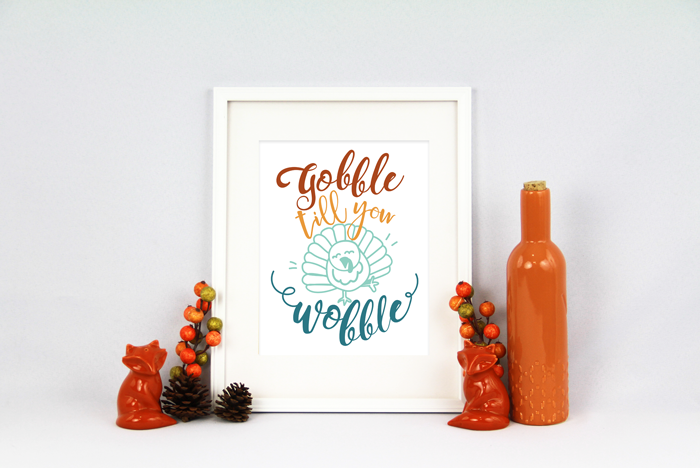
Gobble till you Wobble Free Printable

0
Gobble till you Wobble Free Printable

Have you started to think about your Thanksgiving menu? How about how you will decorate your table? Create something festive for Turkey Day with this colorful Thanksgiving printable.

For Personal Use Only.


Addressing Audience: Two Book Reviews

0
Addressing Audience: Two Book Reviews

As we explained in our piece covering the basics of review writing, not only is an “I” point of view “allowed” in cultural criticism, it is essential. Writers often directly address their audience, explaining how their own backgrounds or experiences with an artist, work, genre or topic influences their perspective.

For example, this week, when the Times comedy critic, Jason Zinoman, took on the tricky task of reviewing Louis C.K.’s first tour since the comic admitted sexual misconduct, Mr. Zinoman devoted some of his piece to explaining his history with Louis C.K.:

Comedy criticism is never objective, but there is nothing more subjective than how funny you find Louis C.K. in 2019. That’s what makes writing this review difficult, and being transparent about my point of view necessary. Over the past decade, no comic had a greater impact on me than Louis C.K. While my relationship with his old work has changed — I can’t laugh at his rape jokes anymore, and the story lines on his FX show that touched on assault now seem like obscene rationalizations — I still regularly think about Louis C.K. punch lines and chuckle.

Now take a look at the first paragraph of Crystal Foretia’s review of “Counting Descent.” How does she address her readers? How does she set the stage for exploring the personal impact of this work — and invite her audience to experience it alongside her?

Imagine you were a black fifteen-year-old on Nov. 9, 2016. You woke up, having gone to bed before the election results came out. Your phone was buzzing all night with people reacting to the results on Twitter. You finally saw the headline: “Donald Trump wins 2016 Presidential Election.” Meanwhile, you heard reports documenting numerous incidents of vandalism. The one that hit home is graffiti reading, “Black Lives Don’t Matter And Neither Does Your Votes.” Despair, confusion, and fear creeped in and then crashed down all at once. If there was a book capturing the strife and anxiety that you felt in that moment, it would be “Counting Descent” by Clint Smith.

The review continues:

Smith’s poetry, published that same year, transcends the boundary between personal and universal by imbuing his parables with the realities of Black America through creative poetic form. If you’ve ever felt frustrated trying to uncover the literary purpose of a sestina or sonnet, don’t fret: Each poem’s unique structure directly feeds into its narrative. “Playground Elegy” resembles a slide as the act of having your hands up, which conveys a sense of freedom, shifts to a similar, but more desperate connotation in police confrontations. “For the Boys Who Never Learned How to Swim” extended the spacing between the final two words to symbolize a black man’s final breath prior to being killed, mimicking a fish’s dying gasp. The numbered format and blank space at the end of “How to Make an Empty Cardboard Box Disappear in 10 Steps” highlights the frequency and lack of progress made on police brutality; it warns that inaction will guarantee another Tamir Rice or Philando Castile incident.

The influences of Ralph Ellison and James Baldwin reflect heavily in Smith’s work. “Counting Descent” echoes “Invisible Man” through its ideas on identity and power, as each poem strains against unfair expectations, violence and self-doubt that plague Black youth, despite the progress made since the 20th century. The epigraph from Ellison also introduces the relationship between protest and artistic expression. Smith explores this dichotomy in two poems alluding to Baldwin’s “Everybody’s Protest Novel,” ultimately concluding that we cannot separate literature from political advocacy. This theme brilliantly unifies the collection, as Smith critiques the lionization of slave-owning presidents, microaggressions middle-class black students receive and the criminalization of black bodies.

Bottom line: If you loved “The Hate U Give,” “The New Jim Crow” or any work detailing modern-day struggles African-Americans face, then read this. “Counting Descent” lambasts the notion of “post-racial society,” which washed over the American populace after Obama’s triumph in 2008. The collection serves as a cathartic read for those who lost their innocence to systemic discrimination. “Counting Descent” is a poignant addition to the Black literary canon.

  • How does Ms. Foretia address her readers and help us understand and appreciate this work? What does she assume her audience already knows about and understands?

  • Poetry may be a harder genre to review than, say, pop music or television since many find it difficult to understand and appreciate. How does this writer help us make sense of Clint Smith’s work? Does she make you want to read it? If so, how?

  • How does Ms. Foretia show how this work fits in to a larger literary tradition?

  • In general, do you think she is successful in writing for a broad audience — one that, say, may not be poetry fans, or feel the way she did about the 2016 presidential election? What lines can you point to to make your case?

  • What else do you notice or admire about this review? What lessons might it have for your writing?

If you are submitting a review to our contest, you are writing for a general audience. How well is it tailored to offer something to everyone, regardless of how well they know about the medium or work? Is your own history with the artist, work, genre or topic relevant to explaining your take?

To test this, have someone who knows little to nothing about your topic read your review. Then ask that person to put it aside and tell you as much as they can about what they understood and remember from the review.

Notice where your reader gets stuck, asks questions, seems confused or bored by your review. Those may be the places where you need to make some revisions so that a general audience can better understand your piece.

Here are a few questions to consider as you revise:

  • What essential information does your reader absolutely have to know to understand the thing you are reviewing? Remember, you don’t have tell your readers everything (no spoilers!) — just enough so they can get the gist. What key context is important?

  • Who is the target audience for this? Would they like it? Don’t rely on stereotypes or your own experiences to answer this question. Do your research to find out what this group’s interests, values and needs are.

  • What key terms, phrases or events might be confusing to your readers if they haven’t encountered this work or medium? Be sure to explain them, or use words they will understand instead.

  • What references, analogies or comparisons can you add to make your review more relatable to a broad cross-section of readers? Consider other works in the same medium or with the same themes or elements that your readers will probably know about.

  • What about your own relationship to this work is important or interesting to include? What influenced the way you experienced this piece? Why might that be useful for your audience to know?

  • What background information might you need to provide to help your readers understand your piece? For example, what historical, cultural or political events might they need to know about?

  • What kind of tone is appropriate for this publication? Should it be serious, irreverent, sarcastic, reverential or something else? Read other reviews from this publisher to get a sense of the tone, style and word choice commonly used.

Making an Argument Via Descriptive Detail: Music Reviews

0
Making an Argument Via Descriptive Detail: Music Reviews

Now read something written by a student. In her 2018 winning entry, Isabella Levine reviews “Anthem of the Peaceful Army,” the debut album by the rock band Greta Van Fleet. Here’s the sentence at the end of the first paragraph that best captures her opinion of the album:

The seeds of a potential rock revival are chewed up and spit out in an overproduced bastardization of rock that romanticizes the hippie era without any of its relevance or defiance.

To support her claim, this writer piles on the evidence about why “they don’t lack talent, just authenticity.”

Packaged in vagueness, themes about love or peace simply lack resonance for a modern audience. Climate change is touched upon in “Watching Over” when Kiazka sings, “And it’s our demise/With the water rising,” but the overtness found here is the exception rather than the rule. A more typical lyric borders on the ridiculous, like, “March to the anthem of the heart,” found on the album’s opener, “Age of Man.” Or try, “And every glow in the twilight knows/That the world is only what the world is made of,” the fluff of the acoustic tune “Anthem,” a song that might have been their “Dust in the Wind” or “Tangerine” but instead, devoid of nuance, falls flat. The track titles alone make Greta Van Fleet’s Achilles’ heel painfully clear: They are too unqualified to address these themes comprehensively yet not self-aware enough to realize it.

Now read the full review, then answer these questions:

  • What evidence does the writer use to support her opinion of the album?

  • Much of this review examines lyrics. How does Ms. Levine use those lyrics to prove her point?

  • The review isn’t a complete pan of the album. What redeeming qualities does she notice?

  • How does Ms. Levine organize the evidence into different paragraphs? What choices did she make about organization? How does each body paragraph build on the previous one to support her overall claim about the album?

With a friend or a small group, or even a whole class, listen to a new song or watch a music video for the first time. As you listen, repeat the “Before Reading” exercise and generate as many adjectives, descriptive words and phrases as you can to describe what you hear (and see). Listen or watch a few more times, adding to your list.

Push yourself to come up with interesting, fresh words and precise descriptions.

Then, see if you can make a claim — state an opinion — about the music. This can be a simple statement (“this album gets you dancing”) or something more vivid, like Ms. Charlton did in her review (“‘The Modern Lovers’ is an album for being young and driving to nowhere in particular at 2 a.m.”) But whatever opinion you assert, now pull from your list of descriptions to write a paragraph full of supporting details.

Then, exchange your work with others, or take turns reading them aloud. What commonalities are there? Whose work defends a claim best, and how does that paragraph do it? What ideas can you borrow from others for your own writing?

We have suggested a range of texts here, but we also hope students will find their own by searching The Times or other media sources for reviews of the art and culture that matters most to them.

Times Review: “Standing Up for Humanity in a World of Screens,” a 2019 art review by Jason Ferago

One of Europe’s leading museums has devoted its biggest show of the season to someone who saw the future more clearly than any artist of his century. He was a restless traveler and a keen student of anatomy who danced across the boundaries of art and science. He blended ancient religion with new forms of representation, and sketched strange new machines that would be realized long after his death.

You thought I meant that lefty at the Louvre? Forget Leonardo: I’m talking about the Korean-American conjurer Nam June Paik (1932-2006), who appears as pioneering as ever in a broad retrospective at Tate Modern in London, and more urgent than ever as a defender of human life in a world dominated by technology.

Student Review: “Listening to The (Not So) Modern Lovers Forty Years Later,” by Maya Charlton

With mainly irreverent, but at the same time strangely relatable, lyrics and consistently good beats (shout out to drummer David Robinson, who went on to join The Cars!), “The Modern Lovers” is an album for being young and driving to nowhere in particular at 2 a.m. It’s the rare album that is an ode to every aspect of life. It has songs like “Roadrunner” that make you sing along at the top of your lungs and do awkward Hillary shoulder shimmies while try to keep your hands on the steering wheel (“Roadrunner, roadrunner/going faster miles an hour”).

Times Review: “Stephen King Visits an ‘Institute,’ Where the Kids Who Enter Can’t Escape,” a 2019 book review by Dwight Garner

King’s new novel — it is roughly, depending on how you count, his 61st — is titled “The Institute.” It’s a big shank of a book that reminded me instantly of many of the reasons I loved (love?) him. His characters are the kind of people who hear the trains in the night. The music is always good. He swings low to the ground. He gets closer to the realities and attitudes of working-class life in America than any living writer I can think of. In “The Institute” people worry about taking their Prilosec. They’re happy to notice that the Denny’s and the bowling alley are right next to each other.

Student Review: “‘The Good Place’: Astute, Heartwarming and Relevant All at Once,” a winning TV review from our 2018 Student Review Contest, By Helen Deng

Through existential crises and unexpected revelations, viewers are increasingly shown that nothing is black-and-white — this world even features a literal Middle Place. The plot may be unpredictable, but its overarching theme of ethics becomes consistently more important and insightful in this age. As our current nation confirms a man onto the Supreme Court because he sexually assaulted a woman while only being “a boy in college” and school shootings continue due to contentious beliefs around our “right to bear arms,” the ethical battle between the overall good versus personal values rages on.

Times Review: “A Brave Graphic Memoir of a Childhood Shadowed by a Parent’s Addiction,” a 2018 book review by Patricia McCormick

… “Hey, Kiddo” is a testament to the power of art and creativity — and a chain-smoking grandfather — to save your life.

Rendered in shades of gray with touches of burnt orange, the drawings are not lovely, but they are perfect. Their hectic lines convey the chaos and complexity of a life where addiction is a backdrop. The crowded panels portray the constant drama. And the characters’ facial expressions communicate a world of confusion, anger, shame and, ultimately, resignation. They are eloquent in a way that mere words are not.

  • What is this reviewer’s opinion of the work? How do you know? What words and lines from the review reveal that especially well?

  • How does the reviewer support his or her claims about this work? What descriptive details does he or she use?

  • How does the reviewer organize the evidence into different paragraphs? What choices did the reviewer make about organization?

  • What else do you notice or admire about this review? What lessons might it have for your writing?

Learning From Negative Reviews: ‘Aquaman’ and Mumble Rap

0
Learning From Negative Reviews: ‘Aquaman’ and Mumble Rap

Consider this edition of Mentor Texts a companion to our piece on learning the basics of review writing, except in this one we take on a thorny question: What if you think the thing you’re reviewing is terrible? (Or, at least, not very good?)

Well, as you’ll see when you read the two mentor texts below, you have the same responsibility to the work whether you liked it or not. You still have to take it seriously and consider it fairly, and you have to give the reader an understanding of the piece, its context and your experience. And, of course, you still have to justify your opinions with evidence — even if you’re having fun insulting it along the way.

But, in fact, writing “pans,” as bad reviews are known, can be just as fun as reading them. Here’s how the Times movie critic A.O. Scott puts it in a piece for The Ringer called “The Art of the Pan: What’s the Point of a Bad Review in 2019?”:

A truly vicious pan, a merciless slam, a full-scale ethering is born of a righteous fury that can transmute into pure joy. “The secret of the bad review is that you can get a lot of pleasure out of it,” A.O. Scott tells me, chatting via phone in late December. “It is a kind of a dopamine rush. First of all, editors — especially editors at The New York Times — love it. They love bad reviews. And they’re fun to do because they give you access to a lot of writerly tools that are fun to use. You can be funny. You can be clever. What you’re doing is, you’re demonstrating your superiority to a thing that you’re writing about.”

Which can be intoxicating, and for the sharpest-knived critic, a source of tremendous pride. “The first paragraph of my review of Michael Bay’s ‘Pearl Harbor,’” Scott says with a laugh, “if I can get to blow my own horn, is a classic to be studied in every How to Write a Negative Review class.” But “you can get too hooked on that feeling” of writing slam after slam, he warns. “They’re definitely more fun. But positive reviews — where you can make a case for something that you really feel enthusiastic about, and still write as well as you can — that’s a lot harder, and a lot more valuable.”

But, of course, a Times critic also has to be aware of the impact a negative review can have. Pete Wells recently addressed this in a Times Insider piece where he discusses his negative review of a famous New York City steak house, Peter Lugar.

In a typical week I eat out at least five times but I write only one review. That leaves enough leeway that when I encounter bad restaurants, I can practice a catch-and-release policy and throw almost all of them back. The ones I don’t throw back have to be big enough to be worth keeping.

In other words, I tend to write negative reviews, which can hurt the bottom lines of relatively small businesses, only when readers are at risk of wasting their money on the basis of an established reputation. It could belong to a famous chef, a deep-pocketed restaurant group or an institution whose historical and cultural significance reaches far beyond its neighborhood. The subject of my review this week, Peter Luger Steak House, is in the last category; a 132-year-old holdover from the days when a substantial number of New Yorkers had moved here from Germany, it has become famous around the world as one of the city’s original beef palaces.

Now that you have a little context, take a close look at two examples — one written by a Times critic, and the other by a student-winner of our 2018 contest — and think about what lessons they might have for your own writing.

Take a look at our related Student Opinion question:

What work of art or culture would you warn others to avoid? Why?

What would you answer? Don’t post your thoughts to our site yet — just jot down a response, or turn to a partner and answer the question. After you study the texts below, you’ll have a chance to return to your writing, then post your final draft online.

Expressing Critical Opinions: Two Movie Reviews

0
Expressing Critical Opinions: Two Movie Reviews

Below are some suggestions for helping students understand reviews, and the role of cultural criticism at The Times, in general. But we also hope students will find their own mentors by searching The Times or other media sources for reviews of the art and culture that matters most to them.

1. Compare: A Times and student review of the same work: Cirque du Soleil’s “Kurios”

Times Review: “In Cirque du Soleil’s ‘Kurios,’ a Frisson of Novelty,” a 2016 theater review by Christopher Isherwood

“Kurios” is fundamentally the kind of nouveau-circus show that the company has virtually patented, although it does, in theory, have a spine of a narrative, at least according to the press materials. Subtitled “Cabinet of Curiosities,” the spectacle is presided over by a character called the Seeker, a mad scientist type with a spike of gray hair atop his head — a proto-man-bun perhaps? — who scampers around the circular wooden stage as “the outlandish, benevolent characters” in his cabinet “turn his world upside down with a touch of poetry and humor in an attempt to engage the Seeker’s imagination.”

Hmm. O.K. Whatever.

Student Review: “Cirque du Soleil: Oh, So Kurios,” an essay by Vicky Lee which was a winner of our 2017 Student Review Contest

I have been properly bewitched since this October. That is to say, absolutely and hopelessly bewitched: ever since the infamous Cirque du Soleil hurricaned into my life. One moment I was bitterly cursing into my mittens, in line behind another hundred grumpy individuals huddling away from the biting West Coast wind. And the next, I was stepping into a steampunk fairy-tale world all underneath a soaring depthless black. The hextech lights, the swinging music, the fantastical costumes all featured in Kurios: Cabinet of Curiosities; they brought me back to my sci-fi fantasy-loving, 10-year-old self once again, even before the performance began.

2. Use short reviews: The Playlist

Every Friday, pop critics for The New York Times weigh in on the week’s most notable new songs and videos. We have used a piece from it for this edition of Mentor Texts.

For example, here is the Nov. 1, 2019 edition: The Playlist: Dua Lipa’s Disco Blast, and 13 More New Songs.

Here is the entire review of “Nobody,” by Ariana Grande featuring Chaka Khan:

Soundtrack songs for the “Charlie’s Angels” movie franchise have emphatically declared that strong, independent women are sexy, and this latest iteration is joyfully on brand. Produced by Max Martin’s pop factory, “Nobody” is smart enough to grab a 1960s soul beat and to pair Ariana Grande with the churchy grit of Chaka Khan — “Got a job, got a crib, got a mind of my own,” she announces. There’s deep calculation all the way through, but there’s also soul music’s intrinsic joy.

3. Take a broader look at culture: Critic’s Notebook

A decades-old column that can be found across the Arts pages, Critic’s Notebook gives Times reviewers a chance to step back and take a broader, more contextualized look at a work and its cultural meaning and impact.

For example, here is a paragraph from “‘Friends’ Is Turning 25. Here’s Why We Can’t Stop Watching it.,” a 2019 consideration of the popular TV show, by Wesley Morris.

Familiarity is the magnet of every decent American sitcom. The “com” can’t compete alone and neither can the “sit,” even though, together, they’re obviously quite the sandwich. But the many nights I’ve spent recumbent on my sofa laughing at, say, Ross and Phoebe debating evolution, or Phoebe, Joey and Ross impersonating Chandler, or Chandler blanching at Monica’s desperate new cornrows or Rachel taking forever to tell somebody who the father of her baby is — those nights have never really been about the situation comedy of “Friends.” They’ve only ever been about us — me and these six people — and my apparently enduring need to know what they’re up to and how they are, even though I’ve known for 25 years.

And here is one from music critic Jon Caramanica headlined, “Want to Build a Rap Career in 2019? Learn to Love the Meme.”

In Teejayx6’s relatively rapid rise to internet notoriety over the past few months, he’s made scamming central to his music; his best songs are like “10 Crack Commandments” for online financial crime. But it also manifests in his image: He courts the meme economy assiduously, playing a character in an ongoing social-media drama that’s just as important as his music, probably more so.

The same is true of many of this year’s most important breakout rappers — DaBaby, Blueface, Megan Thee Stallion, NLE Choppa and others — who understand that in an era in which social media and streaming are interwoven amplifiers, playing a character is as important as making great music. Being loved (and sometimes laughed at) on social media — see 6ix9ine, Lil Pump and other anime characters of the SoundCloud era — is just as important as any song. Creating micro-moments that fans can organize around may be the most robust currency of all.

Besides the broad questions asked about both mentor texts above, which apply to any review, you might also ask:

  • What do you think the reviewer wants the reader to take away from this piece? Has he or she helped you experience something? Introduced you to something new and helped you understand it? Given you a new perspective, or taught you something?

Using Sensory Images: Restaurant Reviews

0
Using Sensory Images: Restaurant Reviews

Next, choose a partner and take turns reading your descriptions aloud. Then, debrief together:

Next, read a winning student restaurant review from our 2018 contest, chosen here for its vivid descriptive language and inventive use of metaphors.

The Sichuan fish is electric. Filleted tilapia simmers under a blistery rain of peppers. Its spice-bombed fragrance, lightened by bean sprouts, infuses the room; our neighbors turn to ask us what we ordered.

The Sichuan fish is excellent. The tilapia is covered in peppers. Its heavy fragrance makes the whole room smell.

Ms. Tian’s piece shows the kind of vivid writing and word play that made us choose her review as a winner. As you read, notice the profusion of sensory details by underlining all of the sights, sounds, smells, textures and tastes you come across. Here is the piece in its entirety:

China Canteen, off Hungerford Drive in Rockville, Maryland, is known to its Chinese customers as 老四川: Old Sichuan. The restaurant has planted itself on the border of a nondescript strip mall for eighteen years — old indeed for an area where restaurants surface and sink in droves.

Between the inked horse paintings and specials handwritten in sloping green Expo, the restaurant wears its age plainly. Chinese parents and kids are seated in cracked maroon booths, deftly breaking apart bamboo chopsticks and pouring steaming cups of tea. Even our broad-shouldered Hispanic server has waited tables here for over a decade. He takes our party’s orders in Mandarin.

We first try a traditional dish, 夫妻肺片, which translates literally to husband-wife-lung-slices. It’s not really lung, the menu coaches us, but the marriage of thinly sliced beef tendon and chili oil, constellated with peanuts, is nevertheless a breathless one.

The Sichuan fish is electric. Filleted tilapia simmers under a blistery rain of peppers. Its spice-bombed fragrance, lightened by bean sprouts, infuses the room; our neighbors turn to ask us what we ordered.

To the chef’s credit, milder dishes don’t erode against the numbing ones. I find myself reaching again for the pi pa tofu: silken tofu beaten with shrimp then gently fried. The size of a toddler’s fist, each ball is soaked in a delicate broth of shiitake mushrooms and bok choy. For $17.99, we share a platter of tea-smoked duck, which arrives wreathed by sprigs of green onion and airy buns painted with sweet bean paste.

As with many Chinese joints, however, the bowls of white rice have become something of a chef’s shrug. And skip the scallion pancakes: the cumbersome dough all but smothers the pale ringlets of scallion. Lunch specials will set customers back $7.99, but they sport none of the traditional plates that charge the rest of the menu.

The restaurant is run by two brothers and their father, all from the Sichuan Province. Mr. Yu, the younger brother, who greets regulars and recommends dishes to new diners with a Buddha-like warmth, says they have no plans for renovations. Every three years, they’ve renewed their license; if business is decent, they see no reason to change.

Of course, it might not be so simple: Along Rockville Pike alone, China Canteen must train its steady firepower against nearly-translucent soup dumplings, A&J’s dense, chewy noodles, and sunny, Instagram-happy newcomers like the pan-Asian food hall, The Spot.

But the Yu brothers brush those thoughts aside. For now, they’re most comfortable in the kitchen, braising fish, cubing duck blood, dicing chicken, slicking the wok with red oil and peppercorns.

And I, for one, am not looking for anything else.