fbpx
Home Blog Page 1646

Getting Ready for EMOOCs 2019

0
Getting Ready for EMOOCs 2019

We’re on our way to Italy! The big European MOOC conference, EMOOCs, is happening next month in the coastal city of Naples. The conference will tackle some big, future-oriented themes, including how higher education can respond to the demands of the information economy, reskilling and upskilling the workforce, and data and technology in education.

Perhaps it is fitting, then, that the local organizer of the conference, the University of Naples – Federico II (Federica for short), at nearly 800 years old, has dived headlong into digital strategy – with 300 courses on its own platform (Federica.eu) and 75 MOOCs available through edX.

This year’s EMOOCs conference agenda is full of big names in MOOC education. Candace Thille, Director of Stanford’s Open Learning Initiative and Director of Learning Science at Amazon, will be delivering a keynote address (she also spoke at this year’s Open edX Conference). Anant Agarwal and Simon Nelson, CEOs of edX and FutureLearn respectively, and Dil Sidhu, Chief Content Officer at Coursera, will take the stage for a set of keynotes to discuss what the future holds for MOOCs.

Class Central will be well represented at the conference. Our CEO Dhawal Shah will be delivering a keynote address on the current state of MOOCs. Also, yours truly will be hosting a panel session on the scalability of online degrees, with innovators from Georgia Tech, the University of Illinois, and the University of London. It’s a perfect follow-on to my last conference appearance at Learning with MOOCs, where I presented research on MOOC-based microcredentials.

In addition to the plenary sessions, we’re also excited to dig into the big questions in the smaller breakouts. The EMOOCs organizers have created five tracks, covering research, experience, policy, business, and one in which all the sessions are in Italian.  Some breakout session topics that have particularly piqued our interest include virtual credit exchange, blended learning, workforce development, and how MOOCs are being used around the world.

If you are attending this year’s EMOOCs conference, be sure to find us and say hello!

Class Central is a media partner for EMOOCs. For other MOOC-related conferences, you can check out our full list of online learning conferences for 2019. We will also be at the Learning with MOOCS 2019 conference (October 23-25). Abstracts for papers for Learning with MOOCs 2019 are due May 1st.

Learning with MOOCs 2019: Abstracts Due May 1st

0

The sixth annual Learning with MOOCs conference will take place in Milwaukee, USA, from October 23 to 25, 2019.

As its name suggests, the conference is dedicated to online education with a focus on MOOCs — from how they’re designed and delivered to how they’re influencing the future of education at large.

This year, the conference theme is “Enhancing Workforce Diversity and Inclusion.”

Organizers are calling for papers on subjects including:

  • Smart education and just-in-time learning techniques
  • International cooperation in MOOC projects
  • Machine learning, AI, and MOOC delivery
  • Using MOOCs in employee training
  • On-line MOOC degree programs
  • Social implications of MOOCs

If you’d like to submit a paper, be quick: the deadline for extended abstracts in on May 1st.

A Brief Overview of Working Memory

0
A Brief Overview of Working Memory

Working memory refers to your ability to manipulate and remember information over a short period of time (about two minutes). It’s very similar to short term memory, but when we use the term working memory we are emphasizing the manipulation of information. For example, if someone gave you a telephone number to write down, you might have to silently repeat the numbers to yourself while you search for a pad of paper. This task could be made more difficult if you try to continue with the conversation as you are searching for the pad of paper. Your ability to follow along with the conversation, while looking for a pad of paper, and while repeating those numbers to yourself, is your working memory.

There are some differences between people’s working memory ability. For some people the task described above may seem nearly impossible – you fail to find the pad of paper, follow the conversation, or remember the numbers almost every time. For others, it’s a bit easier – while it may be challenging, you can usually follow the conversation, find the paper, and remember the number without skipping a beat. Differences in working memory have been associated with reading comprehension (1), logic and reasoning (2, 3), and IQ scores (4). Given the strong association with academics, a lot of research has been done on explaining differences in working memory and possible ways to improve it, particularly in school-age children (5).

There are several different theories about how working memory works. Theories vary in how they emphasize different aspects of working memory. Some emphasize the role of attention (6), others the ability to access and use past information (7), and others still on how inhibitory processes allow us to stay on task (8). However, most theories agree on the basics. Working memory involves at least four different skills and abilities working together.

  1. Attention. Your ability to stay on task and ignore irrelevant information and focus on relevant information. While searching for the pad of paper to write a number down, do get distracted by the ongoing conversation about how your family is doing and forget to write the number down? While reading a longer text, like this one, are you able to read each section and remember the main points without wondering off halfway through?

  2. Verbal Information. Your ability to use your inner voice to, well, talk to yourself. While you’re searching for the pad of paper to write the number down, do you repeat the number to yourself? If you were listening to a song like, oh, say, Jenny by Tommy Tutone, you might sing that song to yourself instead and forget the number you were supposed to be remembering. Similarly, if someone is talking to you while you’re trying to read this you will have a harder time remembering it.

  3. Visual Information. Your ability to picture something in your mind. While trying to find the pad of paper you might visualize where it is in your desk drawer. Interestingly, your ability to form that mental picture does not interfere with your ability to repeat the number to yourself. Similarly, looking at pictures in a text doesn’t impair your ability to focus on the words. (The differences in how we usual visual and verbal information in our working memory helps explain why Dual Coding is effective).

  4. Access to long-term memory. In order to manipulate and use information you have to have information to manipulate and use. While you are looking for a pad of paper to write down a telephone number during a conversation you need to remember what a pad of paper is, where you put yours, who you’re talking to, and why you even need this number in the first place. While reading this blog post you need to access your long term memory to remember Jenny’s number from the popular song, definitions of words, and why you cared about working memory in the first place.

Take Your Child to Work Day

0
Take Your Child to Work Day

Thursday, April 25, is Take Our Daughters and Sons to Work Day, a day meant to help young people imagine their future adult lives as full of professional possibility.

Have you ever visited your parents at work? If so, what was the experience like for you? Did you enjoy seeing where your parents spend their days? Did you learn anything? Do their jobs seem like something you might want to do when you grow up?

If not, would you ever want to go to work with your parents for a day? Why or why not?

Tell us in the comments, then read the related article to learn more about what children can get out of going to work with their parents.

Find many more ways to use our Picture Prompt feature in this lesson plan.

Word + Quiz: placate

0
Word + Quiz: placate

: cause to be more favorably inclined; gain the good will of

_________

The word placate has appeared in 101 articles on NYTimes.com in the past year, including on March 26 in “Helping an Estranged Family Reconnect” by Lori Gottlieb:

Forgiveness is a tricky thing, in the way that apologies can be. Are you apologizing because it makes you feel better or because it will make the other person feel better? Are you sorry for what you’ve done or are you trying to placate the other person who believes you should be sorry for the thing you feel completely justified in having done? Who is the apology for?

_________

What Do You Think Are the Beliefs and Values That Define American Culture?

0
What Do You Think Are the Beliefs and Values That Define American Culture?

Imagine you are from another planet and have arrived in the United States.

Your mission: You must send a report to your extraterrestrial superiors describing the cultural beliefs of these strange people called Americans. Take five minutes and create a list of at least five statements that describe American beliefs and values. Here’s an example: Success is more important than happiness. Here’s another one: Happiness is more important than success.

From the point of view of an unbiased (alien) outsider, which items on your list do you think are true and beneficial? Which items do you think are mistaken or even harmful?

In his Opinion piece “Five Lies Our Culture Tells,” David Brooks questions many of the core beliefs of American society. He believes these “lies” have led to a spiritual and emotional crisis. In tracing the origin of this crisis, he outlines five lies he believes to be at the root of many of the challenges and divisions Americans face today. Here are excerpts from four of them:

Career success is fulfilling. This is the lie we foist on the young. In their tender years we put the most privileged of them inside a college admissions process that puts achievement and status anxiety at the center of their lives. That begins advertising’s lifelong mantra — if you make it, life will be good …

The truth is, success spares you from the shame you might experience if you feel yourself a failure, but career success alone does not provide positive peace or fulfillment. If you build your life around it, your ambitions will always race out in front of what you’ve achieved, leaving you anxious and dissatisfied.

I can make myself happy. This is the lie of self-sufficiency. This is the lie that happiness is an individual accomplishment. If I can have just one more victory, lose 15 pounds or get better at meditation, then I will be happy.

But people looking back on their lives from their deathbeds tell us that happiness is found amid thick and loving relationships. It is found by defeating self-sufficiency for a state of mutual dependence. It is found in the giving and receiving of care. …

Life is an individual journey. This is the lie books like Dr. Seuss’ “Oh, the Places You’ll Go” tell. In adulthood, each person goes on a personal trip and racks up a bunch of experiences, and whoever has the most experiences wins. This lie encourages people to believe freedom is the absence of restraint. Be unattached. Stay on the move. Keep your options open.

In reality, the people who live best tie themselves down. They don’t ask: What cool thing can I do next? They ask: What is my responsibility here? They respond to some problem or get called out of themselves by a deep love. …

Rich and successful people are worth more than poorer and less successful people. We pretend we don’t tell this lie, but our whole meritocracy points to it. In fact, the meritocracy contains a skein of lies.

The message of the meritocracy is that you are what you accomplish. The false promise of the meritocracy is that you can earn dignity by attaching yourself to prestigious brands. The emotion of the meritocracy is conditional love — that if you perform well, people will love you. …

The article concludes:

No wonder it’s so hard to be a young adult today. No wonder our society is fragmenting. We’ve taken the lies of hyper-individualism and we’ve made them the unspoken assumptions that govern how we live.

We talk a lot about the political revolution we need. The cultural revolution is more important.

Students, read the entire article, then return to your list from the beginning and tell us:

— How did your list of cultural beliefs and values compare to Mr. Brooks’s list of lies? What lies or hidden assumptions would you add to or delete from his list of five?

— What do you think of Mr. Brooks’s argument? Do you believe that American culture is in crisis? Do we need a cultural revolution? Or do you think that Mr. Brooks may be overlooking positive aspects of the things he describes as “lies”? Which parts of Mr. Brooks’s arguments resonate with you and which do not?

— Do you agree that we live in a “hyper-individualistic” society? If so, what do you think are the benefits and drawbacks of that individualism? How has American individualism affected your own life and aspirations?

— For the conclusion to the report for your alien superiors, would you say that American culture promotes living a happy and fulfilling life? Why or why not? What do you think are the keys to a rich, happy and fulfilling life?

Students 13 and older are invited to comment. All comments are moderated by the Learning Network staff, but please keep in mind that once your comment is accepted, it will be made public.

Learning With: ‘How the Supreme Court’s Decision on the Census Could Alter American Politics’

0
Learning With: ‘How the Supreme Court’s Decision on the Census Could Alter American Politics’

Before reading the article:

The United States census, taken every 10 years, is essentially a head count of all the people living in the United States. Its data informs many state and federal decisions, but one of its most important roles is determining how seats in Congress will be apportioned among the states, and thus in the Electoral College.

On Tuesday, the Supreme Court heard arguments about whether the next census in 2020 should ask respondents if they are American citizens, a question that has never been asked of all the nation’s residents in the census’ 230-year history.

If noncitizens weren’t counted in the census, how might American politics be affected?

Take a look at the two maps above as an example of the effect this question could have. As you compare them, respond to the following questions:

• What do you notice?

• What do you wonder?

• Taken together, what story are these maps telling about the citizenship question?

• What implications might a question about citizenship have in the 2020 election and beyond?

Now, read the article, “How the Supreme Court’s Decision on the Census Could Alter American Politics,” and answer the following questions:

1. Why did the reporter, Michael Wines, use the 29th Congressional District of Texas in Houston to illustrate the battle that is brewing over the way the nation tallies its population?

2. What are the main arguments in support of and against a citizenship question on the census?

3. Census data is used to redraw political maps each time it is given. How might knowing the number and location of noncitizens shape those maps? Which party would benefit more from these maps and why?

4. How many noncitizens are estimated to be living in the United States? What is known about these residents?

5. How do Democrats generally feel about adding a question about citizenship to the census? How do Republicans generally feel about it? Why?

6. Margo J. Anderson, a historian and expert on the census at the University of Wisconsin-Milwaukee, says the debate about whether to count noncitizens in the census is “uncharted territory.” Why is that?

7. How would redrawing maps without noncitizens alter politics in immigrant-rich places, like Houston?

8. In what ways do noncitizens rely on elected officials and government services? How might daily life for these residents be affected if they were not counted in the census?

Finally, tell us more about what you think:

As noted above, census data is used to influence more than just politics. How else might an undercount of the population affect the nation?

Take a look at this list of other commercial, political and research efforts that depend on accurate census data. Choose one of these areas and explain how it might be affected if noncitizens were not counted in the 2020 census.

Then, tell us what you think: Should there be a question asking about citizenship status in the next census? Why or why not?

How Online Computer Science Degrees Can Solve the On-Campus CS Crunch

0
How Online Computer Science Degrees Can Solve the On-Campus CS Crunch

Computer science (CS) degrees are in demand — and for good reason. Jobs that rely on CS skills are growing fast in exciting fields like artificial intelligence, data science, and biotech. Many of these career paths offer six-figure salaries straight out of school.  

Unfortunately, a recent story in The New York Times highlights growing challenges for on-campus CS education programs. This means that programs like the high-quality CS degrees delivered through Coursera are becoming essential for more and more computer science students.

As detailed in The Times, the supply of quality CS teachers hasn’t kept up with the surge in demand for CS education. A new survey from the Computer Research Association indicates that the number of undergraduate CS major more than doubled from 2013 to 2017, while tenure-track faculty grew by only 17%.

This has caused a growing number of universities to take steps to limit access to CS classes, leading in turn to frustration among aspiring CS students. For example, Swarthmore College is holding lotteries for CS classes, and capping the number of courses that CS majors may take. The University of Maryland is making CS a limited enrollment major.

These limits may lead to new challenges for groups that are already underrepresented in CS, including women, people of color, and low-income students. That’s because some universities are requiring students to get accepted into CS majors before they arrive on campus, which disadvantages those who lack opportunities to take CS courses in high school.

This shortage isn’t just a matter of waiting for the supply of teachers to catch up with soaring demand for CS degrees. High entry-level salaries are luring undergraduate CS majors into the private sector instead of graduate school and teaching, and top tech companies increasingly recruit professors and PhDs. Ironically, the success that CS skills make possible is limiting access to an on-campus CS education.

Online degree options help solve the on-campus CS demand crunch by allowing professors to reach more students. Coursera’s industry-leading education platform hosts four high-quality CS degrees from top universities:

  • The Arizona State University Online Master of Computer Science program offers the opportunity to dive deep into a range of advanced CS topics like AI, cybersecurity, big data, and blockchain.
  • The University of Pennsylvania Online Master of Computer and Information Technology is the only online Ivy League Master’s degree in Computer Science tailored to non-CS majors, allowing students from diverse fields like chemistry, literature, and medicine to succeed in tech-oriented career paths.

Between these four programs, Coursera offers a CS education that matches practically every need — regardless of your past academic background or your future career goals. Most importantly, they each provide the opportunity to learn from the same great faculty as on-campus students with the affordability, accessibility, and flexibility of online courses.


Coursera Turns 7: Celebrate With Us!

0
Coursera Turns 7: Celebrate With Us!

Back in April 2012, Daphne Koller and Andrew Ng launched Coursera to enable anyone, anywhere to transform their life through learning.

Seven years ago, we couldn’t have imagined where we’d be today: connecting 40 million learners around the globe with the world’s greatest thinkers, educators, and institutions.

A lot has happened since 2012. We admire the dedication we’ve seen from learners like Balesh, Scotty, Anastasia, and so many others who have come to Coursera to learn new skills, grow in their careers, and adapt to an ever-changing world.

We wanted to take a moment to celebrate this milestone by looking back on key global trends from each year, as well as the popular courses and Specializations that went along with them.

Thank you for joining us on this journey. We can’t wait to see what you’ll learn next!

2011: Rise of Machine Learning

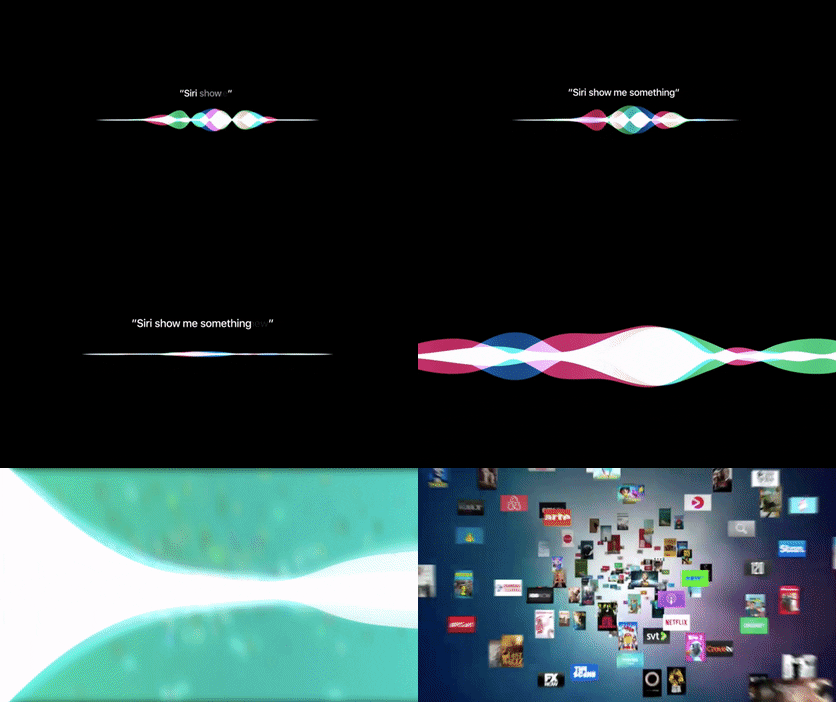
  • In 2011, Apple launched Siri, which used natural language processing to answer questions.
  • The same year, IBM’s Watson computer defeated television game show Jeopardy champions Brad Rutter and Ken Jennings.

Most popular course on Coursera in 2011:

  • Machine Learning from Stanford University: Andrew Ng, a Stanford University computer science professor, launched his open online course on machine learning in 2011. Before long, over 100,000 learners had enrolled. Through this course, Andrew and Daphne discovered the impact online learning could have on increasing access to education, which led to the founding of Coursera.

2012: Power of Social Sharing

  • Social media became the go-to place for sharing in 2012. More than 50 percent of adults used a social networking site in 2012, and 67 percent used those platforms to share their opinions.
  • Medium also launched, giving people across the globe the chance to pen an article without their own blog. With these tools, people had the platform to tell their own story or join the national conversation.

Most popular course on Coursera in 2012:

  • Think Again I: How to Understand Arguments from Duke University: This course, taught by Dr. Walter Sinnott-Armstrong & Dr. Ram Neta, teaches learners how to identify, analyze, and evaluate others’ reasoning. It also detailed ways to craft your own winning arguments. Richard Faigo, who took the course, said, it gives “clear technical insights with regard to analysis of arguments.”

2013: Hello, Sharing Economy

  • People worked together in new ways in 2013. The sharing economy took off in 2013 with the rise of Uber, Lyft, and Airbnb.
  • Crowdfunding, which allows people to come together and collectively back projects, broke into the mainstream. In 2013, crowdfunding sites raised $5 billion, a 50 percent increase from the year before.

Most popular course on Coursera in 2013:

  • Social Psychology from Wesleyan University: This course, taught by Professor Scott Plous, dives into human behavior and shares tips on how to apply evidence-based findings to decision making, persuasion, and group behavior. Marisa, who took the course, said, “I have truly enjoyed and learned tons about why we humans act the way we do. Professor Plous is a pleasure to listen to, and the team behind him has done a great job in making this course relevant and interesting.”

2014: Spotlight on Lifelong Learning in a Changing World

  • A 2014 Bloomberg report showed that half of occupations could be automated over the next two decades.  
  • Individuals and companies began thinking about ways to adapt to a changing workforce by learning new technologies.

Most popular course on Coursera in 2014:

  • Learning How to Learn from McMaster University and University of California, San Diego: Today, more than 2.4 million people across the world have learned to apply research-backed best practices and master tough subjects with this popular course taught by Dr. Barbara Oakley and Dr. Terrence Sejnowski. Chinelo O. who took the course, said, “It totally changed my mindset positively. I use Pomodoro for time management, and my life perspective is more open-minded.”

2015: Unprecedented Demand for Data Scientists

  • In 2015, “data scientist” emerged as one of the most coveted and best-paid professions in the U.S.
  • Demand for data scientists outpaced other tech professions, like engineers and data analysts, by 50 percent.

Most popular course on Coursera in 2015:

  • Data Science Specialization from Johns Hopkins University: Quickly becoming one of the most popular Specializations in Coursera’s history, this series of courses taught by Professors Jeff Leek, Roger Peng, and Brian Caffo teaches the entire pipeline of data science concepts and tools. One learner said the course was challenging and compulsory for anyone who wants to work with data or become a data scientist.

2016: Coding as an Essential Skill for All

  • In 2016, more than half of the jobs named by Glassdoor as top “lucrative, in-demand” professions required programming skills.

Most popular course on Coursera in 2016:

  • Functional Programming in Scala Specialization from EPFL: This hands-on series of courses taught by Professors Viktor Kuncak, Heather Miller, Martin Odersky, Aleksandar Prokopec, & Julien Richard-Foy introduces students to a widely-used programming language, Scala. A learner called it, “an excellent introduction to the concepts of functional programming that had the ‘side effect’ of getting me hooked on the language!”

2017: Real-World Applications of Deep Learning

  • In 2017, after nearly ten years of research, passengers rode in Waymo cars that utilize deep learning for the first time.
  • There were more than 10,000 job vacancies in the US for people with AI or machine-learning skills, according to a study of job ads.

Most popular course on Coursera in 2017:

  • Deep Learning Specialization from deeplearning.ai: Touted as a series of courses that helps individuals break into AI, this Specialization helped learners gain the most highly-sought after skills in tech, like neural networks and machine learning. Zohair Shafi said, “[Andrew Ng’s] courses on Machine Learning and Deep Learning got me to where I am today. In all my years of formal education, I’ve never met anyone who can break down concepts and explain as well as Professor Ng does.”

2018: The Year of Self-Care and Wellness

  • The modern-day “wellness” trend went viral in 2018 and turned the wellness industry into a $4.2 trillion global industry.  
  • Trends like mindfulness, self-care, and mental health took root. People wanted new ways to stay healthy and happy in a modern-tech era.

Most popular course on Coursera in 2018:

  • Science of Well Being fromYale University: Professor Laurie Santos taught Yale’s most popular class ever on the good life. Before long, she launched her course on Coursera so that people around the world could learn about ways to cultivate the things that make people happy. One recent learner said, “A quality course everyone should take, especially after you’ve started your career or overloaded with school. It’s like hitting the refresh button when living an overscheduled life hour-by-hour.”.

2019: AI Goes Mainstream

  • While 2017 was a pivotal year for AI breakthroughs, 2019 looks to be the year we realize how much AI already impacts our daily lives. 72 percent of today’s CEOs regard AI competencies as the most important asset of a company.
  • 64 percent of organizations said AI helped them get an edge on their competitors.

Most popular course on Coursera in 2019 (so far!):

  • AI For Everyone from deeplearning.ai: In this course, Andrew Ng teaches non-technical professionals about the power AI can have for businesses. A learner who took the course said, “I got a comprehensive overview of what AI is and the meanings of various concepts being talked about in this context. Excellent course for one to start on a solid ground. Five stars!”

P.S. Did we miss your favorite course? Share with us @Coursera and give a shout out to your favorite instructor!

2

Coursera raises $103 Million in Series E round of financing

0
Coursera raises $103 Million in Series E round of financing

Today, we’re happy to share that Coursera has raised an additional $103 million of investment in a Series E equity round. With this round, we welcome SEEK Group, a global leader in investing, scaling and operating online employment and education businesses, as our new investor. Existing investors Future Fund and NEA also joined the round.

The Fourth Industrial Revolution, marked by advancements in automation and artificial intelligence, is dramatically reshaping our lives, businesses, and jobs. Coursera is at the forefront of preparing individuals, companies, and governments to address these challenges head-on and turn this disruption into an opportunity. The additional funding gives us the resources and flexibility to further expand internationally and to accelerate the development of a learning platform that currently serves 40 million learners, 1,800 businesses, and over 150 top universities.

Even with our rapid growth and global reach, we still have so much more to do. As the future of work and the future of learning converge, there is an enormous opportunity for us to make the world’s best education available to hundreds of millions around the world and change the way they learn.  We are so grateful to our learners, partners, enterprise customers, and employees who helped us get to this point and will propel our innovation and growth in the years ahead.

9