fbpx
Home Blog Page 900

Benefits of Pretesting in the Classroom

0
Benefits of Pretesting in the Classroom

What’s particularly cool about this is that a lot of research on retrieval practice uses identical questions and the research has sometimes been criticized for being primarily rote retrieval as opposed to deeper learning. But this shows a benefit for related material, indicating that there is a benefit for understanding that goes beyond question-answer memorization. And that benefit (in this study) is 10% – a full letter grade.

Students also responded to a survey about the pre-tests. There were some interesting results to the survey.

·         Students indicated that they took the pretests pretty seriously even though they weren’t for a grade. Students did have to put their names down in order to connect their scores with their final exam grades, so perhaps that raised the stakes for them a bit.

·         On average, students believed they got more than half of the pretest answers correct. This is somewhat surprising. At the time this survey was taken, students have already sat through the lectures and gotten the correct answers, yet they are overestimating how well they did. Still, there was quite a delay between the pretests and this response, so we wouldn’t expect it to be perfectly accurate.

·         Students indicated that they used a strategy on the pretest, either a process of elimination or picking an item with familiar terms. This indicates that students had some knowledge before taking the pretest, which allowed them to consider answer choices instead of purely guessing.

·         About half of the students indicated that they didn’t think about the (ungraded) pretests after they took them, but the other half reported using the pretests as a kind of study tool. They looked up the answers, studied those items, or talked with their friends about them.

·         Interestingly, almost half of the students reported that they engage in some kind of pretesting on their own. They completed quizzes provided by the instructor or those in the textbook before coming to class.

Here’s my take:

There are several possible reasons why pretesting worked in this study.

1)      Students paid more attention to the pretested material during the lecture.

2)      The pretest activated prior knowledge (some of them are clearly doing a lot of prework), and allowed them to encode the new information more deeply.

3)      They were doing a lot of studying of the pretested information outside of class.

4)      There are some great spaced retrieval effects going on. That is, students saw the material before lecture, they took a quiz on it during the pretest, then later they reviewed or quizzed themselves on that same material again during self-study.

Of those reasons, three of them depend on students working on their own in a strategic way, outside of class. While there is clearly more research needed in this area to disentangle these possibilities, I feel pretty confident in telling educators that this is a promising technique for certain students. My concern is that these might be the students who need it the least. If they are already doing extra strategic studying that better prepares them for lectures and exams, those aren’t the students I’m worried about. And if this effect requires all that extra work, there’s less that we, as educators, can do about it.

But there are some things. For example, making those pretests worth a very small amount of the total grade and encouraging students to prepare for them could extend this benefit to students who otherwise wouldn’t do that prework. If we provide quizzes in advance of lectures for students to take at home and then provide the pretest questions for students to take home and use as study we might guide them to more effective study strategies. After all, it’ll be difficult for them to practice retrieval if they have to create their own materials.

In short, this data is promising and folks could consider using pretests in their classes. My advice might be to make these pretests a combination of old and new material, retrieval practice and pretest, and to explicitly tell our students how to effectively study for both better scores on pretests and long-term retention.

Moving Abroad: What You Need to Do

0
Moving Abroad: What You Need to Do

So, you’ve decided to pack it all up and start a new adventure in a new city and country. Moving abroad is a life-changing decision that can be both exhilarating and challenging. Whether you’re relocating for work, education, adventure, or just looking for a change in lifestyle, thorough planning and preparation are essential to ensure a smooth transition. Below, we’ll walk you through the crucial steps you need to take when moving abroad.

Steps and Tips to Making the Move

Embarking on the journey of moving abroad is like opening the door to a world of possibilities, where every step leads to a new adventure. Below we’ll give you seven essential steps and tips to make your international move a seamless and enriching experience.

Research and Planning

We’d love for the logistics of immigrating to end with buying a plane ticket. However, you need to do thorough research before even thinking about booking your flights. Start by considering your reasons for moving and what you hope to achieve in your new country. Some of these factors include where you’ll live, job opportunities, cultural differences, language barriers, and, not least, the financial costs associated with packing up your life and starting afresh. The last thing you want to encounter in a different country is unforeseen expenses because you neglected to plan well.

Tip: You can set yourself up by taking language courses or working on improving your English-speaking skills to help you communicate with locals and other expats in your chosen country. Our free English Vertical courses can help you learn English better and grow personally and professionally.

Applying for Visas

One of the pain points for many individuals looking to move abroad is the visa and immigration requirements. More so because these differ from country to country. As part of the research and planning phase, you need to understand the specific visa regulations applicable to you and the purpose behind your move. These could be for work relocation, studying internationally, family reunification, and more.

Tip: Gather all the necessary and supporting documentation and submit your application well in advance. Visa applications can be a lengthy process, and you don’t want to lose any time when your new adventure awaits.

Accommodation

When you’re moving overseas, you’re leaving the comforts of your home. Finding a place to call home is not an easy task, so you want to start your search early. You also need to check that your chosen housing aligns with your visa status and familiarise yourself with different housing laws and regulations.

Tip: If your company is setting you up with accommodation, make use of online platforms, join expat communities for support  (and more tips), or contact a local real estate agent to help you find the right place, at the right price, and close to the essential amenities you need to make you feel right at home.

Work and School

Are you looking to find a job overseas? Are you furthering your education at an international institution? Whatever your reason, you need to make sure you have a plan for your pursuits. Or if you’re going overseas to join a family member, it wouldn’t hurt to see what employment or educational opportunities are available on the other side. Get the necessary certifications, learn and increase your language proficiency, and ensure your qualifications and skills are up to date.

Tip: You will want to network with expats, take advantage of the support offered by universities and programmes, and find people to help you reach these goals.

Cultural Adaptation

Moving abroad can be daunting when you don’t know anyone or have someone to call to help you deal with the day-to-day tasks and responsibilities. One of the keys to transitioning to a new country is to be open-minded and respectful of the place’s different languages, cultures, and customs. This is not always easy to do, but it can be an exhilarating challenge with the right mindset.

Tip: “When in Rome, do like the Romans do.” The best way to adapt to the new culture is to engage in the locals’ activities. Enrol in language classes, and cultural orientation programmes, embrace new experiences, try the local cuisine, and make friends with those in your new community. These small but essential steps will help you acclimatise better.

Get Insured

Healthcare and insurance are an important aspect of moving abroad. In the same way, you don’t want to be caught counting coins in the first month, you don’t want to find yourself in a doctor’s room or hospital with huge medical bills to deal with. Research the healthcare system in your new country and what insurance systems are acceptable.

Tip: Read the T&Cs of your health insurance before boarding the plane and ensure you fully understand the terms, conditions covered, co-payments if applicable, and routine health checks.

Financial Planning

The money talk cannot be stressed enough. It requires careful planning because of the currency exchanges, setting up new bank accounts, and different costs of living that you may be used to. You also want to keep abreast of the tax obligations you may still have in your home country and the new country.

Tip: Every cent matters. Keep an account of your daily expenses. Have a savings account for rainy days and emergencies. Create a budget and stick to it.

Don’t forget that if you arm yourself with knowledge and are proactive, you’ll be well on your way to having a successful international transfer. Seek advice from expat groups, local professionals, and government resources to make your international move a successful transition. With the right planning, assistance, openness to the new experience, and sticking to these crucial steps and tips, your international adventure might transform into a memorable, life-changing experience.

Are You a Joiner?

0
Are You a Joiner?

There’s a new club at school dedicated to an activity you love: say, anime, Fortnite, knitting or community service. Do you join? Why, or why not? What, if anything, would get you to sign up?

In “I’m Not a Joiner. Was I Born That Way?” Jessica Grose writes about her wariness of group activities:

I’ve always had the Groucho Marx approach to group activities, which is to say, I don’t want to be part of any club that would have me as a member. I’m often skeptical of institutions, their exclusionary tactics and their hidden agendas, which makes me a good journalist (and arguably a good Jew, because we love to question everything).

I also have an aversion to being told what to do by my peers, which is why I’ve dropped out of every book club I’ve ever joined after a single meeting. Once a book becomes an assignment, reading it starts feeling like a chore, rather than a pleasure. I’m lucky enough to have many strong family, friend and workplace relationships that I’ve built up over the years, and many obligations through my children’s schools, so I’ve never felt that I have an unmet need for social interaction.

I’ve wondered whether this disinclination to join has something to do with my somewhat introverted personality. Or is it my upbringing? I come from a long line of suspicious cranks. Or was it cultural? After all, belonging to groups of all kinds has declined over time for Americans. In 2011, Pew Research reported that “75 percent of Americans are active in one kind of group or another.” In 2019, Pew reported that 57 percent of Americans “participate in some type of community group or organization.” A few readers of my series also asked whether there was some sort of intrinsic quality that makes people joiners or not, and I wanted to find out.

After looking at the research and talking to research psychologists, I’d bet that my lack of desire to join groups is probably a combination of all those things: personality, identity, family environment and the wider culture, but with one surprising (to me, at least) twist. Religiosity, specifically, could have a minor genetic component to it.

According to Zachary Hohman, an associate professor of psychological sciences at Texas Tech University who studies group behavior, there are multiple motivations for joining groups, but uncertainty — “not really knowing who you are, where you belong in your society” — plays a major role. The more uncertain you are about your sense of self, the more likely you are to join a group, which can give you guidance on “what to think, how to feel and how to behave,” Hohman told me when I called him in August. Teenagers and young adults may be particularly enthusiastic about joining groups because their sense of self is more in flux — which may partly explain the enduring popularity of Greek life at American universities.

Students, read the entire article and then tell us:

  • Are you a joiner? Do you enjoy being part of a group, club or team? Or, like Ms. Grose, are you more skeptical of organized activities?

  • If you identify as a joiner, why do you think that is? Does it have something to do with your personality, how you were raised, or some other circumstance? What do you get from being part of a group?

  • If you’re not a joiner, what makes you less enthusiastic about organized activities? Where else do you find social interaction, a sense of identity, community and belonging?

  • Whether you consider yourself a joiner or not, which clubs, groups, teams or organizations are you a part of? Tell us about one that has been particularly meaningful to you and why.


Students 13 and older in the United States and Britain, and 16 and older elsewhere, are invited to comment. All comments are moderated by the Learning Network staff, but please keep in mind that once your comment is accepted, it will be made public and may appear in print.

Find more Student Opinion questions here. Teachers, check out this guide to learn how you can incorporate these prompts into your classroom.

Floods in Libya

0
Floods in Libya

Torrential rain from a storm that swept across the Mediterranean Sea over the weekend caused two dams to burst near Derna, a coastal city in the North African nation of Libya, killing thousands and washing entire neighborhoods out to sea. At least 10,000 more people were estimated to be missing and 30,000 to have been displaced.

What is your reaction to the photo above, which shows a group of men looking out over their destroyed city? What do you imagine is going through their minds? What questions does the image raise for you?

If you could send a message to some of the survivors of the flood, what would you like to say?

Tell us in the comments, then go to the related article to see more photos of the damage and rescue efforts.


Students 13 and older in the United States and Britain, and 16 and older elsewhere, are invited to comment. All comments are moderated by the Learning Network staff, but please keep in mind that once your comment is accepted, it will be made public and may appear in print.

Find more Picture Prompts here.

Word of the Day: deferential

0
Word of the Day: deferential

The word deferential has appeared in 63 articles on NYTimes.com in the past year, including on April 30 in “Many in U.K. Greet King Charles’s Coronation With a ‘Take It or Leave It’ Shrug” by Mark Landler:

“In 1953, Britain was a very deferential society,” said Vernon Bogdanor, an authority on the constitutional monarchy at Kings College London. “Now, it’s a competitive society, based on people who’ve earned their position through achievement. Therefore, the monarchy is bound to attract more skepticism.”

Buckingham Palace is sensitive to the changing attitudes. It has cut back the procession route between the palace and Westminster Abbey from that taken by Elizabeth in 1953. That has the benefit of sparing central London from gridlock while also ensuring that the crowds lining the streets do not look sparse.

Can you correctly use the word deferential in a sentence?

Based on the definition and example provided, write a sentence using today’s Word of the Day and share it as a comment on this article. It is most important that your sentence makes sense and demonstrates that you understand the word’s definition, but we also encourage you to be creative and have fun.

Then, read some of the other sentences students have submitted and use the “Recommend” button to vote for two original sentences that stand out to you.

If you want a better idea of how deferential can be used in a sentence, read these usage examples on Vocabulary.com.


Students ages 13 and older in the United States and the United Kingdom, and 16 and older elsewhere, can comment. All comments are moderated by the Learning Network staff.

The Word of the Day is provided by Vocabulary.com. Learn more and see usage examples across a range of subjects in the Vocabulary.com Dictionary. See every Word of the Day in this column.

The AI Guide – R U Asking the Right Questions?

0
The AI Guide – R U Asking the Right Questions?

The AI Guide – Asking the right questions – to vendors or even internally

  • The Questions to Ask your Learning System, Learning Technology, HCM, HRIS, and whatever other solution you want to buy that pitches AI.
  • The difference between machine learning and Gen-AI
  • ChatGPT and your employees, students, members, customers, and the person down the street who refuses to wave to you, but you find out, is on that committee at your business that is deciding on whether ChatGPT can be contained. Oh, and they never buy candy bars from your kid to raise funds for their school. Cheapie!
  • Those data sets – Private vs. Public – A lot of companies believe Private Gen-AI, will eliminate all hallucinations – Sorry, to say – you are wrong.
  • The probability that a vendor built their own LLM (and did not use a 100% open source freebie OR open source but you pay – uh they do) is low. Building your own LLM from scratch is extremely expensive, with no guarantee it will work. Let’s take Lucy.ai for example. They use the GPT Model, as I recall GPT-4. In the learning system space, the vendors who have added Gen-AI, overwhelmingly are using the LLMs from OpenAI – specifically the GPT Models. ChatGPT is free, GPT 3.5 – has a low token data fee – affordable compared to GPT-4 which is very expensive.
  • To date, again with our industry, corporate-wise, I have yet to find a vendor who is using another LLM, besides the one from OpenAI or the Azure one – which is the OpenAI one – GPT models. Even though, the majority of vendors in our industry are on AWS (Amazon). This to me is odd, because Falcon LLM is intriguing, Claude2 can do way more than ChatGPT – and it is also 100% free, Cohere – is totally Enterprise focused, and I could go on.
  • I’ve written about the Token data fees, and why there are vendors who clearly don’t want to pay those fees – it gets really pricey, and thus, try to skirt – This will be a question to ask BTW. Here is the info about Token data fees and why Token data is so relevant.
  • ChatGPT data set is from 2021. It is public — as in via the web, but only through 2021. Thus any information you might seek that is say current, won’t be there.
  • Claude2 is from 2022, although surprisingly it was able to produce information around an Apple release in Feb 2023.

Bottom Line

E-Learning 24/7

What Students Are Saying About Their Proudest Accomplishments

0
What Students Are Saying About Their Proudest Accomplishments

One accomplishment of mine that I feel most proud of is my job. I am a caddie at a private country club. I started out with absolutely no knowledge about golf, and was terrified to talk to adults. I pushed myself to get out of bed at 6am almost every summer morning and go work. Through my job, I have learned to work extremely hard — I have had to go in when it is 100 degrees. I have developed incredible connections with members and they have taught me so many valuable lessons. This summer I got promoted and felt immensely accomplished as I started out with nothing, but have gotten so much out of this job.

— Ella, Glenbard West

You shouldn’t live to impress someone all the time; you should live to feel free and enjoy your time. Your time won’t be enjoyed when you’re living to impress someone. I feel I’ve achieved a few things in life. I learned how to play the flute, I got a job, I have my own car I’m paying for, and I made it to state for a band competition. These are a few things I would consider an accomplishment. I didn’t do these things because I wanted to impress someone or because my parents wanted me to, I did these things because that’s what I wanted to do and that’s how I want to spend my life.

— Madison, Missouri

When it comes to accomplishments, most people say “my education!” or “my friends!” And yes, those are very important accomplishments, but what I’m most proud of is that I can get up in the morning and start the day. Just doing that can lead to better grades, more friends and more experiences. Everyday is different, and waking up can be hard. That’s why I take it as an accomplishment, because accomplishments aren’t easy to achieve.

— Lola, New York

When my mother pushed me to play soccer and go surfing when I was younger, I was so young that all I cared about was having fun. Eventually, all of her pushing caused me to walk away, and I gave up on both. As I’ve gotten older and started both activities again, my vision has become clearer. Your parents should encourage you to succeed in things, but not to the extent that you lose your sense of accomplishment and joy from the activity. I regret not continuing to play soccer and surfing since years of practice were wasted, but I am aware that if I had been pushed further, I would have given up and never returned. I’d like to be able to say that a 7-year-old can be motivated enough to practice anything on their own and become good at it, but I’d be lying because it’s too easy to give up when no one is pushing you, and your parent is the perfect person to push you. Throughout my life I have had so many more achievements than accomplishments, but to me they’re almost the same thing and I’m proud of both.

— Emily, North Carolina

At the ripe age of four years old, I was pressured to begin a chapter of my life, music. Although I was in love with music at a young age, no young child has the mental capacity to choose to play the violin knowing it bears an impact on you for the rest of your life. I was locked in my room for hours at a time for “required” practice every day, losing interest until I finally found love for this art. The enormous investment of both time and money finally paid off as achievements began stacking up: rookie of the year, concertmaster, and recipient of numerous scholarships for summer programs. Soon enough, this chore that was once pushed upon me was a part of my identity and became a passion. Beyond that, through struggle and achievement, this burden that I used to dread turned into a relief to my problems that I was willing to devote my time to, knowing it was helping me in the long run. As someone who now chooses how to use my time, I understand the value the violin has in my life and appreciate my parents pushing me, knowing that it has had an everlasting effect on my future.

— Tobias, Glenbard West High School

What’s Going On in This Graph? | Sept. 20, 2023

0
What’s Going On in This Graph? | Sept. 20, 2023

On Wednesday, Sept. 20, teachers from our collaborator, the American Statistical Association, will facilitate this discussion from 9 a.m. to 2 p.m. Eastern time.

5. By Friday morning, Sept. 22, we will reveal more information about the graph, including a free link to the article that includes this graph, at the bottom of this post. We encourage you to post additional comments based on the article, possibly using statistical terms defined in the Stat Nuggets.

We’ll post more information here on Thursday afternoon. Stay tuned!


More?

• See all graphs in this series or collections of 60 of our favorite graphs, 28 graphs that teach about inequality and 24 graphs about climate change.

• View our archives that link to all past releases, organized by topic, graph type and Stat Nugget.

• Learn more about the notice and wonder teaching strategy from this 5-minute video and how and why other teachers are using this strategy from our on-demand webinar.

• Sign up for our free weekly Learning Network newsletter so you never miss a graph. Graphs are always released by the Friday before the Wednesday live moderation to give teachers time to plan ahead.

• Go to the American Statistical Association K-12 website, which includes teacher statistics resources, Census in the Schools student-generated data, professional development opportunities, and more.

Students 13 and older in the United States and the Britain, and 16 and older elsewhere, are invited to comment. All comments are moderated by the Learning Network staff, but please keep in mind that once your comment is accepted, it will be made public.

8 Tips for Students Looking for a Side Hustle in Tech

0
8 Tips for Students Looking for a Side Hustle in Tech

College is back in session. Tuition prices are up, loan forgiveness is down, and inflation is… inflating. 

All in all, you might be thinking about ways to make a little extra money. Even as a student, you can learn in-demand tech skills and start picking up freelance work. Our Pro Student membership gives you all the resources you need to get a side hustle off the ground, like access to our skill and career paths and professional certifications that verify your skills. Not to mention, adding professional experience to your resume can help make you a better job candidate come graduation. 

Julia Taylor taught herself to code (using Codecademy, among other resources) and kicked off a career as a freelance web developer. Today, she leads GeekPack, a company that helps women develop technical and entrepreneurial skills. Ahead, Julia offers a few tips for college students and new developers that want to start making money ASAP by freelancing in tech.

Learn something new for free

Learn basic web development 

Building websites is a great freelance offering to start with, because people and businesses are always looking for people to make standout sites. HTML and CSS are all you need to start building and designing websites. Check out our skill path Build a Website with HTML, CSS, and GitHub Pages for a step-by-step breakdown of how it’s done. 

Then once you’ve mastered the basics, Julia suggests learning to work with inspect tools, development tools that are built into web browsers, and WordPress websites. Over 43% of websites are built on WordPress (including the Codecademy blog you’re reading!), so there’s a high demand for people that know how to use it. And since WordPress is largely built with PHP, our skill path Learn PHP can be a great start. 

There are also services like search engine optimization (SEO) and dev tools like Flutter that you can use to provide greater value for your clients. When it comes to finding success as a web developer “it doesn’t take a coding bootcamp,” Julia says. “There are things you can learn and implement, offer as a service, and get paid for.” 

Let AI handle your digital marketing 

Freelancing can be a full-time job. Pitching, cold calling, client meetings, and freelance assignments can be a lot to juggle — especially with a full course schedule. The good news: AI tools like ChatGPT are great with generating text content that you can use to flesh out your clients’ websites or create marketing materials to promote your business.  

“Recently, one of my team members did a whole thing on using ChatGPT and Canva to come up with social media posts for a small business,” Julia says. In our free course Prompt Engineering for Marketing, you can learn how to write quality prompts that’ll help large language models create content specifically for your business. AI can help speed up your workflows and outsource the tedious parts of your business, so you can save time for clubs, Greek life, and late-night cram sessions. 

Find your own clients 

Freelancer platforms like Upwork can have thousands of job listings, and many people use them to get their foot in the door, but they come at a cost — literally. Many job boards offer service and platform fees that can take a significant chunk of your earnings. 

That’s why she suggests doing your own outreach and finding your own clients. “The sooner you can put yourself forward as your own business, the better, because you get to keep everything you make,” she says. Try starting on campus: Check out a few clubs or research labs and see if they need help maintaining their website or see if a peer needs to build a portfolio website. 

Use your people skills 

A freelancer’s income is almost entirely dependent on their client relationships, so good people skills are a must. And they’re even more important when you consider the AI tools and services that are entering the market en masse. “I make it very clear to my students that they need to make sure they’re differentiating themselves from a computer,” Julia says. “What’s the human element that they bring to the table that a machine cannot?” 

Using your people skills might include breaking down technical concepts and practices into key points that your client can understand or suggesting a new feature that can improve their users’ experience. Responding to emails promptly and offering to hold check-in meetings with your client also can go a long way — and keep your project running smoothly. 

Find your circle 

Learning to code and starting a business can be tough, especially if you’re doing it on your own. In fact, impostor syndrome is one of the most common challenges new developers face. “I was really intimidated because I didn’t have a degree or any of the things you think you’re supposed to have, but really what I didn’t have was a supportive community where I could ask questions without being made fun of,” Julia says. 

You can connect with thousands of other Codecademy community members to ask questions and share your projects in our Forum and Discord server. There are also Codecademy chapters around the world where you can meet other developers face-to-face, and maybe even build group projects. 

Set boundaries with clients 

Clarifying the project’s scope and expected outcome is one of the best things you can do as a freelancer, Julia says. It’s common for new freelancers to take on work that goes beyond the original assignment, but this can often lead to complicated or confusing situations. 

You’ll need good communication skills to navigate client interactions and set boundaries and expectations. Julia notes that a proposal and contract are key to ensure both parties have clear expectations and timelines. For example, you could outline specifically how much time you’ll dedicate per week to the project and note any dates when you’ll be unavailable (like for midterms or finals). “You’re in control; it’s your business,” Julia says. 

Make time to move the needle 

Dedicating a set amount of time to accomplish tasks is one of the best ways to stay consistent. Try blocking out some time on your calendar to focus on freelancing — whether it’s pitching to new clients, working on projects, or learning a new skill that’ll help your business. “I live and die by my Google Calendar; that’s the only way I know where I’m supposed to be,” Julia says. 

Need help finding time? Here are a few tips for making time to learn coding. 

Know your why 

Freelancing has many perks, but it also comes with unique challenges, and having a clear purpose can help reinforce your discipline and motivation. “Starting your own business is not an easy route, so if you know your why and tie that into working with clients, you’ll have a more positive interaction from the get-go,” Julia says. 

Want more freelance tips? Here’s a list of AI skills for freelancers that are in high demand and some questions to ask yourself before you start applying to jobs. And if you need help building the right skills, just check out our programming courses.

Dartmouth announces first fully online degree on Coursera to expand access for learners worldwide

0
Dartmouth announces first fully online degree on Coursera to expand access for learners worldwide

Only online Ivy League master’s in computer engineering aims to prepare the next generation of engineering leaders and combat talent shortage driven by the CHIPS Act

By Marni Baker Stein, Chief Content Officer at Coursera

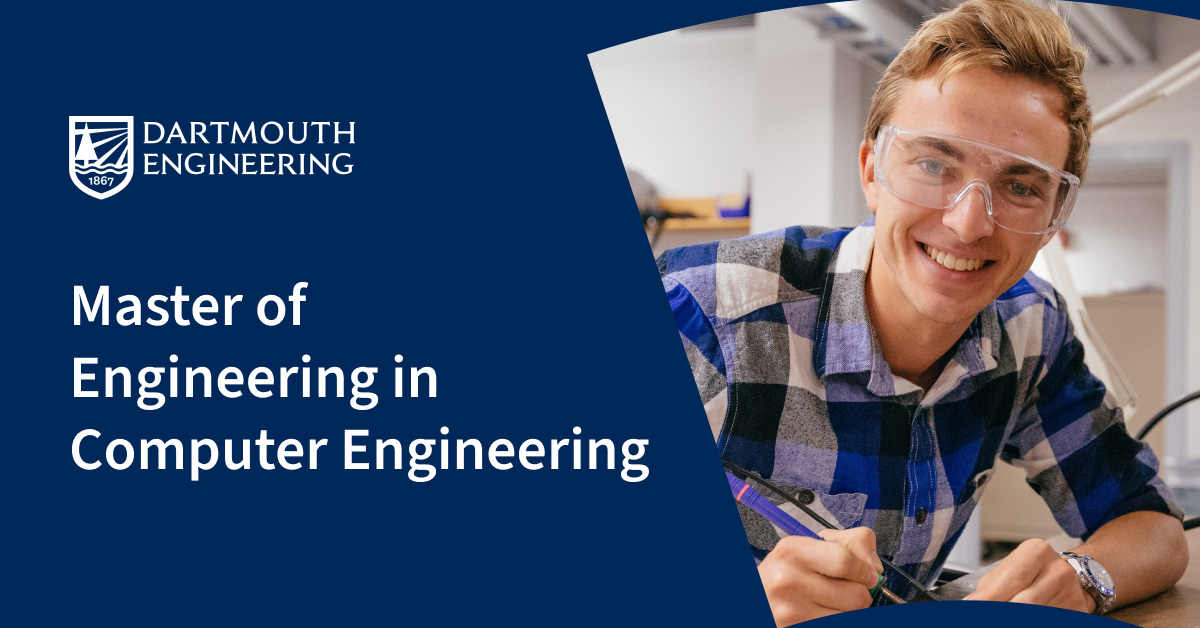
Dartmouth has partnered with Coursera to launch a fully online Master of Engineering in Computer Engineering (online MEng) for $44,100, making it more affordable than the on-campus program. This marks the university’s first fully online degree and the first online Ivy League master’s degree in this topic.

The online MEng aims to produce engineering leaders who can advance emerging technologies, from nanotechnology and clean energy to self-driving cars and AI. By 2030, the U.S. will require 418,000 engineers. With the CHIPS Act, the semiconductor industry, in particular, could face an acute talent shortage, projecting 67,000 unfilled jobs by 2030. 26% of those are expected to be master’s-level engineers. 

Dartmouth’s world-renowned faculty will teach students how to design, analyze, and build computing components, including sensors, for intelligent systems. They’ll implement information-extracting algorithms in specialized computer hardware and analyze data using machine learning, signal processing, and computer vision. Key human skills needed for management and leadership programs are integrated throughout the curriculum.

To broaden access, the admissions committee will review online MEng applications holistically, considering background, statement of purpose, and even performance in online content, such as Dartmouth’s C Programming with Linux Specialization on Coursera. Applicants don’t need a bachelor’s degree in engineering but should have knowledge in core areas, including mathematics, programming, digital logic, and circuit fundamentals. 

“From virtual assistants to virtual reality, intelligent systems are embedded in our everyday lives, and it is critical that engineers in our world understand both the technology and the human impact,” said Alexis Abramson, Dean of Thayer School of Engineering at Dartmouth. “With this new online degree, our goal is to make Dartmouth’s human-centered approach to engineering and high-impact programs within reach of more students — no matter where they work or live.”

To prepare students for today’s hybrid workforce, the program balances global collaboration with self-guided learning — all within an agile methodology. Asynchronous online courses are paired with group projects that can be completed in two-week sprints to model real-world environments. Dartmouth’s faculty and staff will hold live sessions, staggered across time zones, to help students workshop challenges and find collaborative solutions. 

Nearly 100% of graduates from Dartmouth Engineering’s master’s and Ph.D. programs secure employment within six months of graduation, with a starting salary of $123,600. More than 25% advance to C-suite positions within five to ten years. Alums become leaders at top global companies, including Boeing, Intel, and Google, while many found their own companies.

We’re proud to expand our partnership with Dartmouth, which has reached learners in over 180 countries. Amid a growing need for highly skilled, visionary engineering leaders, students worldwide can earn this Ivy League degree without upending their lives or careers. This life-changing credential, coupled with new skills and a robust professional network, can unlock doors for countless learners, enabling them to reshape our technological future. 

Applications are now open for the first cohort, starting in March 2024. To learn more, visit https://www.coursera.org/degrees/meng-computer-engineering-dartmouth.