
Tell us a story, real or made up, about an activity you enjoyed as a child that you gave up as you got older.
Word of the Day: remedial
This word has appeared in 31 articles on NYTimes.com in the past year. Can you use it in a sentence?
Industry Corner Spotlight: What Does it Take to Be an Accountant

Each of us is accountable for something. Or someone. Organisations carry the same responsibility. In companies, accounting is the language of all business. Every business needs to be honest about its numbers. No fledging. No inflating. No exaggerating. Good accounting helps a business make decisions and plays a critical role in the planning and controlling processes. To get a better understanding of how companies balance books and what it takes to be an accountant, we sat down with a qualified Chartered Accountant, Nhyira, to learn more.
Meet Nhyira
Tell us a bit about your background.
My name is Nhyira Asante (p.s. you don’t say it, the way it’s spelt) and I’m a Chartered Accountant from South Africa currently working as an investment analyst.
What made you decide to go into accounting?
The age-old question – well I’m in this specific field via my mom’s direction. She always wanted to be an accountant but didn’t get to be one until later on in life, so she encouraged me to pursue it. When I saw the stars aligning in terms of academics, I gave it a full-hearted “go” and I’ve often looked back since then (I jest, it’s a pretty fulfilling career).
Understanding accountancy
For those who don’t know, what does an accountant do?
An accountant essentially works at making sure the financial side of a business is kept in check by recording transactional information and then providing insight into what all the numbers mean.
What courses does it take to become an accountant? What courses did you study?
I went to Wits University in Johannesburg (University of the Witwatersrand) and studied a Bachelor of Accounting Sciences as my undergrad and then a year of postgrad for my Certificate in the Theory of Accounting (CTA).
What additional certifications, exams, and memberships have you had to complete as part of your career journey?
As soon as CTA was done, I wrote my first Board exam which is a technical exam, and thereafter my second and final Board exam which is a more “practical” exam.
Are there different types of accountants?
Yes, we can break it down by qualification. There are professional accountants, chartered accounts, chartered certified accountants, management accountants, etc. All have a similar focus on providing accurate financial information to assess a business’s performance and forecast future performance. Then there are the roles that accountants perform as well – they can be bookkeepers, financial managers, CFOs, investment analysts, entrepreneurs – any number of things.
What essential skills should every accountant have for success?
The key is to have a good handle on the organisation and pay attention to detail.
Do aspiring accountants need to be good at math to succeed?
Fortunately, yes otherwise people would sue us consistently and constantly.
What qualities and traits do you need to succeed as an accountant?
The traits that help me in my current role in a more personal sense are a very strong prayer life for strength (the job is immensely challenging) and the ability to persevere no matter the challenges.
What are the daily challenges you face as an accountant?
Usual stress of meeting near-term deadlines in the most efficient and accurate manner.
In what sectors can accountants work and where are they most sought after?
Luckily, we can work across many sectors – as long as there is a need for someone to understand financial information there will be a need for accountants.
What are some misconceptions about being an accountant?
That we are boring, stingy, penny pushers that people should ignore.
The life of an accountant
What does a typical day in your life look like?
My journey is a little different from a typical accountant’s – I work in an investment bank so my day-to-day involves covering admin and transactional points that may arise on one of the deals (selling and buying corporate businesses and providing other strategic advice to company leaders) I handle – this includes preparing materials, taking notes, valuing companies etc.
When you started on this journey, what were your vision and mission?
- My vision was to help people with their businesses and financing so entrepreneurs would be able to execute their dreams and visions.
- My mission also slowly became about debunking the information barrier that exists between people who are well versed in how to work in a corporate, investing etc. and those that don’t have access to that information.
What are some of the daily habits you do that contribute to your success?
- I try to take notes of everything I need to do, to help me keep track (I’ve always heard that a short pencil is better than a long memory)
- Motivating and challenging team members towards a greater common goal
- I exercise integrity and try to be reliable which results in more trust in the system for a more conducive work environment.
What’s the biggest sacrifice you’ve had to make, and would you make it again if necessary?
The biggest sacrifice is an ongoing motif in my current role – my job is quite intense, and as a result, I’ve had to sacrifice quality time with family to cater to my job.
Challenges of being an accountant
Have you experienced any failures or setbacks as an accountant and what lessons did you learn from that experience?
- Definitely, in the words of Donnie McClurkin – “we don’t fall, we get up” (paraphrased).
- I had quite the challenge in my post-grad year but managed to pass what is a dreaded year for most accounting students.
What do you know now about being an accountant that you didn’t know before you started your career?
Accountant roles post qualification are so wide and varied – it enables you to do anything you would want to do.
Who inspires you and pushes you to keep going?
I want to build a more beautiful life for my parents – the idea that I will be able to make that happen day one day keeps me going.
Is work-life balance something you can achieve in your job as an accountant?
In general – it is within reach however in my current role, it’s rare.
What are some non-negotiable things you practice in your role?
- Preparing for meetings
- Having a post-debrief session with yourself to understand what was discussed in a meeting (Especially when there’s new information you’ve been exposed to)
- Being diligent and excellent in the work I submit to the team (to the best of my ability)
Do you have any apps or tools you use to stay organised?
I use Microsoft Outlook.
What words of encouragement or advice would you give someone looking to become an accountant?
- Know your why (your purpose for pursuing this career) – once that is established and unlikely to change, you’ll be able to contextualise what you’re giving up getting your dream and decide whether it’s worth it or not.
- Always practise gratitude for any opportunity that is presented to you – it opens countless other doors and opportunities.
Accounting for something
When working with clients, what are the easiest and most challenging things you must deal with?
- Clients are easy to engage with generally, and it’s fun to win them over.
- They can also be quite slow in providing responses that you would need to action your own work which is challenging.
How important is teamwork in this field and how do you ensure you build a strong team?
Teamwork as in most fields is important – building a strong team takes intentionality in building trust and a safe space for team members to share their knowledge and ask questions.
What are the possible career paths for someone who has completed (or is about to complete) their accounting qualification?
Moving overseas using your qualification, financial manager, investment analyst, entrepreneur etc.
The proudest moment in your career so far?
Qualifying as a chartered accountant.
Think you have what it takes to help companies keep accounts? Take our free workplace personality assessment below and find out who you are and why you do the things you do. Discover your skills, strengths and weaknesses and receive course recommendations to get your accounting career started.

Color Love | Winter Blues & Gray

Let’s say goodbye to winter with our last frosty color combination this season. You’ll certainly envelop your readers in tranquility with this soothing Winter Blues & Gray color palette.
Winter Blues & Gray Color Palette
Don’t you just want to nuzzle yourself right into this relaxing blue, soft gray, & tranquil white color palette? These calming colors will bring a serene and peaceful feeling to any blog design.
As always, we have put together a mood board with some inspiration. It is in perfect Pinterest format, so feel free to pin it for later.

See our collection of other gorgeous color palettes by visiting our color palette section.
What do you think about this Winter Blues & Gray color palette? Where would you use it? There are really no limits here. We would love to hear your thoughts. Share them in the comments below.
Lastly, learn about the power of color in blog design in our blog post to see how important colors are in all the projects you create.
If you like blue colors, you may want to check January wallpaper which was all about blue, white, and a few pops of red.

And, of course, don’t forget to check the 2023 Ultimate Planners! Over 100 pages that will help you grow your blog and social media and plan your perfect year!


If you create something using today’s color palette, don’t forget to share it with us!
Film Club: ‘A Brief History of Hating My Face’
How do you feel about the way you look?
March Madness Is Here. Will You Be Watching?
Will you be one of more than 50 million Americans who will fill out a tournament bracket?
Girl Scout Cookies
What are your favorites? Why? Have you ever been a scout?
Word of the Day: denounce
This word has appeared in 226 articles on NYTimes.com in the past year. Can you use it in a sentence?
Learn about Disabilities and Empower Yourself
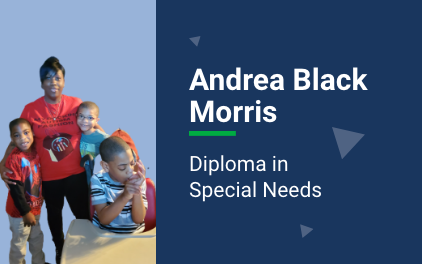
The sleepless nights. The messy house. The stained couches and carpets. While some may cry at these realities, they are also joyful signs of children in the house. Parenting is without a doubt, a beautiful yet at times challenging role without a manual, that many people take on. The reward: priceless. One of our graduates, a proud mother of three, Andrea Morris, decided to learn about disabilities and empower herself and her family. We spoke to her to find out how her Diploma in Special Needs has helped her raise her sons and the impact it’s had on her family.
Tell us a bit about yourself.
I am 45 years old. I am a wife, my husband recently retired from the military, I am a mother of six sons and my three young sons are special needs. I am a full-time student who’s earning a bachelor’s degree in business administration. I wear many hats within my family.
I am the head production manager for a local uprising filming company. I have a custom design online t-shirt business. I created phrases that bring awareness to autism, cerebral palsy, and special needs. My website is called My Rockin’ Autism Fashion. Just recently I was inducted into the Kappa Beta Honor Society for Business and the Alpha Sigma Lambda.
Please introduce your sons to the Alison community.
My first son’s name is Alphonso he’s 8. My second son’s name is JaKobe he’s 7 and his twin brother’s name is Jacob. Jacob is non-verbal and has intellectual disabilities, autism, and ADHD. JaKobe has been diagnosed with autism, ADHD, left-sided hemiplegic cerebral palsy, and epilepsy, and Alphonso has autism and ADHD.
How did you discover Alison?
A very close girlfriend informed me about Alison. She knew I had ended my career because of the extensive care of my three young special needs sons, and she also knew I love to learn, and it started from there.
Life with special needs children
How did you strike/find a balance between being a busy mom and studying?
I always stayed within our routine. If I change anything, it would be chaotic. I learned to be disciplined and listened to them as well, which was very important.
What do you think is a common stumbling block for parents with children who have special needs?
Accepting their child or children’s diagnosis.
Your sons are of different ages. Was the course content translatable for every age?
Yes, it was. The course was also helpful in providing different strategies to use due to my son’s different ages and conditions.
What do your children enjoy most now when it comes to learning?
My two sons’ strengths are reading, they have challenges in other learning areas. My other son has intellectual learning disabilities.
When did you realise your children may have special needs when it comes to learning?
One of my son’s, who is non-verbal I recognized immediately. My other two sons I started to recognise myself when they weren’t comprehending their learning materials.
Diploma in Special Needs course
What made you decide to enrol for the Diploma in Special Needs course?
To gain more knowledge and understanding. And to help my children and other friends and family who are going through similar situations.
What learning challenges were you experiencing before you came across Alison’s Diploma in Special Needs course?
When my sons were diagnosed with autism and other health conditions, I had some knowledge of their condition because I had a career in early childhood education. The challenge I faced was now I’m going through this on a personal level.
What did you find most interesting or surprising in the course?
Discovering that there are various ways to assist students with learning disabilities and the Rigidity of Thought and Repetitive Patterns of Behavior in children with Autism.
What did you enjoy most/enjoy the least in the course content and material?
There was never a dull moment throughout this course. Even the videos were beneficial and encouraging.
What, if any, challenges did you experience in learning/the material?
Fortunately, I didn’t experience any challenges because I already had knowledge about Special Needs.
What educational background did you come into the course with that helped you?
Early Childhood Education 101.
The impact of the Diploma in Special Needs
How has learning in the home improved since you completed the course?
I have been more aware of my son’s triggers, the way that they process things, and their social interaction with others.
What key takeaways did you get from the course?
Managing meltdowns, meltdown warning signs, and developing social interaction skills.
What needs did the Diploma in Special Needs course meet for you and your family?
By helping me understand the Individual Education Plan (IEP) regarding my three sons and having a vivid understanding of learning disabilities.
Who do you think will benefit from taking this course?
Parents who are having challenges with meeting the needs of their special need child or children and educators who may not have a vivid understanding of what special needs students need in the classroom for support.
What motivated you to press on with the course and complete it?
I have a love for learning and being that I have hands-on experience with not just one child with special needs but three. They all have unique conditions, and this journey is a life I wanted to educate myself to be a strong advocate for my three sons.
Final thoughts
What advice would you give to moms who have special needs, children?
Educate yourself. Understand your position when it comes to your child or children’s IEPs. Be a strong advocate for your children and be their voice.
What motto/words do you live by?
I stay ready so I don’t have to get ready.
Life comes with its fair share of challenges but if you have a positive attitude and outlook like Andrea, you can rise to the challenge. If, however, you are feeling overwhelmed by the challenges and various needs requiring your attention and need help, our mental checkup assessment can help. The short assessment will help you understand and enhance your personal levels of positivity and confidence in your daily life.
What Is ROM?

Think back to the last time your hard drive crashed (we hope it was a long time ago). Chances are that you were acutely stressed and panicked because you couldn’t properly load your operating system, which is stored on your hard drive. But you might have been able to run the basic programs you needed to boot up your computer, reinstall your operating system, recover your files, and keep your cool. All of those critical functions were made possible by ROM storage.
In this article, we’ll answer all your questions about ROM: what ROM is, why it’s important, the types of ROM, and what makes ROM different than RAM.
Learn something new for free
What is ROM?
ROM stands for read-only memory. It’s a type of storage that can permanently store data on computers, devices, and chips.
There are two main characteristics of ROM. First, ROM is non-volatile. This means the data remains stored in ROM even when it’s not powered. The second characteristic is that data stored in ROM cannot be electronically modified once the ROM device is manufactured and the initial data is programmed into the device. And while there are ROM devices today that can be reprogrammed, this can only be done with special equipment, at slow speeds, and usually only a certain number of times.
Why is ROM important?
ROM is a permanent and unchangeable form of data storage. While this may sound quite limiting, ROM has distinct advantages for certain computer science and hardware applications.
When you turn on your computer or phone, the device needs a few essential instructions just to start up correctly. These instructions are stored on ROM chips that contain essential information for the basic input/output system (BIOS), the boot-up process, reading and writing to peripheral devices, and software for basic utilities. All of this is stored in ROM because it’s such a secure and reliable form of storage.
Another application of ROM is for electronic devices that perform specific functions. These devices contain firmware or pre-written operating instructions and configurations stored in ROM. Examples of devices that contain firmware include digital watches, pocket calculators, cameras, keyboards, computer monitors, and modems.
What are the different types of ROM?
Since the widespread use of ROM in the 1960s, there have been several improvements to the basic ROM chip. Today, there are four main types of ROM: Mask ROM, PROM, EPROM, and EEPROM.
Mask ROM
The earliest and most basic form of ROM contains a series of integrated circuits. A mask ROM chip sends current via specific input-output pathways determined by fuses on the chip. Current can only travel via fuse-enabled pathways that are wired by the manufacturer. It’s practically impossible to rewire mask ROM chips, which means there’s no way to modify or rewrite data on the chip.
Mask ROM chips are designed to be mass-produced. While designing and producing the first template takes a lot of time and money, creating identical ROM chips from an existing template is much cheaper.
PROM
A programmable ROM (PROM) chip starts as a blank version of a classic ROM chip — in other words, every possible pathway is open. A programmer then chooses the input-output pathways for the PROM chip based on the data to be stored. Any unwanted fuses are then burnt out with high voltage. Note that it’s only possible to destroy fuses on a PROM once, which means that PROM chips can only be programmed once.
Since PROM chips don’t need to be programmed at a manufacturing facility, they’re also known as field-programmable ROM (FPROM). But while PROM chips are more convenient and flexible than ROM chips, they’re also more vulnerable to damage. That’s because a static electricity discharge can accidentally burn out fuses on the PROM chip and corrupt the data.
EPROM
Erasable programmable ROM (EPROM) chips offer a limited way to rewrite data on the chip. EPROM chips are initially programmed in the same way as PROM chips. But these chips are also built with a quartz window through which a special tool can emit ultraviolet (UV) light. The UV light exposure essentially reopens every circuit, and the chip can be reprogrammed.
EPROM chips offer a lot more versatility than PROM or mask ROM chips, but it comes at a cost. First, UV exposure slowly degrades the chip, and most EPROM chips have lifetimes of about 1,000 erasures. Second, the risk of accidental UV exposure from sunlight and fluorescent light makes EPROM chips vulnerable to accidental erasure if they’re not properly covered.
EEPROM
The most advanced form of ROM is electrically erasable programmable ROM (EEPROM). Data on EEPROM chips can be erased and rewritten by applying local electric fields to the chip. This makes it possible to selectively edit the data rather than needing to erase and rewrite everything on the chip, as with EPROM. And unlike earlier types of ROM, you can rewrite data on an EEPROM chip without special equipment.
EEPROM chips also have limited rewrite cycles, though modern lifetimes are now over a million erasures. You can find EEPROM chips in computers as well as smart cards and keyless entry systems. And descending from EEPROM is flash memory, which you can find in smartphones, cameras, and USB drives everywhere.
ROM vs. RAM
If you’re learning about hardware components, then you’ve likely come across the term RAM as well as ROM. While both have to do with memory storage, random-access memory (RAM) works differently than ROM. RAM is a form of volatile storage, which means that RAM chips must be powered to store data. Once the power is cut off, the data disappears. This is why RAM is described as “short-term memory.”
Compared to RAM, data stored in ROM can take longer to access. That’s why ROM data is often copied to RAM, where it can be quickly accessed when it’s needed. When you shut down your computer or device, everything in RAM is erased while the ROM data remains safe.
Understanding ROM is important for developers
While most people are used to working with rewritable forms of solid-state storage, the truth is that ROM is still critically supporting us behind the scenes to make sure our devices still work when things go wrong. And if you’re ready to begin a career in computer science, IoT, or even game development, ROM will play a central role in how you develop new software and products.
So, what else should you know about ROM? We recommend taking an online programming course to keep your skills sharp. And if you’re not sure what to learn next, our developer career paths will help guide you in building the right skills you need to succeed in your new career.
