fbpx
Home Blog Page 1256

Learn 60 New Vocabulary Words With These Imaginative Student Videos

0
Learn 60 New Vocabulary Words With These Imaginative Student Videos

Over the past eight years of our Vocabulary Video Contest, students have produced thousands of lively, original videos in which they define a Word of the Day in under 15 seconds.

Sixty of the winning videos, organized into three compilations by part of speech, are rounded up in this post. We hope that this repository of videos informs as much as it entertains. To that end, we created an interactive Vocabulary.com list to accompany each video. Use these lists of verbs, adjectives and nouns to practice each word’s definition and spelling.

Our 9th Annual 15-Second Vocabulary Video Contest will run from Dec. 1, 2021 to Jan. 12, 2022. In the meantime, check out our yearlong calendar of challenges for students to learn new vocabulary with The New York Times.


Learn nine verbs via the three-minute video at the top of this post, then test your comprehension with this vocabulary list.

1. abscond by Gabe Sherman

2. amalgamate by Isabella Bonito and Riya Dosh

3. defame by Naomi Cooke, Riddhi Damani and Kendall McDonough

4. distill by Victoria Tong

5. exorcise by Emily Bone and Davis Gibb

6. feign by Emma Kim

7. levitate Miguel Cabelin and Enya Rodriguez

8. scotch by Jacob Rodriguez

9. vex by Steven Xie, Elliot Azzi, Arek Zenel Walasek and Korinne Hennel


Learn 19 adjectives in the six-minute video below, then test your comprehension with this vocabulary list.

Learn 32 nouns in the ten-minute video below, then test your comprehension with this vocabulary list.

Top 100 Learning Systems 2021-22

0
Top 100 Learning Systems 2021-22

The List. That is what I refer to it as, you can refer to it as whatever you wish (hopefully – nice). The List represents learning system vendors from around the world. Sales Enablement Platforms? Yes. LMS? Yes. LXP? Yes. LMS and LXP combo? Yes. Learning Suite? Yes. A Learning Platform in general? Yes. Training Management Platform? Yes. Skills specific platform? Yes. Skills Metrics/Measurement Platform? Yes.

A TXP? Yes. A TXP who continues to refer to themselves externally as an LXP? Yes.

While there are plenty of people who think that I only focus on the states and are unaware of who or what is out elsewhere, well, The List shows otherwise.

The List includes systems from Australia, Germany, Italy, Switzerland, Russia, France, England, Ireland, Netherlands, Denmark, Sweden, Scotland, Canada, Brazil, Spain, Israel and the United States.

The systems themselves, some you will definitely recognize, others, probably not. The List isn’t a who’s who in the marketing or placing themselves on some top 10 directories or similar. They represent every nearly every vertical out there (industry wise), audience size – small business, SMB (including mid-market), mid-market, Enterprise, Large Enterprise, Customer Education/Training/B2B and B2C (aka as extended enterprise).

Each one of these vendors are in consideration for the awards – including the Diamond and Platinum Picks for 2021, and the Top 10 for 2022 (although 11-20 will be noted too).

Each one is in consideration for the best system in specific industries and certain items (such as best for skill development) for the end of 21 and into 22.

I monitor over 1,300 learning systems in the world (right now it is edging towards 1,358). Some I see a lot of, others I do not, but by paying attention, observing, and watching the system to see which way it goes – focus, design, approach, even audience type – employee-only, employees and customers (aka combo) or customers only (aka extended enterprise).

There are vendors that are not on this list. It may be yours. It may be the one you bought. It may be the one you and some other person are debating over right now. I hear you. Okay, I don’t, after all, I do not have access to your mic., but I get it. One of those is Workday Learning. There is way too much to explain why not, including the use of LL whereas data on what is taken cannot be brought back into WL (although rumors say in the next version this will be resolved).

SuccessFactors is not on this list. No need to explain why. Moodle isn’t – because it is not centralized – it is de-centralized and open source.

There were four systems that are not on the list, only because they are either not yet live or they are – but I need to validate a few items with the system(s) – in one case I already have seen the system, but it is in “beta” right now, another is in “beta” as we speak – I’ll be seeing it in two months, and one other is not even in launch mode.

Before you ask:

  • There are ZERO FEES involved here. I didn’t ask for any fees, nor require any fees to be paid, nor any fees down the road or whatever. ZERO. Nada. Nothing.
  • This isn’t a popularity contest. I honestly do not care that vendor A received 52 five stars on site ABCD. Or that 300 people think Vendor X is as good as a matchbox car (although I do want to know which one).
  • This is the first time I have made this list public. I create one each year from my award consideration, but have never made the list public. Now I have. Why? Voodoo my dog told me in three barks, that I should. I always listen to my pittie (to be fair, Spirit mumbled and Cali tried to eat a sneaker).

Podcast Tie-In

  • A deeper dive on many of these systems will be on my Podcast, “The Amazing E-Learning Roadshow” which will appear Thursday on Anchor.fm, Spotify, Apple Podcasts, Google Podcasts and a couple of other podcast sites. It will kickoff season two of my podcast series. Thus, if you want o know way more than just a list, this is the place to go to. There will be a link to the Podcast on this post – Thursday afternoon.

Codes

Next to each vendor’s name you may see the following (CEP, FAL) CEP means the vendor has agreed and signed my Customer Excellence Pledge, a rigorous certification program to ensure that their support is validated thru a series of checks. FAL – The vendor is on my FindAnLMS platform. Here you can compare the vendor to other vendors, see more details about them, request a quote, save as favorites and so on. If you see nothing next to their name, well, it means they are not on FAL or CEP.

To go to the vendor’s web site simply click on their name.

As I move closer and closer to October for the Diamond and Platinum Picks, check back to this post, because you will start to see additional information next to many of their vendor’s names.

The List

It is in alphabetical order. A PDF version with links will be available in a few weeks. Systems are identified as either “Employee-focused” (at least 80% of their clients use system for internal workforce), “Combo” (Employees and Customer Ed, usually skews more clients for employees, but there are exceptions) or “Customer Ed Focused” (aka extended enterprise – at least 80% of client base is customer education/partner training/B2B/B2C – thus skews heavy towards Customer Ed – B2B segment). Associations, regardless if professional or trade will always slide in the “Customer Ed focus).

  • Absorb LMS (CEP, FAL) – Combo
  • Academy of Mine – Combo
  • Access LMS (FAL) – Employees
  • Ascendre – Inquisiq – Combo
  • Acorn LMS (FAL) – Combo
  • Administrate (FAL) – Combo, but more skewed towards employees heavily
  • Agylia (CEP,FAL) – Combo
  • Area9 – Adaptive learning platform – always skews employees
  • Avallian Magnet – Combo
  • Axonify – Combo
  • BenchPrep Combo
  • Biz Library (CEP, FAL) – Combo
  • Blossom (FAL) – Combo
  • Blue Volt (FAL) – Customer Ed Focused
  • Brainier (FAL) – Combo
  • Brainshark by Bigtincan – Sales Enablement Platform – An SEP requires a component of sales capabillities plus a learning component. An SEP is not the same as a vendor saying they do “sales training”. An SEP does that, but a lot more due to the sales functionality within it.
  • CanopyLab – Combo
  • Centrical – Combo
  • Continu – Combo
  • Coorpacademy – Combo skewed more so on employees
  • Cornerstone Learning (FAL) – Combo skewed more on employees. I recommend going suite here with Learning (LMS) + Content Anytime (content marketplace) + PXP (think Skills platform combined with an LXP). If you add the “Careers” mod to the above, then the system becomes a TXP (but you need all four mods).
  • CourseStage (CEP, FAL) – Customer Ed focused, associations and non-profits included
  • CrossKnowledge (FAL) – Combo
  • Crowd Wisdom (FAL) – Association focused system, non-profit, foundations. You can purchase the system without having to purchase Community Brands’ association platform.
  • CXCherry – Combo
  • Cypher Learning – MATRIX (FAL) – Combo, although skewed more towards employees
  • D2L – Brightspace (Corporate version) (CEP, FAL) – Combo – plays well in the association market too.
  • Degreed (FAL) – TXP (Talent Development + LXP) – Employee-Focused
  • Digital Chalk LMS (Combo)
  • Disprz (FAL) – Skills heavily focused platform. Employee-focused
  • Docebo Learning Suite (excluding Shape) – (FAL) Combo system
  • EdCast XP (CEP, FAL) – I consider EdCast XP as a TXP (Talent Dev + LXP). I recommend adding on Domo for stronger analytical capabilities
  • Edolando (FAL) – Combo, skews more towards employees
  • Elevate LMS by Cadmium – Associations and non-profits
  • ELMO Learn with Rewards/Recognition and Predict – Employee focused
  • eloomi – Combo
  • enabley (CEP, FAL) – Combo, a bit of a wildcard – I like that.
  • Ethos CE (FAL) – Employee-focused, strong in the Continuing Ed space for medical
  • Eurekos (CEP, FAL) Customer-Ed focused. Strong Player. Plays in association space well.
  • Filtered (FAL) – Employee focused
  • Fuse (CEP, FAL) – Combo, Best analytical metrics/data visualization in the industry (out of the box – i.e. comes with the system)
  • G-Cube (CEP, FAL) – Combo
  • Growth Engineering (FAL) – Combo system, skews more towards employees – Gamification driven
  • Gyrus Aim (CEP, FAL) – Combo, Underrated – Not anymore.
  • HALIGHT – Atmosphere LMS (FAL) – Combo
  • HCM Deck for Learning – Combo, skews heavy towards employees
  • (FAL) Combo, skews heavy towards employees
  • Intellum (FAL) Customer-Ed focused. Strong Player.
  • Juno Journey (FAL) – TXP – i.e. Talent Development + LXP – Legit competitor against Degreed and EdCast XP
  • Kallidus Learn – Combo, skews heavy on employees
  • Knowledge Anywhere (CEP, FAL) – Combo, robust platform, streamlined design
  • Kokm (FAL) Combo – skews heavy towards employees
  • Learn Amp (CEP, FAL) – Combo, skews very heavily towards employees. It is a Learning System (LMS, with LXP functionality, Skills and Content market)
  • Learning Tribes with EdFlex (FAL) – Combo – Skews towards employees
  • Learningbank Combo
  • Learning Zone – Ekko (Compliance LMS) – Employee focused
  • Learnster (FAL) Combo
  • LearnUpon (FAL) Combo
  • LMS365 (FAL) – SharePoint Online LMS fully integrated into Microsoft 365 and Teams – Employee focused
  • Looop (FAL) Combo
  • Meridian KSI – Customer-Ed Focused
  • MindTickle! – Sales Enablement Platform – Very robust.
  • MyLearninghub – (FAL) – Combo, skews more to employees
  • NetEx Learning Cloud (FAL) Combo, skews more to employees
  • NorthPass – Combo
  • NovoEd – Combo
  • OKN Learning – Combo
  • Origin Fractal LXP – (FAL) Combo, skews heavy towards employees
  • Peoplefluent (FAL) – Employee focused
  • Pluralsight Skills – Skills-based platform, specifically tech skills. Employee focused.
  • Raven360 (FAL) Not a full fledged SEP, rather a learning platform that gears more towards Customer Ed segment.
  • Relias Employee-focused, Medical, Senior Care, Behavioral Health, Health care
  • Rockstar LMS (CEP, FAL) – Combo. LMS with LXP functionality. From eLearning Brothers. Been out less than a year. And yet, here they are.
  • SAP Litmos (FAL) – Combo. If you have SAP and are debating between SF and Litmos? Trust me – go Litmos.
  • Sesimic – Lessonly – Sesimic is a Sales Enablement Platform, my vibe is that Lessonly will be continue to be a standalone (too many ARR accounts), but parts to go into Sesimic for the SEP powerhouse of a system. I can easily see this combo being a legit threat to MindTickle!
  • Schoox (CEP, FAL) – TXP. Talent Development + LXP. Legit competitor against Degreed, EdCast XP
  • Skilljar (FAL) Combo, Nearly 50-50 employees vs customers.
  • Skills Base – Skills metrics/measurement platform. This is all metrics here. Only skills metrics/measurement platform on the top 100.
  • Skills Hub – Employee focused – This is around the learning platform itself.
  • Skore – Combo, very under the radar.
  • SkyPrep (FAL) – Combo
  • SmarterU (CEP, FAL) – Combo – Continues to improve – Welcome to THE LIST! (I always wanted to say that)
  • Stream LXP (FAL) – Employee focused
  • StudyTube – Combo
  • SumTotal Learn Combo, heavily skewed towards employees
  • Talent LMS (FAL) – Combo skews employees
  • Talentsoft Learning – Employee focused
  • Thinqi – Combo
  • Thought Industries (CEP, FAL) Customer-Ed focused. Strong Player. Plays in association space well.
  • THRIVE LXP Combo, skews more towards employees
  • Totara Engage LXP – Combo, heavily skewed towards employees
  • Tovuti – Combo
  • Traineasy LMS-X (FAL) – Employee focused
  • Upside LMS (FAL)
  • Valamis – Customer-Ed focused.
  • Vowel LMS – Combo
  • WBT Systems (FAL) – Combo, skews towards employees
  • Wisetail – Combo
  • WorkRamp Combo

Bottom Line

There they are.

All 100 of them.

To gain even more insight, tune to my Podcast on Thursday.

Or just wait for the book

Next year.

E-Learning 24/7

Michael McCague: “There’s great freedom in Irish music.”

0
Michael McCague: “There’s great freedom in Irish music.”

Michael McCague is a guitar and bouzouki player from County Monaghan. He’s played with a variety of outstanding traditional musicians over the years, including as part of both At First Light and At The Racket.

He plays a weekly session in Tigh Coili in Galway and has just finished recording an album with Hugh Healy, a concertina player from Corofin in Clare, which will be out in the next few weeks. 

Michael has produced Alison’s Traditional Irish Guitar Courses and shared his passion for both the genre and the instrument with the Alison Blog.


Hi Michael, tell us a bit about yourself!

My name is Michael McCague and I’m from a small village in north County Monaghan called Scotstown. I play traditional accompaniment on the guitar and bouzouki.

My parents started me and my siblings on traditional music lessons to give us an outlet and a hobby. I first started playing by learning tin whistle at the local Comhaltas group. Then when I was about 6 or 7 I started going for lessons on the fiddle. I took up banjo for a few years later but never really took to it.

I took a bit of a break from playing music and then, when I was 16, in Transition Year, I remembered my cousin had this instrument with a funny sounding name and it turned out to be the bouzouki. He happened to be getting a new one so I bought his old one, and that’s how I started accompanying. He showed me a few chords and then I used to call round to him whenever he was home from university and he’d show me a few things and we’d listen to albums and try out different things.

How did you get into playing the guitar?

It really wasn’t until I got to college that I took up guitar. There was a guitar sitting around in the house I was renting so I used to pick it up and play a bit. I taught myself through translating my knowledge of bouzouki accompaniment and also from listening to records and playing in sessions. I knew a lot on the bouzouki by then in terms of chords and harmony and what chord progressions worked well for traditional music. I really just had to translate it onto guitar.

How did your music career progress after college?

I really wasn’t playing guitar that long when I started playing with a band called At The Racket. I had finished college and I used to play the odd session with Brian McGrath, who was the piano and banjo player in the band. He’s highly accomplished and much sought-after as an accompanist on the banjo. He asked me to play a few gigs with them and that basically turned into me joining the band. So I started playing with them we’ve played a lot of traditional festivals and arts venues around Ireland and the UK.

What’s different about the guitar in Irish traditional music?

With the guitar, you have standard classical tuning or folk tuning, which is a tuning that lends itself to traditional music. You take the bass string and you tune it down from an E to a D. We call it Dropped D tuning.

DADGAD [named after the notes the strings are tuned to] is another traditional tuning for guitar. With DADGAD you have a potential for the notes to ring out more and have more sustain than with Dropped D, so there’s a looser sound to DADGAD and a tighter sound to Dropped D.


How did the guitar become integrated into traditional Irish music?

The guitar was being used in traditional Irish music as early as the 20s and 30s in recordings in New York but really it took off with the folk boom in the 60s. Paul Brady was an early forerunner. He was the first person to start playing Dropped D tuning. Arty McGlynn was another early exponent. Then you had people like Mícheál Ó Domhnaill who was one of the early DADGAD players. Though it’s still not a mainstream instrument, the guitar is engrained into Irish music now, primarily in an accompanist rhythm role.

Why do you love Irish music?

I would have considered myself quite shy when I was younger and traditional music really brought me out of my shell. It’s a great way to get out and about and meet people and develop your personality. It’s a very open and accepting community to play music in.

Traditional music is informal and it’s a simple music in some ways. It’s not very complex in terms of moving through keys and modulations, like jazz or classical music. But it’s got very involved melodies and you have to be very aware of different people’s styles and be fit to adapt and join in in sessions, whether you’re a melody player or an accompanist.

While it’s not very complex harmonically, it’s very melodic music. It’s an aural and an oral tradition and there are lots of different ways tunes can move and that’s so much scope for variation. That’s where the challenges in Irish music lie. There’s great freedom in it that way.

Why would you encourage others to learn your instrument?

Playing traditional guitar is fulfilling because you’re providing a really interesting backdrop to the melody players. Sometimes players might be nervous so you have to provide them with a steady rhythm to give them safety and comfort. And then sometimes you might give them a jolt, and provide them with ideas or a jumpstart. You’re providing them with support and also inspiration with the different variations in rhythm or chords that you play, so there’s a reward in bringing out a lot of stuff that’s inherent but subtle in the music.

And it’s a challenge too because there’s no set template for chords in Irish music. It’s not like pop music where the melody is written and then the chords are charted out. In traditional music the tunes are written or handed down and you just have to find a way to provide the harmony or the chords. It’s a totally open template so there’s great freedom in that but also great challenges in how you establish what your chords are and what your arrangement is. You’ve got a lot of freedom with Irish music.

Why would you recommend learning Irish music to people?

There’s a good community of people in Irish traditional music. They’re very non-judgemental.

There are also lots of different instruments to try out and you don’t have to have a specific role in the music. You don’t really have lead or backup. At a session, you can play along with lots of different melody players so if you’re not quite sure of yourself, there’ll always be stronger melody players there who can keep the melody going if you’re only starting to learn. It’s a very welcoming music and it’s not too complex or daunting.

It can be quite hard to get involved in some music genres, unless you start your own band. But with Irish music you can always go and join a local session group. It’s a living music.

Start your journey into Ireland’s musical heritage by checking out the Traditional Irish Music Hub now!

7 tips for tech job searching

0
7 tips for tech job searching

Congratulations on getting started in your new career as a developer! We know it was a hard decision, but it’s going to pay off in the long run. And speaking of paying off, how exactly should you start searching for that tech job to jump-start your new career?

We’ve put together seven useful tips to help you succeed in your tech job search. But before we get into the details, you need to make sure you’re clear on what kind of tech job you’re looking for. You’ll want to focus your search on the developer career path that you’re following. This will help you get the most out of your search and get started on your new career.

If you’re changing careers to follow your dream of working in tech or development, take pride in your decision and share it with your friends and professional contacts. You’ll be amazed at how much moral support you’ll receive as you start your journey. Plus, your friends and colleagues will know to send a tech job opening your way when they hear about one.

2. Update your professional web presence

Following our first point, you should also update your personal website and your professional social media pages. As you expand your professional network, you never know who’ll be taking a peek at your online presence, and an updated social media page shows that you’re serious about your career change. Social media is also a great way to track the news and events that are grabbing the attention of your new tech contacts.

Beyond social media, you’ll also want to consider creating a technical portfolio. These portfolios contain various projects that illustrate your proficiency with the technical skills required for the role you’re pursuing, and they also help set you apart from the competition. Need help creating one? Check out our guide on building technical portfolios.

3. Have your elevator pitch ready

After announcing your plans to switch careers, you’ll probably hear the common follow-up question, “So, why do you want to be a developer?” This can be a tough question to answer in a few sentences, so you’ll want to prepare an elevator pitch ahead of time.

An elevator pitch is a brief statement outlining your skills and goals. Essentially, your elevator pitch should tell your story and include:

  • What you did before. (“I worked for five years as a digital marketing professional…”)
  • How you realized that development was a better career for you. (“…and became really passionate about front-end development when my company completely changed its website design…”)
  • What you’ve done/are doing to get the skills you need. (“…so I took courses in HTML, CSS, and JavaScript to combine my expertise in digital marketing with front-end development.”)
  • What you’re looking for in your new career. (“I’m looking for entry-level opportunities at a company that wants to combine SEO and front-end development.”)

Developing an elevator pitch will help you quickly highlight your skills, experience, and what you’re looking for when you’re introduced to someone who could help you land a tech job.

4. Start your tech job search using your existing network

Chances are that you know someone — or you know someone who knows someone — who’s a developer or works in tech. Set up a time for an informal chat over coffee or lunch and tell them about your new career plans. Even if they don’t know of any current job postings, they’ll remember to ping you if they hear about something. This is also a great opportunity to ask about local tech networking groups (more on that below).

If you already work for a large corporation and have a good relationship with your manager, then you’re in luck. A lot of big companies allow employees to apply internally to vacant positions. Since most internal job applicants need to notify their manager at some point, it’s a good idea to be upfront about this. They may even vouch for you as a reliable reference.

5. Go to tech networking events

There’s no better way to get into the local tech job market than attending networking events. Some networking events are exactly that — organized social hours where people mingle over light snacks and drinks. Others will include a presentation or panel discussion with time for networking afterward.

When possible, try to attend networking events that feature presentations. It’s much easier to strike up a conversation with a stranger about what the presenter had to say. Also, presenters and panelists often make themselves available after the presentation, which is another great opportunity to make a new connection. Best case, you’ll make a new professional contact with a promising tech job lead.

6. Treat your job search like its own job

Along with networking events, you should be actively searching for tech jobs every day. Try setting up a schedule and sticking to it as you would an actual job.

If you already have a full-time job, commit to searching for at least an hour or two each day. Use this time to search online for new job postings and work on cover letters and resumes. Remember that each job application should include a customized cover letter and resume to show that you understand the job description.

7. Manage your expectations

While some people get extremely lucky landing that dream tech job after their first networking social, this is the exception rather than the rule. For most, switching careers takes time and patience. Keep at it, and remember that it’s all going to pay off.

Searching for a tech job will pay off

Searching for a tech job is a lot of work, but it’ll pay off. Companies all over are fighting for talented developers. In the meantime, remember to keep building your development skills to stand out as a job candidate.Not sure which skills to learn? Our Career Paths will guide you through the best skills to learn to help you succeed in your new career.

Vocabulary in Context: TikTok Food Stars

0
Vocabulary in Context: TikTok Food Stars

“TikTok is the biggest thing that happened to me in my career, and honestly the reason why I am where I am today,” he said.

In 2018, when TikTok was officially introduced in America — it was already enormously popular elsewhere around the world — the app was lip syncs and dance challenges. But food content exploded on the platform in early 2020, when millions of people were stuck at home during quarantine and cooking became a pastime.

Our 9th Annual 15-Second Vocabulary Video Challenge

0
Our 9th Annual 15-Second Vocabulary Video Challenge

3. Work alone, with a partner or in a group.

4. Only one submission per student.

If you submit as part of a group, you cannot enter separately as an individual.

5. Your video should be no more than 15 seconds, but it can be shorter.

Please double check the video length after you upload the video to YouTube.

6. The video should be appropriate for a Times audience.

7. Your video should help viewers understand and learn your word.

You can act the word out, animate it, use puppets, draw, sing a song, create a dance, incorporate photographs, create a Claymation or do anything else.

8. To participate in this contest, students, teachers or parents need to upload entries to YouTube.

Entrants must make sure their privacy settings are set to “public” or “unlisted” so our judges can view the submissions. We will judge only the videos that have been posted to YouTube — not other services — because YouTube videos more easily embed in our system. However, you can edit your video with any software (iMovie, TikTok, Adobe Premiere) so long as you upload the file to YouTube. Be sure that all entries abide by the YouTube Terms of Service. Also, be certain that you meet the age requirements to post videos on YouTube as explained in the company’s Terms of Service. If you are a minor in your country, you must always have your parent’s or guardian’s permission before using the service. If you do not meet YouTube’s age requirements, you can have a parent or guardian post on your behalf. If you are a teacher posting a video on behalf of students, be sure that you have permission from their parents or guardians to post any content.

8. Be sure to use only sound effects or music that is not copyright protected.

If you incorporate music or sound effects in your video, consider creating your own. Or, if you want to use royalty-free music and sound effects, such as those found on sites like Freesound or SoundBible, be sure to follow the attribution instructions for how to give proper credit. That may include listing the sound creator’s name in the YouTube video description.

9. If you use any sounds or music that is not your own, please list your sources in the entry form.

You can identify the URL of the web page from which you downloaded the sound or music.

Summer Reading Contest Winner, Week 8: On ‘If You Paid Your Debt to Society, You Should Be Allowed to Work’

0
Summer Reading Contest Winner, Week 8: On ‘If You Paid Your Debt to Society, You Should Be Allowed to Work’

Francisco Kim Choi, 17, chose a guest essay from the Opinion section headlined “If You Paid Your Debt to Society, You Should Be Allowed to Work” and wrote:

Every extended family has a black sheep and mine is no different. In my case, that would be my favorite aunt. Maybe my partiality is materialistic, but she has always showered me with gifts and bought me my first pair of Jordans for basketball camp in sixth grade. Unfortunately, she is also a dedicated scam artist who has been to prison about four or five times for fraud. I miss her when she is away, but my mom won’t let me make visits. When I asked her why she can’t just go clean, she dejectedly said that she can’t get hired due to her criminal record and background checks. Thus, she gives up after being rejected a couple of times and goes back to her old ways.

Just like criminal justice reform is a critical issue, the recidivism rate for released convicts needs just as much attention. It is a travesty that “Nearly half of formerly incarcerated people are unemployed one year after leaving prison.” How can they become a contributing member of society if they can’t get hired?

Like the article states, “to create real systemic change, we need better public policy” to “help clear or seal eligible criminal records, open access to jobs and increase earnings by about 20 percent.” Gandhi once said that “The true measure of any society can be found in how it treats its most vulnerable members” and the people who get released into society with a couple bucks in their pockets and a manila envelope with all of their belongings need help.

In alphabetical order by the writer’s first name.

Amber C. Lu on “Simone Biles and the Power of ‘No’”

Andy on “Advice for Artists Whose Parents Want Them to Be Engineers”

Angela on “‘Arthur’ Is Ending After 25 Years”

Chuyue on “Inked Mummies, Linking Tattoo Artists With Their Ancestors”

Etan on “To Fight Vaccine Lies, Authorities Recruit an ‘Influencer Army’”

Grace Liang on “There Are No Fashion Rules Anymore”

Jack on “The Beautiful, Flawed Fiction of ‘Asian American’”

Lauren on “I’m Tired of Being Cynical. I’m Watching the Olympics.”

Peri on “Simone Biles and the Power of ‘No’”

Making Vocabulary Instruction Active With Language Field Guides

0
Making Vocabulary Instruction Active With Language Field Guides

One of my former students, Michelle Kirchner, is a Ph.D. student in entomology and biology at North Carolina State University. Her specialty is ants.

Whether 70 feet up in a tree or digging a hole to find them, Michelle learns about ants by taking careful notes in her field notebook, building a record of her discoveries — precise GPS measurements of each habitat’s location, the weather (including humidity and temperature), the type of tree or plant on which an ant is found, neighboring animals that are present, interesting ant behaviors, pictures from the field and her hypotheses about the species of ant she is collecting.

These field notes, created through an alchemy of persistence, patience and wonder, construct new understandings of various ant species, how they interact with their environment and how human development affects them.

“My field notes are valuable to me because they’re the record of all of my work,” she said, “and while they are very useful to me, the notes may also be useful in 100 years for future scientists.”

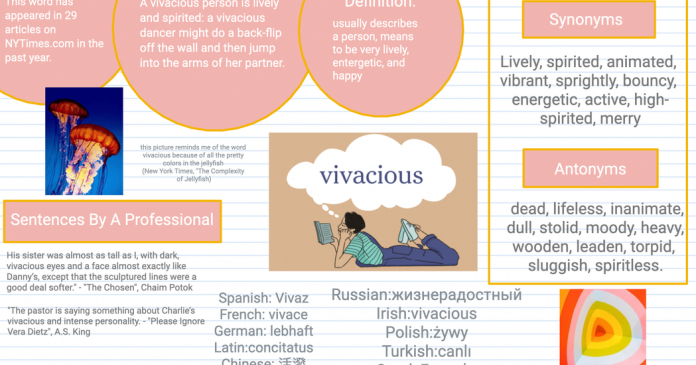
With naturalists as our mentors, my students have been creating their own field notes to record their discoveries about words in their natural habitats — words we find in our reading, but also words they are learning in history class and geometry and music and at dance rehearsal and baseball practice. Collected together, these notes construct students’ understanding of language, how it works, how it evolves and how they can tap into its power.

Each “note” is essentially a one-pager, exploring a single word from myriad angles. It relies on a combination of words and images to explore the nuances of a word’s ecosystem. When we compile these over the course of the year, we have made a field guide for language itself.

Like notes about a rare species of ant, language field guides help readers and writers better understand how words behave: how they work in authentic sentences, where to find them, what other words or phrases they hang out with, what they sound like and how to use them.

September Vocabulary Challenge: Discover a Word in The New York Times

0
September Vocabulary Challenge: Discover a Word in The New York Times

In your comment, do your best to document your process of learning this word. This could include guessing the word’s definition incorrectly (or correctly!), making a personal connection to the word, or offering a compelling explanation for why the word intrigued you. The best submissions will capture memorable encounters between a student and a new word.

See some examples — from both students and Learning Network staff — below, and feel free to use any of them as models for your own submissions.

6. We will recognize some outstanding submissions in a separate post.

The rules:

  • Send us your submission by commenting on this post. Comments must be submitted by 11:59 p.m. Pacific time on Sept. 30 to be considered. The comments section will open on September 1.

  • Minimum Age Requirements: Middle and high school students ages 13 and older in the United States and Britain, and 16 and older elsewhere, can submit by commenting on this post. Teachers and parents can submit on behalf of students in middle or high school who do not meet these age requirements. If you are submitting on behalf of a student, please include the student’s name at the bottom of the comment.

  • Please submit only one comment per student. You cannot edit your comment once it has been submitted.

Feel free to use any of the examples below as models for your own responses.

Two examples from teenagers who won previous Learning Network vocabulary challenges:

Rohana Khattak, age 15, home-school, Pakistan

I chose the word “leitmotif” from an obituary for a professional runner, Milkha Singh, (https://www.nytimes.com/2021/06/23/sports/milkha-singh-dead.html) because I’d seen the word motif many times before, but never as part of this word. I found out that the writer was saying that Mr. Singh’s love of running was a recurring theme throughout his life.

Sophia Mensching, age 14, Alexander W. Dreyfoos School of the Arts, West Palm Beach, Fla.

I chose the word “transitory” from an article about the Federal Reserve (https://www.nytimes.com/2021/07/28/business/economy/fomc-fed-meeting-rates-taper.html). My brain jumped to “trans” or “transform,” thinking that the word might mean “to change.” However, when I looked the word up, the word’s actual meaning is something that doesn’t last very long.

Two examples from adult Learning Network staffers:

Reading The Times can improve your vocabulary no matter how old you are. Even those of us who work here regularly discover new words! Here are two examples from Learning Network news assistants with no shame in their word-discovery game:

John Otis, Senior News Assistant, The Learning Network

While reading the article “How TV Went From David Brent to Ted Lasso,” (https://www.nytimes.com/2021/07/26/arts/television/ted-lasso-the-office.html) I came across the word “mordant,” which means “biting sarcasm.” I have likely encountered this word before, but would not have been able to define it on the spot. The prefix ‘mor’ was striking (it reminded me of the word ‘morbid’), along with the fact that I couldn’t immediately figure out the word’s meaning from context.

Callie Holtermann, Senior News Assistant, The Learning Network

I chose the word “iconoclastic” from an article about queer women in ballet (https://www.nytimes.com/2021/06/01/arts/dance/lesbians-in-ballet.html) because I recognized the word “icon,” but didn’t know what it meant in this longer word. I found out that it meant one ballet company was breaking the mold; it was different from other ballet companies. It was interesting to see “icon” used within another word that has to do with standing out.

Q3 Coursera for Campus Features Release: Deliver job-based learning and build a cutting-edge curriculum

0
Q3 Coursera for Campus Features Release: Deliver job-based learning and build a cutting-edge curriculum

By Shwetabh Mittal, Senior Director, Product Management

We’re excited to share details with you about some exciting new Q3 launches. In this post, we’ll specifically be discussing SkillSets, which are job-based learning programs that can help you bridge skills gaps and boost student job outcomes as well as new curriculum integration features—including curriculum recommendations, for-credit tagging, limited availability schedules, and the online gradebook.

SkillSets

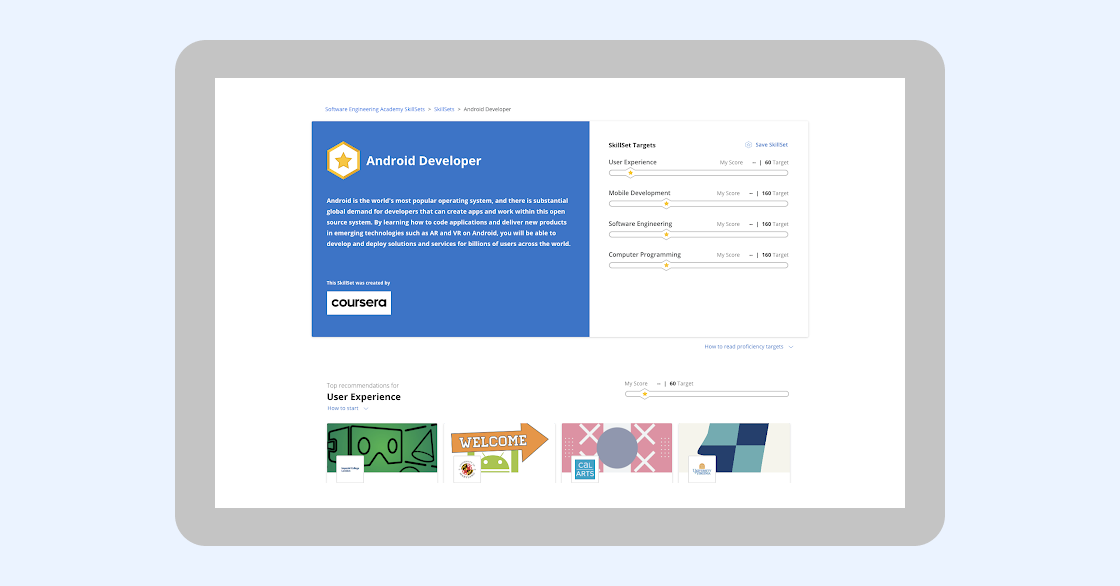
SkillSets are job-based learning programs that leverage world-class courses from leading universities and companies, hands-on learning, and skills insights derived from Coursera learners at over 2,300 employers. With dozens of SkillSets currently available, you can confidently prepare students with the in-demand skills necessary to secure today’s high-growth jobs. Within a given SkillSet, students will take courses and projects tailored to their existing proficiency levels that accelerate their skill mastery.

Example SkillSet

What are the benefits of SkillSets?

SkillSets will enable you to confidently deploy tailored, job-based learning programs at scale. SkillSets leverage Coursera’s comprehensive skills and role insights to identify the high-growth jobs that companies are hiring for, and the corresponding skills they require. This allows you to:

  • Choose from dozens of job-based learning programs that develop in-demand skills for entry-level roles.
  • Deliver job-based learning with confidence, knowing that you’re teaching exactly the in-demand skills necessary to drive stronger student employability outcomes.
  • Deliver tailored learning experiences with dynamic course and project recommendations that are optimized for the proficiency level of each student.
  • Drive mastery of in-demand tools and technologies using Guided Projects that leverage a side-by-side interface in a virtual cloud workspace. 

Additionally, with our Skills Development Dashboards, you can track student progress and monitor skill acquisition over time. Also, you can compare student skills against industry benchmarks. In addition to optimizing your learning programs, this information will allow you to share actionable insights with prospective employers and match candidates to the right opportunities based on their skills.

Learn more about SkillSets in our announcement here.

Curriculum Integration 

Successful curriculum integration begins with easy and effective navigation—the ability to quickly find the right courses to supplement your curriculum and fit your students’ needs. Then, you’ll want to seamlessly incorporate that content into your learning programs and workflows. And finally, you need to be able to deploy courses and monitor student progress. To achieve all these goals, we’re introducing some great new features. Let’s review each one:

Curriculum recommendations. Our curriculum recommendations feature will help you navigate the Coursera catalog to select the courses that supplement your curriculum and fit your students’ needs. This feature allows you to:

  • Browse courses by academic discipline making it easy for you to discover the courses in our catalog that correspond with the core subjects you are teaching in your curriculum.
  • View our recommendations of courses to offer for credit based on our extensive skills expertise and data to leverage the courses in our catalog that are most suitable for your core curriculum. 

For-Credit Tagging: In addition to the enhanced navigation functionality described above, this feature allows you to choose and tag which courses you would like to offer for credit. This makes it easier for your learners to see which courses are part of your core curriculum that they need to complete, right from within the Coursera platform.  

Limited Availability Schedules: You can use this feature to offer courses within timeframes that align with your academic term or other timelines that your institution observes. This simplifies program management, as you don’t have to worry about multiple, misaligned timelines. For your students, this will help to ensure they’re progressing as a cohort in order to comply with the timelines you have set. 

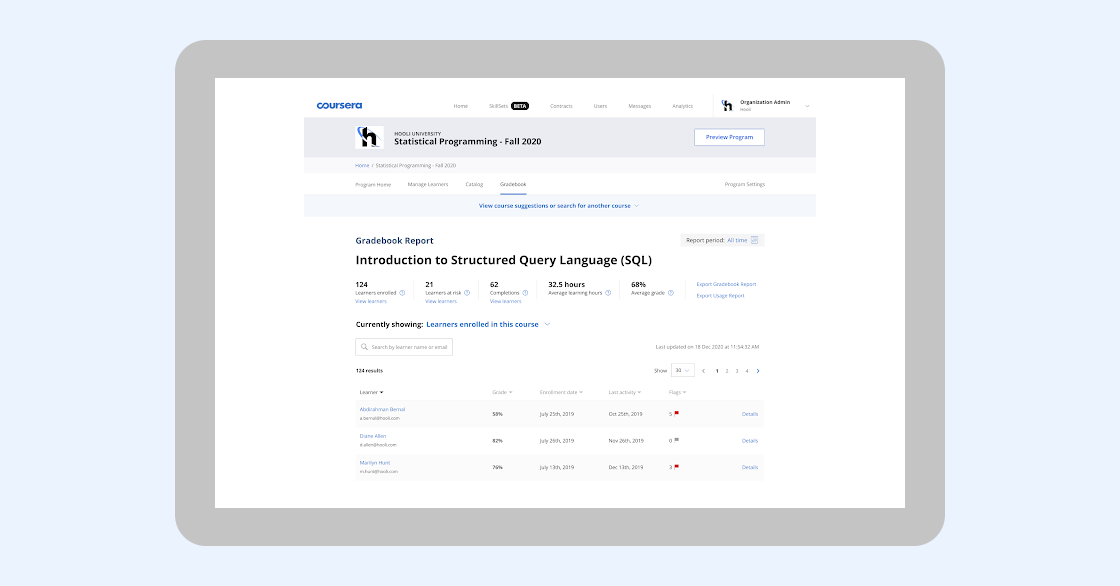
Online Gradebook: Our online gradebook provides you with course progress monitoring abilities, right from within the Coursera platform. Leveraging this functionality, you will be able to:

  • Track the progress of students taking a course across in order to ensure that your students are moving smoothly throughout the course. You can see this progress at a cohort level for the current academic term or for all students who have taken that course. 
  • Identify learners who are enrolled, at risk, inactive, or who have completed the course in order to take necessary corrective measures. 
  • Export data to load into your LMS in order to analyze this information along with the rest of your program information. 

The online gradebook also provides information at an individual level, allowing you to see how a student is progressing in a course, how they have performed in assignments and quizzes, and where their progress has stalled. Additionally, if you see anything that is a cause for concern (e.g. a student has failed a quiz or has been inactive), you can send them a message from within the online gradebook, providing that proactive nudge they might need. 

Online Gradebook

We’re excited for you to start taking advantage of these new features. If you have any questions or comments, please reach out to us or contact your customer success manager.

5