

All of the major leagues in the United States, plus golf, tennis and other sports, have shut down because of the spread of the coronavirus. The top soccer and rugby leagues have done the same in Europe. Just about all sports in China and Japan have been idle for weeks. But the continued, despite fears over the outbreak.
What’s the difference between social distancing and self-isolation?

For the latest advice on how to respond to the coronavirus, please consult the World Health Organization or take guidance from your local government health organisation.
Social distancing and isolation measures are being stepped up around the world in an attempt to slow the spread of the novel coronavirus, also known as COVID-19.
According to the World Health Organization (WHO), distancing and isolating yourself from others is an extremely important and proven way of helping to stop yourself and others catching the virus.
But what exactly is social distancing, how does it differ to self-isolation, and what does WHO recommend that we all should be doing as a bare minimum?
Social distancing
Social distancing is a measure designed to limit and restrict your face-to-face interactions with other people. If fewer people come into physical contact with each other, the chance of people sharing and perpetuating the spread of the disease.
Who should be social distancing?
At this time, everyone should be making efforts to reduce their social contact with others and implement social distancing measures in their lives.
If followed, the measures will help to slow the spread of the disease which will reduce the pressure on health services overwhelmed by patients suffering from the symptoms of coronavirus.
How do I practice social distancing?
- In line with WHO’s advice, you should only leave your home for essential reasons:
- Buying food or medical supplies.
- Caring for a vulnerable person.
- Going to essential work.
- Taking some form of exercise.
- You should not socialise with anyone outside of the people in your home, whether in a large or small group, at home or in public.
- Do not have people over to your home and do not socialise with friends or family at their homes. Keep in touch using remote technology like video calls or texting.
- Work from home unless working from home is impossible in your role or you are a key worker, eg a nurse or teacher.
- If you do have to go out, stay at least three steps (two metres or six feet) away from anyone else.
- Make sure you wash your hands frequently and thoroughly for at least 20 seconds. When you return home from anywhere, you must wash your hands.
Self-isolation
Self-isolation is a measure designed for anyone with symptoms of the coronavirus or who is confirmed to have the coronavirus. It means staying at home in one room and not leaving your home for any reason.
Social isolation is the most effective way of halting the spread of the virus.
Who should be self-isolating?
Following advice from Public Health England, anyone who has symptoms of the coronavirus should be self-isolating at home for seven days.
If you live with someone who is showing symptoms of the coronavirus, you must also self-isolate for 14 days, even if you are not showing any symptoms.
This is because the virus has a 14 day incubation period so you may be carrying coronavirus without yet showing symptoms. The 14 day period begins from the day the person showing symptoms first became ill.
If you do become ill in this 14 day isolation period, you must start a new 7 day isolation period. This means you could be self-isolating for up to 21 days.
How do I self-isolate?
- Do not leave the house. Do not go to work, do not go to supermarkets, and do not go out into public areas.
- Order food supplies online or ask people to help deliver food or medical supplies to you.
- Avoid having visitors in your home. If anyone delivers supplies, make sure they leave them outside of your door and that you do not come into contact with the person delivering items.
- If you live with people, try to contain yourself to one well-ventilated room if possible. Keep three steps (two metres or six feet) from anyone else in your home at any time. If you live with vulnerable people, try to move them out of your home to stay with friends or family if possible.
- If you feel well and need to exercise, stay well away from others, at least adhering to the six feet away rule.
- Sleep alone if you are able to.
- Make sure everyone in your home is washing their hands regularly for at least 20 seconds at a time and disinfecting any shared areas. Dispose of any waste eg tissues in a double bag and keep away from other household waste for at least 72 hours to avoid contamination.
Social distancing and self-isolation are extreme measures which are dramatically affecting how most people live their lives.
Though it is challenging, it is the only way we can collectively attempt to slow the coronavirus outbreak. The more people who comply with these regulations, the sooner our lives will return to normal.
If you’d like to learn more about the coronavirus outbreak and its impact around the world, the London School of Hygiene & Tropical Medicine has created a completely free online course, COVID-19: Tackling the Novel Coronavirus, for anyone who’d like to know more.
If you’re a healthcare professional, St George’s University of London has created a course, Managing COVID-19 in General Practice, designed to support front-line clinicians to keep their primary care practice running safely.
Or, if you’d like to explore courses to learn new things and distract yourself during this difficult time, take a look at our courses for keeping busy during isolation and check out our blog on ways to stay cultural whilst isolating at home.
Coursera Together: Free online learning during COVID-19


Coursera Together: Free online learning & community resources during COVID-19
As each of us navigate the impact of COVID-19 on our lives, we hope that you can find comfort in the strength of the Coursera community. Know that you’re not alone, and we’re here to help in any way that we can.
During this time, we remain as passionate as ever about helping you learn, grow, and connect with learners and educators around the world. Both here and on our social media channels we’ll continue sharing uplifting stories, new ways to learn, and courses we think you’ll love.
To help our community during this critical time, we’re launching new, free resources, as well as surfacing interesting course collections, community discussions, and expert interviews. We’ll continue to update this list with new resources as we have them—stay tuned!
Free Courses | Course Collections | Community Discussions | Expert Interviews

Learn something new with a free course
Starting today, we’re making a selection of courses completely free for anyone, anywhere so it’s easier to keep learning. To get started, click a link below—your free discount will be applied at checkout. We’re planning to make this offer available through May 31, 2020, with more details available in the links below.

Explore a new interest, career, or hobby with one of these collections
There are also hundreds of other opportunities to learn everything from storytelling to how the universe was formed! Uncover a new favorite course in one of these popular collections. Many of these courses are free to audit – or you can choose to pay to access additional quizzes, projects, and a shareable Certificate when you complete.
- Take the first step in exploring a new career path with learning programs that can help you build skills in fields like information technology, healthcare, graphic design, marketing, and more.
- See what data science is all about with these beginner and intermediate level courses that focus on strengthening your mathematical and statistical foundations.
- Hone important soft skills like effective communication and conflict resolution to achieve your personal and professional goals.
- Ready, player one? Break into the gaming industry with courses on AR/VR and game design.
- Discover the wonders of the animal kingdom through these courses on understanding animal care, behavior, cognition, and origins.
- Learn about the building blocks of life with courses on evolution, genetics, and the formation of the universe.
- Study modern and classical poetry from different cultures and learn to write your own.
- Explore museums from the comfort of home with virtual tours offered through courses from the Museum of Modern Art and the American Museum of Natural History.
- Breaking news! Develop skills in journalism to help tell your unique story.
- Unleash your inner artist by diving into the world of photography, writing, filmography, and more.
- Explore the complexities of the human brain with courses on neurobiology and the mechanisms behind decision making.

Share advice and discover resources in the Coursera Community
The Coursera Community is a great place to connect with learners around the world to share advice, ask questions, and find inspiration. We’ve collected a few of the conversations that our community is using to navigate this critical time together:
- If you have questions regarding the outbreak, you can find additional resources from world-renowned public health experts in Coursera’s partner community.
- If you or someone you know is learning online for the first time: You can share these 8 tips from our Teaching & Learning team.
- If you’re looking for ways to keep learning with your kids: Connect with parents around the world and exchange favorite resources.
- If, like Coursera, you and your team are shifting to remote work: You can join others in our community to discuss strategies and share advice.
- If you’re looking for advice about moving in-person learning online: You can reference these best practices from our Teaching & Learning team.

Get up to speed on a new topic with an expert
From motivational tips to help you achieve your goals to discussions on how to decide which programming language to learn, we’ve been talking with experts in the field to get the latest research and best advice.
Explore one of our recent conversations to see if it sparks a new idea, a new perspective, a new question, or a new interest. Find all of our 20 minute conversations here or jump into some of our favorites below:
Now more than ever, we are grateful to our global community of educators and learners who continue to support and learn from each other. We invite you to share your questions, ideas, and comments with the community and hope that Coursera can serve you and those you love during these difficult times. We’re in this together and we’ll get through this together.
Q1 Coursera for Business Quarterly Product Release

By Shwetabh Mittal
We’re excited to share our newest features as part of our Q1 product release. These features provide you with valuable data and insights to assess the performance of your learning program and the program management tools to engage with your learners at scale. These features include:
- A redesigned homepage that displays your learning program’s performance at a glance, with clear data and insights to make program management even more actionable.
- A universal learners list that provides you with the ability to view and manage learners across your different learning programs (instead of having only a single program view) and more advanced learner management capabilities such as filtering learners by learning activity.
- Learner communications tools that give you the flexibility to reach out to your learners with tailored messaging—a pat on the back for a job well done or a quick nudge to start learning.
Just this past week, our Product Management team hosted a webinar to talk through these new features, as well as our 2020 roadmap, complete with even more exciting updates set to release later this year. You can tune in to the webinar on-demand here.
Without further ado, let’s dive right in!
With the new admin homepage, you can evaluate the overall performance of your learning program with a single glance, identify which areas of your learner funnel need attention and take action on them right away.
The summary tab gives you a high-level view of your learning program as well as your organization’s skills development journey, including enrollments, learning hours, and the number of lessons taken.
The usage overview section surfaces critical data points, such as invitations sent, learners joined, and learner enrollment. This information provides you with a snapshot of the leaky bucket in your learner funnel to drive learner participation. And lastly, below each stage in the learner funnel are quick action buttons you can use to take the needed measures.

With the Universal Learners List functionality, you have a comprehensive view of learners across your different programs. You can also filter your member list to view the cohorts you need to see, using our various preset filters.
For example, these filters include learners who were invited but never joined, or learners who joined but have yet to enroll. Once you’ve identified the learner population, the Universal Learners List will then give you the ability to send a bulk email and a collective reminder to start learning. You can also take other bulk actions, such as downloading the list as a CSV file or removing learners from the program.


The Learner Communication Tools allow you to send targeted communications to the different cohorts of learners in your programs, with preset messages tailored to the group of learners you are trying to reach. For example, you can select the population of learners who joined the program but never enrolled in a course. Once selected, a pre-populated message will appear explicitly intended for that audience. Note, you can also customize your communications as you see fit for your learners, or start from a blank canvas entirely. And to make your messages even more engaging, we’ve added an audience-specific call-to-action button to every email, giving recipients the ability to take the needed action seamlessly and with minimal friction.


Through these tools, we hope to give you the insights and capabilities you need to enhance your learning programs, deliver strong learning outcomes, and engage with your learners at scale. Be sure to watch our webinar replay for additional information on all these new features. Happy learning!
Trapped Inside

Tell us about a moment from your own life that this illustration makes you think of — or use your imagination to write the opening of a short story or poem inspired by it.
Post it in the comments, then read the related article to find out what this image all about.
Find many more ways to use our Picture Prompt feature in this lesson plan. You can find all our Picture Prompts in this column.
Word + Quiz: steamroller

steamroller ˈstēm-ˌrō-lər noun and verb
noun: vehicle equipped with heavy wide smooth rollers for compacting roads and pavements
noun: a massive inexorable force that seems to crush everything in its way
verb: bring to a specified state by overwhelming force or pressure
verb: overwhelm by using great force
_________
The word steamroller has appeared in 10 articles on NYTimes.com in the past year, including on Jan. 15 in “Is a 400% Rent Increase the Future of Coney Island?” by Aaron Randle:
Dianna Carlin should be finishing the book she is writing about the joys of owning the Lola Star boutique, a “really tiny, magical little shop” on the Coney Island boardwalk, for the past 19 years.
Instead, Ms. Carlin has been anxious and fearful since her landlord weeks ago offered her a new lease — with a 400 percent rent increase. “I’m wondering if I should start ordering ‘going out of business’ signs,” she said.
… And now, facing the steamroller of gentrification, even Coney Island’s quirky circus sideshow could be forced to confront an uncertain future.
“They’re trying to turn the People’s Playground into the playground for the wealthy,” Ms. Carlin said.
_________
Should Public Preschool Be a Right for All Children?
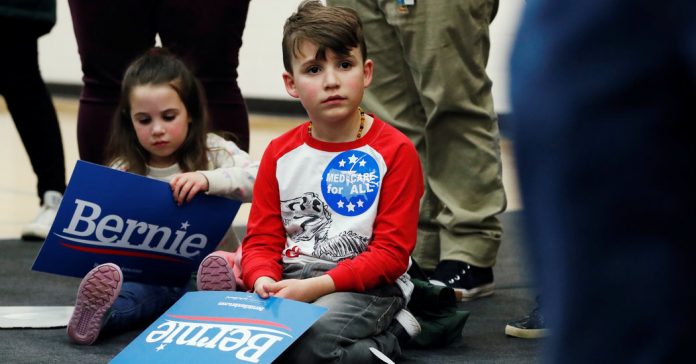
Find all our Student Opinion questions here.
In “Public School Is a Child’s Right. Should Preschool Be Also?” Claire Cain Miller begins the article with a question:
In the United States, the chance that a child attends a high-quality preschool — which research has shown sets them on a more successful life path — often depends on whether the parents can afford it. But what if government-funded care and education of children started soon after birth?
What do you think? Is it the government’s responsibility to provide free preschool for all children? Or should universal public school begin at age 5, in kindergarten, the way it currently does in most states?
Is public preschool available in your area, or do parents have to pay for it?
The author writes about proposals for government-funded early childhood education put forward by Democratic presidential candidates:
It hasn’t always been the norm in parts of the United States that public school started at age 5. The first kindergartens, in the late 1800s, started at age 3. Several states and cities already offer universal pre-K, starting at age 3 or 4, including Oklahoma, New York City and Washington, D.C. In Washington, the vast majority of children attend preschool, and 86 percent of them finish ready for kindergarten, as measured by their cognition skills.
But over all, Americans have resisted universal care and education for the youngest children. One reason has been political resistance to a large new taxpayer-financed government program. Another has been the belief held by some that young children should be home with a parent, and that it’s not the government’s role to intervene during this period.
Yet three major things have changed. A significant amount of research has shown that high-quality care and education are important for young children’s development, and that low-income children have significantly less access to these programs. Second, most parents work, including 65 percent of mothers of children under 6 — and women’s work force participation increases when there is public preschool. Finally, the private market for child care isn’t working well: Families are struggling to afford rising child care costs, yet teachers are underpaid.
The article looks at the differences between “means-tested” programs, which are based on family income and need, and universal education:
For early learning in particular, researchers say, universal options have educational benefits that means-tested programs like Head Start do not. Achievement gaps between rich and poor children are evident by kindergarten, and classrooms with children from various economic backgrounds have been found to improve children’s learning, particularly for lower-income children.
On his campaign website, Senator Sanders cited this as a reason for his plan: “Our means-tested system has created racially and economically segregated child care and pre-K in this country.”
A recent study of 5,100 4-year-olds from 33 states, using data from the Early Childhood Longitudinal Study, compared those who attended universal pre-K (available to everyone); targeted pre-K (available to families below a certain income); and no pre-K. Universal programs had much larger effects on children’s academic performance and kindergarten readiness than targeted programs, and this was especially true for low-income children. The study ruled out various explanations, like spending per student and children’s alternative care arrangements.
Ms. Cain Miller also compares approaches and beliefs about early childhood education in different countries:
In countries where early childhood programs are offered to everyone, it has become the default option, said Gabriele Fain, director of the early childhood practice at the American Institutes for Research. (These countries also tend to have very long parental leaves, so many children do not need outside care until they are toddlers.)
“It’s just inherent in how they think about early childhood education,” she said. “It’s really baked into these countries in a much more cultural way than it is here in the United States, with our pull yourself up by your bootstraps mentality.”
France and the Nordic countries spend 1.2 percent to 1.8 percent of gross domestic product on early childhood care and education. The United States spends 0.4 percent. In much of Europe, it is considered a child’s legal right, no matter the family’s income or background, which helps protect government funding for it, according to a report co-written by Ms. Fain.
Students, read the entire article, then tell us:
Do you believe there should be a universal system of public preschool, available to all children in the United States? Why or why not?
What is your reaction to the proposals put forward by different Democratic presidential candidates for universal preschool? What do you think about the already-existing early childhood education models in European countries? Do you think there are advantages and disadvantages to offering publicly funded preschool?
How has your school’s diversity, or lack of diversity, affected your own learning experience? Do you think it is important for teenagers to be around people of different races and socioeconomic backgrounds? What about for younger children?
What are your earliest memories of learning and going to school? Did you go to a preschool or day care center, or did you stay at home with family members?
Students 13 and older are invited to comment. All comments are moderated by the Learning Network staff, but please keep in mind that once your comment is accepted, it will be made public.
Five ways to stay cultural when social distancing

With venues and arts institutions rapidly closing around the world, you might be feeling the sting of missing out on those gallery trips, gigs, and museum visits that keep spirits high in normal times.
However, just because you’re staying at home for the foreseeable, doesn’t mean you can’t still enjoy great culture. Many venues and artists are turning their work online to reach a whole new audience in the era of social distancing.
Here are five great ways to get your cultural fix, from the comfort of your own home.
Explore an art gallery
Thanks to Google’s arts and culture initiative, many of the world’s best galleries have their collections up to peruse from your computer (as well as on their own websites).
Watch a concert
Even as venues shut, musicians and venues have started livestreaming performances to stay connected to fans.
Enjoy some comedy
Being able to laugh is crucial to lifting the blues. Fortunately, the comedy world is carrying on, even in the face of venue closures.
Get stuck into arthouse movies and documentaries
Always wanted to improve your cine-literacy, but never had the time? There are many places online to watch independent and experimental film, if you know where to look.
Take a cultural course
FutureLearn have a selection of free online courses on culture and media that can help to keep your brain active and engaged, even when stuck at home all day.
Brady’s Big Move

Last week, Tom Brady, the only N.F.L. quarterback to win six Super Bowls, announced that after 20 seasons with the New England Patriots, he would not return to the team. He will now play for the Tampa Bay Buccaneers.
Are you, or anyone you know, a Brady or Patriots fan? If so, what is your reaction to the news? Do you plan to follow the Buccaneers now?
If not, has your favorite player ever switched teams? How did you feel about it? Do you think it’s “disloyal” for athletes to switch teams? Or, are they entitled to act in their own self-interest?
Tell us in the comments, then read the related article to learn more about Brady’s big move.
Find many more ways to use our Picture Prompt feature in this lesson plan. You can find all our Picture Prompts in this column.
Word + Quiz: fuselage

fuselage ˈfyü-sə-ˌläzh , -zə- noun
: the central body of an airplane that is designed to accommodate the crew and passengers (or cargo)
_________
The word fuselage has appeared in 31 articles on NYTimes.com in the past year, including on July 16 in “Ed Dwight Was Set to Be the First Black Astronaut. Here’s Why That Never Happened” by Emily Ludolph:
It was just the sort of challenge that a chiseled 29-year-old aspiring astronaut named Ed Dwight was after.
In 1962, he piloted an F-104 Starfighter, essentially a chrome javelin, with wings so small as to seem gestural, designed to go very fast and very high, ideally in a straight line. A massive engine took up one end; the other was occupied by the pilot.
As he thundered toward the sun, air roared against the fuselage and Dwight felt the familiar lurch of passing through the sound barrier. On cue at 80,000 feet, as the bruised edge of the atmosphere drew closer, Dwight cut the fuel to the engine.
_________
