



New Findings Inform the Laptop versus Longhand Note-Taking Debate
While there may be very good reasons to be cautious about laptop use in the classroom – e.g., laptops with internet access may invite multitasking which is detrimental to the learning of the student engaging in multi-tasking, but also has negative effects on students sitting in proximity of the multitasker (2) – their use to…

Hocus Focus
From a cognitive psychologist’s point of view, these results are particularly impressive because they demonstrate transfer. There are a number of training tools that are marketed as improving mental processes. While a number of these show improvement on the training task itself, very few show improvement on things outside of the task (4). In other…

How Should Students Take Notes?
References (1) Mueller, P. A., & Oppenheimer, D. M. (2014). The pen is mightier than the keyboard: Advantages of longhand over laptop note taking. Psychological Science, 25, 1159-1168. (2) Bui, D. C., Myerson, J., & Hale, S. (2013). Note-taking with computers: Exploring alternative strategies for improved recall. Journal of Educational Psychology, 105, 299-309. (3) Fiorella,…

THANK YOU to our guest bloggers from 2017!
We're right in the middle of a season where a lot of us are giving thanks and reflecting on the year we have had. For some of us it is because of American or Canadian Thanksgiving, Japanese Labour Thanksgiving, or Turkish National Day of Thanks, or upcoming holidays such as Hanukkah, Christmas, or Kwanzaa. For…

SQ3R or Read, Recite, Review
What is SQ3R?SQ3R stands for survey, question (or query), read, recite, review. It is a method designed in the 1940s to improve reading comprehension. Here is the brief overview of each step:Survey: First, go through and get a lay of the land. Look at headings and subheadings, graphics, highlighted words, maybe summary paragraphs. Get an…
Retrieval Practice and Stress
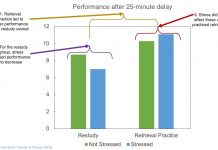
School can be stressful, and 2020 has been a particularly stressful year for many of us. So, for this week’s blog, I thought I would write about retrieval practice and stress. Fortunately, I get to share some good news! Prior research has shown that acute stress can hinder our ability to retrieve information. Acute stress is…

Spaced Practice for Skill Learning
By Cindy Nebel Psychologists often breakdown memory into different types. Long-term memory can be divided into two different types: explicit memories and implicit memories. Explicit memories are memories for events and facts. They are memories that we can easily think and talk about. Implicit memories are a bit different. Implicit memories include procedural (muscle) memories…

Weekly Digest #136: Optimizing Lecture Capture
Today’s weekly digest is motivated by a paper on lecture capture that I (Carolina) am currently co-writing (1). I thought it would be a good idea to put together a digest summarizing the evidence behind the benefits or pitfalls of recording university lectures. While students are eager to get their hands on lecture recordings, lecturers…

Forgetting to Remember
Another explanation for how and why we forget has been in terms of disuse or decay (2, 3). Sometimes we forget things simply because we haven’t remembered it in awhile. For example, you can probably remember what you had for lunch yesterday. How about last week? Last month? Unless there was a reason for you…

A Brief Overview of Working Memory
Working memory refers to your ability to manipulate and remember information over a short period of time (about two minutes). It’s very similar to short term memory, but when we use the term working memory we are emphasizing the manipulation of information. For example, if someone gave you a telephone number to write down, you…
