




Time Management: What is it, who has it, and can you improve it?
Time management can refer to a wide range of behaviors and can look very different from person to person. There are lots of different systems and approaches to time management. Making a to-do list, keeping a planner, setting event reminders in your phone, setting goals, prioritizing tasks, and marking events on a calendar can all…
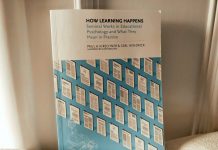
Book Review: How Learning Happens (Kirschner & Hendrick)
By Carolina Kuepper-TetzelA few weeks ago, Paul Kirschner contacted us and said that he co-wrote a new book with Carl Hendrick and wondered whether we would be interested in reviewing it in form of a blog post. So, here I am now, sitting in my living room: laptop on my lap, book by my side,…
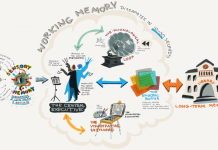
GUEST POST: The Power of Metacognition in Everyday Life
The inner voice and inner ear may be central to consciousness (2). The point is that talking to yourself is a powerful tool for successful living. I have previously described how to use your inner voice in order to practice metacognitive quality-control of your reading and self-regulation of your learning. You can learn how to…

GUEST POST: Learning from Video
ModelingAs children mature from toddler to adolescent, they often value peer model more than parent model. However, they still look to others to guide their behaviors. Learning from positive peer behavior and interactions is one of the strongest arguments for inclusion and heterogeneous grouping in classes. Strouse et al.’s (2018) study indicates that no significant…
Digest #142 (COVID-19 Edition): Online Teaching and Learning Resources
In today’s digest, we would like to provide resources for teachers, students, and parents during the challenging COVID-19 quarantine. Learning and teaching is still going on, but mostly shifted online. In the past few days, we have all probably come across different resources to support this online learning experience and we thought it would be…

Digest #141: Autism and Educational Settings
3) Good Practice in Autism Education (https://www.futurelearn.com/courses/autism-education) a Future Learn online course (free) by The University of Bath, @UniofBath.Quote from the course description: “Currently there are many modalities of schooling for students with autism, including general special schools, autism-specific special schools, autism units within mainstream schools and being in a mainstream classroom. But what are…

Digest #140: There’s an App for That
These days we are all extremely busy! So, we’ll keep it brief. Check out these resources to help you manage your workflow and stay productive. Since we know you’re busy, we’ll keep the descriptions to a minimum today and let the descriptive titles speak do most of the talking!

Elaboration as Self-explanation
Self-explanation has been shown to be related to better understanding of concepts (2). In a correlational study, where the researchers identified which students used self-explanation naturally and compared this to performance on a concept test, Chi and colleagues showed that those who self-explained performed better. Chi and his research team wanted to know whether engaging…

The Impact of Guided Discovery vs. Didactic Instruction on Learning
Elham Arabi is a lead instructional designer and learning consultant at University of Nevada, Las Vegas. She advocates using evidence-based approaches in learning design and in her collaborations with subject-matter experts. Elham also works as a consultant with students who have learning challenges. She incorporates science of learning how to learn in her course designs. She…
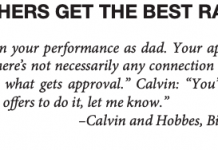
Teaching Effectiveness vs. Teaching Evaluations
Header note, this quote appears at the top of the cited article by Kornell and Hausman (1)By Megan SumerackiFor most of us who teach in higher education, the end of the semester means administering teaching evaluations and can be a bit stressful for some. However, the beginning of each semester means reading those evaluations. In…
