fbpx
Home Blog Page 1175

Comment on A meaningful Right if Modernized by Toudjidoum Meurdé joel

0
Comment on A meaningful Right if Modernized by Toudjidoum Meurdé joel

Introduction

I started first grade in 1980, subsequent to a long and tedious war for Zimbabwe’s independence. People who were unable to attend school for years were now able to do so. At age 7, I could see students who were roughly 20 years old, just getting the opportunity to attend grade seven at my school. Bearded men, mother-like grown up women all in the same classroom as younger students who were supposed to be in that grade at their appropriate age. As the new majority government started their reign, one announcement that excited my family was that education was a human right for all and so every child was supposed to be given an opportunity to learn. Despite the fact that the majority of students in my class came from low-income families, it gave us all bright hope that we had the right to learn and that right, no one could take away from us.

Before this era, there were bottlenecks in the education systems of most colonized countries. Due to this, it seemed like the only options natives had were to prepare to be “good subordinates” to the superior colonial systems they wanted to be a part of.

Scholarly Perspectives on Education

I am inclined to agree with the thought that the free-market economy has many advantages, as it promotes the idea of competition that must motivate all parties to be efficient in decisions and actions. Ver Eecke, W (1998) identifies education as, “a merit good in which if the socio-economic dimension is ignored, society will be deprived.” It is now a common fact that education is regarded as a merit good, one that is likely to be under-supplied and under-consumed if everything should be left to market forces. Biesta, G. (2012) brings a deeper perspective to education as he looks at the need to include education as a “public good”. One may not doubt why such perspectives would be brought into question. One reason for this could be the innumerable benefits to society when people opt to take education to the public domain. A market system is deemed to have failures if it cannot efficiently allocate education as a merit or public good.

Jongbloed, B. (2003) sheds light on the issue of supply monopolies in education as a market failure. When I was a teenager, I was only aware of one university in Zimbabwe: the University of Zimbabwe. Consequently, the result of having only one such facility privatized, would only allow for a privileged few who could afford it, to attend.

My Experience

When I completed my Advanced Level education through an external examination body; since Zimbabwe had not yet localized exams by then, I faced great competition to be accepted into a public college. Many students had benefited from the “Education for All Policy”, such that the literacy level of Zimbabwe was climbed to approximately 98%. The number of Ordinary Level students was so high that only advanced level students could be enrolled in public universities. This was a high standard in the region. It became even more evident to me when I visited and started staying in Malawi. All my employers admitted that on average, the education standards set by the new independence government were very high.

Some colleagues disliked this new policy and thought it to be a most unfair advantage to students in our region, which was unfortunate because in no way did it lower the difficulty level of learning the material taught. I remember the rigorous efforts I made in college while I trained for a diploma in education. A colleague from a neighboring country confessed that the Diploma standards that were set in Zimbabwe, could match the degree standards in their country. Another close friend in the Engineering department also admitted to the same thought. He mentioned that the equipment in the department at the same college I studied; donated by the US Government, was far better quality than those at some other institutions.

I am proud to have had the exposure I did during my tenure there as it prepared me tremendously for my degree program.

Online and Adult Education Opportunities

As a zealous student, I am pleased to say that I have completed my Bachelors and Masters degree programs. My degree was completed through a program dubbed the “Block-Release” program where I utilized my school holidays as a teacher to study for an average of four weeks. It was difficult to cover sixteen weeks’ worth of work in four weeks, but the end result was worth it. One thing I learnt is that it is never too late to achieve your goals. As long as there is breath in your body, you have the capacity to achieve.

Another advantage of this program was that it forced us to become computer literate. This was an advantage for us as computers were not in our school system when I was a child. Online education forced me to become computer literate. Even on days when I struggled, I reminded myself of the great right I had to learn and used that to propel myself to completion.

Is education a human right?

While in theory, the right to education is often preached in almost all nations, not enough has been done to realize this for a vast majority of citizens. McCowan, T. (2010) makes this observation, “The universal right to education has been enshrined in a range of international rights instruments. Yet despite the considerable secondary literature on the subject, there has been little discussion of the notion of education underpinning the right.”

Where I now reside, I have witnessed the financial challenges that students at the primary level face even though education is free for all. In my research, “The Marketisation of Education”, I was saddened when the head of a school revealed that the school charges a small development levy of about $0.80 per term but some parents still struggle to find this amount. I visited the school and saw that the majority of classes have no chairs or desks, leaving students to conduct studies on the cold hard floor. My conclusion was that a mindset change, and a paradigm shift must be done since some things that were missing did not need monetary resources.

Modernizing Education

There is a dire need to modernize the education system. African countries, which make up a significant part of the developing world, can learn from developed nations such as the US and the UK if they are to transform the current education system. Courtney, S. J. (2018) outlines how the UK managed to achieve some milestones in modernizing their education system. There is need for investing time, talents and resources to make the right to education a meaningful one. The current generation has much more advantages than those gone before. They have the internet, computers, improved transportation systems, televisions, radios, etc. Proper planning and execution can bring new ideas to life to achieve a better system.

Conclusion

Education is a right and we must be thankful for it. The right has to be taken to where it is needed most – to the less privileged and the disadvantaged potential talents so that our world can be a better home for all. Those in authority in developing nations have an uphill task, especially where the education index is low. Even the so-called developing nations have a right to reach levels such as those in Scandinavian countries like Sweden and Finland, which boast of high educations indices. Records show that an average child makes it to university, while in a low-income country like Malawi, an average child struggles to complete secondary education. The right to education can be reached by all.

Comment on A meaningful Right if Modernized by Toudjidoum Meurdé joel

0
Comment on A meaningful Right if Modernized by Toudjidoum Meurdé joel

Introduction

I started first grade in 1980, subsequent to a long and tedious war for Zimbabwe’s independence. People who were unable to attend school for years were now able to do so. At age 7, I could see students who were roughly 20 years old, just getting the opportunity to attend grade seven at my school. Bearded men, mother-like grown up women all in the same classroom as younger students who were supposed to be in that grade at their appropriate age. As the new majority government started their reign, one announcement that excited my family was that education was a human right for all and so every child was supposed to be given an opportunity to learn. Despite the fact that the majority of students in my class came from low-income families, it gave us all bright hope that we had the right to learn and that right, no one could take away from us.

Before this era, there were bottlenecks in the education systems of most colonized countries. Due to this, it seemed like the only options natives had were to prepare to be “good subordinates” to the superior colonial systems they wanted to be a part of.

Scholarly Perspectives on Education

I am inclined to agree with the thought that the free-market economy has many advantages, as it promotes the idea of competition that must motivate all parties to be efficient in decisions and actions. Ver Eecke, W (1998) identifies education as, “a merit good in which if the socio-economic dimension is ignored, society will be deprived.” It is now a common fact that education is regarded as a merit good, one that is likely to be under-supplied and under-consumed if everything should be left to market forces. Biesta, G. (2012) brings a deeper perspective to education as he looks at the need to include education as a “public good”. One may not doubt why such perspectives would be brought into question. One reason for this could be the innumerable benefits to society when people opt to take education to the public domain. A market system is deemed to have failures if it cannot efficiently allocate education as a merit or public good.

Jongbloed, B. (2003) sheds light on the issue of supply monopolies in education as a market failure. When I was a teenager, I was only aware of one university in Zimbabwe: the University of Zimbabwe. Consequently, the result of having only one such facility privatized, would only allow for a privileged few who could afford it, to attend.

My Experience

When I completed my Advanced Level education through an external examination body; since Zimbabwe had not yet localized exams by then, I faced great competition to be accepted into a public college. Many students had benefited from the “Education for All Policy”, such that the literacy level of Zimbabwe was climbed to approximately 98%. The number of Ordinary Level students was so high that only advanced level students could be enrolled in public universities. This was a high standard in the region. It became even more evident to me when I visited and started staying in Malawi. All my employers admitted that on average, the education standards set by the new independence government were very high.

Some colleagues disliked this new policy and thought it to be a most unfair advantage to students in our region, which was unfortunate because in no way did it lower the difficulty level of learning the material taught. I remember the rigorous efforts I made in college while I trained for a diploma in education. A colleague from a neighboring country confessed that the Diploma standards that were set in Zimbabwe, could match the degree standards in their country. Another close friend in the Engineering department also admitted to the same thought. He mentioned that the equipment in the department at the same college I studied; donated by the US Government, was far better quality than those at some other institutions.

I am proud to have had the exposure I did during my tenure there as it prepared me tremendously for my degree program.

Online and Adult Education Opportunities

As a zealous student, I am pleased to say that I have completed my Bachelors and Masters degree programs. My degree was completed through a program dubbed the “Block-Release” program where I utilized my school holidays as a teacher to study for an average of four weeks. It was difficult to cover sixteen weeks’ worth of work in four weeks, but the end result was worth it. One thing I learnt is that it is never too late to achieve your goals. As long as there is breath in your body, you have the capacity to achieve.

Another advantage of this program was that it forced us to become computer literate. This was an advantage for us as computers were not in our school system when I was a child. Online education forced me to become computer literate. Even on days when I struggled, I reminded myself of the great right I had to learn and used that to propel myself to completion.

Is education a human right?

While in theory, the right to education is often preached in almost all nations, not enough has been done to realize this for a vast majority of citizens. McCowan, T. (2010) makes this observation, “The universal right to education has been enshrined in a range of international rights instruments. Yet despite the considerable secondary literature on the subject, there has been little discussion of the notion of education underpinning the right.”

Where I now reside, I have witnessed the financial challenges that students at the primary level face even though education is free for all. In my research, “The Marketisation of Education”, I was saddened when the head of a school revealed that the school charges a small development levy of about $0.80 per term but some parents still struggle to find this amount. I visited the school and saw that the majority of classes have no chairs or desks, leaving students to conduct studies on the cold hard floor. My conclusion was that a mindset change, and a paradigm shift must be done since some things that were missing did not need monetary resources.

Modernizing Education

There is a dire need to modernize the education system. African countries, which make up a significant part of the developing world, can learn from developed nations such as the US and the UK if they are to transform the current education system. Courtney, S. J. (2018) outlines how the UK managed to achieve some milestones in modernizing their education system. There is need for investing time, talents and resources to make the right to education a meaningful one. The current generation has much more advantages than those gone before. They have the internet, computers, improved transportation systems, televisions, radios, etc. Proper planning and execution can bring new ideas to life to achieve a better system.

Conclusion

Education is a right and we must be thankful for it. The right has to be taken to where it is needed most – to the less privileged and the disadvantaged potential talents so that our world can be a better home for all. Those in authority in developing nations have an uphill task, especially where the education index is low. Even the so-called developing nations have a right to reach levels such as those in Scandinavian countries like Sweden and Finland, which boast of high educations indices. Records show that an average child makes it to university, while in a low-income country like Malawi, an average child struggles to complete secondary education. The right to education can be reached by all.

Start-up founder Mary-Brenda shares how learning can empower you to discover a world without limits

0
Start-up founder Mary-Brenda shares how learning can empower you to discover a world without limits

Meet Mary-Brenda! She is an entrepreneur and founder of a social impact start-up focused on expanding access to affordable, clean energy throughout Nigeria. She is also a lifelong learner with ambitious academic goals and a thirst for new skills and knowledge that she can apply to make a positive impact in the world. She ultimately decided that she wanted to earn a degree, and with the benefit of a stellar academic record, she was accepted to many universities in the UK. However, she didn’t want to leave her social impact start-up to pursue her studies abroad. She found the ideal solution in the online Bachelor of Computer Science program offered by Goldsmiths, University of London. After seeing the program’s combination of quality, affordability, and flexibility, she felt like it was made for her. In her story below, she shares her passion for social good, her excitement around transformative new technologies like artificial intelligence (AI), machine learning (ML) and virtual reality (VR), and her vision for how she can take what she’s learning to scale her impact. 

I first came across Coursera when I heard about the University of London’s Virtual Reality Specialization. Through enrolling in those courses, I began to learn about machine learning and artificial intelligence––two subjects that really caught my attention. This technology cuts across so many sectors and I read amazing stories of people using AI and ML to improve people’s lives. There’s one man in Kenya who invented smart gloves that allow people who are mute to turn sign language gestures into audio speech. This opened up a world of possibilities for me and made me start imagining how much change and impact I could make with the right skills and technology. 

My core values have always been service, family, and excellence. I am motivated by the desire to improve the lives of others—that’s why I founded Grassroot Solar in the first place. We’re helping to provide affordable, clean energy to people in Nigeria. These same values are why I wanted to earn a degree, and I included that in my application. I want to learn new skills and apply them to improve people’s lives.

I saw the degree program as the best possible way I could expand my capabilities in order to create more impact in the world and in my community. I’m not afraid of hard work. I really don’t care what it requires as long as it gives me the capability to accomplish amazing things—anything from curing diseases to solving the energy crisis. Once I see the end game and I see that it’s going to lead to change for the world, for communities, for Africa, I’m down with it and excited to learn whatever skills, knowledge, or tools necessary in order to make it happen.

To be honest, I never saw myself in computer science, but after discovering and learning about AI and ML, and then eventually enrolling in the degree program, I knew I had found my next calling. I’m loving the program. I’m realizing things I never thought I could accomplish. I learned about data visualization and created a map that visualizes COVID-19 cases around the world. In our first semester, I built a 2D game and learned how to build websites. I also recently built a bot for a cryptocurrency trading simulation, and I’m now applying machine learning to literary analysis.

I feel good about this decision to enroll in the bachelor’s program because I’m discovering things I didn’t think I was capable of, things that if I didn’t decide to go on this journey, I would never have known.

I can really feel my perspective changing. I’m thinking about how I can use what I’ve learned to solve problems on a global scale. And, even as I’m discovering what’s possible for myself, I’m also thinking of how girls in my community can also get on board with CS and AI. I’m a big advocate for helping girls see themselves in computer science. We need more women in tech, but we don’t have many girls even thinking of CS as a possibility—it’s not an option that gets mentioned to you when you’re a girl. 

Sometimes I have to caution myself to stop seeing the barriers and to stop limiting myself––it’s hard. There’s no difference between boys and girls when it comes to intellectual matters, and you can’t keep limiting yourself. If you do, you’ll never discover what you could have been or could have gone on to achieve. So I encourage girls everywhere to take that step, explore the world of computer science, and discover the possibilities for themselves.

For myself, I just keep discovering something new all the time. I’m excited to share that I recently got a six-month software engineering internship offer from Microsoft! I’m hoping that I’ll learn a lot from that experience and be better positioned to more specifically identify those overlooked, challenging, real-world problems where I can apply my skills, knowledge, and experience.

Thank you Mary-Brenda, for sharing your story! We can’t wait to see where your learning takes you next, and we look forward to seeing all the amazing ways you’re going to keep making positive contributions in the world!

2

Weekly News Quiz for Students: Winter Storms, Mars Rover, Tennis Champion

0
Weekly News Quiz for Students: Winter Storms, Mars Rover, Tennis Champion

Brutal winter storms on Feb. 14 brought snow and ice to a large part of the country, resulting in power outages, car accidents, disruptions to vaccine distribution and more than 50 deaths. Almost a week later, nearly half the population of remained under boil-water advisories after freezing temperatures overwhelmed systems providing clean water.

Word + Quiz: vernacular

0
Word + Quiz: vernacular

noun: the everyday speech of the people (as distinguished from literary language)

noun: a characteristic language of a particular group

adjective: being or characteristic of or appropriate to everyday language

_________

The word vernacular has appeared in 122 articles on NYTimes.com in the past year, including on Dec. 18 in “How New York City Vaccinated 6 Million People in Less Than a Month” by John Florio and Ouisie Shapiro:

In front of news cameras, Dr. Weinstein vaccinated Mayor O’Dwyer, who had already been inoculated four times in the Army. President Harry S. Truman also got into the act. His visit to New York on April 21 was accompanied by news reports that he, too, had rolled up his sleeve.

“In today’s vernacular, O’Dwyer and Truman were influencers,” said Lisa Sherman, president of the Ad Council, the nonprofit group working on a campaign for the Covid-19 vaccines. “They could deliver important information that people wanted to hear. They were trusted messengers.”

_________

What ‘Old’ Technology Do You Think Is Cool?

0
What ‘Old’ Technology Do You Think Is Cool?

Students in U.S. high schools can get free digital access to The New York Times until Sept. 1, 2021.

Do you think “old” technology is cool? Do you appreciate vinyl records, for example, or Polaroid cameras? Eight-track tapes or printed newspapers? What do you find appealing about these items that our modern world has already made — or may still make — obsolete?

In the 2016 article “Why Vinyl Records and Other ‘Old’ Technologies Die Hard,” Nick Bilton wrote:

For a glimpse of what teenagers are into these days, all you have to do is visit Abbot Kinney Boulevard in the Venice neighborhood of Los Angeles. On weekend nights, the half-mile shopping drag is packed with style-conscious kids who traipse past coffee shops, ice cream parlors and boutiques, often while taking selfies.

Yet one of the most popular destinations for these teenagers is a white, single-story building with big pink letters on the roof that spell “Vnyl.” The store sells vinyl records, and the kids who gather there are often in awe.

“I’d say half of the teens who hang out in my store have never seen a record player before,” said Nick Alt, the founder of Vnyl. “They will walk up to the turntable, and they have no concept where to put the needle.” But once they figure out that the needle goes into the outermost groove, those smartphone-toting teenagers are hooked.

In a Style article from this past weekend, Hannah Selinger writes about the demand for old VHS tapes:

The last VCR, according to Dave Rodriguez, 33, a digital repository librarian at Florida State University in Tallahassee, Fla., was produced in 2016, by the Funai Electric in Osaka, Japan. But the VHS tape itself may be immortal. Today, a robust marketplace exists, both virtually and in real life, for this ephemera.

On Instagram, sellers tout videos for sale, like the 2003 Jerry Bruckheimer film “Kangaroo Jack,” a comedy involving a beauty salon owner — played by Jerry O’Connell — and a kangaroo. Asking price? $190. (Mr. O’Connell commented on the post from his personal account, writing, “Hold steady. Price seems fair. It is a Classic.”)

If $190 feels outrageous for a film about a kangaroo accidentally coming into money, consider the price of a limited-edition copy of the 1989 Disney film “The Little Mermaid,” which is listed on Etsy for $45,000.

The article explains why VHS tapes are special to the people who collect them:

“Anything that you can think of is on VHS tape, because, you’ve got to think, it was a revolutionary piece of the media,” said Josh Schafer, 35, of Raleigh, N.C., a founder and the editor in chief of Lunchmeat Magazine and LunchmeatVHS.com, which are dedicated to the appreciation and preservation of VHS. “It was a way for everyone to capture something and then put it out there.”

There is, Mr. Schafer said, “just so much culture packed into VHS,” from reels depicting family gatherings to movies that just never made the jump to DVD. Mr. Schafer owns a few thousand tapes himself, and his collection, he said, includes “a little bit of everything,” including other people’s home videos.

Michael Myerz, 29, an experimental hip-hop artist in Atlanta, who has a modest collection of VHS tapes, finds the medium inspirational. Some of what Mr. Myerz seeks in his work, he said, is to replicate the sounds from “some weird, obscure movie on VHS I would have seen at my friend’s house, late at night, after his parents were asleep.” He described his work as “mid-lo-fi.” “The quality feels raw but warm and full of flavor,” he said of VHS.

For collectors like April Bleakney, 35, the owner and artist of Ape Made, a fine art and screen-printing company in Cleveland, nostalgia plays a significant role in collecting. Ms. Bleakney, who has between 2,400 to 2,500 VHS tapes, views them as a byway connecting her with the past. She inherited some of them from her grandmother, a children’s librarian with a vast collection.

Ms. Bleakney’s VHS tapes are “huge nostalgia,” she said, for a child of the 1980s. “I think we were the last to grow up without the internet, cellphones or social media,” and clinging to the “old analog ways,” she said, feels “very natural.”

Students, read both articles, then tell us:

  • What technologies from the past hold the most interest for you? Why?

  • Why do you think there is still so much interest in obsolete technologies like Polaroid instant cameras, record players, Atari game systems or VHS tapes?

  • Would you ever want to collect old tech like vinyl records or CDs? Why or why not?

  • In your opinion, what old technologies are likely to make the biggest comeback in the future? Why?

  • The two articles discuss the role that nostalgia plays for many collectors. Do you think you might be nostalgic for any technology from your own childhood in 20, 40 or 60 years? What tech, and why?

  • In your opinion, which is better: today’s technology or that of the past? Why? What are the advantages and disadvantages of each?


About Student Opinion

Find all of our Student Opinion questions in this column.
Have an idea for a Student Opinion question? Tell us about it.
Learn more about how to use our free daily writing prompts for remote learning.

Students 13 and older in the United States and the United Kingdom, and 16 and older elsewhere, are invited to comment. All comments are moderated by the Learning Network staff, but please keep in mind that once your comment is accepted, it will be made public.

What’s Going On in This Picture? | Feb. 22, 2021

0
What’s Going On in This Picture? | Feb. 22, 2021

Students in U.S. high schools can get free digital access to The New York Times until Sept. 1, 2021.

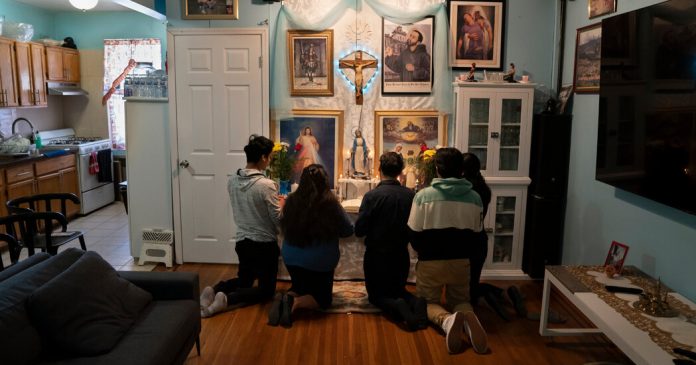
1. After looking closely at the image above (or at the full-size image), think about these three questions:

2. Next, join the conversation by clicking on the comment button and posting in the box that opens on the right. (Students 13 and older are invited to comment, although teachers of younger students are welcome to post what their students have to say.)

3. After you have posted, try reading back to see what others have said, then respond to someone else by posting another comment. Use the “Reply” button or the @ symbol to address that student directly.

Each Monday, our collaborator, Visual Thinking Strategies, will facilitate a discussion from 9 a.m. to 2 p.m. Eastern time by paraphrasing comments and linking to responses to help students’ understanding go deeper. You might use their responses as models for your own.

4. On Thursday afternoons, we will reveal at the bottom of this post more information about the photo. How does reading the caption and learning its back story help you see the image differently?

Word + Quiz: torpor

0
Word + Quiz: torpor

1. a state of motor and mental inactivity with a partial suspension of sensibility

2. inactivity resulting from lethargy and lack of vigor or energy

_________

The word torpor has appeared in 18 articles on NYTimes.com in the past year, including on Sept. 8 in “These Hummingbirds Take Extreme Naps. Some May Even Hibernate” by Veronique Greenwood:

Hummingbirds live a life of extremes. The flitting creatures famously have the fastest metabolisms among vertebrates, and to fuel their zippy lifestyle, they sometimes drink their own body weight in nectar each day. But the hummingbirds of the Andes in South America take that extreme lifestyle a step further.

Not only must they work even harder to hover at altitude, but during chilly nights, they save energy by going into exceptionally deep torpor, a physiological state similar to hibernation in which their body temperature falls by as much as 50 degrees Fahrenheit. Then, as dawn approaches, they start to shiver, sending their temperatures rocketing back up to 96 degrees.

_________

What Is the Worst Toy Ever?

0
What Is the Worst Toy Ever?

Students in U.S. high schools can get free digital access to The New York Times until Sept. 1, 2021.

Do you have any all-time favorite toys? A doll, a puzzle, an action figure, a game? What made it fun to play with?

Conversely, have you ever had any true clunkers? Toys that were impossible to assemble or too easily broken? Toys you found maddeningly boring, messy, annoying, confusing, frustrating, scary or even dangerous?

What makes a bad toy, in your opinion?

In “An Unofficial Ranking of the 10 Most Annoying Kids’ Toys,” Jessica Delfino writes:

Nobody told me that once I had a child, I’d be held hostage by a deranged assortment of countless toys, each with their own maddening varieties of terrible features. Some are too loud, others too sticky, some are depressing and still others are even potentially dangerous.

After chatting with more than 100 mothers in an online parenting group, I learned that I was not alone, and that many other parents had come to loathe some of the same playthings I had. To help you avoid falling into the same traps, here is a list of 10 toys that consistently came up as some of the most infuriating, ranked from most to least annoying. These, we all agreed, could distress even the most unflappable parents.

Here are four terrible toys from Ms. Delfino’s list:

2. Slime: Destructive

Every toy company seems to have their own branded blob of slime, but some go above and beyond by selling it in a three-pound tub. Why? Three pounds of slime is too much slime. My son’s favorite stuffy owl sat in a puddle of it overnight, and is now permanently disfigured. “I hate slime so much, and it’s in every ‘surprise’ toy and now it’s also all over my couch,” said Anna Lane, a comedy writer in Los Angeles. “It got all over the carpet and I banned it,” said Diana Metzger, a mom in Maryland. You can have nice things or you can have slime, but you can’t have both.

4. Play-Doh: Destroyer of nice things

Before I had a son, I gifted my niece a rainbow rack of Play-Doh. “Gee, thanks,” my sister said, sarcastically. I was confused. What kind of monster dislikes Play-Doh? Today, I’m that monster, infuriated by the dried crumbs that are encrusted onto the expensive things I’ve worked hard for. And Hasbro knows it — their website offers a long list of clean up tips. If traditional Play-Doh wasn’t bad enough, the company also makes putty, foam and even — hooray — at least three different versions of slime. Wonderful! Five more styles to also detest.

5. Glitter Shaker: Eternal

Those tiny, loose, hell flakes get stuck in floor cracks, between eyelashes, on fabric and, worst of all, in my photographer husband’s gear, so we’ve banished the stuff from our lives. One could theorize that glitter has been annoying parents since the beginning of time: Humans have been drawn to shiny things since the prehistoric period, when they would incorporate naturally lustrous substances like luminous gold, mirrored mica and beetle wing covers into artwork, textiles and more. Today, most glitter is made from plastic film, which can take about 1,000 years to biodegrade. “As an art teacher, I avoid glitter,” said Kelly Jones, who is also a mom and lives in Los Angeles. The sentiment is spreading; it’s used in my child’s school projects less and less. Good riddance.

10. Furby: Relentless

I thought my neighbor and I were friends, but then she handed her daughter’s Furby down to my son. It talks nonstop in a high-pitched, head-splitting voice; it screams, flatulates and has no “off” switch. It needs to be unscrewed to take the batteries out and make it stop. Of course, my son loves it and it must go everywhere with us. The best part? She gave us two.

Students, read the entire article, then tell us:

  • What are your least favorite toys ever — either those you played with as a child, or those of siblings, younger relatives or the children you babysit? Tell us what would make your top 10 terrible toys list. Do you have any memorable experiences with a bad toy?

  • Ms. Delfino describes each entry on her list with biting wit. Of harmonicas, she warns: “To purchase one is self-torture.” On the glitter shaker she laments: “Those tiny, loose, hell flakes get stuck in floor cracks, between eyelashes, on fabric and, worst of all, in my photographer husband’s gear.” Vividly describe the qualities of at least one toy in your personal “Worst Toy Hall of Fame” that make it so awful — the appearance, texture, sound, overall concept or confusing lack of one, or anything else.

  • What is your reaction to Ms. Delfino’s list of most annoying kids’ toys? Did you nod enthusiastically along with any of her choices? Were you shocked to find one of your favorite toys making the cut?

  • If your parents were asked to make a list of their most hated and annoying toys from your childhood, what do you think would be in their top 10 and why? Ms. Delfino writes, “You can have nice things or you can have slime, but you can’t have both.” Have any of your toys disfigured your parents’ favorite items? Does reading the article make you rethink toys from a parent’s perspective?

  • If you were an executive of a toy company, how would you fix, remake or reboot any of the toys on your or Ms. Delfino’s list? What advice and recommendations would you make to stop toy makers from designing a terrible toy?


About Student Opinion

Find all of our Student Opinion questions in this column.
Have an idea for a Student Opinion question? Tell us about it.
Learn more about how to use our free daily writing prompts for remote learning.

Students 13 and older in the United States and the United Kingdom, and 16 and older elsewhere, are invited to comment. All comments are moderated by the Learning Network staff, but please keep in mind that once your comment is accepted, it will be made public.

Lesson of the Day: ‘We Are Saying It With Flowers. Loudly and Repeatedly.’

0
Lesson of the Day: ‘We Are Saying It With Flowers. Loudly and Repeatedly.’

Students in U.S. high schools can get free digital access to The New York Times until Sept. 1, 2021.

Featured Article: “We Are Saying It With Flowers. Loudly and Repeatedly.” By Carly Lewis

The Society of American Florists, 1-800-Flowers and individually operated flower shops have reported a significant increase in the number of flower sales since the start of the coronavirus pandemic. What is driving this recent uptick in spending on flowers?

In this lesson, you will hear from four florists about how their businesses and responsibilities have evolved over the past year. Then we invite you to reflect on the actions and rituals — like buying flowers — that have brought you connection and peace during the pandemic. Plus, try a flower-related art project.

Take five minutes to free-write in your journal about your relationship to flowers.

  • How do you feel about flowers? Do you find them to be beautiful, calming or a kind way to tell someone you’re thinking of them? Or do you tend to avoid them, perhaps because they die in a few short days or trigger your allergies?

  • Have you ever sent or received flowers? Do you ever buy flowers for yourself? What was the occasion? What was that experience like and how did it make you feel?

  • The featured article looks at the role that flowers have played in many people’s lives during the pandemic. Before reading, why do you think flowers have become significant for some people this past year? Have you sent or received any flowers recently? Why?

Read the article, then answer the following questions:

1. What has Julia Gray, a florist, noticed about how people’s views on flowers have changed since the onset of the pandemic?

2. How does John Harkins use his degree in counseling while working as a florist?

3. Mr. Harkins’s father told him that “the flower business is recession-proof.” What does that mean? How does the article support this statement?

4. Some of the florists in the article talk about the joy, and the sadness, that comes with their work. What is one story from the article that exemplifies the ways in which being a florist can be emotionally difficult or painful?

5. How does Whit McClure, who runs the floral design studio Whit Hazen, understand her role as a florist during the pandemic?

6. Emily Scott, who owns Floriconvento Flowers, said, “I feel privileged to be the liaison between the customer’s feelings and the recipient’s.” What is one example from the article that highlights the florists’ role as liaison that you found particularly moving?

6. In your opinion, what are some of the things that make working as a florist unique? How has the pandemic highlighted some of the special, and unusual, responsibilities of the profession?

Option 1: Reflect on the small things that make you feel grounded and connected.

How have you expressed love, sadness and grief during the pandemic? What are ways that you have been able to connect with others from a distance and express how you feel about them?

Many of the florists in the article emphasized the ways that flowers can provide connection and support. Ms. McClure of Whit Hazen said, “Our job is helping people stay connected during this time.” And Ms. Scott, the owner of Floriconvento Flowers, said: “Even if it’s just switching out the water in a vase, that can be good for mental health. Giving flowers to people offers them a healthy, meditative moment.”

What are things in your daily or weekly life that offer you a chance to have a “meditative moment”? Is it taking a walk outside or going for a bike ride? Do you intentionally turn off your phone or read a book when you are looking for a minute of peace? Do tasks like watering plants or helping a neighbor offer you a sense of calm?

How have you found creative ways to connect with the people you care about? Do you check in with them on the phone or by writing letters? Have you sent flowers, shared a playlist of your favorite music or written someone a poem?

What is one new thing you would like to try, either to bring yourself more inner peace or to connect with others?

Option 2: Create with flowers.

If you are inspired to make your own floral project, here are two step-by-step guides that allow you to both create and connect with others:

After completing your project, write a short reflection on how it felt to create something using flowers and to give your creation to someone else. What was it like to use flowers as an expressive medium? Did you feel any of the things that the florists in the article described?


About Lesson of the Day

Find all our Lessons of the Day in this column.
Teachers, watch our on-demand webinar to learn how to use this feature in your classroom.