

The age of info insanity is upon us, and really weird claims are all the rage. Some have been saying Trump faked his coronavirus diagnosis because he’s about to round up an imaginary satanic pedophilia cabal. “Let’s get into the conversation of President Donald Trump supposedly having coronavirus— ‘supposedly’ being the operative word there.” Others are speculating that Joe Biden was wearing a wire in the debates. “There it is. Biden’s wearing a wire.” It’s actually just a crease in his shirt. And a popular meme among teens was the claim that Wayfair is shipping children in industrial-grade cabinets. I just have a lot of questions here. The main driver of info insanity is something called QAnon, which is where stories like these originate or are amplified. “I have grown to fully trust Don, master of all masters. He is a genius, a 5D chess player, a man with a huge heart.” He was an unknown person who claims to be an intelligence insider but obviously isn’t. And Anons are the people who follow him and decode his vague posts. The main gist of QAnon is that elite satanic pedophiles are everywhere and they’re coming to get your kids. More specifically, pedophiles are everywhere among liberals, celebrities, and the media. Meanwhile, Donald Trump is busy plotting to round them all up. “Why is it that all these pedophiles were allowed to be untouched for years and years and years until President Trump was sworn in as president?” The scale of QAnon isn’t yet clear, but it’s definitely big. It’s reached the crucial ‘your mom has heard of it’ stage. “Q is the best thing that has ever happened to me.” There are now 87 QAnon supporters who have run for Congress, and the first will be elected this November. “I think it’s something worth listening to and paying attention to.” And Trump refuses to push back against QAnon because QAnon loves Trump. “Well, I don’t know much about the movement, other than I understand they like me very much.” QAnon is serious, and it merits our attention and our concern. We need to respond. It’s tempting to just laugh all this off. But in this video, I’m going to show you why that is actually one of the worst things you can do. To understand QAnon, it helps to understand magic. I don’t mean this kind. I mean the medieval stuff. Throughout history, people believed in spells and superstitions and, yeah, religions. Magical thinking is driven by spotting patterns and creating connections. A black cat crossed your path, then your daughter fell ill— presto, look out for black cats. This is how Anons are interpreting reality. They’re thinking magically. They’re seeing patterns and drawing connections. “So there we have a connection between The Grateful Dead and the mystery schools of Egypt, ancient Egypt.” One of the major reasons QAnon is on the rise right now is because when the world is scary and uncertain, we are drawn to magical thinking. We now have a major schism between two tribes, magical thinkers and evidence seekers. The rest of us, the evidence seekers, are still plenty irrational and magical, but we mostly defer to science and empiricism. We are two tribes making sense of the world in different ways and perceiving different realities. QAnon has an indifference or outright hostility towards reality that to us evidence seekers is shocking or baffling or hilarious or infuriating. “What if I told you that those who are corrupting the world, poisoning our food, and igniting conflict were themselves about to be permanently eradicated from the Earth?” So how do we evidence seekers respond? Often with ridicule. “So I dived deep into the rabbit hole to talk to four prominent QAnon researchers.” “Donald Trump is one of the most intelligent men probably in our lifetime— like, top five, believe it or not.” “I find it hard.” We mock. We belittle. We dunk on them. It’s fun. It’s entertaining. It feels fantastic. “Boring!” Ridicule is a booming industry in Trump-era America. “I’m no psychiatrist, but I think it’s safe to say—” “This guy’s got some big issues.” There’s even an anti-QAnon community of influencers and podcasters and YouTubers dunking on QAnon all day every day. Many of them seem to love this stuff the way that other people love awful movies. It’s so bad, it’s good. “Not the bees!” Creators like these are funny and smart and, generally speaking, right. In a lot of ways, ridicule works. It’s a peaceful weapon against the powerful. It persuades people who haven’t chosen sides yet. And it demonstrates to those already on your side that your team is the smartest and wittiest and most wonderful of all. Ridicule is part of society’s immune system. Just like your body’s immune system fights a viral invader, ridicule attacks nonsense and drives it back to the fringes. Or, at least, it tries. “Where we go on, we go off. God bless, patriots.” But where ridicule falls entirely flat is at bringing people back who do believe in QAnon. Instead, ridicule leaves in its wake shame, anger, resentment, and in the worst cases, humiliation. We underestimate the power of this emotion. If someone humiliates us, we will hold that grudge indefinitely, and we will get our revenge. I think we all learned this from The Karate Kid. What role has the judgment and condescension of college-educated urbanites played in spawning QAnon? How big a factor is humiliation in the rise of Donald Trump? And if you think you’re above being targeted with ridicule, if you think you’re beyond the reach of humiliation, allow me a brief demonstration. Maybe you think Donald Trump engineered some brilliant covert conspiracy with Russia despite not being able to keep anything else secret. “We are actually about to find out if Russia maybe has something on the new president.” Maybe you think JFK was taken out by the FBI or the CIA or the military industrial complex. “I think most Americans would agree that it was not a lone gunman. That’s the conspiracy in the Warren Report.” Actually, this guy definitely did it all by himself. Maybe you believe in anarchism, which has never worked anywhere ever and spectacularly explodes in all experiments. If you believe any of these things, you might have just felt the sting of ridicule. That’s the feeling we give others when we ridicule them. Did it make you rethink your positions? Not unless you were already rethinking them. More likely, you doubled down. You got to work figuring out why I’m an idiot. Maybe you even started plotting your revenge, like a mean tweet. We all believe goofy stuff. We go to great lengths to avoid admitting being wrong, because it’s embarrassing. And when you’re really, really, really wrong, it’s humiliating. “Why are they not in jail? Oh, is it because you’re part of them? Are you part of the deep state?” “Thank you, ma’am. Your time has expired.” “The deep state is going down, and if any of you are in the deep state, you’re going down with it.” “Ma’am, this is your last warning. I’m finding that you are disrupting this meeting.” The bad news is, regardless of what happens with this guy, QAnon is still going to be here. And while most platforms have cracked down on Q, Anons are clever at evading these measures. QAnon may very well grow and even get uglier in the years ahead. So if we can’t dunk on fools, what do we do? What society as a whole does about QAnon is a complex question that has no definite answer. But what we as individuals do about Q in our personal lives is relatively simple. We don’t panic, and we don’t lash out. We calm down and we slow down. Here are three things to do if someone you know gets into QAnon. These are based on the work of Mick West, who has been debunking conspiracy theories for 15 years. Stay connected. For almost everyone, it’s not necessary to cut off a Q believer. If you do this, that’s one less lifeline back to reality they have access to. That’s one less voice that isn’t simply cheering them on. Share information they may be lacking. When you see someone posting incorrect information, share links that show why it’s incorrect and simply ask questions about how these conspiratorial claims would work. Often, when people delve a bit deeper, they can see for themselves when something is implausible. And finally, be patient. These beliefs are unlikely to suddenly vanish. It will seem like nothing is working when slow progress is actually being made. If you intervene, you need to be gentle. Be kind or be neutral. And if you can’t do either, do nothing, because your attacks can make things worse. Believers in QAnon will benefit more from our interest and our respect than from our condemnation. “Calling it stupid, calling the people who are involved in it stupid— and I’ve never known a good way to get people to do anything for me by calling them stupid.” Instead of looking at QAnon followers as a force to be defeated, look at them as fellow flawed humans you can positively influence. This isn’t some contest you need to win. Anons are just people like us. They’re not mentally ill. They’re not beyond redemption. The most formidable adversary QAnon might ultimately face is QAnon. This is a narrative that is not built to last. It’s premised on predictions that never materialize. Any and all outlandish claims are accepted. Dissent is not tolerated. There is no objective reality. And everything is interpreted. QAnon will always be an incoherent mess of nonsense. These are gigantic faults. And for many Q followers, they will become obvious in time. And the Q Show is still in its early seasons. People will also simply get bored. In the meantime, we need to endure and not chase people deeper down the rabbit hole. [MUSIC PLAYING]
Cook an Indigenous Meal or Dance with Dua Lipa
Here is a sampling of the week’s events and how to tune in (all times are Eastern). Note that events are subject to change after publication.
Monday
Celebrate Indigenous cuisine at the “Reclamation Feast,” a seminar hosted by the Museum of Food and Drink and the Greene Space. During the 90-minute event, participants will learn to make a three-course meal using heirloom ingredients. Experts leading the demonstration include Crystal Wahpepah, the first Native American chef to appear on the Food Network show “Chopped.” Tickets are $20.
When 8 p.m.
Where thegreenespace.org/event/reclamationfeast
Appreciate surrealist women artists with Abbi Jacobson, a star of “Broad City” and the host of the “A Piece of Work” podcast, and Anne Umland, a senior curator at MoMA. As part of the museum’s Virtual Views series, they will cover works by Claude Cahun, Frida Kahlo and Remedios Varo. To prepare, play the exquisite corpse game with your quarantine pals or listen to Ada Limón’s poem, ‘The Mirror & The Ribbon,’ inspired by Kahlo. The discussion is free.
When 8 p.m.
Where moma.org
Tuesday
Mix yourself a cocktail and settle in for some graveyard tales at Green-Wood Cemetery’s “History Happy Hour: Hidden Green-Wood.” Attendees will learn about some of the lesser-known graves on the cemetery’s 478 acres — including that of the 19th-century suffragist Elizabeth Tilton, who became embroiled in a scandalous affair with her pastor. Her grave is inscribed with just one word: “Grandmother.” Entry is $9 and includes an appletini recipe.
When 6 p.m.
Where green-wood.com/event
Wednesday
Trot your way into the holidays with New York Road Runners’ Virtual NYRR Run for Thanks 5K, one of many remote races happening across the country next week. Thanksgiving, it turns out, is the most popular day of the year to run. Entrance is free, and you can run your 3.1 miles anywhere; for $30, runners can access a virtual course map and leader board.
When Anytime, through Nov. 29
Where nyrr.org/races/virtualnyrrrunforthanks5k
Watch 15 short readings by Italian playwrights and then vote for your favorite as part of the Italian & American Playwrights Project. Themes examined in the plays include underage prostitution and family tragedy.
When Anytime, through Dec. 1
Where italianandamericanplaywrightsproject.com
Thursday
Shake up your holiday traditions with a botanical art lesson by the London Drawing Group, an all-female art collective. The session starts with quick sketches and is followed by basic water color techniques. It is helpful to have some houseplants or collected leaves and flowers handy. A donation is encouraged and registration is required.
When 1:30 p.m.
Where eventbrite.co.uk
Try this at home with your leftover turkey bones. Science Fun For Everyone, an educational nonprofit, guides you through an experiment showing the effect of vinegar on bone strength. Chicken and ham bones work, too. Vegetarian households can substitute pasta for the bones. You’ll also need water, vinegar, two glass jars, two labels and pencil.
When Anytime
Where sciencefun.org
If you missed PBS’s broadcast of “A Charlie Brown Thanksgiving” on Sunday, you can still stream the Peanuts special for free on Apple TV+ for three days, starting today.
When Until Nov. 27
Where tv.apple.com
Friday
Tune into a marathon reading of Toni Morrison’s novel “Song of Solomon,” featuring contemporary writers like Jesmyn Ward, Jason Reynolds and Margaret Atwood. The three-day event, hosted by the nonprofit Literacy Partners, begins tonight and continues at 2 p.m. on Saturday and Sunday. A $5 donation is suggested; a $50 donation earns attendees a book by one of the participating authors.
When 8 p.m.
Where litpartners2020.org/toni-morrison
Attend a virtual concert with Dua Lipa. Her “Studio 2054” performance will be livestreamed from a warehouse and feature songs from her new album “Future Nostalgia,” as well as FKA Twigs as a special guest. On a recent Instagram live post, she described the livestream as “more like a theater performance — it’s more like someone giving me the reigns and letting me have my own TV show.” Tickets start at $14.99.
When 9 p.m.
Where dualipa.co/2054-livestream
Saturday
View the art exhibition, “On Photographs,” named after a new book by David Campany, a curator and writer based in London and New York who was inspired by Susan Sontag’s “On Photography.” Both the book and the exhibition, which is presented by the Robert Klein Gallery in Boston, examine the meaning of the medium. The virtual collection surveys works by 18 prominent 20th-century photographers including Eugène Atget, Ilse Bing, Henri Cartier-Bresson and Mark Cohen.
When Until Dec. 31
Where robertkleingallery.com
Sunday
Seize your last chance to watch “Kristina Wong for Public Office,” a virtual one-woman play starring Ms. Wong, a performance artist, and staged by the Center Theater Group in Los Angeles. In 2019, Ms. Wong was elected to the Wilshire Center Koreatown Neighborhood Council, an advisory board to the City of Los Angeles; the play explores the intersection of art and politics. Tickets cost $10.
When Until Nov. 30 at 2:59 a.m.
Where centertheatregroup.org
Should Schools Provide Free Pads and Tampons?
Students in U.S. high schools can get free digital access to The New York Times until Sept. 1, 2021.
Have you ever felt stressed, anxious or ashamed about your period — or do you know someone who has? Has the cost of pads or tampons ever been a challenge for you or someone you know?
Do these questions make you uncomfortable? If so, you’re not alone. How do you deal with — or combat — period stigma?
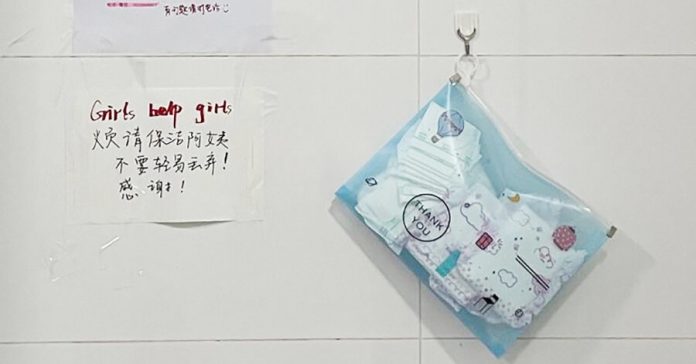
In “‘Stand by Her’: In China, a Movement Hands Out Free Sanitary Pads in Schools,” Tiffany May and Amy Chang Chien write about a grass-roots movement to distribute menstrual products to students in China:
It started when a single box of free sanitary pads appeared in a middle school classroom in October.
Then a plastic container with pads was attached to the walls of four bathrooms in a university in Shanghai.
By Monday, boxes and bags of individually wrapped pads had popped up outside bathrooms in at least 338 schools and colleges across China.
Each carried a version of the same instructions: “Take one, then put one back later. Stop period shaming.”
The pads were part of a broader effort to increase access to a product that not all students can afford, and to strip away the shame surrounding a natural bodily function that has long been stigmatized, according to organizers of a grass-roots campaign called Stand by Her.
Founded by Jiang Jinjing, a women’s rights advocate, the campaign aims to push the subject of period poverty — what the United Nations describes as the financial struggle low-income women and girls face to afford menstrual products — to the forefront of the national conversation. Ms. Jiang, who gained prominence in March after mobilizing deliveries of sanitary pads to hospitals in Wuhan, China, during the coronavirus outbreak, began the campaign to fight period poverty this year.
In an interview published in September by the online Shanghai magazine Sixth Tone, Ms. Jiang said she used to believe that menstrual products were inaccessible only in impoverished rural Chinese provinces, but soon realized that the phenomenon was widespread.
“This is so-called women’s poverty,” said Ms. Jiang, who is more widely known by her pen name, Liang Yu. “When we talk about poverty, women’s needs become automatically invisible.” She has declined a request for comment.
Her group raised $126,000 in a crowdfunding campaign in October to send pads to 2,000 teenagers in rural areas and to provide information about periods and sex education. A middle-school teacher took inspiration from Ms. Jiang’s efforts and placed a box with free sanitary pads in her classroom, telling her students to take one and replace it later.
Ms. Jiang posted photographs sent by the unidentified teacher on Weibo, a Chinese social media platform. She encouraged others to follow suit, and the campaign surrounding what she called “mutual aid boxes” took off.
The article continues:
The inability to afford menstrual products is common in many countries, and that inaccessibility is often compounded by social mores that view menstruation as a taboo topic.
Women and girls in Nepal have been banished from their homes to huts during their period. At least one or two women die in the huts each year from exposure, animal bites or smoke inhalation after building fires to stay warm.
A study published in July by the Maple Women’s Psychological Counseling Center in Beijing found that nearly 70 percent of respondents said that they tried to hide the sanitary pads they carry around, and more than 61 percent used euphemisms for their period.
Students, read the entire article, then tell us:
Should schools be required to provide free pads and tampons to students? How are pads and tampons similar to toilet paper, soap, Band-Aids and other products that are already provided in schools? How are they different?
Has access to menstrual products ever been a challenge for you or someone you know? What about expense? Are periods a source of financial stress for you or your siblings or friends?
Who should assume the cost of pads or tampons for students who cannot afford them? Groups like the Stand by Her campaign in China? School districts? Governments? How much responsibility should schools bear in helping students meet the basic physical requirements to be able to learn? How might students be affected if those needs are not met?
Do you feel squeamish talking about periods? Is discussing pads and tampons taboo, or stigmatized, in any of the communities you belong to? If you use menstrual products, do you ever hide them or feel embarrassed about them? Do you think that a stigma surrounding menstrual products can make them more difficult to gain access to?
Past student winners of our podcast and editorial contests have created pieces about period poverty and period stigma. Do you think your generation speaks more freely about women’s health than other generations? If so, does that include boys as well as girls?
What are some of the benefits of openly discussing periods and the challenges they present? How do you approach conversations that might make others feel uneasy or uncomfortable?
About Student Opinion
• Find all of our Student Opinion questions in this column.
• Have an idea for a Student Opinion question? Tell us about it.
• Learn more about how to use our free daily writing prompts for remote learning.
Students 13 and older in the United States and the United Kingdom, and 16 and older elsewhere, are invited to comment. All comments are moderated by the Learning Network staff, but please keep in mind that once your comment is accepted, it will be made public.
Respect for Skateboarders
Students in U.S. high schools can get free digital access to The New York Times until Sept. 1, 2021.
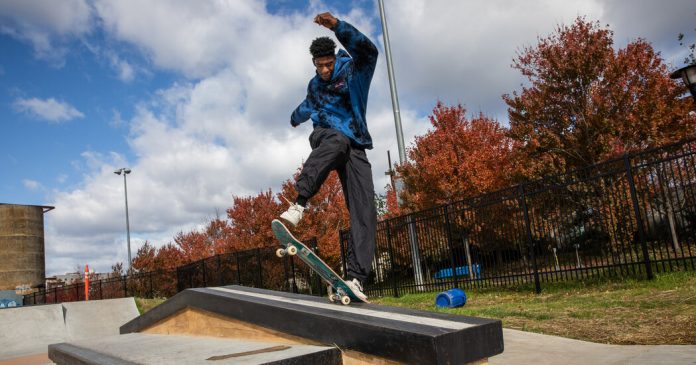
The Times reports that “cities are finally showing skateboarders some respect”:
From New Jersey across the Hudson River to New York, skateboarders are now enjoying many more places to flow at a time when outdoor space has become more coveted with the coronavirus resurging.
Have you noticed this in your area? Where do skateboarders tend to congregate? Are there dedicated parks for them? If not, what kind of design would you like to see your neighborhood, town or city create? In general, do you agree with this article that skateboarding is becoming much more mainstream? If so, is that a good thing, in your view?
Tell us in the comments, then read the related article to learn more.
About Picture Prompts
• Find all our Picture Prompts in this column.
• Have an idea for a Picture Prompt? Tell us about it.
• Teachers, discover more ways to teach with our Picture Prompts and learn how to use our free daily writing prompts for remote learning.
Students 13 and older in the United States and the United Kingdom, and 16 and older elsewhere, are invited to comment. All comments are moderated by the Learning Network staff, but please keep in mind that once your comment is accepted, it will be made public.
Introducing Codecademy for Teams: Technical training for organizations

Here at Codecademy, we believe that technical skills and digital literacy are important for all people in all industries. Marketers, sales teams, finance teams, and more can all benefit from learning to code. That’s why we’re excited to tell you about Codecademy for Teams — a Codecademy for Business offering we quietly launched earlier this year to allow organizations to provide technical training and education for their employees.
Codecademy for Teams is currently being used by over 500 organizations, from Fortune 500s to media brands, universities, financial institutions, and more. Are you a team lead, manager, or team member that’s interested in signing your team up for Codecademy? You can learn more about the features and benefits of our Teams offering below and request a quote here.
How your team can benefit from Codecademy
Adam Godson, Chief Product Officer at Paradox and Codecademy for Business customer, tells us:
“Investing in our team’s continued learning is of utmost importance, for both the success of our business and the betterment of each employee. Codecademy for Teams equips us with the technical skills and tools we need to be an industry leader, while keeping our employees engaged, motivated, and connected to one another through learning.”
Offering Codecademy to employees has benefits for both individual team members and full organizations. Here are just a few of the ways we’re seeing teams benefit from learning with us.
Keep your team’s skills up to date
Technology is constantly evolving and, with it, new languages and tools become the norm. Ensure your team stays up-to-date as the industry changes. We’ve seen everything from engineering teams using Codecademy to train developers on new languages to analysts honing their data science skills, marketing teams moving off of Excel, and more.
Empower non-technical teams to learn technical skills
As we’ve mentioned, learning to code isn’t just for programmers. Access to Codecademy can empower non-technical teams to learn technical skills that can help them advance in their roles.
Marco, a Senior BI Analyst, felt stuck relying on data engineers to help with his day to day tasks:
“I have always been curious about coding and the idea of sitting around without getting my hands dirty was something that I wanted to erase. My wake-up call was when my data engineer co-worker suggested that I pick up some SQL skills to provide me with some independence when completing my tasks. SQL took my modus operandi to another level. I prepare better reports in less time and I’ve finally landed a Senior job that required advanced coding skills.”
Build confidence and encourage problem solving
Like Marco, who was able to advance into a more Senior role, we’ve seen many learners benefit from learning to code, beyond just the technical skills. Learning to code improves problem solving skills and helps prepare teams for the future. Plus, the process of learning new skills offers a major confidence boost.
Johnnie Weathersby, Senior BI Data Analyst at The Motley Fool, another Codecademy for Business customer, tells us:
“Codecademy has been an asset in our efforts to increase technical skills around various points of the company, and move training participants from unfamiliar-to-conversant and from conversant-to-practitioners in the realm of coding.”
How does Codecademy for Teams work?
With Codecademy for Teams, you can unlock Codecademy Pro access for anywhere from 5 to forty-nine members of your team. For larger teams, contact our sales team for more information about our Enterprise offering.
Codecademy for Teams participants will get access to the complete catalog of content on our interactive learning platform. Curriculum spans topics from Data Science to Computer Science and Web Development, and includes courses in 18 programming languages, including HTML/CSS, SQL, Python, JavaScript, and more.
Here’s what your team can expect:
- Interactive learning platform: Codecademy is designed to make learning to code easy and interactive. Code directly in your browser and get instant feedback with no set up required.
- Guided paths: Guided learning paths provide a curated roadmap to help your employees know exactly what to take and when to achieve their goals. You can take a step back and let your employees take ownership of their learning.
- Real-world practice: Put the skills you’re learning into practice with Portfolio Projects, quizzes, practice packs, and more.
- Up-to-date curriculum: Codecademy teaches the latest skills on the most important topics your team needs to stay ahead of the curve.
- Proof of growth: Milestones, goal-setting features, and streaks help your employees see their progress and growth over time. Weekly custom reports help you monitor your team’s growth and progress. Plus, employees earn certificates for each course they complete.
- Built-in motivation: Code challenges, streaks, weekly targets, and a supportive community of learners help your team stay motivated and engaged.
Getting started
Interested in taking Codecademy for Teams for a spin? Sign up below to connect with a member of our team to request a free trial or learn more. We look forward to connecting!
Introduction to ‘Picture Prompts’

Besides written articles, The Times also offers a rich collection of visuals — photos, illustrations, graphics, GIFs and short videos — that are accessible to learners of all levels. Since 2016, we’ve been featuring these images in our daily Picture Prompts.
These accessible, image-driven prompts include both photographs and illustrations, and invite a variety of kinds of writing. Each links to a related Times article, but all students need to start writing is the image itself and the short, simple language we use to introduce it.
Teachers tell us they use these prompts in all kinds of ways. Some use them to encourage students to develop a daily writing habit. Others use them as an exercise to practice inferences, spark discussion or support reading. One elementary school music teacher told us how her class used the visuals as inspiration for writing short stories accompanied by music.
Ready to use Picture Prompts? Get started here.
Cards

Students in U.S. high schools can get free digital access to The New York Times until Sept. 1, 2021.
What message do you think this image is trying to convey? How does it relate to or comment on society or current events? Can you relate to it personally? What is your opinion of its message?
Tell us in the comments, then read the related Opinion essay to learn more.
About Picture Prompts
• Find all our Picture Prompts in this column.
• Have an idea for a Picture Prompt? Tell us about it.
• Teachers, discover more ways to teach with our Picture Prompts and learn how to use our free daily writing prompts for remote learning.
Students 13 and older in the United States and the United Kingdom, and 16 and older elsewhere, are invited to comment. All comments are moderated by the Learning Network staff, but please keep in mind that once your comment is accepted, it will be made public.
Word + Quiz: unencumbered

unencumbered ˌən-in-ˈkəm-bərd adjective
1. free of encumbrances like burdens or obstacles
2. lacking obligations, cares or responsibilities
_________
The word unencumbered has appeared in 68 articles on NYTimes.com in the past year, including on Nov. 8 in “The Digital Nomads Did Not Prepare for This” by Erin Griffith:
For a certain kind of worker, the pandemic presented a rupture in the space-time-career continuum. Many Americans were stuck, tied down by children or lost income or obligations to take care of the sick. But for those who were unencumbered, with steady jobs that were doable from anywhere, it was a moment to grab destiny and bend employment to their favor.
Their logic was as enviable as it was unattainable for everyone else: If you’re going to work from home indefinitely, why not make a new home in an exotic place? This tiny cohort gathered their MacBooks, passports and N95 masks and became digital nomads.
_________
What’s Going On in This Graph? | Dec. 2, 2020

3. Below the response box, there is an option for students to click on “Email me when my comment is published.” This sends the link to their response which they can share with their teacher.
4. After you have posted, read what others have said, then respond to someone else by posting a comment. Use the “Reply” button to address that student directly.
On Wednesday, Dec. 2, teachers from our collaborator, the American Statistical Association, will facilitate this discussion from 9 a.m. to 2 p.m. Eastern time.
5. By Friday morning, Dec. 4, we will reveal more information about the graph, including a free link to the article that included this graph, at the bottom of this post. We encourage you to post additional comments based on the article, possibly using statistical terms defined in the Stat Nuggets.
More?
• See all graphs in this series or a slide show of 60 of our favorite graphs.
• View our archives that link to all past releases, organized by topic, graph type and Stat Nugget.
• Learn more about the “Notice and Wonder” teaching strategy and how and why other teachers are using this feature from our on-demand webinar.
• Sign up for our free weekly Learning Network newsletter so you never miss a graph. Graphs are always released by the Friday before the Wednesday live-moderation to give teachers time to plan ahead.
• Go to the American Statistical Association K-12 website, which includes teacher statistics resources, professional development opportunities, and more.
Students 13 and older in the United States and the United Kingdom, and 16 and older elsewhere, are invited to comment. All comments are moderated by the Learning Network staff, but please keep in mind that once your comment is accepted, it will be made public.
Texts
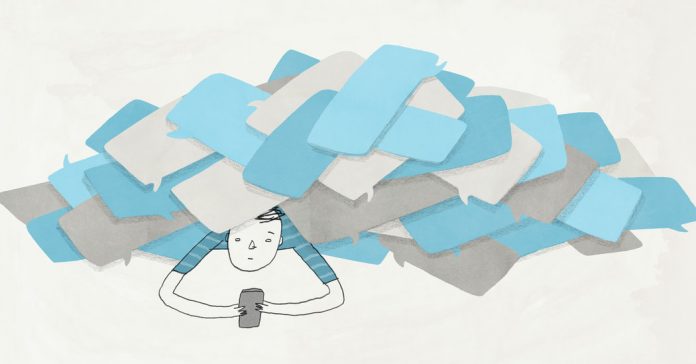
Students in U.S. high schools can get free digital access to The New York Times until Sept. 1, 2021.
What story does this image inspire for you?
Use your imagination to write the opening of a short story or poem inspired by this illustration — or tell us about a memory from your own life that this image makes you think of.
Tell us in the comments, then read the related essay to learn more.
About Picture Prompts
• Find all our Picture Prompts in this column.
• Have an idea for a Picture Prompt? Tell us about it.
• Teachers, discover more ways to teach with our Picture Prompts and learn how to use our free daily writing prompts for remote learning.
Students 13 and older in the United States and the United Kingdom, and 16 and older elsewhere, are invited to comment. All comments are moderated by the Learning Network staff, but please keep in mind that once your comment is accepted, it will be made public.
